HighLevel for Carpet and Flooring Companies: Marketing, CRM, Sales, Payments and Field Service

Discover how carpet and flooring companies can use HighLevel and FieldTask for CRM, marketing, appointments, payments and field service.

Discover how carpet and flooring companies can use HighLevel and FieldTask for CRM, marketing, appointments, payments and field service.Running a carpet or flooring company involves much more than fitting floors.

You need to generate enquiries, answer calls, arrange measuring appointments, prepare quotations, follow them up, take deposits, schedule jobs, keep customers informed, collect final payments and generate reviews.

For a larger nationwide flooring company, building systems around all of that might once have meant investing in expensive CRM, marketing automation, call handling, payment and field service software.

For a smaller flooring company or sole trader, that kind of technology could easily have felt out of reach.

That is changing.

Today, a small independent flooring business can have access to marketing and CRM technology that only a few years ago would largely have been the preserve of businesses with substantial IT and marketing budgets.

One combination I think is particularly interesting is HighLevel plus FieldTask.

HighLevel can manage the marketing, enquiries, CRM, appointments, follow-up, sales, customer communication and payments.

FieldTask can then manage the operational side of sending people out into the field and completing the flooring job.

That gives you two specialist systems working together rather than trying to force one piece of software to do absolutely everything.

The Typical Customer Journey for a Flooring Company

Think about what happens when somebody decides they need new flooring.

They might find you on Google, see an advert on Facebook, receive a recommendation or already know your business.

Google, Facebook or Referral

↓

Website Enquiry or Phone Call

↓

Initial Conversation

↓

Home Measuring Appointment

↓

Quote

↓

Follow-Up

↓

Customer Accepts

↓

Deposit or Payment

↓

Job Scheduled

↓

Flooring Delivered and Fitter Assigned

↓

Installation

↓

Final Payment

↓

Review Request

↓

Future Marketing and Referrals

There are really two sides to this process.

The first is winning and managing the customer.

The second is delivering the job.

That is why I like the idea of using HighLevel and FieldTask together.

HighLevel manages the customer.

FieldTask manages the job.

HighLevel as the Marketing and CRM System for a Flooring Company

HighLevel is particularly strong at the front end of the customer journey.

Through MarketerM8, it can become the central marketing, sales and CRM platform for a carpet or flooring business.

Rather than having enquiries spread across email inboxes, spreadsheets, phones, Facebook messages and different apps, you can bring much more of the customer journey together around a central CRM record.

Generate Enquiries Through Your Website and Landing Pages

Your flooring website should do more than show photographs of previous installations.

It should generate enquiries.

You might create dedicated pages for services such as:

  • Carpet fitting
  • Luxury vinyl tile
  • Laminate flooring
  • Hardwood flooring
  • Commercial flooring
  • Vinyl flooring
  • Floor restoration
  • Home measuring and fitting

Someone searching for a particular flooring service can arrive on the relevant page, complete a form or make contact and have their enquiry added directly to HighLevel.

That means the sales process can start immediately.

Bring Flooring Leads Into One CRM

Not every flooring enquiry will come through your website.

A prospective customer might contact you through telephone, website forms, Facebook, Instagram, Google Ads, Facebook Lead Ads, WhatsApp or email.

HighLevel can bring much of this activity together around the customer’s contact record.

That is important because one of the biggest problems I see in small businesses is not necessarily generating too few leads.

It is failing to properly follow up the leads they already have.

I call this the leaky bucket problem.

I explain this in more detail in How HighLevel Fixes the Leaky Bucket That’s Costing Your Business Leads, Sales and Revenue.

What Happens When You Miss a Call?

Missed calls are particularly relevant for flooring businesses.

If you are measuring someone’s house, talking to a customer in the showroom, unloading flooring or actually fitting a floor, you may not be able to answer your phone.

Unfortunately, the person calling may simply move down the Google results and ring the next flooring company.

HighLevel can automatically respond to a missed call.

Customer Calls

↓

Nobody Answers

↓

HighLevel Automatically Sends an SMS

↓

Customer Replies

↓

Conversation Continues Inside Your CRM

You can go further too.

HighLevel can be used with AI voice technology to answer calls, gather information and potentially book appointments.

I have written more about this in Looking for a Small Business Phone System? Why HighLevel Could Replace Your Office Phones and CRM.

Book and Manage Home Measuring Appointments

For many carpet and flooring companies, the measuring appointment is one of the most important parts of the sales process.

The customer has made an enquiry. The next objective is to get somebody into the property, understand what they want, measure the rooms and gather the information required to prepare a quotation.

HighLevel can help manage that process.

The customer can be booked into a calendar for a home measuring appointment, with that appointment attached to their contact record.

You can then automate much of the administration around it.

New Flooring Enquiry

↓

Measuring Appointment Booked

↓

Confirmation Sent

↓

Automatic Reminder

↓

Estimator Visits the Property

↓

Measurements and Notes Recorded

↓

Quote Prepared

↓

Opportunity Moves to Quote Sent

You could have different calendars for different estimators, salespeople, showrooms or geographical areas.

The person carrying out the appointment can also access the customer’s information through the HighLevel mobile app while away from the office.

At this stage, you are still trying to win the business, so it makes sense for the measuring appointment to remain part of the HighLevel sales process.

Once the customer accepts the quote and places the order, the operational side of the job can begin.

Keep Customers Updated by Text and WhatsApp

HighLevel can also help you keep the customer informed throughout the process using SMS and WhatsApp.

For example, you could automatically send measuring appointment confirmations, appointment reminders, quote follow-ups, deposit confirmations, fitting date confirmations, job updates, completion messages and review requests.

Customers can reply too, with the conversation kept against their contact record.

For a small flooring business, this can make the whole customer experience feel considerably more organised and professional without somebody in the office having to manually send every message.

You can read more about using WhatsApp with HighLevel in HighLevel: The Ultimate WhatsApp Marketing Automation Software Tool for Businesses.

Manage Every Flooring Opportunity Through a Sales Pipeline

Once somebody makes an enquiry, you need to know what happens next.

A flooring company’s HighLevel pipeline might contain stages such as:

  • New Enquiry
  • Contacted
  • Measuring Appointment Booked
  • Measured
  • Quote Sent
  • Quote Follow-Up
  • Accepted
  • Deposit Paid
  • Job Booked
  • Completed
  • Final Payment

At any point, you can see which potential jobs are moving forward and which ones need attention.

This is much better than relying on somebody remembering which customers need chasing.

Automatically Follow Up Flooring Quotes

Quote follow-up is an obvious opportunity for automation.

Imagine you send somebody a £3,500 quotation.

They say, “Thanks. We’ll have a think about it.”

Then the phone rings. Another customer arrives. A fitter has a problem.

Before long, three days have turned into three weeks and nobody has followed up the quotation.

HighLevel can help prevent that.

Moving an opportunity into Quote Sent could automatically trigger a sequence.

Perhaps the customer receives a friendly email after a couple of days. A few days later, an SMS asks whether they have any questions.

If they still have not responded, HighLevel can create a task reminding the salesperson to call them.

The automation does not have to replace the salesperson. It simply makes sure the salesperson does not forget.

Take Deposits and Payments Through HighLevel

Once the customer says yes, HighLevel can also help you collect the money.

That might be a deposit when the flooring is ordered, full payment in advance, an outstanding balance or a separate fitting fee.

The payment can become part of the same customer journey.

Customer Accepts Quotation

↓

Order Confirmed

↓

Deposit Collected

↓

Payment Recorded

↓

Opportunity Updated

↓

Confirmation Sent

↓

Job Moves Into Operations

Turn Your Phone Into a Card Payment Terminal

This is a HighLevel feature that I think could be particularly useful for flooring companies.

HighLevel’s mobile Point of Sale functionality supports Tap to Pay on compatible phones and payment setups.

That means you may not necessarily need to carry a separate SumUp-style card machine just to collect face-to-face payments.

Take a Deposit During the Measuring Appointment

Imagine you have measured the rooms, discussed the options and the customer decides to proceed.

Instead of saying, “I’ll email you a payment link when I get back to the office”, you may be able to collect the deposit immediately.

The customer simply taps their compatible contactless card or mobile wallet against your phone.

Take Payments in the Showroom

The same principle can work in a flooring showroom.

Your compatible phone effectively becomes the card terminal.

Let the Fitter Collect the Final Payment

This could be even more useful at the end of the job.

Suppose the installation is complete and there is still a fitting fee or outstanding balance to pay.

The customer checks the work and is happy.

The fitter can potentially collect the money on their phone before leaving.

Job Completed

↓

Customer Checks the Work

↓

Fitter Opens HighLevel

↓

Customer Taps Their Card on the Phone

↓

Payment Recorded

↓

Customer Marked as Paid

↓

Review Process Begins

For smaller flooring companies and sole traders, that is particularly attractive.

It means one less piece of hardware and potentially one less separate system to manage.

Then What Happens to the Actual Flooring Job?

This is where I think businesses should be pragmatic.

HighLevel is extremely capable at CRM, marketing, communications, automation, appointments, sales and payments.

But that does not mean I would try to force HighLevel to become specialist field service software as well.

Once the flooring has been sold, you may need to manage:

  • Jobs and work orders
  • Fitters and other operatives
  • Installation dates
  • Scheduling
  • Routes and locations
  • Time on site
  • Job notes
  • Photographs
  • Forms
  • Customer signatures
  • Job progress
  • Job completion

That is a different requirement.

This is where specialist field service software becomes useful.

HighLevel Plus Field Service Software

One option would be to connect HighLevel to an established field service platform such as ServiceM8.

HighLevel could handle the marketing and sales.

ServiceM8 could handle the job.

You would then need to make sure the relevant information moves correctly between the two systems.

There is, however, another option that I think is particularly interesting if you are already using HighLevel.

FieldTask: Field Service Software Built Around HighLevel

FieldTask is a specialist field service application designed specifically to work with HighLevel.

That distinction matters.

Rather than taking an unrelated field service platform and trying to connect it to your CRM afterwards, FieldTask has been designed around the HighLevel ecosystem.

For a flooring business, HighLevel could therefore manage:

Marketing + Leads + CRM + Measuring Appointments + Quotes + Follow-Up + Sales + Payments

while FieldTask manages:

Jobs + Scheduling + Fitters + Field Operations + Completion

Once the flooring order has been placed, the job can move into FieldTask for the operational work.

If you want to explore this part in more detail, read my full guide: FieldTask for HighLevel: What It Is, How It Works and How to Get It.

For smaller carpet and flooring companies, I think this combination could be particularly powerful.

HighLevel manages the customer.

FieldTask manages the job.

Big-Business Marketing and CRM Without the Big-Business Infrastructure

This is perhaps the bigger opportunity for an independent flooring company.

Not very long ago, sophisticated CRM and marketing automation was predominantly associated with larger organisations.

A nationwide flooring chain could invest in enterprise CRM software, marketing automation, call tracking, sophisticated follow-up systems, dedicated customer service systems and expensive integrations.

The independent carpet shop or sole trader often could not.

Their competitive advantage had to come from their personal service, reputation and expertise rather than their technology.

Platforms such as HighLevel are changing that.

Today, a small flooring company can potentially have:

  • A central CRM
  • Automated lead follow-up
  • Email marketing
  • SMS
  • WhatsApp
  • Sales pipelines
  • Online calendars
  • Appointment reminders
  • Websites and landing pages
  • Phone systems
  • AI call answering
  • Review management
  • Automated workflows
  • Online payments
  • Mobile Tap to Pay

Then, with an application such as FieldTask, you can add specialist field service capabilities around the same ecosystem.

That gives a small flooring company a level of marketing and operational infrastructure that would have required a considerably larger technology budget only a few years ago.

HighLevel Is Now Playing in a Very Different League

There is another reason small businesses should perhaps take HighLevel seriously.

HighLevel co-founder and CEO Shaun Clark has said that HighLevel is now the second-largest CRM in the world, behind Salesforce, and that the company is growing at more than 50% year-on-year.

Those are Shaun Clark’s own figures rather than independently verified CRM market-share figures, so I think that distinction is important.

But the scale HighLevel has reached is significant.

I have looked at Shaun’s comments and what they potentially mean for small businesses in more detail in HighLevel Is Now the World’s Second-Largest CRM, Behind Salesforce, Says CEO Shaun Clark.

The interesting part for a smaller flooring company is not really the league table.

It is that a business with only a handful of employees, or even a sole trader, can now access a CRM and marketing platform operating at enormous scale without taking on a traditional enterprise CRM implementation.

You can gain much of the marketing and automation capability associated with much bigger businesses without needing a Salesforce-sized budget.

That potentially helps level the playing field between an independent flooring company and the nationwide chains competing for the same customer.

Automatically Turn Completed Flooring Jobs Into Reviews

When the installation is complete, the marketing process should not stop.

Reviews are extremely important for local flooring businesses.

A customer choosing between several carpet fitters or flooring companies is likely to look at the experiences of previous customers.

HighLevel can help automate that process.

Once the job is complete, the customer could automatically receive a message asking how everything went and inviting them to leave a review.

The business that consistently asks happy customers for reviews has an advantage over the competitor that simply hopes somebody remembers to leave one.

Your Existing Customers Are an Asset Too

There is another often-overlooked benefit of having customers in a proper CRM.

Someone who bought carpet from you three years ago may now want another room flooring, LVT in the kitchen, flooring for a rental property, flooring for a new house or commercial flooring for their business.

They may also know friends or family who need a flooring company.

Because the customer remains in HighLevel, you can continue communicating with them through email, SMS and WhatsApp.

You can run occasional customer campaigns, promote additional services, ask for referrals and stay front of mind.

The customer is not simply an invoice from three years ago. They are part of your marketing database.

HighLevel Does Not Have to Do Everything

This is the wider principle.

I increasingly see HighLevel becoming the central system around which a business can operate.

That does not mean every specialist business application needs to be replaced by HighLevel.

Sometimes the better approach is to use HighLevel for the things HighLevel does extremely well and add specialist applications where the business genuinely needs specialist functionality.

I explore this wider idea in HighLevel Is No Longer Just a Marketing Platform: Is It Becoming a Business Operations Platform?.

For a carpet or flooring business, that could mean:

HighLevel = Marketing + CRM + Appointments + Communications + Sales + Payments

FieldTask = Field Service + Jobs + Fitters + Operations

The result is a connected system that can support the whole customer journey.

Is HighLevel Suitable for a Carpet or Flooring Company?

It can be an excellent fit, particularly for an independent flooring company, growing small business or sole trader that wants to become more organised and professional without buying a collection of disconnected systems.

But I would not recommend buying HighLevel simply because it has lots of features.

Start with how your business actually works.

How do enquiries arrive?

Who follows them up?

How do you arrange measuring appointments?

How do you prepare and follow up quotations?

How do customers pay deposits?

When does a sale become an operational job?

How do you schedule fitters?

How do you keep the customer informed?

How do you collect the final payment?

How do you generate reviews, referrals and repeat business?

Once those processes are clear, we can decide what should happen inside HighLevel and where an application such as FieldTask should take over.

That is how we approach HighLevel implementations at MarketerM8.

Frequently Asked Questions About HighLevel for Carpet and Flooring Companies

Is HighLevel suitable for carpet and flooring companies?

Yes. HighLevel can manage marketing, leads, CRM, measuring appointments, sales pipelines, quote follow-up, SMS and WhatsApp communication, payments and customer reviews.

For the operational side of the business, specialist field service software such as FieldTask can then manage fitters, scheduling and jobs in the field.

What is the best CRM for a small flooring company?

There is no single best CRM for every flooring company, but HighLevel is particularly worth considering if you want CRM and marketing automation in the same platform.

Rather than simply storing customer details, HighLevel can help generate enquiries, automate follow-up, manage appointments, communicate with customers and collect payments.

Can sole trader carpet fitters use HighLevel?

Yes. HighLevel can be particularly useful for sole traders and small flooring businesses because automation can handle tasks that might otherwise require additional administration or marketing staff.

For example, it can automatically respond to missed calls, send appointment reminders, follow up quotations and request customer reviews.

Can HighLevel manage flooring measuring appointments?

Yes. HighLevel includes calendars that can be used to book home measuring appointments.

Confirmations and reminders can be sent automatically, and the appointment remains connected to the customer’s CRM record and sales opportunity.

Can HighLevel automatically follow up flooring quotations?

Yes. HighLevel workflows can automatically follow up customers after a quotation has been sent using email, SMS and other actions.

It can also create tasks reminding a salesperson to personally contact a prospect who has not responded.

Can a flooring company communicate with customers by SMS and WhatsApp through HighLevel?

Yes. HighLevel supports customer communication through channels including SMS and WhatsApp.

A flooring company could use these for measuring appointment reminders, quote follow-up, fitting confirmations, job updates and review requests.

Read more in my guide to HighLevel WhatsApp marketing and automation.

Can a flooring company take card payments through HighLevel?

Yes. HighLevel supports online and mobile payment functionality.

Depending on the phone, payment provider and configuration, its mobile Point of Sale functionality can also support Tap to Pay, allowing customers to make contactless payments using a compatible smartphone.

Could a carpet fitter take payment on their phone after completing a job?

Potentially, yes. With a compatible HighLevel Tap to Pay setup, a fitter could collect an outstanding balance or fitting fee using their smartphone rather than carrying a separate SumUp-style card terminal.

Does HighLevel manage flooring fitters and field service jobs?

HighLevel can manage the customer, sales and communication side of the process, but for specialist field service requirements I would consider adding dedicated field service software.

FieldTask is particularly interesting because it has been designed specifically to work with HighLevel and can manage jobs, operatives, scheduling and other field service activities.

What is FieldTask for HighLevel?

FieldTask is field service management software designed to work with HighLevel.

It extends HighLevel into field operations by adding functionality for jobs, operatives, scheduling, routes, photographs, forms, signatures and job completion.

Read my full guide: FieldTask for HighLevel: What It Is, How It Works and How to Get It.

Can HighLevel work with ServiceM8?

HighLevel and ServiceM8 can potentially be connected so that HighLevel handles marketing, CRM and sales while ServiceM8 handles field service operations.

However, FieldTask is particularly worth considering for HighLevel users because it has been specifically designed around the HighLevel ecosystem.

Is HighLevel suitable for an independent flooring company competing with national chains?

Potentially, yes. One of HighLevel’s attractions for smaller businesses is access to CRM, marketing automation, SMS, WhatsApp, sales pipelines, online booking, payments, review management and other technology that historically required multiple systems and much larger budgets.

Combined with specialist software such as FieldTask, it can give a small flooring company or sole trader a sophisticated marketing and operational setup without traditional enterprise-level infrastructure.

Can I use HighLevel for a carpet or flooring franchise and give franchisees a branded CRM and marketing automation system?

Yes. This is one of the more interesting ways HighLevel can be used by a carpet or flooring franchisor.

Rather than every franchisee choosing their own CRM, email marketing platform, forms, calendars and follow-up systems, the franchisor can create a standard HighLevel setup and then roll that out across multiple franchise locations.

That could include branded pipelines, enquiry forms, calendars, automated follow-up, missed-call text back, review requests, email campaigns, SMS, WhatsApp and other marketing automation.

Each franchisee can then operate from their own HighLevel account while the franchisor maintains much greater consistency across the network.

HighLevel snapshots can also be used to package a proven CRM and marketing setup so it can be deployed repeatedly to new franchisees as the network grows.

This can be particularly useful for a carpet or flooring franchise that wants to give smaller local operators access to the same marketing systems, processes and branding across every location.

I explain this model in more detail in How to Build a HighLevel Snapshot SaaS-Style That Can Scale to Hundreds of Clients.

Is HighLevel cheaper than Salesforce for a flooring company?

They are very different propositions, so I would not compare them purely on subscription price.

Salesforce is a major enterprise CRM platform, whereas HighLevel combines CRM with marketing, communications, automation, websites, calendars and payments.

HighLevel co-founder and CEO Shaun Clark has said that HighLevel is now the world’s second-largest CRM behind Salesforce. For a small flooring company or sole trader, the more important point is that HighLevel provides access to sophisticated CRM and marketing technology without the kind of enterprise implementation typically associated with systems such as Salesforce.

Read more in HighLevel Is Now the World’s Second-Largest CRM, Behind Salesforce, Says CEO Shaun Clark.

Want to Explore HighLevel for Your Carpet or Flooring Business?

If you run a carpet, flooring or floor fitting business and are looking for a better way to manage your marketing, enquiries, sales and field operations, I would be happy to discuss what you are trying to achieve.

We can look at the systems you currently use and explore how HighLevel, MarketerM8 and FieldTask could fit around the way your business actually operates.

Want to see how this could work in your flooring business?

Book a 20-minute discovery call and we can discuss your current marketing, CRM, sales and field service setup.

Book a Discovery Call with Julian Mills

The objective is not simply to sell you another piece of software.

It is to give your business a connected marketing, CRM, sales and operational system that helps you compete more effectively, convert more enquiries into customers and deliver the work you have sold.

Julian Mills HighLevel Consultant and Marketing Automation Strategist

About the Author

Julian Mills

HighLevel Consultant & Marketing Automation Strategist

Julian Mills helps business owners automate lead generation, sales follow-up, customer communication and business processes using HighLevel and MarketerM8. Since 2009 he has helped businesses implement CRM, marketing automation and AI-powered systems that save time, improve customer experience and generate more sales.

About Julian
Book a Discovery Call
Join a Free HighLevel Workshop
Learn About HighLevel with MarketerM8

Can I Use HighLevel to Send Cold Emails?

GoHighLevel cold email, HighLevel cold emailing, can HighLevel send cold emails, cold email with HighLevel, HighLevel cold outreach, GoHighLevel cold outreach, HighLevel email marketing

GoHighLevel cold email, HighLevel cold emailing, can HighLevel send cold emails, cold email with HighLevel, HighLevel cold outreach, GoHighLevel cold outreach, HighLevel email marketingIf you’re already using HighLevel for your CRM, email marketing and marketing automation, you might reasonably ask:


Can I use my HighLevel account to send cold emails?

The short answer is yes, technically HighLevel can send cold emails. But for most businesses, I wouldn’t recommend using your main HighLevel email infrastructure for cold email campaigns.

For serious B2B cold email prospecting, I recommend using a dedicated email finder and cold email platform for the initial outreach then bringing interested prospects and leads into HighLevel.

This protects your main email infrastructure and lets you use HighLevel for what it does particularly well: managing, nurturing and converting genuine sales opportunities.

Can HighLevel Send Cold Emails?

Technically, yes.

However, there is an important difference between something being technically possible and it being the best way to structure your outbound marketing.

HighLevel’s email guidance recommends precautions around cold outreach, including:

  • Validating email addresses before sending
  • Using bounce protection
  • Sending in smaller batches
  • Warming your sending domain
  • Separating cold outreach from your normal sending infrastructure
  • Using a separate domain rather than risking your primary business domain

HighLevel has also recommended using purpose-built cold email tools to qualify prospects before importing them into HighLevel.

That’s essentially the same approach I recommend to HighLevel clients.

Why I Don’t Recommend Cold Emailing From Your Main HighLevel Setup

Your email reputation is valuable.

When you’re using HighLevel to communicate with customers, enquiries, subscribers and genuine sales opportunities, you want those messages reaching people’s inboxes.

Cold email introduces additional risk.

You’re contacting people who may never have heard of your business. That can potentially mean more bounces, lower engagement and more spam complaints.

Those signals can damage your sending reputation.

If your main business domain becomes associated with poor-quality or unwanted email, you could potentially affect the deliverability of the emails you actually care about.

That’s why I wouldn’t recommend simply obtaining a database of thousands of prospects, uploading them into your normal HighLevel account and starting a large automated cold email workflow.

There is a better way.

Use a Dedicated Cold Email Platform

For cold outreach, I prefer to separate your prospecting infrastructure from your CRM and marketing infrastructure.

There are specialist tools designed specifically for managing the outbound email process. HighLevel itself has referenced platforms such as Instantly and Smartlead in its email guidance. ContactOut and QuickProsp are other options.

Dedicated cold email platforms can provide functionality specifically designed for outbound prospecting, such as multiple sending mailboxes, mailbox rotation, email warm-up, sending sequences, bounce monitoring and personalised outreach.

That’s a different job from the one I primarily want HighLevel doing.

HighLevel is where I want to manage the relationship once somebody becomes a genuine lead.

Protect Your Main Business Domain

Another important part of a sensible cold email strategy is separating your cold outreach infrastructure from your main business email infrastructure.

Rather than conducting cold outreach through the same domain your team relies upon for everyday communication, dedicated secondary domains and sending mailboxes can be used for outbound prospecting.

Those mailboxes can be configured correctly and gradually warmed before significant outreach begins.

A specialist cold email platform can then distribute the campaign appropriately across those mailboxes.

The objective isn’t simply:

How many cold emails can we send?

A much better question is:

How can we generate conversations with potential customers while protecting the email reputation of the business?

Is Cold Email Legal in the UK?

Cold email is not automatically illegal in the UK.

However, the rules depend on who you’re contacting, what information you’re using and the circumstances surrounding the campaign.

The Information Commissioner’s Office (ICO) distinguishes between corporate subscribers and individual subscribers under the Privacy and Electronic Communications Regulations (PECR).

Corporate subscribers include organisations such as limited companies and limited liability partnerships.

According to current ICO guidance, the PECR electronic-mail marketing rule does not require prior consent when sending B2B marketing emails to corporate subscribers.

However, you must not conceal your identity and you must provide a valid way for the recipient to opt out of future marketing.

Sole traders and certain types of partnerships are different.

They are treated as individual subscribers under PECR. Unsolicited marketing emails to them generally require consent unless the requirements of the soft opt-in are satisfied.

If you don’t know whether an address belongs to a corporate or individual subscriber, the ICO recommends treating it as an individual subscriber.

What About UK GDPR?

UK GDPR can still apply to B2B cold email where you are processing personal data.

For example, an email address identifying a particular employee or director can constitute personal data even though you’re contacting that person in their business capacity.

You therefore need an appropriate lawful basis for processing that person’s data and must meet the relevant transparency requirements.

Legitimate interests may sometimes provide an appropriate lawful basis for B2B direct marketing, but it isn’t automatic. You need to consider the purpose of the processing, whether it is necessary and whether the individual’s interests, rights and freedoms override your interests.

You should also honour objections to direct marketing and maintain an appropriate suppression or do-not-contact list.

You can read the current ICO guidance on B2B direct marketing here.

This article provides general information rather than legal advice. If you’re unsure about the legality of a particular campaign or database, take appropriate professional advice.

Does Cold Email Break HighLevel’s Terms of Service?

This needs a little more nuance than simply saying:

“Cold emailing is against HighLevel’s Terms of Service.”

HighLevel’s current Terms prohibit using the platform in violation of applicable laws or regulations and prohibit unlawful advertising, junk mail, spam and similar solicitation.

The Terms also make the user responsible for ensuring they have the necessary consents, permissions and authorisations required under the applicable law before contacting recipients.

So I wouldn’t interpret HighLevel’s ability to technically send a cold email as permission to upload any prospect database and start sending.

You are responsible for ensuring that your particular campaign complies with the applicable rules.

You can read the current HighLevel Terms of Service here.

Cold Email First. HighLevel Second.

This is the architecture I generally prefer:

Target Prospects → Dedicated Email Finder & Cold Email Platform → Prospect Engages → HighLevel

For example, you might identify suitable B2B prospects using third party tools to conduct your initial outreach.

If somebody responds positively, requests more information, books a meeting or otherwise becomes an engaged lead, that’s when HighLevel can really come into its own.

The prospect can be brought into HighLevel automatically.

From there, we can:

  • Create or update their HighLevel contact record
  • Create an opportunity in the appropriate sales pipeline
  • Assign the lead to a salesperson
  • Notify the appropriate team member
  • Trigger appointment booking
  • Send appointment reminders
  • Record calls and conversations
  • Automate appropriate sales follow-up
  • Move the opportunity through your sales pipeline
  • Add longer-term nurture where appropriate

This gives you two systems doing what each is best at.

Your email finder and cold email platform help you identify prospects and start conversations.

HighLevel manages and converts the opportunities those conversations create.

Don’t Just Build a Cold Email Campaign. Build a System.

This is where I think many businesses get cold email wrong.

They start with:

“We have a list of 10,000 email addresses. How do we email them?”

I would start somewhere different.

  • Who are we trying to reach?
  • Where has the data come from?
  • Are these the right businesses?
  • Are we contacting corporate subscribers, sole traders or individuals?
  • What domains and mailboxes should we use?
  • How do we protect our primary domain?
  • How will replies be handled?
  • What happens when somebody is interested?
  • How quickly does a salesperson get notified?
  • How do we follow up with somebody who doesn’t book immediately?
  • How does all of that information get into HighLevel?

The cold email itself is only one part of the process.

Frequently Asked Questions About HighLevel and Cold Email

Can HighLevel send cold emails?

Technically, yes. HighLevel has the email functionality required to send outbound emails. However, for serious cold email prospecting I recommend using a specialist email finder and cold email platform and bringing interested prospects into HighLevel once they engage.

Is cold email against HighLevel’s Terms of Service?

It isn’t accurate to say that every cold email automatically breaches HighLevel’s Terms. However, HighLevel prohibits unlawful advertising, spam and similar solicitation and requires users to have the necessary permissions and authorisations required under applicable law. You are responsible for ensuring your campaign complies with the laws and regulations that apply to it.

Is B2B cold email legal in the UK?

B2B cold email is not automatically illegal in the UK. Current ICO guidance says that unsolicited marketing emails can be sent to corporate subscribers without prior consent under PECR, subject to requirements including identifying the sender and providing an opt-out. Different rules apply to sole traders and certain partnerships, and UK GDPR may also apply when personal data is being processed.

Should I use my main business domain for cold email?

I wouldn’t recommend it. Cold outreach carries additional deliverability and reputation risks. Using appropriately configured secondary domains and dedicated sending mailboxes can help isolate your primary business email infrastructure from your outbound prospecting activity.

What cold email software works with HighLevel?

There are several specialist tools available. For finding B2B prospects and email addresses, I recommend an email finder such as ContactOut. For cold email outreach, HighLevel has referenced Instantly and Smartlead in its own guidance, while QuickProsp is another option. The important consideration is how your prospecting and cold email system integrates with HighLevel when a prospect responds or becomes a genuine sales opportunity.

Can cold email leads be automatically added to HighLevel?

Yes. A properly designed setup can pass interested or qualified prospects from your cold email platform into HighLevel. From there, HighLevel workflows can create opportunities, notify salespeople, trigger follow-up, arrange appointments and manage the rest of the sales process.

We Can Help You Connect Cold Email With HighLevel

This is something we advise HighLevel users on and can help them implement.

We can look at your requirements and help you plan a sensible cold email setup, including your email finder, cold email platform, secondary domains, sending mailboxes and how interested prospects should flow into HighLevel.

We can then build the HighLevel side of the process so that when your cold outreach generates interest, the opportunity doesn’t disappear into somebody’s inbox.

The lead can enter your CRM, appear in the appropriate pipeline and trigger the next steps in your sales process.

The objective is to create a joined-up outbound prospecting system while avoiding unnecessary risk to the email infrastructure you rely upon for your normal HighLevel marketing and customer communications.

Thinking About Using Cold Email With HighLevel?

If you’re already using HighLevel, or you’re considering HighLevel alongside a B2B cold email strategy, let’s talk about what you’re trying to achieve.

Book a free 20-minute discovery call with Julian Mills and we can discuss how to structure your cold email prospecting and HighLevel setup.

Book Your Free 20-Minute Discovery Call

Julian Mills HighLevel Consultant and Marketing Automation Strategist

About the Author

Julian Mills

HighLevel Consultant & Marketing Automation Strategist

Julian Mills helps business owners automate lead generation, sales follow-up, customer communication and business processes using HighLevel and MarketerM8. Since 2009 he has helped businesses implement CRM, marketing automation and AI-powered systems that save time, improve customer experience and generate more sales.

About Julian
Book a Discovery Call
Join a Free HighLevel Workshop
Learn About HighLevel with MarketerM8

HighLevel Is Now the World’s Second-Largest CRM, Behind Salesforce, Says CEO Shaun Clark

shaun clark highlevel founder

shaun clark highlevel founderIf you run a small or medium-sized business and are considering HighLevel, here’s a statistic that might give you some confidence in the platform.

In a recent interview with Mike Cooch, HighLevel co-founder and CEO Shaun Clark said HighLevel is now the second-largest CRM in the world, behind only Salesforce.

He also revealed that HighLevel is currently growing at more than 50% year-on-year.

Those are Shaun Clark’s own figures rather than independently verified market-share data, but you can hear him make the claims yourself in the interview.

Watch the interview with Shaun Clark on YouTube. The relevant section starts at approximately 26:36 min, with the growth and CRM size figures discussed from around 26:55 min.

That’s quite a statement for a CRM platform that many UK business owners have still never heard of.

But perhaps the more interesting story isn’t simply how quickly HighLevel is growing.

It’s what this means for smaller businesses.

Enterprise-level CRM technology is no longer just for enterprises

Salesforce has long been one of the biggest names in enterprise CRM.

Large organisations can invest significant sums implementing CRM, marketing automation and, increasingly, AI across their businesses. Historically, that kind of technology has often come with an enterprise-sized price tag too.

One of our own clients in Ireland, for example, had previously been quoted around £150,000 for a Salesforce implementation.

Compare that with the new generation of platforms such as HighLevel.

At MarketerM8, we provide businesses with our customised version of HighLevel for £97 + VAT per month, with unlimited contacts and users.

Of course, I am not suggesting that paying £97 a month suddenly gives you the equivalent of a fully designed and implemented £150,000 Salesforce solution.

HighLevel is an extremely capable platform, but most businesses will need some level of configuration and customisation around their particular sales and marketing processes.

That may involve additional consultancy or implementation costs.

But increasingly, businesses can also do more of this themselves.

HighLevel’s AI is making it easier to configure the platform yourself

One of the most interesting ways HighLevel is evolving is through the increasing use of AI within the platform itself to help with setup and implementation.

Tasks that previously required specialist technical knowledge are increasingly being assisted by AI, and the capabilities are improving incredibly quickly.

I’ve already seen this happening with my own MarketerM8 clients.

An orthodontic dentist built three websites himself

One orthodontic dental client called me recently to tell me how pleased he was with the three websites he had built himself using HighLevel’s AI Studio.

I was genuinely surprised by what he’d been able to achieve without needing me to train him or build them for him.

Interestingly, Shaun Clark talks about exactly this type of use case in the interview, describing how HighLevel’s AI Studio can create websites and incorporate functionality such as forms and calendars.

An entertainment business built its own custom data structure

Another client in the entertainment industry needed to create a custom data object structure inside HighLevel.

Previously, you might have expected the client to ask a consultant to design and configure this for them.

Instead, with assistance from HighLevel’s Ask AI and the 24/7 support available through MarketerM8, the client organised and built the structure themselves.

No additional consultancy from me was required.

A private knee surgeon built his own integration in around 15 minutes

The third example takes this a step further.

A private knee surgeon wanted to connect HighLevel to the third-party booking system used by his practice.

Not very long ago, my response would probably have been:

“We’ll need a developer to build a custom API integration.”

That could easily have meant £1,000 or more in developer time.

This time, I pointed the client in the right direction and he built his own “vibe coded” solution in around 15 minutes.

Think about that.

Something that might previously have required a specification, a developer, custom API work and a four-figure budget was created by the business owner himself in about a quarter of an hour.

That illustrates something much bigger than HighLevel simply becoming easier to use.

AI is starting to reduce both the cost and technical barriers involved in customising and connecting business software.

A field service client ended up training me

Another client wanted to add field service software to their MarketerM8 account.

They found FieldTask, a specialist app built to work with HighLevel, and asked us to add it to their HighLevel sub-account.

We did that part.

Then the client went in and configured FieldTask themselves around the way their business operates.

On a later call, they actually walked us through how they were using FieldTask in practice and how it fitted into their day-to-day processes.

The client was training me.

That was quite a turnaround.

In the traditional software consultancy model, the consultant would often be expected to understand, configure and teach every part of the system.

Increasingly, that isn’t necessary.

The HighLevel ecosystem gives clients access to specialist apps, AI assistance and support, while the agency can focus on helping them choose the right direction and making sure the different parts of the technology stack fit together.

Am I making myself redundant?

I sometimes joke that HighLevel and AI are making me redundant.

There is an element of truth in it, but a better description is that my role is evolving into that of an AI & Automation Architect.

Clients increasingly don’t need me to physically build every website, configure every workflow or commission every integration.

My value is increasingly in understanding the business, identifying the problems and opportunities, and then architecting how the CRM, marketing automation, AI, workflows, data and third-party systems should work together.

Once that architecture is clear, HighLevel’s AI, vibe coding, 24/7 support, specialist apps and the client themselves can increasingly handle more of the implementation.

The expertise hasn’t disappeared.

It’s moving up a level.

For clients, that’s potentially very good news. Less budget needs to be spent on routine technical implementation, leaving more available for strategy, architecture and specialist work where experience really matters.

Some businesses will still want additional implementation help, and that will naturally involve additional costs.

But you’re still not looking at a Salesforce-sized price tag.

You can start with a platform costing £97 + VAT per month and invest in additional expertise where you actually need it.

What can a small business actually do with HighLevel?

A small or medium-sized business can now bring together capabilities that previously might have required several different pieces of software, significant integration work or considerably larger budgets.

Within HighLevel, businesses can potentially manage:

  • CRM and contact management
  • sales pipelines and opportunities
  • email marketing
  • SMS marketing
  • marketing automation
  • websites and landing pages
  • forms and surveys
  • online appointment booking
  • events and ticketing
  • ecommerce
  • electronic document signing
  • reputation and review management
  • social media
  • phone calls and call tracking
  • WhatsApp marketing
  • courses and communities
  • conversational AI
  • Voice AI and AI phone receptionists

That doesn’t mean every business should switch all of those features on.

Quite the opposite.

The value isn’t having hundreds of software features. It’s knowing which ones will solve a real business problem and how they should work together.

And that brings us to another interesting question.

“If HighLevel is that big, why have I never heard of it?”

It’s a fair question.

If HighLevel really is operating at this scale, why don’t you see HighLevel advertising everywhere?

Why hasn’t a HighLevel salesperson called you?

And why isn’t the HighLevel name as familiar to the average UK business owner as Salesforce, HubSpot or Mailchimp?

The answer lies in HighLevel’s unusual business model.

HighLevel doesn’t follow the traditional software sales model

Most large software companies build their brands by advertising heavily, employing large marketing and sales teams and acquiring customers directly.

HighLevel took a different approach.

A major part of its growth has come through agencies and consultants that can provide HighLevel technology to their own customers, including under their own white-label brands.

MarketerM8 is one of those agencies.

So you may already have encountered HighLevel technology without necessarily realising that HighLevel was sitting underneath it.

Why would HighLevel want agencies in the middle?

A CRM isn’t like buying Microsoft Word.

Every business has different leads, sales processes, customer journeys, follow-up requirements, integrations and reporting needs.

The technology needs configuring around the business.

Rather than trying to provide all of that expertise through a huge direct consulting organisation, HighLevel allows agencies to take the core platform and customise it around their customers.

And white-labelling HighLevel isn’t simply about changing the logo.

An experienced agency can add its own:

Experience and strategy

Helping determine what the business actually needs rather than simply switching on features.

Snapshots

HighLevel snapshots can package proven configurations, workflows, pipelines and other assets so every implementation doesn’t have to start from scratch.

Workflows and automation

The platform can be customised around how a particular business captures, follows up and converts leads.

Integrations

HighLevel can connect with accounting software, job-management systems and other specialist applications through native integrations, Zapier, Make, Pabbly or APIs.

And, as the knee surgeon example demonstrates, AI and vibe coding are beginning to make some of these integrations far easier to create.

Third-party applications

HighLevel also has an expanding ecosystem of applications that can add specialist functionality to the core platform, as the FieldTask example demonstrates.

So you’re not necessarily just buying a standard piece of software.

You’re potentially getting a technology platform combined with the experience, support and intellectual property of the agency providing it.

The agency becomes the technology partner

This was also one of the major themes of Shaun Clark’s interview.

His argument was that the growth of AI doesn’t mean business owners suddenly want to become software developers, CRM specialists or AI engineers.

The tools might become easier to use, but the business owner still has a business to run.

Businesses still need people who can understand the bigger picture and translate technology into outcomes.

After all, you probably aren’t looking at HighLevel because you desperately want another CRM.

You might want to:

  • stop enquiries falling through the cracks
  • respond to new leads faster
  • follow up prospects automatically
  • turn more enquiries into appointments
  • reactivate old customers
  • automate repetitive administration
  • answer missed telephone calls
  • improve customer communication
  • generate more reviews
  • understand where your leads and sales are coming from

The CRM, automation and AI are simply the technology that helps achieve those outcomes.

AI could help level the playing field even further

Historically, a large enterprise had an enormous technology and manpower advantage over a small business.

It could have separate sales, marketing, customer service, administration and IT departments.

AI is beginning to change that equation.

In the interview, Clark talks about smaller businesses gaining access to a level of sophistication previously available mainly to much larger corporations.

HighLevel’s Voice AI is a good example.

Imagine a local plumbing or heating company.

Someone calls while everybody is busy. Traditionally, that call might go to voicemail and the potential customer simply calls the next company on Google.

With Voice AI, an AI receptionist can potentially answer the call, have a conversation, collect information, answer appropriate questions and book an appointment.

Clark says HighLevel is already processing millions, even tens of millions, of these AI calls every month.

So we’re no longer talking about an interesting AI experiment.

This technology is already being used at considerable scale.

HighLevel’s growth matters because it gives businesses confidence

There are always risks in adopting a relatively unknown technology platform.

Will it still be around in a few years?

Is anyone actually using it?

Will development continue?

Is there a large enough ecosystem around it?

That’s why Shaun Clark’s comments about HighLevel’s scale are significant.

According to Clark, HighLevel is growing at more than 50% year-on-year and has reached the point where, by the measure he is referring to, it is now second only to Salesforce in size.

Again, those are Clark’s claims rather than independently verified market-share figures, which is why I’ve linked directly to the interview.

But for a business considering investing its time and money in HighLevel, that level of growth provides an important degree of confidence.

A very different CRM market

None of this means Salesforce is suddenly irrelevant.

Far from it.

Salesforce remains an enormously powerful enterprise platform and will continue to be the right choice for many large and complex organisations.

Nor am I suggesting that HighLevel at £97 per month is a like-for-like replacement for every Salesforce implementation.

It isn’t.

The significant change is the entry point for sophisticated business technology.

CRM, marketing automation, communications and increasingly AI capabilities that were once predominantly the domain of much larger organisations are now accessible to ordinary small and medium-sized businesses.

You may still need help configuring them, integrating other systems or designing your automation properly.

But increasingly, HighLevel itself, AI, 24/7 support and its growing ecosystem of specialist apps are helping businesses do more themselves.

You no longer necessarily need an enterprise-sized software and implementation budget before you can start taking advantage of enterprise-style capabilities.

Is HighLevel right for your business?

HighLevel is a huge platform.

That doesn’t automatically mean it is right for every business. And even if it is right for you, you probably don’t need every feature it contains.

That’s where I believe the agency model makes sense.

The role of a good HighLevel agency isn’t simply to give you the software and leave you to work it out. It should help you understand what you’re trying to achieve, identify the parts of the platform that can help and architect how everything should work together.

Increasingly, that doesn’t necessarily mean doing everything for you.

Sometimes it’s providing the platform, experience, support and direction that allows you to do more yourself.

That’s increasingly how I see my own role at MarketerM8.

AI & Automation Architect rather than simply the person who builds everything.

At MarketerM8, our HighLevel platform starts from £97 + VAT per month, with unlimited contacts and users.

Additional consultancy, customisation and implementation support is available where required.

If you’re currently looking at CRM, marketing automation or AI for your business and want to understand whether HighLevel could be an alternative to the traditional CRM platforms, book a 20-minute discovery call with me.

We can look at what you’re currently using, what you’re trying to achieve and whether HighLevel makes sense for your business.

Check out HighLevel agency – MarketerM8.com

Julian Mills HighLevel Consultant and Marketing Automation Strategist

About the Author

Julian Mills

HighLevel Consultant & Marketing Automation Strategist

Julian Mills helps business owners automate lead generation, sales follow-up, customer communication and business processes using HighLevel and MarketerM8. Since 2009 he has helped businesses implement CRM, marketing automation and AI-powered systems that save time, improve customer experience and generate more sales.

About Julian
Book a Discovery Call
Join a Free HighLevel Workshop
Learn About HighLevel with MarketerM8

How to Build a Spam Honey Trap in HighLevel Using Workflows and AI

HighLevel spam filter ai workflow

HighLevel spam filter ai workflowIf you connect all your communication channels to HighLevel, there is an inevitable consequence.

The genuine messages come into HighLevel. But so does the spam.

Email, SMS, WhatsApp, Facebook Messenger and Instagram messages can all end up in your CRM.

And the problem isn’t simply having to look at annoying spam messages.

Those incoming messages can create spam contacts in your HighLevel database.

That potentially creates two much bigger problems.

1. Spam Contacts Can Fill Up Your CRM

Every spam submission that becomes a contact is another record sitting in your CRM.

If your CRM provider charges according to the number of contacts you store, allowing thousands of spam contacts to accumulate can potentially push you into higher contact tiers and increase your costs.

HighLevel itself is relatively unusual in offering unlimited contacts on its main agency plans, but this is still an important consideration when designing CRM systems generally, particularly if data is being synchronised with other platforms that do charge by contact volume.

Even when there isn’t a direct additional contact cost, you probably don’t want thousands of fake Facebook accounts, spammers and bots mixed in with your genuine prospects and customers.

2. Spam Contacts Can Become a Deliverability Problem

This is potentially the more serious issue.

Imagine a spam email message creates a new contact in your CRM.

Six months later, you send a marketing campaign to everyone in your database.

You’ve now potentially taken a contact that sent spam to you and turned it into a contact that you are trying to send marketing messages to.

That’s not good.

The same principle can apply across SMS and WhatsApp.

If your CRM repeatedly attempts to push outbound messages to fake, invalid or unwanted contacts, you risk poor delivery signals, bounces, complaints and other negative engagement.

Over time, that can contribute to problems with your sender reputation and messaging deliverability.

So the objective isn’t simply:

“How do we stop our team seeing annoying spam?”

It is:

“How do we identify spam contacts as they enter HighLevel and prevent them from contaminating our genuine marketing database?”

Back in my Infusionsoft days, we used to build automations that we called “Honey Traps”.

The idea was simple. Catch contacts that clearly weren’t genuine prospects or customers before they became mixed into the rest of the database.

With HighLevel, we can take that old Honey Trap idea considerably further.

We can combine simple workflow rules with AI to create a multi-stage Spam Honey Trap.

And the clever bit is that we don’t need to pay for AI to analyse every incoming message.

We can use simple workflow logic to catch the obvious spam first. Then only messages that get through that first layer need the more sophisticated AI treatment.

Use rules for what you already know. Use AI for what you don’t.

That’s the basis of the HighLevel Spam Honey Trap we’re going to build.

How the Multi-Stage Spam Honey Trap HighLevel Workflow Works

At its simplest, the process looks like this:

Incoming message

↓

Stage 1: Free If/Else spam checks

↓

Not caught?

↓

Stage 2: AI analyses the message

↓

Stage 3: Legitimate, suspected spam or human review

↓

Stage 4: Learn from what got through

The important point is that AI isn’t our first line of defence.

There’s little point paying AI to analyse a message if a simple HighLevel workflow condition could have identified it immediately.

Stage 1: Catch the Obvious Spam With If/Else Logic

We can start our workflow using the Customer Replied trigger.

HighLevel allows this trigger to respond to incoming messages and filter them according to things such as the reply channel and phrases contained in the message.

That gives us our first Honey Trap.

Think about the spam you already receive.

You may repeatedly see messages containing phrases such as:

  • “Your Facebook page will be deleted”
  • “Your account has been suspended”
  • “Community standards violation”
  • “Copyright infringement”
  • “Your account will be permanently disabled”
  • Other recurring phrases specific to the spam targeting your business

HighLevel’s own spam example demonstrates this approach using words and phrases such as “violation”, “permission” and “suspension”.

These are known patterns.

We don’t need AI to understand them.

We can simply use workflow logic to ask:

Does the incoming message contain one of our known spam phrases?

YES → Send it down the Spam route.

NO → Move to Stage 2.

HighLevel’s Customer Replied trigger currently supports Contains Phrase and Exact Match Phrase filters, as well as filtering according to tags, intent and reply channel.

That means you could also have slightly different Honey Traps depending on whether the message arrived by email, SMS, WhatsApp or social messaging.

Don’t Try to Catch Everything With Keywords

This is important.

The Stage 1 Honey Trap isn’t supposed to be perfect.

If you build hundreds of complicated rules trying to identify every possible piece of spam, you could create something that’s difficult to maintain and potentially catches legitimate messages.

A genuine customer could quite reasonably use the word “suspended” or “violation”.

So Stage 1 should concentrate on the really obvious patterns.

If we’re not confident, let the message continue.

That’s what Stage 2 is for.

Stage 2: Let AI Look at the Message

Now we reach the messages that weren’t obvious enough for our simple rules.

This is where AI becomes useful.

Rather than looking for individual words, AI can consider the meaning and context of the entire message.

We could instruct it along the lines of:

“This is an incoming message received by our business. Analyse the message and determine whether it appears to be a genuine customer communication, unsolicited spam, a phishing/scam message, or something you cannot confidently determine.”

We can also give the AI examples.

Spam:
“Your Facebook Business Page has violated our policies and will be permanently deleted. Click here to appeal.”

Legitimate:
“I tried to log into my account this morning but it says my account has been suspended. Can somebody help?”

Both contain language about accounts being suspended.

A simple keyword rule could struggle with that.

AI has a much better chance of understanding the difference.

HighLevel now specifically documents spam submission detection as an example use case for its AI Decision Maker. The AI can be given form or contact data, examples of spam, and instructions for routing the contact into the appropriate branch.

This AI step is a premium action, which makes our Stage 1 filtering even more worthwhile.

Why pay for an AI decision when a simple rule could have dealt with the message first?

Don’t Just Ask AI “Spam or Not Spam?”

I’d also avoid making this a simple binary decision.

Instead, I’d create classifications such as:

  • LEGITIMATE
  • LIKELY SPAM
  • DEFINITE SPAM
  • UNSURE

This gives us much more control over what happens next.

LEGITIMATE
Continue normally.

DEFINITE SPAM
Tag and quarantine.

LIKELY SPAM
Tag as suspected spam and potentially send for review.

UNSURE
Send to a human.

That last option is important.

AI doesn’t have to make every decision.

Sometimes the best decision AI can make is:

“I’m not sufficiently confident. A person needs to look at this.”

Stage 3: Create a Spam Quarantine

I wouldn’t start by automatically deleting everything the AI identifies as spam.

Initially apply a spam tag, run the automation for a week or two and inspect the contacts being identified. Only once you’re confident in the results should you consider something more aggressive such as automatic deletion.

I like to think of this as creating a Spam Quarantine.

For example:

Tag: Suspected Spam

You could potentially also record:

  • Spam classification
  • Reason for classification
  • Channel
  • Date detected

Most importantly, these contacts can then be excluded from the normal processes intended for genuine prospects and customers.

That could mean keeping them out of sales pipelines, marketing campaigns and automated follow-up.

This is particularly important because it addresses one of the problems we discussed at the beginning.

We don’t want a spammer who contacted us today accidentally receiving our email, SMS or WhatsApp marketing six months from now.

Stage 4: Build a Spam Library

This is where I think the Honey Trap becomes much more interesting.

Instead of trying to predict every type of spam in advance, we can build a library from the actual spam our business receives.

And we can make it incredibly simple for the team to maintain.

Create a Google Sheet called something like:

HighLevel Spam Library

Message Channel Classification Spam Type Notes
Your Facebook page will be permanently disabled… Facebook Spam Fake Meta warning Phishing link
We guarantee first page rankings on Google… Email Spam SEO solicitation Unsolicited sales
Your account violates our trademark policy… Instagram Spam Fake account warning Suspicious link

Then something interesting happens.

HighLevel can now connect Google Sheets directly to a Knowledge Base.

The Sheet becomes a live source of information that HighLevel’s AI tools can reference.

Google Sheet Knowledge Base sources can also automatically synchronise, so changes made by the team can be reflected in the Knowledge Base without continually exporting and uploading files.

Let Your Team Teach the Spam Honey Trap

Imagine the following situation.

A completely new spam message arrives.

Stage 1 doesn’t catch it because we’ve never seen the wording before.

AI isn’t confident enough to classify it as definite spam.

So it reaches a member of your customer service team.

They immediately recognise it as spam.

Normally they might simply delete it.

But now they do something else.

They add it to the Spam Library.

The Google Sheet updates.

The Knowledge Base updates.

The next time the AI encounters something similar, it has another real example to work from.

This gives us a potentially very useful feedback loop:

Spam arrives

↓

Automation doesn’t recognise it

↓

Human identifies it

↓

Example added to Spam Library

↓

Knowledge Base updates

↓

AI has more information next time

We’re effectively allowing the people dealing with the messages every day to help improve the Honey Trap.

And they don’t need to understand HighLevel workflows or AI prompts to do it.

They just need to add another row to a Google Sheet.

Don’t Just Store Spam Examples

I’d actually take this one stage further.

The library could contain examples of legitimate messages too.

Why?

Because we’re not merely trying to teach AI:

“This looks like spam.”

We’re also teaching it:

“This might look suspicious, but it’s actually genuine.”

Imagine you run an IT company.

A genuine customer might send:

“My Microsoft account has been suspended and I’ve been told there has been a security violation. Can you help?”

Those words could look remarkably similar to a phishing message.

By maintaining examples of both spam and legitimate communications, we’re giving AI more context on which to base its decision.

The Clever Bit: Make the Spam Honey Trap Cheaper Over Time

Here’s another aspect I particularly like.

Suppose our AI identifies 30 messages over a few weeks that are all essentially the same scam.

We inspect them and discover they all contain a distinctive phrase.

We now promote that pattern into Stage 1.

Instead of paying AI to analyse message number 31, our free If/Else rule catches it.

So the Honey Trap potentially becomes:

  • Smarter.
  • More accurate.
  • And cheaper to operate.

AI deals with the unusual cases.

Traditional automation gradually takes over the repetitive cases.

That’s exactly how I think AI and conventional automation should work together.

Use Rules for What You Know. AI for What You Don’t.

There is currently a temptation to throw AI at every automation problem.

I don’t think that’s always the right answer.

If we know that a particular phrase almost certainly indicates spam, an If/Else condition is quicker, predictable and essentially free.

We don’t need AI.

But if the decision requires understanding context, intent and language, that’s exactly where AI starts to earn its keep.

Known problem → Rules

Unknown or ambiguous problem → AI

AI isn’t confident → Human

Human discovers new pattern → Teach the system

That’s a much more interesting use of AI than simply replacing an If/Else condition with ChatGPT.

This Can Work Across Multiple HighLevel Communication Channels

Another advantage of building the Honey Trap inside HighLevel is that we’re not simply building an email spam filter.

HighLevel’s Customer Replied workflow trigger can distinguish between reply channels.

That means the same overall idea can potentially be applied differently according to where the message originated.

You might discover that:

Facebook and Instagram attract fake Meta account warnings.

Email attracts unsolicited SEO, web design and lead generation pitches.

SMS attracts another type of unwanted message.

WhatsApp develops its own spam patterns.

The underlying architecture remains the same.

Cheap rules first. AI second. Human review when necessary.

But the rules and examples can be tailored to the channel.

What About Spam Form Submissions?

There’s another variation worth considering.

Not all spam arrives as a reply.

Website forms can attract automated bots and junk submissions too.

This is particularly relevant if every form submission automatically:

  • Creates a contact
  • Creates an opportunity
  • Notifies a salesperson
  • Starts a nurture workflow
  • Adds the person to future marketing

The same multi-stage philosophy can be used here.

Known junk patterns can be filtered first.

Anything less obvious can be assessed by AI before an opportunity is created or the contact is pushed further into your sales process.

HighLevel itself now uses spam form submissions as an example of what its AI Decision Maker can classify.

So the Honey Trap doesn’t necessarily have to protect only your Conversations inbox.

It can sit at several of the entrances into your CRM.

Start Conservatively

If I were implementing this for a business, I wouldn’t turn everything on and immediately start deleting contacts.

I’d build it gradually.

  1. Start with your most obvious spam phrases.
  2. Run those through Stage 1.
  3. Then introduce AI.
  4. Tag suspected spam rather than deleting it.
  5. Review what the system catches.
  6. Look carefully at the false positives.
  7. Add new examples to your Spam Library.
  8. Then gradually improve the rules.

Once you’ve seen the system working accurately for a reasonable period, you can decide how aggressively you want it to deal with definite spam.

The objective isn’t to create the world’s cleverest spam filter on day one.

It’s to create something safe that improves with experience.

From Infusionsoft Spam Honey Traps to AI Honey Traps

I’ve been building CRM automations for a long time.

Back in my Infusionsoft days, our Honey Traps were largely based on rules.

If X happens, do Y.

Those rules are still incredibly useful.

But today we can add another layer.

HighLevel gives us workflows capable of reacting to incoming communications across different channels. We can combine those traditional rules with AI that can actually examine the content and context of a message.

Then we can add human experience back into the loop through something as simple as a Google Sheet.

That creates a very different type of Honey Trap.

  • Rules catch what we already recognise.
  • AI investigates what isn’t obvious.
  • Humans deal with the exceptions.
  • The Spam Library captures what the humans learn.

And when a new spam pattern becomes predictable, we can move it back into the free rule-based layer.

It’s a simple idea.

But it’s also a good example of how I think AI should be used inside HighLevel.

Don’t use AI to replace simple automation. Use AI to deal with the things simple automation can’t reliably understand.

HighLevel Help Doc on AI Decision Maker.

Julian Mills HighLevel Consultant and Marketing Automation Strategist

About the Author

Julian Mills

HighLevel Consultant & Marketing Automation Strategist

Julian Mills helps business owners automate lead generation, sales follow-up, customer communication and business processes using HighLevel and MarketerM8. Since 2009 he has helped businesses implement CRM, marketing automation and AI-powered systems that save time, improve customer experience and generate more sales.

About Julian
Book a Discovery Call
Join a Free HighLevel Workshop
Learn About HighLevel with MarketerM8

EU AI Act Article 50 Is Now in Force: What HighLevel Businesses Using AI Chatbots and Voice AI Need to Know

EU AI Act Article 50 transparency rules for businesses using AI chatbots, Voice AI and platforms such as HighLevel

EU AI Act Article 50 transparency rules for businesses using AI chatbots, Voice AI and platforms such as HighLevelTime fo writing: 20 August 2026

If you are using an AI chatbot, AI receptionist, Voice AI or an AI agent to communicate with customers, there is an important new rule you need to be aware of.

Article 50 of the EU AI Act became applicable on 2 August 2026.

And one of the main requirements is actually pretty straightforward:

If someone is interacting directly with AI, they should know they are interacting with AI.

You can read the actual legislation here:

EU AI Act – Article 50 on EUR-Lex

The European Commission has also published detailed guidance explaining how Article 50 should work in practice:

European Commission – Article 50 Transparency Guidelines

So what does this actually mean for a normal business using AI?

The days of pretending your AI bot is a human may be over

This is probably the biggest practical takeaway.

A lot of effort has gone into making AI agents sound as human as possible.

That’s understandable.

We don’t want customers talking to something that sounds like an old-fashioned automated phone system.

But there is a big difference between making an AI sound natural and making someone believe it is a human being.

For example, imagine you have an AI chatbot called Sarah.

A customer starts a conversation and Sarah says:

“Hi, I’m Sarah. How can I help?”

The customer could quite reasonably assume Sarah is sitting at a desk somewhere.

Instead, something as simple as this makes the position clear:

“Hi, I’m Sarah, ABC Ltd’s AI assistant. How can I help?”

You haven’t ruined the conversation.

You’ve simply told the customer what they are interacting with.

This could be particularly important with Voice AI

This is where I think businesses need to pay particular attention.

AI voices have become incredibly realistic.

With platforms such as HighLevel you can now have an AI receptionist answer the phone, qualify enquiries, answer questions, book appointments and even transfer calls.

Imagine phoning a heating company and hearing:

“Good morning, ABC Heating, Sarah speaking. How can I help?”

If Sarah isn’t actually a person, the caller could understandably believe they are speaking to a receptionist.

A simple change fixes that:

“Good morning, ABC Heating. You’re speaking with our AI receptionist. How can I help?”

That’s hardly going to destroy the customer experience.

In fact, I think businesses could turn it into a positive.

“I’m ABC Heating’s AI receptionist. I’m available 24/7 and can answer questions, book appointments or get one of the team to call you back.”

Now AI is part of the benefit rather than something you’re trying to hide.

What about website chat?

The same principle applies.

If someone opens a website chat and an AI immediately starts answering their questions, make it clear that it is an AI assistant.

You don’t need a frightening legal disclaimer.

Something like:

“Hi, I’m our AI assistant. How can I help?”

may be all that’s needed to make the nature of the interaction clear.

The important thing is that the customer shouldn’t have to spend ten minutes chatting before eventually asking:

“Hang on. Are you a bot?”

Don’t rely on the customer asking

I’ve seen AI prompts which include instructions along the lines of:

“If someone asks whether you’re an AI, tell them you are.”

That’s sensible.

I would definitely have that instruction in the prompt.

But Article 50 isn’t really about admitting you’re AI when somebody catches you out.

The person should be informed that they are interacting with AI from the start of the AI interaction.

So I’d do both.

Make the AI status clear at the beginning and make sure your prompt prevents the AI from subsequently pretending to be human.

SMS and WhatsApp get more interesting

This is an area I think businesses using AI for lead follow-up and database reactivation need to look at.

Imagine you send a normal automated SMS:

“Hi John, are you still looking for a new boiler?”

John replies:

“Yes.”

An AI agent then takes over the conversation.

The important point isn’t necessarily whether AI wrote the original SMS.

The question is when John starts interacting directly with AI.

At that point I’d want the AI to make its position clear.

For example:

“Thanks John. I’m ABC Heating’s AI assistant. I can ask you a few questions and arrange for someone from the team to contact you.”

That’s transparent without making the conversation clunky.

What about HighLevel users?

This is one reason Article 50 caught my attention.

GoHighLevel has been rapidly expanding its AI capabilities.

Businesses can now potentially have AI involved with:

  • Website chat
  • SMS
  • WhatsApp
  • Lead qualification
  • Appointment booking
  • Database reactivation
  • Voice AI
  • AI receptionists
  • Automated follow-up

So if you’re using HighLevel AI, I’d spend ten minutes looking at your setup from the customer’s perspective.

At what point does AI take over the conversation?

Does the customer know?

Could they reasonably think they’re talking to one of your employees?

And try this one:

Ask your AI agent if it is a real person.

You might be surprised by the answer.

If you’ve previously prompted the AI to stay in character at all costs, this is definitely worth testing.

Does this affect UK businesses?

Potentially.

Don’t simply assume:

“We’re not in the EU anymore, so this doesn’t apply to us.”

The EU AI Act can have application beyond businesses physically established within the EU.

If your AI systems are being used in the EU or interacting with EU customers, you should establish whether the legislation applies to your particular circumstances.

This could therefore be relevant to UK businesses selling into Europe and UK agencies building AI systems for European clients.

What about AI-written blog posts?

This is another area where I think we’re going to see some misleading headlines.

Article 50 does not simply mean that every piece of content created with the help of ChatGPT now needs a big:

“THIS WAS WRITTEN BY AI”

warning at the top.

There are separate rules covering AI-generated and manipulated content, including certain text published to inform the public about matters of public interest.

But there is an important exception where the AI-generated text has been subject to human review or editorial control and somebody takes editorial responsibility for it.

That’s an important distinction.

If you ask AI to automatically create 100 news articles and publish them without anybody checking them, that’s one thing.

If you use AI to help research and draft an article, then read it, fact-check it, change it, add your own experience and decide what gets published, that’s very different.

The European Commission’s Article 50 guidance specifically addresses this distinction.

Article 50 isn’t just about chatbots

There is more to Article 50 than conversational AI.

It also contains transparency requirements relating to things including:

  • AI-generated and manipulated content
  • Deepfake images, audio and video
  • Certain AI-generated text on matters of public interest
  • Emotion recognition
  • Biometric categorisation

There are also requirements concerning machine-readable identification of AI-generated or manipulated content.

So this isn’t simply the “AI chatbot law.”

But for the average business experimenting with AI right now, customer-facing conversational AI is probably the obvious place to start checking.

Five things I would do now

If you’re already using AI to communicate with customers, I’d do these five things.

1. Find every place AI talks directly to customers

Check your website, SMS, WhatsApp, social messaging and telephone systems.

2. Check the start of the AI conversation

Is it clear that the customer is now interacting with AI?

3. Review your AI prompts

Look for instructions telling the AI to pretend to be human, stay in character or avoid revealing that it is AI.

4. Test your AI

Talk to it yourself.

Ask:

  • “Are you a real person?”
  • “Are you a bot?”
  • “Are you AI?”

See what happens.

5. Check whether you have EU customers

Particularly if you’re a UK business, don’t dismiss this simply because Brexit happened.

I don’t think this is necessarily bad news for AI

Some businesses are going to worry that telling customers they’re interacting with AI will reduce conversions.

I’m not convinced.

If I contact a company at 10pm and an AI assistant immediately answers my question, I don’t particularly care that it’s AI.

What I don’t want is an AI deliberately trying to convince me that somebody called Sarah is sitting in the office at 10pm replying to me.

There is an opportunity here to make AI a benefit:

“I’m our AI assistant, so I’m available 24/7.”

That’s a pretty good customer proposition.

Human-like is fine. Pretending to be human isn’t.

That’s probably my biggest takeaway from Article 50.

AI conversations should absolutely feel natural.

They should understand context, ask intelligent questions and communicate in normal language.

But there is no reason they need to deceive someone into believing they’re human.

For businesses using HighLevel Conversation AI, Voice AI or other AI agents, now would be a very good time to test exactly what your customers experience.

The change required could be as simple as adding three words:

“I’m an AI assistant.”

And that seems a pretty small price to pay for being transparent with your customers.

Further reading

Read Article 50 of the EU AI Act on EUR-Lex

Read the European Commission’s Article 50 transparency guidance

This article is intended as a practical overview rather than legal advice. If AI is a significant part of your business or you operate extensively within the EU, you should take appropriate professional advice.

Julian Mills HighLevel Consultant and Marketing Automation Strategist

About the Author

Julian Mills

HighLevel Consultant & Marketing Automation Strategist

Julian Mills helps business owners automate lead generation, sales follow-up, customer communication and business processes using HighLevel and MarketerM8. Since 2009 he has helped businesses implement CRM, marketing automation and AI-powered systems that save time, improve customer experience and generate more sales.

About Julian
Book a Discovery Call
Join a Free HighLevel Workshop
Learn About HighLevel with MarketerM8

Looking for a Small Business Phone System? Why HighLevel Could Replace Your Office Phones and CRM

HighLevel IVR, HighLevel phone system, business phone system, IVR phone system, VoIP phone system, call routing, interactive voice response, office phone system, small business phone system, cloud phone system, business call routing, HighLevel VoIP

HighLevel IVR, HighLevel phone system, business phone system, IVR phone system, VoIP phone system, call routing, interactive voice response, office phone system, small business phone system, cloud phone system, business call routing, HighLevel VoIP

Your business started with one phone.

Then somebody else needed to answer it.

You hired more staff. Someone started working from home. Customers needed transferring between colleagues. Staff started giving out personal mobile numbers.

And suddenly you’ve realised:

We need a proper business phone system.

If that sounds familiar, you’ve probably started searching for:

Small business phone systems, VoIP phone systems, cloud phone systems or office phone systems.

But before signing up for another standalone phone platform, there’s an alternative worth considering.

Particularly if your business also needs a CRM.

HighLevel can potentially give you both.

And increasingly, it can add something much more interesting:

A 24/7 AI receptionist.

What If Your Phone System Came With a 24/7 AI Receptionist?

A traditional business phone system solves the technical problem of getting calls to the right people.

It doesn’t necessarily solve the bigger problem:

Who actually answers the phone?

Your team might be with customers, in meetings, driving, on another call or simply outside normal working hours.

Instead of an unanswered call going to voicemail, HighLevel Voice AI can act as a virtual receptionist.

Depending on how it’s configured, it can potentially:

  • Answer calls
  • Ask why someone is calling
  • Answer common questions
  • Capture contact details
  • Qualify enquiries
  • Book appointments
  • Transfer calls
  • Send SMS messages
  • Trigger workflows
  • Update HighLevel

That means your business can continue dealing with enquiries even when nobody is available.

The Economics Are Interesting Too

Providing human telephone cover throughout the working day has a significant cost.

Providing it 24 hours a day, seven days a week is unrealistic for most SMEs.

Voice AI changes that.

I wouldn’t suggest it replaces everything a good human receptionist does. There will always be calls where judgement, empathy or experience are important.

But does a human really need to handle every routine call?

“What time are you open?”

“Do you cover my area?”

“I’d like a quote.”

“Can I book an appointment?”

So rather than:

Human receptionist OR AI

I’d think:

Human team + AI receptionist

You Can Even Build an AI Telephone Team

You can take this a stage further.

Rather than having one AI agent attempting to deal with every type of call, different AI agents can have different roles.

The first agent acts as your receptionist:

Answer

↓

Understand why they’re calling

↓

Deal with straightforward enquiries

↓

Triage the call

↓

Send it to the right destination

That destination could be a human or another specialist AI agent.

Imagine a Home Improvement Company

A caller says:

“I’d like a quote for replacing my windows.”

The receptionist identifies a sales enquiry and directs it to an:

AI Sales Agent

That agent could establish the type of property, number of windows, postcode, requirements and timescale, then potentially book an appointment.

Another caller says:

“You’ve already installed my windows and I’ve got a problem with one of the doors.”

That could go to an:

AI Customer Service Agent

Another says:

“I’ve got a question about my invoice.”

That could go to an:

AI Accounts Agent

So you potentially have:

Main Business Number

↓

AI Receptionist

↓

Sales AI / Customer Service AI / Accounts AI / Human Team

For a simple business, one AI receptionist may be enough. For a more complicated operation, specialist agents can have more focused roles.

And when human judgement is required, the call can be transferred to a person.

But Can HighLevel Replace a Proper Office Phone System?

AI is exciting, but the fundamentals still matter.

Most growing businesses need:

  • A main business number
  • Several people able to answer
  • Internal call transfers
  • Departments and call routing
  • IVR
  • Working-hours routing
  • Voicemail
  • Desktop and mobile calling
  • Desk phones where required
  • Call recording
  • Remote working
  • Out-of-hours handling

This is where HighLevel has developed significantly.

Several Employees Can Answer Business Calls

Incoming calls can be routed to team members and, depending upon the setup, answered through:

Web app

Mobile app

Telephone

SIP desk phone

So your receptionist might use a physical phone, an office manager their computer and a salesperson their mobile.

They’re all potentially part of the same business phone system.

Working-Hours Routing

HighLevel can take individual users’ working hours into account when routing inbound calls.

If somebody isn’t working, HighLevel can skip them and follow alternative routing.

That means:

During office hours

↓

Ring the team

and:

Outside office hours

↓

AI receptionist

This can also accommodate part-time staff, different working days and holidays.

Call Transfers and Internal Phones

HighLevel supports both blind and warm transfers.

A blind transfer sends the caller directly to another person.

A warm transfer lets you speak to the colleague first:

“I’ve got Mr Smith on the line about his quote. Are you free to take it?”

and then connect the customer.

Calls can be transferred to colleagues using their configured web, phone or SIP devices.

HighLevel also supports compatible SIP desk phones, so moving to HighLevel doesn’t mean everybody needs to sit at a computer wearing a headset.

You could have:

Receptionist on a desk phone

Office manager using the web app

Salesperson using mobile

Remote worker using a laptop

all working within the same overall phone environment.

Call Scripts Help Your Team Handle Calls Consistently

As your team grows, you don’t necessarily want every employee handling an important sales enquiry completely differently.

HighLevel supports Call Scripts within its web dialler.

For example, a sales script might remind the person handling the call to establish:

What service are you interested in?

Where are you based?

When are you looking to proceed?

What’s the best next step?

The aim isn’t to turn your team into robots.

It’s to make sure important questions don’t get forgotten.

Scripts could be useful for:

  • New enquiries
  • Sales qualification
  • Appointment booking
  • Quote follow-up
  • Renewals
  • Customer service

Then Record What Happened With Call Dispositions

At the end of the call, HighLevel’s Call Dispositions provide a structured way to record the outcome.

For example:

Follow Up

Requested Callback

Appointment Requested

Interested

Not Interested

But the really useful part is that a disposition can trigger automation.

For example:

Requested Callback

↓

Create follow-up task

Or:

Appointment Requested

↓

Send booking information

↓

Create task

Or:

Not Interested

↓

Update CRM

↓

Stop inappropriate follow-up

Instead of:

Employee finishes call → tries to remember what to do

you have:

Employee finishes call → selects outcome → HighLevel starts the appropriate next step

For an office manager or owner trying to create consistent processes across a growing team, that’s potentially very useful.

The Big Difference: The Phone System Is Inside the CRM

This is where HighLevel starts to look different from a standalone VoIP system.

When somebody calls, your team can potentially have access to:

  • Who they are
  • Their company
  • Previous conversations
  • Opportunities
  • Appointments
  • Notes
  • Tasks
  • Previous messages

You’re not simply answering a random telephone call.

You’re continuing an existing customer relationship.

Many modern VoIP systems advertise:

CRM integration.

HighLevel approaches the problem differently:

The phone system is already part of the CRM platform.

Calling sits alongside:

Contacts, Opportunities, Calendars, Conversations, Tasks, Workflows, Email, SMS, WhatsApp and AI.

That’s perhaps the biggest difference.

What Happens When Nobody Answers?

A conventional setup might look like:

Ring → Ring → Ring → Voicemail

HighLevel gives you other options.

One is Missed Call Text Back.

Someone calls, nobody answers and they immediately receive an SMS inviting them to reply.

That potential customer may have been about to call the next business on Google.

Or rather than letting the call become missed:

Voice AI can answer it.

The Call Can Trigger What Happens Next

Because the phone system sits inside HighLevel, the important question isn’t simply:

Did somebody call?

It’s:

What should happen because they called?

For example:

Salesperson handles enquiry

↓

Selects “Appointment Requested”

↓

Workflow starts

↓

Booking information sent

↓

Opportunity updated

Or:

AI receptionist handles enquiry

↓

Contact captured

↓

Appointment booked

↓

CRM updated

↓

Salesperson notified

↓

Confirmation sent

The telephone call becomes part of a wider business process.

Imagine This Happening at 8:45pm

A potential customer finds a home improvement company on Google.

It’s 8:45pm.

They call.

AI receptionist answers

↓

Identifies a new sales enquiry

↓

Routes to the appropriate AI sales process

↓

Enquiry qualified

↓

Contact details captured

↓

Appointment booked

↓

CRM updated

↓

Salesperson sees the qualified enquiry the following morning

The customer hasn’t left a voicemail and waited until tomorrow.

More importantly, they haven’t simply called the next company on Google.

They’ve interacted with your business.

That’s much more than simply replacing an office telephone.

Phone, SMS, WhatsApp and Email Around the Same Customer

Customers don’t think in communication channels.

Someone might call you, reply to an SMS later, send a WhatsApp message and eventually respond to an email.

HighLevel can bring much of that communication together around the same Contact.

That’s potentially much more useful than having:

Phone system in one place

CRM somewhere else

SMS elsewhere

WhatsApp somewhere else again

Is HighLevel Suitable for Every Business Phone System?

No.

If you’re operating a large contact centre with sophisticated queue management, workforce planning, specialist compliance requirements or hundreds of agents, a dedicated platform may still be the right answer.

But imagine an SME with 5, 10, 20 or 30 employees that needs:

  • One main business number
  • Several people answering
  • Internal transfers
  • Departments
  • Remote workers
  • Mobile users
  • Desk phones
  • Out-of-hours cover
  • Call scripts
  • Call outcomes
  • CRM
  • Follow-up automation
  • AI receptionist

HighLevel becomes a serious option.

Don’t Just Compare the Phone Features

There may be individual telephony features where a specialist VoIP provider wins.

That’s to be expected.

The better question is:

What does the business actually need to happen when a customer calls?

If the telephone is one part of:

Sales, customer service, appointment booking, CRM, follow-up and automation

then HighLevel has an important advantage.

The phone system isn’t another application that needs integrating into your CRM. It’s already inside it.

Could It Save Money Too?

Potentially.

Many businesses already pay separately for:

  • Business phone system
  • CRM
  • Email marketing
  • SMS
  • WhatsApp
  • Appointment booking
  • Marketing automation
  • AI receptionist

So don’t just compare the monthly cost of the phone system.

Look at the total software stack.

If HighLevel can consolidate several of those systems, the economics can change considerably.

Voice AI also potentially gives an SME a level of telephone availability that would be expensive to provide using people alone.

My View

A few years ago, I would have thought of HighLevel’s phone functionality mainly as a useful extra within its CRM.

Today, I think that’s underselling it.

For many SMEs, HighLevel is becoming a credible alternative to a standalone small business phone system.

The most interesting part isn’t simply making and receiving calls.

It’s everything that happens around the call.

A standalone phone system knows somebody called.

HighLevel can potentially know:

Who called

What they wanted

What stage they’re at

What the outcome was

and:

What needs to happen next.

Then CRM, automation, SMS, WhatsApp, email, calendars and AI can take over.

And Voice AI introduces another question.

Instead of simply asking:

“Who is going to answer the phone?”

you can start asking:

“Which calls should our people answer, which can our AI receptionist handle and which could be passed to a specialist AI agent?”

So if your company has outgrown mobiles, simple call forwarding or a basic office telephone, don’t just compare traditional VoIP providers.

Ask a bigger question:

If our phone system was part of our CRM, automation and AI platform, what could we do differently?

For many SMEs, I think the answer is becoming very interesting.

To check out all the features of HighLevel please visit out HighLevel agency – MarketerM8.

Woudl you like a call to discuss your requirements in detail – Book a Discovery Call with Julian.

Julian Mills HighLevel Consultant and Marketing Automation Strategist

About the Author

Julian Mills

HighLevel Consultant & Marketing Automation Strategist

Julian Mills helps business owners automate lead generation, sales follow-up, customer communication and business processes using HighLevel and MarketerM8. Since 2009 he has helped businesses implement CRM, marketing automation and AI-powered systems that save time, improve customer experience and generate more sales.

About Julian
Book a Discovery Call
Join a Free HighLevel Workshop
Learn About HighLevel with MarketerM8

HighLevel Is No Longer Just a Marketing Platform: Is It Becoming a Business Operations Platform?

highlevel business operations platform custom objects integrations marketplace ai

highlevel business operations platform custom objects integrations marketplace ai

For a long time, if you’d asked me what HighLevel was particularly good at, my answer would have been fairly straightforward:

Marketing, lead generation, sales and follow-up.

It was excellent at capturing leads, nurturing them, booking appointments, managing sales opportunities and automating communication.

But once somebody became a customer, many businesses would still need another system to actually deliver the work.

That’s beginning to change.

HighLevel is evolving rapidly beyond marketing and sales. Increasingly, we’re seeing features that allow businesses to use HighLevel to help run their day-to-day operations.

One of the clearest examples of this is the rapid development of Custom Objects. HighLevel has expanded them across all plans, increased the number available per account and, importantly, integrated them much more deeply into workflows and automation.

But Custom Objects are only part of the story.

We’re also seeing more sophisticated operational automation, calculations, reporting, a growing App Marketplace, APIs and integrations, plus the beginnings of AI-assisted app development.

Put all of those developments together and I think we’re seeing something significant.

HighLevel started as a marketing platform. It developed into a sales and CRM platform. Now it’s increasingly becoming an operating hub around which an SME can run much more of its business.

From Marketing Platform to Business Operations Platform

HighLevel’s origins are obvious when you look at its traditional strengths.

It brings together:

  • CRM
  • Email marketing
  • SMS
  • Phone
  • WhatsApp
  • Calendars
  • Forms
  • Funnels
  • Websites
  • Sales pipelines
  • Reviews
  • Social media
  • Payments
  • Documents and contracts
  • Marketing automation
  • AI

That’s already an impressive collection of functionality.

But historically, much of it revolved around acquiring and converting customers.

The journey looked something like:

Lead → Follow-up → Appointment → Opportunity → Sale

But what happens after the sale?

For many businesses, that’s where things get much more complicated.

Imagine a home improvement company:

Sale → Survey → Project → Materials → Installation → Completion → Aftercare

An insurance broker:

Client → Policy → Renewal → Claim → Policy Change

A garage:

Customer → Vehicle → Service → MOT → Repair → Next Service

An estate agent:

Contact → Property → Viewing → Offer → Transaction → Completion

These are operational processes rather than simply marketing processes.

Historically, businesses would often need another piece of software to manage them.

HighLevel is increasingly building the infrastructure that could allow more of these processes to be managed within, or around, the CRM.

Custom Objects Are a Big Part of This Change

Most CRMs contain standard types of records.

HighLevel has traditionally revolved primarily around Contacts, Companies and Opportunities.

A Custom Object lets you create another type of record specific to your business.

Imagine you run a garage.

You don’t really want all the information about someone’s car stored against the customer’s Contact record.

A customer might own several vehicles.

Instead, you could create:

Custom Object: Vehicle

Each vehicle could then have information such as:

  • Registration number
  • Make
  • Model
  • Year
  • VIN
  • Mileage
  • MOT date
  • Last service date
  • Next service date
  • Warranty information

The Vehicle is then associated with the customer.

One customer can have multiple vehicles.

That’s fundamentally different from simply adding more custom fields to a Contact.

You’re beginning to build a data model of how the business actually operates.

HighLevel Has Made Custom Objects Much More Accessible

This is particularly relevant now because HighLevel has significantly expanded Custom Objects.

They are no longer restricted to the Pro plan. HighLevel has made them available across Starter, Unlimited and Pro plans.

HighLevel has also increased the maximum number of Custom Objects in an account from 3 to 10.

HighLevel itself gives examples including:

Properties, Policies, Loans, Patients, Vehicles and Projects.

Those examples are revealing.

These aren’t simply marketing records.

They’re operational business records.

Why Relationships Between Records Matter

Take an insurance broker.

You might have:

Contact: John Smith

John could then be associated with:

Motor Policy
Home Policy
Business Policy

Each policy exists independently and has its own:

Policy number
Insurer
Premium
Start date
Renewal date
Status

That’s considerably cleaner than creating dozens of custom fields against John Smith’s Contact record and then wondering what happens when he buys a second policy.

Custom Objects allow the CRM to start reflecting the actual relationships within the business.

But Storing Operational Data Isn’t Enough

This is where the recent HighLevel developments become particularly interesting.

It’s one thing to store a Project inside your CRM.

It’s another thing for HighLevel to understand:

The project has been created.

The installation date has changed.

A milestone has been completed.

The renewal date is approaching.

The service job has changed status.

And then automatically take action.

That’s where HighLevel’s workflows become particularly powerful.

Custom Objects can now have their own workflows.

Instead of automation always being triggered because something has happened to a Contact, it can happen because something has changed with a:

Project

Property

Vehicle

Policy

Service Job

or whatever other Custom Object you’ve created.

That’s an important shift from marketing automation towards business process automation.

Imagine Running a Project Through HighLevel

Let’s use a home improvement business as an example.

A salesperson marks an Opportunity as Won.

A workflow could automatically create a new:

Project

record associated with the customer.

That Project might contain:

Customer
Property
Project value
Survey date
Installation date
Project manager
Installation team
Materials cost
Status
Completion date

As the project progresses, workflows could react to changes.

Project created
→ Create internal tasks

Survey date approaching
→ Send customer reminder

Survey completed
→ Update project status

Installation date approaching
→ Notify customer

Installation completed
→ Begin aftercare

Project completed
→ Request review

Six months later
→ Customer follow-up

Now we’re well beyond lead nurturing.

We’re using HighLevel to help deliver the service.

HighLevel Can Find and Update Operational Records Automatically

Another useful development is Find Object Record.

A workflow can search for an existing Custom Object based upon information such as an external ID or VIN, then update, associate or branch the automation depending upon whether the record was found.

Imagine another system sends HighLevel information about:

Vehicle Registration: AB12 CDE

HighLevel can look for the corresponding Vehicle record.

If it exists:

Update it.

If it doesn’t:

Take a different route and potentially create it.

This becomes particularly interesting when HighLevel is being used alongside other business systems.

And that brings me to an important point.

HighLevel Doesn’t Have to Do Everything

I don’t think HighLevel becoming more operational means every other piece of specialist software suddenly becomes unnecessary.

Quite the opposite.

There will always be specialist applications that do particular jobs better.

An accountant will still need accounts production software.

A solicitor may need specialist legal practice management software.

A garage may need workshop software.

A construction company might require sophisticated project or job management software.

HighLevel doesn’t necessarily need to replace those applications.

Instead, I think HighLevel can increasingly become the central CRM, automation and communications hub around them.

And there are now several ways of achieving that.

Five Ways to Extend HighLevel Into Business Operations

If your business has an operational requirement, I’d approach it in roughly the following order.

1. Use HighLevel’s Native Functionality

Always start here.

If HighLevel already does what you need, there’s little point introducing another application unnecessarily.

HighLevel already covers an enormous amount of ground.

The simplest solution is often the best one.

2. Extend HighLevel Using Custom Objects and Automation

If your business needs to manage something beyond Contacts, Companies and Opportunities, you may be able to model it using Custom Objects.

That might be:

Projects

Properties

Vehicles

Policies

Service Jobs

Contracts

You can then build HighLevel workflows, tasks, reminders, calculations and reporting around those records.

For some SMEs, that may be enough to bring an operational process directly into HighLevel without introducing another platform.

3. Install a Specialist HighLevel Marketplace Application

If HighLevel doesn’t provide the specialist functionality you require, the next place I’d look is the HighLevel App Marketplace.

This is an important part of the bigger picture.

HighLevel doesn’t need to develop every specialist feature required by every type of business.

Marketplace developers can extend the platform.

A good example of this approach is FieldTask.

FieldTask has been designed to work alongside HighLevel for businesses that need to manage service delivery and jobs once the sale has been made.

HighLevel might manage:

Lead → Follow-up → Quote → Opportunity → Customer

Then FieldTask extends that into:

Job → Scheduling → Team → Service Delivery → Completion

HighLevel can remain at the centre for CRM, sales, automation and customer communication, while the specialist application handles the operational requirements it was designed for.

I’ve written about this separately here:

FieldTask for HighLevel: What It Is, How It Works and How to Get It

This is a good illustration of something I think will become increasingly important.

HighLevel doesn’t have to build absolutely everything itself.

It can become the platform around which an ecosystem of specialist applications develops.

4. Connect HighLevel to an Existing Third-Party System

There’s another option that shouldn’t be overlooked.

You may already have specialist software that does its job extremely well.

If that’s the case:

Why replace it?

Instead, connect it to HighLevel.

Platforms such as Zapier, Make and Pabbly Connect can act as the bridge between HighLevel and thousands of other applications.

For example, something happens inside your specialist operational system.

That information gets passed to HighLevel.

HighLevel can then:

Update the CRM

↓

Update an Opportunity or Custom Object

↓

Trigger a workflow

↓

Send an email, SMS or WhatsApp message

↓

Create a task

↓

Notify the appropriate team member

Information can potentially travel in the opposite direction too.

Something happening inside HighLevel could trigger an action in the specialist system.

This means the specialist application can continue doing what it does best, while HighLevel manages the CRM, communication, marketing and automation around it.

The Problem With Some Older Industry-Specific Software

There is, however, a problem I come across with some of the older, longer-established software platforms used within particular industries.

They weren’t necessarily designed for today’s interconnected software environment.

You might discover that the system has:

No Zapier integration

No Make integration

No Pabbly integration

and, more importantly:

No accessible API

If the software doesn’t provide a way of getting data in or out, even an API developer may not be able to create a direct integration.

At first sight, that can look like the end of the road.

But sometimes there’s another option.

How to Create an Indirect HighLevel Integration Using Email with a Third Party Tool

Many older systems may not have modern integration capabilities, but they do send emails.

For example, imagine a specialist practice management system used by a clinic.

Whenever a new patient is created, the software sends an email notification containing information such as:

Patient name

Email address

Telephone number

Appointment details

The software may not integrate with Zapier.

It may not have an API.

But if that notification email can be diverted or forwarded to something such as Zapier Email Parser, we may be able to extract the relevant information from the email.

The process could look like:

New patient created in specialist software

↓

Specialist software sends notification email

↓

Email is forwarded to an email parser

↓

Patient information is extracted

↓

Zapier receives the structured data

↓

Contact is created or updated in HighLevel

↓

HighLevel workflow begins

Suddenly we’ve created an indirect integration with a piece of software that technically doesn’t integrate with HighLevel at all.

HighLevel could then take over the communication process.

For example:

Send appointment information

↓

Send SMS or WhatsApp reminders

↓

Start an onboarding sequence

↓

Create internal tasks

↓

Request a review after the appointment

The original specialist system continues doing the job it was designed for.

HighLevel handles the customer communication and automation around it.

It’s Not Limited to New Customers

The same principle can potentially work with other notification emails.

An older system might send an email when:

  • A new customer is created
  • An appointment is booked
  • A job changes status
  • A policy is approaching renewal
  • A payment is received
  • A service is completed
  • A case reaches a particular stage

If the notification contains consistent, identifiable information, there may be an opportunity to extract that information and use it to trigger activity within HighLevel.

It’s not as elegant as a proper API integration.

And it won’t work in every situation.

The email needs to contain the required information in a sufficiently consistent format, and you need to think carefully about data protection and the reliability of the process, particularly where sensitive customer information is involved.

But where the alternative is no integration at all, it can be a remarkably useful workaround.

It also demonstrates why I don’t immediately accept:

“Our existing software doesn’t integrate with HighLevel.”

as the end of the conversation.

The better question is:

“What information can we get out of the existing system, and how can we get it into HighLevel?”

Sometimes there’s a route that isn’t immediately obvious.

When Zapier, Make or Pabbly Aren’t Enough

If the software does provide an API, but there isn’t a ready-made Zapier, Make or Pabbly integration, that’s another situation entirely.

An API developer may be able to create a direct connection between the two systems.

This can be more involved and expensive than using an off-the-shelf integration, but it’s still very different from developing an entirely new software application.

You’re not reinventing the specialist software.

You’re simply building the bridge between two existing systems.

For the right requirement, that can be a very sensible approach.

So I’d broadly think of third-party integration in three levels:

Ready-made integration
Use Zapier, Make, Pabbly or an existing connector.

↓

Direct API integration
Have a developer connect the systems where APIs are available.

↓

Indirect integration
Where the older system is effectively closed, look for other reliable outputs, such as notification emails, that can potentially be captured and passed into HighLevel.

Sometimes the most useful integration isn’t actually an integration in the traditional sense.

It’s simply finding a reliable way of getting the right information from System A into HighLevel at the right moment.

5. Build Something Bespoke

Finally, there’s the option of developing functionality specifically for your business.

HighLevel has an increasingly capable API and developer ecosystem.

So, in theory, if your business has a very particular requirement, you can create your own software or application around HighLevel.

But I would put a big word of caution around this option.

There is a major difference between integrating existing software and becoming responsible for your own software.

Bespoke software needs to be:

Designed

Developed

Tested

Secured

Hosted

Monitored

Documented

Maintained

Updated

and supported when something inevitably goes wrong.

The important question isn’t simply:

“How much will this cost us to build?”

It’s:

“Who is going to maintain this for the next five years?”

If your business becomes dependent upon that software, you’ve effectively created another software product that somebody needs to look after.

There can absolutely be a business case for doing this.

But it should be approached seriously.

AI Is Creating an Interesting Middle Ground

There is one area where I think the economics of bespoke development are beginning to change.

AI-assisted development tools such as Lovable, together with HighLevel’s rapidly evolving AI Studio, are making it possible to create relatively simple tools much faster than would traditionally have been possible.

That could make sense for things such as:

  • Calculators
  • Internal dashboards
  • Simple quoting tools
  • Data collection interfaces
  • Customer information tools
  • Lead generation tools and quizzes
  • Small utilities that interact with HighLevel data

I’ve experimented with this myself.

For example, I’ve used Lovable to create a front-end experience and then connected it to HighLevel using a webhook. HighLevel can then take over the CRM, automation and follow-up.

I’ve written in more detail about the relative strengths of the two approaches here:

How Do HighLevel AI Studio and Lovable Compare?

This is an area I expect to develop very quickly.

But there’s an important distinction I would make:

How business-critical is the application?

If an AI-built calculator or useful internal tool stops working for an afternoon, that’s inconvenient.

If the application controls every job, payment, engineer schedule and customer record in your company, that’s a completely different level of risk.

I’m quite comfortable with the idea of using AI-assisted development for useful, relatively simple and non-business-critical tools.

I’d be much more cautious about building an entire service-delivery operation around something quickly created with an AI app builder.

AI may dramatically reduce the time and technical knowledge required to build the first version of an application.

It doesn’t remove the need for:

  • Security
  • Testing
  • Data protection
  • Backups
  • Documentation
  • Maintenance
  • Technical ownership

The technology might make it easier to build version one.

Someone still needs to be responsible for versions two, three, four and five.

A Sensible Order of Preference

So, if I were looking at an operational requirement within a business using HighLevel, I’d generally ask these questions in this order:

1. Can HighLevel already do it?

↓

2. Can we build it using HighLevel’s Custom Objects, workflows and other native functionality?

↓

3. Is there a proven HighLevel Marketplace application that already does it?

↓

4. Can we integrate an existing specialist application using Zapier, Make, Pabbly, an API connection or even an indirect integration?

↓

5. Do we genuinely need to build something bespoke?

That final question matters.

Just because it’s becoming easier to build software doesn’t necessarily mean building software is the best business decision.

Sometimes the smartest technology decision is simply getting two proven systems to talk to each other.

The Marketplace Makes the Platform Model Even More Interesting

I think the development of HighLevel’s Marketplace deserves particular attention.

A mature business platform doesn’t need its core developers to build every possible feature.

Look at platforms such as Shopify.

Part of their power comes from the ecosystem around the core platform.

We’re beginning to see signs of HighLevel moving further in that direction.

If businesses are going to rely on Marketplace applications operationally, those apps need to behave more like proper maintained software products.

HighLevel is increasingly building the infrastructure around that ecosystem.

Operational Reporting Is Starting to Appear Too

If you’re going to manage operational processes through HighLevel, you also need to know what’s happening.

Custom Object data can increasingly be incorporated into HighLevel’s reporting.

Imagine you’ve created a Project object.

You might want to report on:

Projects currently open
Projects completed
Total project value
Average project value

An insurance business might want information about:

Policies
Policy values
Claims

A garage might be interested in:

Vehicles
Service orders
Average service value

Again, this is a very different use of HighLevel from simply reporting on leads and sales opportunities.

Even Calculations Can Become Part of the Process

HighLevel is also expanding the actions that can be performed within these operational workflows.

For example, calculations can be incorporated into Custom Object workflows.

Imagine a Project containing:

Material cost: £4,000

Labour cost: £2,500

The workflow could calculate:

Total project cost: £6,500

Individually, that’s not revolutionary.

But step back and look at what we’re accumulating:

Custom business records

Relationships

Tasks

Dates

Calculations

Automations

AI

Reporting

Marketplace applications

Third-party integrations

APIs

Bespoke applications

Individually these are product features.

Collectively they suggest something much bigger.

Is HighLevel Now a Project Management or Job Management System?

I’d be careful here.

I wouldn’t currently position HighLevel as a replacement for every dedicated project management or job management platform.

If you require sophisticated resource scheduling, inventory management, field service functionality, complex project dependencies or industry-specific functionality, a specialist application may still be the right answer.

But the boundary is shifting.

There are plenty of SMEs whose operational requirements aren’t particularly complicated.

They need to know:

What jobs do we have?

Who is responsible?

What’s the status?

What’s happening next?

When is it due?

Does the customer need updating?

Has somebody completed the task?

What happens when it’s finished?

Increasingly, HighLevel can either handle those sorts of processes itself or sit at the centre of the systems that do.

And I think that’s the more important development.

HighLevel as the Operating Hub

This changes how I think businesses should evaluate HighLevel.

Rather than asking:

“Does HighLevel do absolutely everything our business needs?”

I’d ask:

“Could HighLevel become the operating hub of our business, with specialist applications extending it where required?”

That’s a much more interesting proposition.

You could potentially have:

HighLevel native functionality

↓

Custom Objects and workflows

↓

Marketplace applications such as FieldTask

↓

Existing specialist software connected through Zapier, Make or Pabbly

↓

Indirect integrations where older software doesn’t provide modern integration options

↓

Direct API integrations where necessary

↓

Lightweight AI-built tools

↓

Bespoke software where genuinely justified

all organised around the same CRM and customer journey.

The result isn’t necessarily one piece of software that does everything.

It could be something better.

One central platform around which the rest of the business technology is organised.

So Is HighLevel Becoming a Replacement for Salesforce or HubSpot?

Not necessarily.

Platforms such as Salesforce have spent decades developing extremely sophisticated CRM, data, reporting, permissions and enterprise capabilities.

HighLevel isn’t suddenly Salesforce.

Nor does having Custom Objects automatically mean every business should use them.

There’s no point making a CRM more complicated simply because you can.

But for the SME market, I think something interesting is happening.

The question used to be:

“Is HighLevel’s CRM sophisticated enough for our sales and marketing?”

Increasingly, I think the question is becoming:

“How much of our entire business could we run through HighLevel?”

That’s a very different conversation.

My View

I’ve worked with CRM and marketing automation platforms for many years, and one thing I’ve learned is that adding more features doesn’t automatically make software better.

Sometimes it simply makes it more complicated.

What interests me about the direction HighLevel is taking is that many of these developments connect together.

Custom Objects allow us to model the things a business actually manages.

Associations connect those things to customers, companies and opportunities.

Workflows automate the processes around them.

Dates can trigger operational activity.

Tasks allow people to manage the work.

Reporting provides visibility.

HighLevel’s existing email, SMS, WhatsApp, phone and AI capabilities provide the communication layer.

The Marketplace allows specialist developers to extend the platform.

Zapier, Make, Pabbly and APIs allow existing third-party systems to be connected.

Even older, relatively closed software can sometimes be brought into the picture through indirect integrations.

And AI-assisted development is starting to make smaller bespoke tools more accessible.

That’s potentially very powerful.

HighLevel started life with a strong marketing focus.

It then developed into a much broader sales and CRM platform.

I think we’re now seeing the beginning of its next evolution: HighLevel as the operating hub of the business.

It’s not there for every business and every use case yet.

There will still be many situations where specialist software is the right answer.

But HighLevel is evolving remarkably quickly.

And if you’re currently considering HighLevel, I’d suggest looking beyond the question of which marketing tools it could replace.

The much more interesting question may now be:

How much of the day-to-day running of your business could HighLevel bring together in one place?

Julian Mills HighLevel Consultant and Marketing Automation Strategist

About the Author

Julian Mills

HighLevel Consultant & Marketing Automation Strategist

Julian Mills helps business owners automate lead generation, sales follow-up, customer communication and business processes using HighLevel and MarketerM8. Since 2009 he has helped businesses implement CRM, marketing automation and AI-powered systems that save time, improve customer experience and generate more sales.

About Julian
Book a Discovery Call
Join a Free HighLevel Workshop
Learn About HighLevel with MarketerM8

HighLevel White-Label CRM Alternatives in the UK: Which Platform Should You Choose?

highlevel_white_label_crm_alternatives_genieai_marketerm8_my_instant_business_notluck_nextlevel_rule_your_jungle_sales_igniter_automagicalcrm_richh_digital_goengage_avantwerk_digitraffic

highlevel white label crm alternatives genieai entrepreneurs circle marketerm8 my instant business notluck nextlevel rule your jungle sales igniter automagicalcrm richh digital goengage avantwerk digitrafficIf you’re searching for GenieAI alternatives, MarketerM8 alternatives, My Instant Business alternatives, NotLuck CRM alternatives or alternatives to another all-in-one CRM platform, there is something important you should understand before making your decision.
You may actually be comparing different versions of the same underlying software: HighLevel.

HighLevel, also widely known as GoHighLevel, allows agencies and consultants to white-label its CRM and marketing platform. An agency can put its own name, branding and domain around HighLevel and offer it to customers as its own platform.

There is nothing unusual or underhand about this. White-labelling is deliberately built into HighLevel’s business model.

It does, however, make comparing CRM systems rather interesting.

A business might compare two or three apparently different CRM platforms without realising that underneath the branding, they may share much of the same HighLevel technology.

And that changes the question you should be asking.

Rather than simply asking:

“Which CRM has the best features?”

you may need to ask:

“Who do I want helping me implement and get the most from HighLevel?”

A Note on Transparency

Before going any further, I should declare an interest.

MarketerM8 is my own HighLevel agency.

I’ve included MarketerM8 in this guide because it is itself a white-label HighLevel platform and therefore belongs in a meaningful comparison of HighLevel providers.

I’m not going to pretend MarketerM8 is proprietary CRM software that I developed from scratch. It isn’t.

It’s HighLevel.

What we provide around HighLevel is where MarketerM8 differs, including implementation, consultancy, training and ongoing UK-based support.

I’ll come back to that later.

What Is a HighLevel White-Label CRM?

HighLevel is an extensive sales, marketing and customer management platform.

Depending on how it is configured, it can provide:

  • CRM and contact management
  • Sales pipelines and opportunities
  • Email marketing
  • SMS marketing
  • WhatsApp
  • Telephone calls
  • Online calendars and appointment booking
  • Forms, surveys and quizzes
  • Websites and sales funnels
  • Marketing automation and workflows
  • Social media management
  • Reputation and review management
  • Payments
  • Courses and communities
  • AI chat
  • AI voice receptionists
  • Automated lead nurturing
  • Mobile apps

HighLevel’s agency model allows another business to take this technology and provide it under its own brand.

The provider can then add its own services, templates, workflows, industry knowledge, training, support and pricing.

That means two businesses could technically be selling access to HighLevel while providing very different customer experiences.

How I Identified These Platforms

I’ve worked with CRM and marketing automation systems since the days of Infusionsoft, now Keap, and have worked extensively with HighLevel since adopting the platform.

That means there are certain features and terminology that immediately make me take a closer look at a CRM.

One feature proves very little.

But when a platform offers a combination such as:

CRM + pipelines + unified conversations + SMS + email + calendars + funnels + forms + workflows + reviews + social media + missed-call text-back + payments + courses + AI + a branded mobile app

…it starts to develop a very distinctive HighLevel fingerprint.

For this article I’ve also looked for stronger evidence, including providers openly mentioning HighLevel or LeadConnector, references in privacy policies and HighLevel’s own websites and awards.

I’ve therefore tried to distinguish between platforms where the HighLevel connection is confirmed and those where the available evidence simply suggests that HighLevel may be the underlying technology.

This is important because I don’t want to claim that a business uses HighLevel where that cannot reasonably be established.

GenieAI by Entrepreneurs Circle Alternative

If you’re searching for GenieAI alternatives or alternatives to GenieAI by Entrepreneurs Circle, it’s worth understanding what you’re actually comparing.

I know Entrepreneurs Circle and GenieAI very well and work closely with them. I would regard them as one of the largest HighLevel agencies in the UK, and in my experience they provide an excellent service.

One of GenieAI’s particular strengths is that you’re getting much more than simply access to HighLevel. Entrepreneurs Circle has built an extensive collection of pre-installed templates and marketing resources around the platform. For businesses already involved with Entrepreneurs Circle, that combination of technology, proven marketing material and the wider Entrepreneurs Circle ecosystem can be particularly valuable.

I should also disclose my own relationship with Entrepreneurs Circle. I’m an Entrepreneurs Circle Certified Marketing Coach and work 1-to-1 with business owners to help them implement the Entrepreneurs Marketing System.

I also co-authored The Entrepreneurs Marketing System with Entrepreneurs Circle founder Nigel Botterill. You can get a copy of The Entrepreneurs Marketing System here if you’d like to learn more about the approach.

So if I’m positive about GenieAI, why include GenieAI alternatives in this guide?

Because the right HighLevel provider depends on what you need.

You might value GenieAI’s extensive templates and Entrepreneurs Circle ecosystem. Alternatively, you might want to use HighLevel directly, work with a different HighLevel agency, or choose a completely different CRM such as HubSpot, Keap, Pipedrive or Zoho.

If you like the underlying HighLevel technology but want a different approach to implementation, pricing, support or training, comparing other HighLevel providers makes perfect sense.

And that’s the purpose of this guide. Not to declare one HighLevel agency universally better than another, but to help you understand the differences between them and choose the provider that’s right for your business.

MarketerM8 Alternative

If you’re searching for MarketerM8 alternatives, it’s only fair that I include my own platform.

MarketerM8 is a white-label HighLevel agency.

We’re not hiding that fact.

Our proposition isn’t that we’ve invented better CRM software than HighLevel.

Our proposition is about helping businesses actually implement HighLevel properly.

My approach is very much Done With You.

Rather than simply giving somebody a login and leaving them with hundreds of HighLevel features to work out, or a bunch of one size fits all templates we help determine what the business actually needs, configure it and train somebody internally to become their CRM Champion.

However, MarketerM8 isn’t necessarily right for everybody.

If you’re technically confident and simply want the software, going directly to HighLevel may make more sense.

If you want an industry-specific system that has already been heavily configured for your particular niche, a specialist HighLevel provider may be a better option.

And if you don’t want HighLevel at all, platforms such as HubSpot, Keap, Pipedrive or Zoho should be considered.

That’s why I think searching for alternatives to MarketerM8 is perfectly sensible.

My Instant Business Alternative

If you’re searching for My Instant Business alternatives, the first thing to consider is whether you’re looking for different technology or simply a different provider.

My Instant Business provides an extensive all-in-one business platform including CRM, websites, funnels, automation, communications, booking and AI functionality.

The combination of features has a strong resemblance to the HighLevel ecosystem.

Based on the publicly available evidence I’ve reviewed, I believe there is strong evidence that HighLevel technology may sit behind the platform, although I haven’t found evidence strong enough to describe this as definitively confirmed.

If you’re looking for an alternative to My Instant Business, I would therefore include HighLevel and other HighLevel providers in your comparison alongside genuinely different CRM products.

More importantly, compare what happens after you subscribe.

Who configures the system?

Who builds your workflows?

Who migrates your data?

Who trains your staff?

And who helps when you know what you want the system to achieve but don’t know how to build it?

Those questions can matter far more than the software logo.

NotLuck CRM Alternative

If you’re searching for NotLuck alternatives or NotLuck CRM alternatives, the HighLevel connection is much easier to identify.

The company openly markets GoHighLevel services in the UK and its published information references LeadConnector, the technology associated with HighLevel.

You should therefore compare both other HighLevel providers and completely different CRM platforms.

If you like HighLevel but want a different service relationship, another HighLevel agency could be the logical alternative.

If HighLevel itself is the problem, changing the branding around it probably isn’t going to solve your problem.

NextLevel CRM Alternative

If you’re searching for NextLevel CRM alternatives, NextLevel takes a refreshingly straightforward approach.

It openly states that its CRM is built on GoHighLevel.

That makes the comparison relatively easy to understand.

You aren’t necessarily searching for alternative technology.

You might actually be searching for an alternative HighLevel provider.

This illustrates something I think is really important about the white-label CRM market.

The platform isn’t necessarily the differentiator.

The implementation around it can be.

Rule Your Jungle CRM Alternative

If you’re searching for Rule Your Jungle alternatives, it’s worth considering the underlying technology as part of your comparison.

Rule Your Jungle provides an all-in-one CRM and marketing platform aimed at helping businesses manage leads, communications and marketing activity.

Its combination of functionality and branded CRM approach has many characteristics associated with HighLevel.

My research suggests a strong likelihood of a HighLevel connection, but I would currently describe this as strong evidence rather than confirmed fact.

I’d therefore include HighLevel providers in the comparison, while also considering alternative CRM ecosystems.

Sales Igniter UK Alternative

If you’re searching for Sales Igniter alternatives, be aware that there are other software products using the Sales Igniter name.

Sales Igniter UK offers a particularly recognisable combination of functionality, including CRM and pipelines, landing pages, surveys and forms, calendars, webchat, messaging, workflows, SMS, email, payments and reviews.

That combination provides strong evidence of HighLevel-style technology.

If you’re considering the UK CRM platform, it may therefore help to search specifically for:

Sales Igniter UK alternative

or

Sales Igniter CRM alternatives UK.

Again, the important comparison is between the underlying technology and the service wrapped around it.

AutomagicalCRM Alternative

If you’re searching for AutomagicalCRM alternatives, its feature set is worth looking at closely.

AutomagicalCRM positions itself as an all-in-one CRM offering lead capture, landing pages, forms, surveys, appointment booking and marketing automation.

Those are familiar characteristics within the HighLevel ecosystem.

Based on the public evidence I’ve reviewed, I consider there to be strong evidence of HighLevel-style underlying technology, although I wouldn’t currently describe the connection as independently confirmed.

HighLevel itself and alternative HighLevel providers are therefore sensible places to start your comparison.

RichH Digital CRM Alternative

If you’re looking for RichH Digital CRM alternatives, its broad feature set creates a particularly strong HighLevel fingerprint.

RichH Digital offers websites and funnels, Stripe payments, calendars, SMS and email, sales pipelines, courses, communities, forms, workflows, reviews and missed-call text-back.

I’d therefore compare the service against other HighLevel providers as well as standalone CRM platforms.

The important consideration is not simply whether another provider has the same features. It’s what expertise and service you’re receiving around those features.

GoEngage Alternative

If you’re searching for GoEngage alternatives, GoEngage provides CRM, email, SMS, social media, automation, WhatsApp, calendars, lead nurturing and AI functionality.

That combination is highly reminiscent of the HighLevel ecosystem.

My current research suggests HighLevel is a probable underlying platform, but I would not present that as confirmed without stronger evidence.

Someone considering a GoEngage alternative should therefore establish whether they’re unhappy with the technology or simply looking for a different implementation and support model.

Avantwerk Alternative

If you’re researching Avantwerk alternatives, its all-in-one offering includes CRM, marketing, appointment booking, AI chat, reputation management, payments, websites and other business tools.

It has many characteristics associated with HighLevel.

I’d therefore compare what you’re receiving beyond the software itself, particularly implementation, automation expertise, support and training.

DigiTraffic CRM Alternative

If you’re searching for DigiTraffic alternatives or DigiTraffic CRM alternatives, the platform offers CRM, website functionality, email and SMS, AI automation, reputation management and lead nurturing as part of its wider digital marketing offering.

Again, there are similarities with the HighLevel ecosystem.

I currently regard this as a probable rather than confirmed HighLevel connection, so buyers should verify the underlying platform directly with the provider if that is important to their decision.

What About I Need Leads?

I Need Leads is interesting because its functionality has several similarities to HighLevel.

However, based on the current information I’ve reviewed, I’m less confident about classifying it as a HighLevel white label than some of the other platforms in this article.

Its technology may have evolved, it may combine several systems, or it may use technology that simply provides similar functionality.

For that reason, I’m deliberately not classifying I Need Leads as a HighLevel white-label platform without stronger evidence.

I think that’s an important distinction.

Similarity isn’t proof.

A Word of Caution: HighLevel Newbies, Dabblers and Disappearing Agencies

There is another side to the HighLevel white-label market that I think prospective customers need to understand.

HighLevel predominantly sells its software through agencies, and its white-label model makes it relatively easy for somebody to launch what appears to be their own CRM platform.

In this guide, I’ve deliberately tried to identify some of the more prominent and established HighLevel white-label agencies in the UK.

But there will be many more that have gone under my radar.

Some will be perfectly good smaller HighLevel specialists. Being a one-person agency isn’t automatically a bad thing. A highly experienced independent HighLevel consultant can potentially provide a much more personal service than a larger organisation.

The issue is experience and longevity.

HighLevel presents a very attractive business opportunity. That inevitably attracts people who see the opportunity to make recurring revenue by reselling software but they may not be the most experienced operators.

Some will launch a HighLevel agency despite having relatively little previous experience of CRM, marketing automation, business processes or marketing itself.

Setting up a HighLevel agency is relatively easy.

Running a good one isn’t.

Once customers start asking for complicated workflows, integrations, email deliverability advice, data migrations, websites, funnels, pipelines, AI, reporting and troubleshooting, the provider needs considerably more knowledge than simply knowing how to create a HighLevel sub-account.

At best, an inexperienced provider may simply be unable to give you the level of support you need.

At worst, they may discover that running a HighLevel agency involves significantly more work than they expected and that finding customers is not as easy as they first thought and so they decide the business isn’t for them.

That’s when things can become much more serious for the customer.

What Happens If Your HighLevel Agency Disappears?

This is a question I don’t think enough businesses ask before signing up:

“What happens to my HighLevel account if your agency closes?”

We’ve seen real examples of why this matters.

In one case, a business had paid an agency to build a new website for them inside HighLevel. Not long afterwards, the agency decided that running a HighLevel agency wasn’t for them and cancelled their agency account.

The client was then left with a website they had paid for, but without normal access to the HighLevel sub-account that controlled it.

That’s an extreme example, but it demonstrates the risk.

HighLevel does have mechanisms that allow client sub-accounts to be transferred between agencies, and many of the important assets can move with the account. However, a transfer normally requires action from the releasing agency, and some integrations and services need to be reconnected afterwards.

So this is something worth discussing before you choose an agency, rather than trying to solve it after something has gone wrong.

Think about how serious the situation could become if HighLevel isn’t just hosting your website.

Your HighLevel account could contain:

  • Your customer database
  • Sales opportunities and pipelines
  • Email and SMS conversations
  • Appointment calendars
  • Forms and surveys
  • Automated workflows
  • Websites and funnels
  • Memberships and courses
  • Telephone numbers
  • Marketing campaigns
  • Reporting
  • Integrations with other business systems

HighLevel can become a central part of a business remarkably quickly.

That makes the stability of the agency providing your account important.

Don’t Just Ask “How Much Does HighLevel Cost?”

A very cheap HighLevel white-label account might look attractive.

But price shouldn’t be the only consideration.

Before putting an important part of your business into somebody else’s HighLevel agency, I’d want to know:

How long have they been working with CRM and marketing automation?

How long have they been using HighLevel?

Do they have established customers?

Can they demonstrate real implementation experience?

Is HighLevel a serious part of their business, or something they’ve recently started experimenting with?

What happens to your account if they stop trading or decide to leave HighLevel?

Will they transfer your sub-account to another HighLevel agency if you need to leave?

And critically:

Who owns and controls the assets you’ve paid to create?

This doesn’t mean you should automatically choose the biggest HighLevel agency you can find.

It means you should choose a provider that gives you confidence they understand the technology, understand business and marketing, and are likely to still be there when you need them.

You’re not simply choosing where to buy a piece of software. You may be choosing who will hold an increasingly important part of your business infrastructure.

HighLevel Direct vs a White-Label HighLevel Agency

So why not simply buy HighLevel directly?

For some businesses, that’s exactly what I’d recommend.

If you’re technically confident, enjoy building automation and have the time to learn the platform, you can set up a HighLevel account directly here.

For transparency, that is my HighLevel affiliate link. If you sign up through it, I may receive an affiliate commission.

Going direct means your relationship is directly with HighLevel rather than accessing the platform through a white-label agency.

But there is an important distinction.

HighLevel gives you the technology. A good HighLevel agency should provide expertise around that technology.

HighLevel is enormous. Having hundreds of features available doesn’t mean your business needs hundreds of features.

Most businesses need somebody to help answer a much more important question:

“What should we actually build?”

That’s where a good HighLevel consultant or white-label provider can earn their money.

The value shouldn’t simply be providing access to the software. It should be helping you turn that software into something useful.

Checklist: Questions to Ask Before Choosing a HighLevel Agency

If you’re comparing MarketerM8, GenieAI, NotLuck, NextLevel CRM or any other HighLevel provider, don’t simply compare the monthly subscription price.

Here are the questions I’d ask.

The Platform

  • Is your platform built on HighLevel?
  • Which HighLevel features are included in my subscription? Is the account restricted?
  • Are any HighLevel features disabled or restricted?
  • Do I get unlimited contacts and users, or have you imposed your own limits?
  • Do I have API access? If so, what level of API access is provided?
  • Can I use HighLevel Marketplace apps and integrations?
  • Can I connect my own Stripe, email, phone and other third-party accounts?

Setup and Implementation

  • Who actually sets up my account?
  • Is implementation included in the monthly fee or charged separately?
  • Will you help migrate my existing contacts and data?
  • Will you build my pipelines, workflows, calendars, forms and automations?
  • Do you understand my business processes, or am I simply being given a standard “one size fits all” template or snapshot?
  • Can you integrate HighLevel with the other software my business already uses?

Expertise

  • How long have you actually worked with HighLevel?
  • How long have you worked with CRM, marketing and marketing automation generally?
  • Can you show examples of real HighLevel implementations you’ve completed?
  • Do you have established HighLevel customers?
  • Do you provide strategic CRM and marketing automation advice, or primarily software support?
  • Who will I be dealing with when I need help?
  • Is that person experienced in HighLevel itself?

Training and Support

Support can vary considerably between HighLevel agencies. If having access to somebody in the UK is important to you, don’t assume that a UK-facing HighLevel provider actually provides its support from the UK.

  • What onboarding and training is included?
  • Will my team receive training?
  • Can you help us develop somebody internally to take ownership of the CRM?
  • Is ongoing support included with my subscription?
  • Is support free, or will I pay an additional support fee?
  • What exactly is covered by support, and what would be charged as consultancy or implementation work?
  • Is support available 24/7?
  • How can I access support: live chat, email, telephone, Zoom or support tickets?
  • What response times should I expect?
  • Is the agency itself based in the UK?
  • Will the people I deal with be working in the UK timezone?
  • Is support actually provided by the agency’s own team, or is it passed through to HighLevel or an outsourced support service?
  • If I have a complicated implementation problem, can I speak to an experienced HighLevel expert rather than simply submitting a support ticket?

For many UK businesses, that last group of questions is particularly important.

I regularly speak to businesses that aren’t necessarily looking for different CRM software. They’re looking for somebody who understands HighLevel and is available during UK business hours.

There’s a big difference between having access to 24/7 technical support and having access to an experienced UK-based HighLevel consultant who understands your business, knows how your account has been built and can help you decide what to do next.

Ideally, establish what you’re getting before you sign up: technical support, strategic advice, implementation help, or a combination of all three.

Costs

  • What is the monthly subscription?
  • Are there setup or onboarding charges?
  • What are the charges for email, SMS and telephone calls?
  • Are usage charges passed through at cost or marked up?
  • What will I pay for AI features?
  • Is WhatsApp included or an additional charge?
  • Are there additional charges for integrations, premium workflows or other HighLevel features?
  • What is a realistic total monthly cost for a business like mine?

Ownership, Stability and Leaving

This is an area I’d pay particular attention to.

  • Who owns my customer data?
  • Can I export my contacts and other data whenever I want?
  • Am I tied into a minimum contract?
  • How established is your HighLevel agency?
  • What happens to my account if you stop trading or cancel your HighLevel agency account?
  • What happens if I decide to leave your agency?
  • Can my HighLevel sub-account be transferred to another HighLevel agency?
  • Will you agree to transfer my sub-account if I decide to move?
  • What happens to my workflows, funnels, websites, forms and automations if I leave?
  • Which integrations or services would need reconnecting following a transfer?
  • Will you cooperate with another HighLevel provider if I decide to move?
  • Are there any charges for leaving or transferring my account?

Perhaps the Most Important Question

There is one question I’d put near the top of the list:

“Apart from giving me access to HighLevel, what value are you adding?”

That’s really what you’re buying from a white-label HighLevel agency.

If the answer is simply a different logo on essentially the same software, you need to decide whether that’s worth paying for.

But if the provider brings industry knowledge, implementation expertise, proven workflows, integrations, consultancy, training and good ongoing support, the white-label model can make a great deal of sense.

The underlying HighLevel technology might be the same.

The expertise wrapped around it can be completely different.

Or Go Direct to HighLevel

After asking those questions, you may conclude that you don’t actually need an agency.

That’s perfectly reasonable.

You can start with HighLevel directly here and build your own system.

Again, for transparency, that’s my HighLevel affiliate link, so I may receive a commission if you subsequently become a paying HighLevel customer.

Going direct doesn’t mean you have no access to technical support. But there is an important distinction between technical platform support and having an experienced consultant who knows your business and helps you decide how HighLevel should actually be implemented.

If, on the other hand, you’re looking at that checklist and thinking:

“I don’t want to work all this out myself. I want somebody who already understands HighLevel to help us decide what to build and then help us implement it.”

That’s where choosing the right HighLevel agency becomes much more important.

What Makes MarketerM8 Different?

As I’ve already made clear, MarketerM8 is my own HighLevel agency.

So you should take that into account when reading my opinion.

MarketerM8 gives businesses access to HighLevel, but the software itself isn’t what I consider our main differentiator.

It’s the experience around it.

I’ve worked in direct response marketing since 1996 and with CRM and marketing automation systems since 2009, initially specialising in Infusionsoft and Keap before moving into HighLevel.

That experience has taught me that buying software rarely solves a business problem by itself.

You need to decide what you’re trying to achieve.

Then you build the technology around that.

That’s why my approach to HighLevel is Done With You.

We typically start by understanding the business, identifying what should be automated and then implementing HighLevel in manageable stages.

For UK businesses, there’s another practical advantage. You’re dealing with people who are based in the UK and working in the same timezone as you.

That’s something prospective customers mention to me surprisingly often. They don’t necessarily need someone sitting at a helpdesk at 3am. They want an experienced person they can speak to during their working day who understands both HighLevel and what they’re trying to achieve with it.

The objective isn’t to build the cleverest HighLevel account possible.

It’s to build one that people actually use.

So Which HighLevel Alternative Should You Choose?

There isn’t one answer.

If you want to configure everything yourself, HighLevel direct may be your best option. As mentioned above, this is my affiliate link.

If you want a pre-configured system designed specifically for your industry, a specialist white-label provider could be an excellent choice.

If you’re already using something such as GenieAI, NotLuck, NextLevel CRM or another HighLevel-based platform and you’re happy with the technology, but not the surrounding service, another HighLevel provider may allow you to stay within a familiar ecosystem.

If you don’t like HighLevel itself, look beyond the HighLevel ecosystem altogether. HubSpot, Keap, Pipedrive, Zoho and other CRM systems approach the problem differently.

And if you want HighLevel combined with hands-on UK consultancy, implementation, training and people working in the UK timezone, that’s exactly where MarketerM8 fits.

One Final Question to Ask

If you’re evaluating any CRM that looks remarkably similar to HighLevel, there’s nothing wrong with asking the provider directly:

“Is your platform built using HighLevel?”

If the answer is yes, that isn’t necessarily a reason not to buy it.

In fact, HighLevel is an extremely capable platform.

But it means you can make a much more informed comparison.

You’re no longer just comparing software.

You’re comparing the people, expertise, implementation, support, stability and value wrapped around it.

And in my experience, that’s usually where the real difference lies.

Julian Mills HighLevel Consultant and Marketing Automation Strategist

About the Author

Julian Mills

HighLevel Consultant & Marketing Automation Strategist

Julian Mills helps business owners automate lead generation, sales follow-up, customer communication and business processes using HighLevel and MarketerM8. Since 2009 he has helped businesses implement CRM, marketing automation and AI-powered systems that save time, improve customer experience and generate more sales.

About Julian
Book a Discovery Call
Join a Free HighLevel Workshop
Learn About HighLevel with MarketerM8

How to Improve HighLevel Bulk Email Deliverability: Sending Domains, Warm-Up, Verification and Postmaster Tools

highlevel-bulk-email-deliverability

highlevel-bulk-email-deliverabilityIf you’re considering HighLevel for bulk email marketing, one of the biggest questions isn’t whether HighLevel can send large volumes of email.
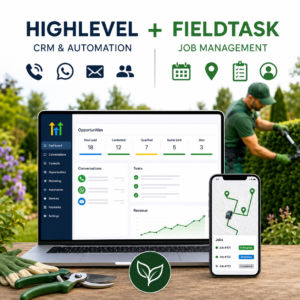
It can.

The more important question is:

How do you maximise the chances of those bulk emails actually reaching the inbox?

I recently put together a proposal for a business that relies heavily on bulk email marketing.

Around 90–95% of its lead generation and re-engagement activity involves email, and it has a substantial database.

That made bulk email deliverability one of the most important considerations when looking at moving the business from Keap to HighLevel.

And during that process, I discovered something about HighLevel that I hadn’t previously fully appreciated.

HighLevel gives us a surprisingly sophisticated set of tools for managing bulk email deliverability.

We’re not simply talking about creating an email campaign and pressing Send.

HighLevel gives bulk email senders access to:

  • Dedicated sending domains
  • Multiple sending domains
  • Built-in email verification
  • Automated domain warm-up
  • Google Postmaster Tools
  • Microsoft SNDS for dedicated IP users
  • Domain and IP reputation monitoring
  • The option of a dedicated IP address for high-volume senders

For a business sending tens or hundreds of thousands of emails, these can become very important.

Bulk Email Sending Isn’t Just About How Many Emails You Can Send

This is perhaps the first thing we need to recognise.

Sending a bulk email campaign to 20,000, 50,000 or 100,000 contacts isn’t simply a case of pressing Send and assuming those emails will arrive in people’s inboxes.

Gmail, Yahoo, Outlook and other mailbox providers are constantly evaluating the reputation of the organisations, domains and IP addresses sending email.

They look at signals including:

  • Spam complaints
  • Bounces
  • Authentication
  • Sending patterns
  • Recipient engagement
  • Domain reputation
  • IP reputation
  • Unsubscribe behaviour

A business can therefore have a perfectly legitimate database and still find that its bulk emails increasingly end up in spam if its sending reputation deteriorates.

I’ve previously written about why HighLevel emails can end up in spam, including the importance of authentication, reputation and database quality.

The larger your bulk email database and sending volume, the more seriously I think you need to take this.

Can HighLevel Be Used for Bulk Email?

Yes.

HighLevel can be used for bulk email campaigns, but the interesting question for me isn’t simply whether HighLevel can technically send tens or hundreds of thousands of emails.

There are plenty of email marketing platforms capable of doing that.

What’s more interesting is the infrastructure HighLevel gives us to manage bulk email sending and deliverability.

That includes email verification before sending, dedicated sending domains, multiple sending domains, automated domain warm-up, database segmentation, Google Postmaster monitoring and, for appropriate high-volume senders, dedicated IP addresses and Microsoft SNDS monitoring.

For businesses comparing HighLevel with platforms such as Keap, Mailchimp, ActiveCampaign or HubSpot for bulk email marketing, I think these are important capabilities to understand.

What Is the Significance of 5,000 Bulk Emails Per Day?

You’ll often see the figure 5,000 emails per day mentioned when discussing bulk email deliverability.

But it needs some explanation.

Google considers organisations sending around 5,000 or more messages to personal Gmail accounts within 24 hours to be bulk senders.

Bulk senders have additional requirements around authentication, spam rates and unsubscribing.

But there’s an important detail.

Google calculates this using the primary domain.

So sending 2,500 emails from one subdomain and another 2,500 from another subdomain of the same primary domain doesn’t mean you’ve avoided the 5,000 threshold.

And once Google has classified a domain as a bulk sender, that classification doesn’t simply disappear because you subsequently reduce the volume.

So I don’t think businesses should approach multiple sending domains as a clever way of staying “under Google’s radar”.

That’s the wrong objective.

Instead, bulk email senders should be asking:

How can we build an email infrastructure that supports larger volumes while protecting and monitoring our sending reputation?

That’s where HighLevel gets interesting.

HighLevel Can Use Multiple Dedicated Sending Domains

HighLevel allows dedicated sending domains to be configured rather than relying entirely on generic shared email infrastructure.

That immediately gives us more control over our sending reputation.

HighLevel can also accommodate multiple dedicated domains.

This gives businesses much greater flexibility over how different types of email communication are handled.

For example, you might want to separate:

  • Marketing broadcasts
  • Automated nurture emails
  • Appointment confirmations and reminders
  • Transactional communications

HighLevel even allows multiple dedicated domains to be assigned specifically to Calendar emails, with percentage-based distribution available across those domains.

That’s interesting because an appointment reminder saying “Your appointment is tomorrow at 10am” is commercially very different from a marketing broadcast.

Protecting the deliverability of those important operational emails makes sense.

Your Main Business Domain Is an Asset

Your primary domain is more important than many businesses realise.

If your website is company.co.uk and your employees communicate using name@company.co.uk, the reputation associated with that domain matters.

You therefore don’t necessarily want years of indiscriminate high-volume email marketing damaging the reputation associated with your everyday business communications.

HighLevel recommends using a dedicated sending subdomain for email marketing.

For example:

mail.company.co.uk

or

updates.company.co.uk

This creates some separation between your sending infrastructure and your everyday business email.

However, remember the point about Google’s bulk-sender rules.

Google still considers subdomains when assessing the primary domain’s overall bulk-sender status.

So subdomains provide useful infrastructure and reputation management benefits, but they aren’t a loophole around Gmail’s requirements.

Authentication Is Essential

Creating a dedicated sending domain isn’t enough.

It needs to be properly authenticated.

That means understanding three important acronyms.

SPF

SPF identifies which servers are authorised to send email on behalf of your domain.

DKIM

DKIM cryptographically signs your emails, helping receiving systems verify that the message genuinely came from an authorised sender and hasn’t been altered.

DMARC

DMARC builds on SPF and DKIM and tells receiving systems what to do when authentication fails.

For businesses sending at scale, these are no longer obscure technical extras.

They’re fundamental parts of email deliverability.

Google’s requirements for bulk senders include SPF, DKIM and DMARC, along with other requirements such as one-click unsubscribe for marketing messages.

If you’d like more background on setting up email correctly, I’ve covered related issues in my article on HighLevel email deliverability.

Clean Your Email List Before You Send

There’s another important part of email deliverability that HighLevel can help with: email verification.

Before sending a large campaign, particularly to an older database, you want to know whether the email addresses you’re about to contact are actually valid.

People change jobs. Companies close. Domains expire. Email addresses get mistyped.

An email database that was clean two years ago may contain a significant number of invalid addresses today.

Sending thousands of emails to invalid addresses creates bounces, and high bounce rates aren’t good for your sending reputation.

Traditionally, I might have exported the database from the CRM, uploaded it into a specialist email verification service, cleaned the list and then imported the results back into the CRM.

There are a number of well-known services in this market, including:

  • NeverBounce
  • ZeroBounce
  • BriteVerify
  • Kickbox
  • EmailListVerify
  • Emailable
  • Verifalia
  • Clearout

These services still have their place, particularly where you need specialist list-cleaning functionality.

But HighLevel has email verification built directly into LC Email.

That means email addresses can be verified without exporting your customer database into another system simply to clean it before a campaign.

At the time of writing, HighLevel charges $2.50 per 1,000 email verifications.

HighLevel can also be configured to re-verify email addresses every 90 days.

I particularly like this.

An email address that passed verification six months ago isn’t necessarily still valid today.

For me, however, the bigger benefit isn’t simply the price.

It’s that list hygiene can become part of the email process inside the CRM:

Database → Verify → Segment → Send → Monitor

rather than:

Database → Export → Third-party verification tool → Download → Re-import → Send

That’s one less integration and one less opportunity for something to go wrong.

And importantly, email verification and email warm-up solve two different problems.

Verification protects the quality of the database you’re sending to.

Warm-up protects and develops the reputation of the domain you’re sending from.

For serious email marketing, you really need to think about both.

HighLevel Has Built-In Email Domain Warm-Up

This was another feature I hadn’t fully appreciated until I started researching the email infrastructure for this project.

HighLevel has a built-in domain warm-up system for dedicated sending domains.

The principle behind warming a domain is fairly straightforward.

Imagine registering a brand-new sending domain today and immediately attempting to send 50,000 marketing emails from it tomorrow.

Gmail, Outlook and Yahoo have virtually no history for that domain.

Suddenly seeing tens of thousands of messages coming from it isn’t necessarily a great trust signal.

Instead, we want to gradually establish a sending history.

HighLevel’s current fixed-stage warm-up model progressively increases sending volume through these stages:

1,000 → 2,500 → 5,000 → 6,500 → 8,000 → 10,000 → 14,000 → 20,000 → 25,000 → 35,000 → 50,000 → 80,000 → 125,000 → 175,000 → 250,000 emails per day

For newly created dedicated sending domains, HighLevel automatically enables the warm-up process once the domain has been created and verified.

That’s a significant deliverability feature to have built directly into the CRM.

Could You Warm a New Domain in Two Phases?

For a business where email is particularly important, I would consider going a stage further.

Rather than creating a new sending domain and immediately beginning marketing broadcasts, you could consider a two-phase warm-up strategy.

Phase 1: Pre-Warm the New Domain

As an optional additional precaution, you could investigate using a specialist email warm-up service before putting the domain into normal marketing use.

Popular services in this area include:

  • EmailWarmup.com
  • Warmup Inbox
  • Mailreach
  • Warmbox
  • TrulyInbox
  • Folderly

These services use different techniques, so I wouldn’t automatically recommend one simply because it’s described as an email warm-up service.

I’d want to understand exactly how it operates and whether its approach is appropriate for the domain and sending infrastructure involved.

Think of this first phase as an optional pre-warm, rather than something HighLevel requires.

Phase 2: Move Into HighLevel’s Warm-Up Process

The second phase is where we start sending genuine emails through HighLevel.

HighLevel’s built-in warm-up process then provides a structured way of gradually increasing real sending volumes rather than immediately hitting the database with a massive broadcast.

And I’d be quite selective about who receives those first emails.

I’d start with the people most likely to engage:

Recent customers → Recent enquiries → Recent email clickers → Older engaged contacts → Wider database

Good HighLevel database management and segmentation becomes particularly important here.

Spam complaints, bounces and consistently ignored emails can be negative signals.

So your best contacts should generally be introduced first before you start sending to older and potentially less engaged sections of the database.

If you’re considering genuinely cold outreach rather than emailing an opted-in marketing database, that’s a different subject. I’ve written separately about sending cold emails with HighLevel.

Postmaster Tools Changes the Game

This was probably one of the most interesting things I discovered while researching this project.

Inside HighLevel, under Settings → Email Services → Postmaster Tools, we can access deliverability information from both:

  • Google Postmaster Tools
  • Microsoft SNDS, Smart Network Data Services

This is important because we’re no longer simply looking at whether HighLevel says an email was sent or delivered.

We’re getting information from two of the world’s biggest mailbox providers about how they view our email infrastructure.

Google Postmaster Tools

Google Postmaster Tools gives email senders visibility into how Gmail views their sending infrastructure.

That includes information about:

  • Domain reputation
  • IP reputation
  • User-reported spam
  • Authentication
  • Encryption
  • Delivery errors
  • Compliance

HighLevel can pull this information directly into the platform.

That gives us an opportunity to spot a problem before it becomes a much bigger deliverability issue.

Microsoft SNDS

For businesses using a dedicated IP address, HighLevel also integrates with Microsoft’s Smart Network Data Services, SNDS.

Microsoft SNDS provides information about how your dedicated sending IP is performing across Microsoft’s email platforms, including Outlook and Hotmail.

HighLevel can show information including:

  • IP filtering results
  • Whether the IP has been blocked
  • Spam complaint rates
  • Spam trap hits
  • Sending activity
  • Detailed IP health information

Spam traps are particularly interesting.

These are email addresses used by mailbox providers and anti-spam organisations to identify poor-quality or badly maintained mailing lists.

If your emails start hitting spam traps, that’s a warning sign that you need to investigate your database quality and how those contacts entered your CRM.

Google + Microsoft Gives Us a Much Bigger Picture

With Google Postmaster Tools, we can monitor how Gmail views our sending.

With Microsoft SNDS, dedicated IP users can monitor what’s happening with Outlook and Hotmail.

So instead of email deliverability being something largely invisible, we can start actively monitoring it from inside HighLevel.

Keep Spam Complaints Extremely Low

Google recommends keeping user-reported spam rates below 0.1% and avoiding ever reaching 0.3% or higher.

At a 0.1% complaint rate, that’s just:

10 spam complaints from 10,000 inbox-delivered emails.

At 0.3%, it’s:

30 complaints from 10,000.

That’s why segmentation, database hygiene and sending relevant emails matter so much.

Don’t Treat Every Contact Equally

Recently Engaged Contacts

People who have recently clicked, replied, enquired or purchased.

Older but Previously Engaged Contacts

These may still be valuable, but I would treat them more cautiously.

Long-Term Unengaged Contacts

These are potentially the highest-risk group.

A database containing 100,000 contacts isn’t necessarily more valuable than a clean and engaged database containing 30,000.

I’ve covered some of this in my HighLevel Simple Email Marketing Workshop and my article about using tags to segment HighLevel email campaigns.

What About a Dedicated IP Address?

Once you start getting into serious email volumes, there’s another part of the infrastructure worth considering.

A dedicated IP address.

Normally, email platforms can send messages using infrastructure shared between multiple customers.

A dedicated IP means the IP used for your email sending is exclusive to you.

The advantage is control.

Your IP reputation isn’t being influenced by unrelated organisations sharing the same IP.

But there’s an important flip side.

You become responsible for building and maintaining that IP’s reputation.

A dedicated IP isn’t automatically a shortcut to better deliverability.

HighLevel currently suggests considering a dedicated IP when sending hundreds of thousands to millions of emails per month, particularly above around 200,000 emails.

For a smaller sender, shared infrastructure with an established reputation may actually make more sense.

For a business sending consistently at significant scale, however, a dedicated IP provides another level of control.

With a dedicated IP, HighLevel gives us both Google Postmaster data and Microsoft SNDS data, providing much greater visibility into how our sending infrastructure is performing across Gmail, Outlook and Hotmail.

Multiple Domains Also Give Us More Control

Suppose you’re operating multiple properly configured sending domains and the reputation associated with one begins to deteriorate.

If you’re monitoring the data, you have an opportunity to investigate.

Perhaps a particular campaign generated an unusually high number of spam complaints.

Perhaps an old database segment was used.

Perhaps bounce rates suddenly increased.

Perhaps authentication has failed.

The important point isn’t that you simply switch domains whenever there’s a problem.

That would just move bad sending practices somewhere else.

The objective is to identify the cause, fix it and protect the reputation of your email infrastructure.

Email Deliverability Should Be Managed, Not Assumed

For years, I’ve tended to think about email marketing primarily from a marketing perspective:

  • Who are we sending to?
  • What’s the subject line?
  • What’s the offer?
  • What’s the call to action?
  • When should we send it?

Those things still matter.

But with a large database, there’s another question that arguably comes before all of them:

Will the email actually reach the inbox?

And increasingly, I think we need to think about the complete process:

Database → Verification → Segmentation → Authentication → Sending domain → Warm-up → Campaign → Deliverability → Monitoring → Engagement

This Is Where HighLevel Surprised Me

I’ve worked with email marketing and CRM systems for many years, including a long time working with Infusionsoft and Keap.

I’ve also been writing about email deliverability since my Keap and Infusionsoft days.

What has surprised me while researching this particular project is the amount of email infrastructure HighLevel now exposes to us.

HighLevel isn’t simply giving us an email campaign builder.

We can:

  1. Verify email addresses before sending.
  2. Automatically re-verify addresses as the database gets older.
  3. Configure dedicated sending domains.
  4. Use multiple sending domains.
  5. Warm new domains gradually.
  6. Segment our database so we start with our most engaged contacts.
  7. Connect Google Postmaster Tools.
  8. For dedicated IP users, connect Microsoft SNDS.
  9. Monitor domain reputation, IP reputation, spam rates, spam traps and authentication.
  10. Investigate problems before simply continuing to send.
  11. Move to a dedicated IP when our sending volume justifies it.

Individually, none of these features is revolutionary.

Put them together inside the same CRM, however, and you start to have something much more interesting.

For businesses where email represents a major source of leads and sales, these aren’t obscure technical features.

They can become commercially important.

Because the question isn’t simply:

“Can my CRM send 50,000 emails?”

Most email marketing platforms can send large volumes.

The much better question is:

“How many of those emails are actually going to reach the inbox, and will we know when our reputation starts deteriorating?”

Frequently Asked Questions About HighLevel Bulk Email

Can HighLevel send bulk emails?

Yes. HighLevel can be used to send bulk email campaigns to large contact databases. Businesses sending at scale should pay particular attention to email verification, authentication, sending-domain reputation, warm-up, segmentation and spam complaints rather than focusing solely on the number of emails the platform can technically send.

Is HighLevel suitable for high-volume email marketing?

Potentially, yes. HighLevel provides dedicated sending domains, automated domain warm-up, built-in email verification, Google Postmaster integration and dedicated IP options. For dedicated IP users, Microsoft SNDS provides additional visibility into Microsoft’s email network.

How many bulk emails can I send with HighLevel?

HighLevel’s domain warm-up system progressively increases the permitted daily sending volume of a new dedicated sending domain. The current warm-up stages eventually reach 250,000 emails per day.

That doesn’t mean every business should aim to send 250,000 emails per day. Appropriate sending volume depends on factors including database quality, engagement, domain reputation, authentication and spam complaint rates.

Does HighLevel verify email addresses before bulk sending?

HighLevel has email verification built into LC Email. This means businesses can verify addresses without necessarily exporting their database to third-party email verification services such as NeverBounce, ZeroBounce, BriteVerify, Kickbox or Emailable.

Does HighLevel warm up new email sending domains?

Yes. HighLevel has a built-in fixed-stage domain warm-up system for new dedicated sending domains.

Can I monitor HighLevel bulk email deliverability?

Yes. HighLevel integrates with Google Postmaster Tools, giving you visibility into important Gmail deliverability information.

For businesses using a dedicated IP address, Microsoft SNDS provides additional information about IP performance across Microsoft’s email infrastructure, including Outlook and Hotmail.

Should I use a dedicated IP for HighLevel bulk email?

Not necessarily.

A dedicated IP gives a high-volume sender greater control over its own IP reputation, but it also means you’re responsible for building and maintaining that reputation.

For smaller or inconsistent sending volumes, established shared infrastructure may be more appropriate. As your bulk email volumes increase into hundreds of thousands of emails per month, a dedicated IP becomes something worth considering.

HighLevel Bulk Email Deliverability Should Be Managed, Not Assumed

If you’re considering HighLevel for bulk email marketing, I’d look beyond the question of how many emails the software allows you to send.

The more important questions are:

  • Are the email addresses valid?
  • Is the sending domain properly authenticated?
  • Has the domain been warmed?
  • Are we sending first to the most engaged parts of the database?
  • What’s our spam complaint rate?
  • What’s happening to our domain reputation?
  • Do we have visibility across Gmail, Outlook and Hotmail?
  • At our volume, should we consider a dedicated IP?

HighLevel gives us an increasingly comprehensive set of tools for answering those questions.

And that’s why I think the conversation around HighLevel and bulk email shouldn’t simply be:

“How many emails can HighLevel send?”

It should be:

“How do we build and manage a HighLevel bulk email infrastructure that gives those emails the best possible chance of reaching the inbox?”

For a business where bulk email is responsible for a significant proportion of leads and sales, that’s a much more important question.

Julian Mills HighLevel Consultant and Marketing Automation Strategist

About the Author

Julian Mills

HighLevel Consultant & Marketing Automation Strategist

Julian Mills helps business owners automate lead generation, sales follow-up, customer communication and business processes using HighLevel and MarketerM8. Since 2009 he has helped businesses implement CRM, marketing automation and AI-powered systems that save time, improve customer experience and generate more sales.

About Julian
Book a Discovery Call
Join a Free HighLevel Workshop
Learn About HighLevel with MarketerM8

CRM & Field Service Software for Gardeners: HighLevel + FieldTask

CRM & Business Management Software for Gardeners HighLevel + FieldTask

CRM & Business Management Software for Gardeners HighLevel + FieldTaskIf you run a gardening, lawn care or landscaping business, there’s a good chance you spend most of your working day nowhere near a desk.

You’re cutting hedges, mowing lawns, designing gardens, laying patios, supervising landscaping projects or driving between customers.

But while you’re doing the work, somebody still needs to answer new enquiries, book site visits, chase quotations, keep customers informed, organise jobs, collect payments and ask for reviews.

Increasingly, technology can take care of much of this.

For gardening and landscaping businesses, I think the combination of HighLevel and FieldTask is particularly interesting.

Put simply:

HighLevel helps you win the customer and manage the customer relationship.

FieldTask helps you manage and deliver the work in the field.

And if you’re a garden designer, specialist garden design software such as SketchUp or Vectorworks can continue to handle the actual design work.

Let’s look at how the pieces fit together.

What is the best CRM for a gardening business?

There are plenty of CRM systems capable of storing a customer’s name, telephone number and email address.

But I’d argue that isn’t really the question a modern gardening business should be asking.

The better question is:

What can my CRM actually do for me?

For example, can it:

  • Capture new enquiries automatically?
  • Answer the telephone when I’m out working?
  • Manage WhatsApp conversations?
  • Send emails and text messages?
  • Ask customers for photographs?
  • Book site visits?
  • Remind customers about appointments?
  • Manage a sales pipeline?
  • Send and follow up estimates?
  • Take payments?
  • Request Google reviews?
  • Reactivate previous customers?
  • Automate repetitive administration?

This is where HighLevel becomes much more interesting than a simple customer database.

HighLevel brings CRM, sales, marketing, communications and automation together within one platform.

For a gardening or landscaping business, that means a new enquiry can become the start of an organised process rather than simply another email sitting in an inbox.

HighLevel for gardeners, landscapers and lawn care businesses

The ideas in this article could apply to all sorts of businesses, including:

  • Gardeners
  • Garden maintenance companies
  • Lawn care businesses
  • Landscapers
  • Garden designers
  • Grounds maintenance companies
  • Hedge cutting businesses
  • Fencing contractors
  • Patio and paving companies
  • Decking installers
  • Commercial grounds maintenance businesses
  • Tree and shrub maintenance businesses

Obviously, they don’t all need exactly the same system.

Someone looking for a £50 garden tidy-up requires a very different process from someone considering a £20,000 garden redesign.

That’s one of the strengths of using a CRM and automation platform such as HighLevel.

You can build different customer journeys for different types of work.

Imagine this happening while you’re cutting somebody else’s hedge

Let’s imagine Sarah is looking for a local landscaping company to redesign her garden.

She finds you on Google and calls.

Unfortunately, you’re halfway through an on site visit with a client.

You can’t hear your phone, never mind answer it.

Traditionally, Sarah has two choices.

  1. She leaves a voicemail and hopes you’ll call her back some time in the future.
    OR
  2. She goes back to Google and calls the next landscaping company – and if they pick up the chances are you have lost the business already.

There’s now another option.

Let HighLevel Voice AI answer the phone

HighLevel’s Voice AI can act as an AI receptionist for your gardening business.

Rather than every unanswered telephone call going to voicemail, an AI agent can answer and have a conversation with the caller.

It can answer questions, collect information, qualify enquiries and even book an appointment in your calendar.

So while you’re working in one customer’s garden, your business can still be dealing with the next potential customer.

Sarah could explain that she’s interested in having her back garden redesigned.

The Voice AI receptionist could collect information such as:

  • Her name
  • Telephone number
  • Email address
  • Address
  • Type of work required
  • Approximate scope of the project
  • Book a consultation

That information can become part of Sarah’s record within HighLevel.

The enquiry hasn’t simply been answered.

It has entered your sales process.

For me, this is one of the most practical uses of AI for gardeners, landscapers and other tradespeople.

AI isn’t replacing the gardener.

It’s dealing with an administrative problem that occurs precisely because the gardener is busy gardening.

Move the conversation onto WhatsApp

Gardening and landscaping are incredibly visual businesses.

Suppose someone phones and says:

“I’ve got a large hedge that needs cutting back.”

Your next question is probably going to be:

“How large?”

Rather than immediately arranging a site visit, wouldn’t it be useful to see it?

This is where the WhatsApp add-on within HighLevel becomes particularly valuable.

The customer could receive a WhatsApp message asking them to send some photographs.

For example:

“Thanks for getting in touch. Could you send us a couple of photos of the hedge and surrounding area so we can see what’s involved?”

This could save a completely unnecessary journey.

WhatsApp can then become part of the wider customer relationship.

You could use it for:

  • Requesting photographs
  • Confirming site visits
  • Appointment reminders
  • Quote follow-up
  • Answering questions
  • Advising customers of delays
  • Weather-related changes
  • Keeping customers informed during projects
  • Payment reminders
  • Review requests
  • Seasonal garden maintenance campaigns

There’s an important point here.

Automation doesn’t have to mean removing the human conversation.

A workflow might start the communication automatically. Once the customer replies, you or someone in your team can continue the conversation.

HighLevel has also expanded the relationship between Voice AI and WhatsApp. An AI voice agent can send an approved WhatsApp message during a telephone conversation.

That could mean sending a booking link or other useful information to the caller while they’re still speaking to your AI receptionist.

Telephone, AI, WhatsApp and CRM can therefore start working together rather than operating as separate systems.

Create a proper sales pipeline for gardening enquiries

This is where a CRM for gardeners becomes much more valuable than keeping names in your phone.

You can create a visual sales pipeline showing exactly where every enquiry sits.

For a landscaping company, that might look something like:

New Enquiry → Information Required → Photos Received → Site Visit Booked → Quote Required → Quote Sent → Follow-Up → Quote Accepted → Job Scheduled → Work Completed → Paid

A lawn care business might have a much simpler process.

A garden designer handling large projects might have additional stages for design consultations, proposals and project approvals.

The important thing is that enquiries aren’t relying on somebody remembering what needs to happen next.

Stop forgetting to follow up quotes

This must be one of the biggest leaks in many small service businesses.

You visit the customer.

You spend time working out the price.

You prepare the quotation.

You send it.

Then you get busy.

A week later, you suddenly think:

“Whatever happened to that quote?”

By then, the customer may have chosen somebody else.

HighLevel workflows can automate the follow-up.

For example:

Day 0: Quote sent.

Day 2: Check the customer received it.

Day 5: Ask whether they have any questions.

Day 10: Send another polite follow-up if they still haven’t made a decision.

This doesn’t need to become an aggressive sales sequence.

It’s simply making sure potential work doesn’t disappear because everyone got busy.

Estimates, deposits and payments

For larger landscaping and garden design projects, getting the customer to say yes is only part of the process.

You may require a deposit before committing materials or labour.

Larger projects may involve staged payments.

HighLevel includes estimates, invoicing and payment functionality, allowing the commercial side of the job to remain connected to the customer and opportunity.

For example, a landscaping project might operate on:

20% deposit on acceptance

40% before work commences

40% on completion

Your actual payment terms will obviously depend on your business and project.

The benefit is that the customer, opportunity, estimate and payment process can be connected rather than living in completely separate systems.

But HighLevel is not gardening job management software

This distinction is important.

HighLevel is strong at:

CRM + sales + communication + marketing + automation.

But that’s different from managing multiple gardeners, vans and jobs out in the field.

As a business grows, different questions start appearing.

Who’s doing Mrs Jones’s garden tomorrow?

Which van are they using?

What jobs does Team Two have this afternoon?

Has the operative arrived?

How long did the job take?

What work needs completing?

What’s the most efficient route between today’s jobs?

That’s specialist field service management.

And that’s where FieldTask comes in.

FieldTask: job management software designed for HighLevel

FieldTask is a field service management system designed specifically to work with HighLevel.

Rather than trying to turn HighLevel itself into field service software, FieldTask adds the operational tools required to manage work out in the field.

Its integration with HighLevel allows information to move between the two platforms, connecting the customer journey with delivery of the job.

For gardening and landscaping companies, that creates a useful division of responsibilities.

HighLevel manages the customer journey

HighLevel can handle areas such as:

  • New leads
  • CRM
  • Website enquiries
  • Telephone calls
  • Voice AI receptionist
  • WhatsApp
  • SMS
  • Email
  • Appointment booking
  • Sales opportunities
  • Sales pipelines
  • Estimates
  • Quote follow-up
  • Payments
  • Reviews
  • Marketing automation
  • Customer reactivation

FieldTask manages the work in the field

FieldTask adds field-service functionality such as:

  • Job scheduling
  • Dispatch
  • Work orders
  • Team assignments
  • GPS tracking
  • Route optimisation
  • Job execution
  • Timesheets
  • Mobile field access
  • Job information
  • Invoicing

This is why I find the combination so interesting.

HighLevel manages the customer. FieldTask manages the job.

What about Jobber, ServiceM8, Fergus and other gardening CRM systems?

If you’ve been searching for the best CRM for gardeners, lawn care software, landscaping CRM or garden maintenance software, you’ll probably have encountered several other platforms.

Rather than comparing them feature-by-feature, it’s more useful to understand the category they sit in.

Most of these systems are primarily built around job management and field operations, scheduling work, managing teams, quoting, invoicing and tracking delivery.

Examples include:

  • Jobber
  • ServiceM8
  • Fergus
  • Arborgold
  • LMN
  • Yardbook
  • RealGreen
  • Service Autopilot
  • Aspire

These are all operational tools, but they are fundamentally focused on running the work once it’s been won.

HighLevel approaches the problem from the opposite direction.

It focuses on winning the work in the first place and managing the customer relationship around it.

So rather than thinking of them as direct replacements, it’s more accurate to think of them as different layers of the same business:

  • HighLevel = leads, marketing, communication and CRM
  • Field systems = scheduling, jobs, delivery and operations

And in many cases, they can work alongside each other rather than competing.

HighLevel vs specialist landscaping CRM software

Perhaps the easiest way to understand all these products is to divide the software into three categories.

1. Winning and managing the customer

This is where I see HighLevel.

It can manage:

Lead → Telephone Call → Voice AI → CRM → WhatsApp → Appointment → Sales Pipeline → Quote Follow-Up → Payment → Review → Reactivation

2. Managing and delivering the gardening job

This is where products such as Jobber, ServiceM8, Fergus, Aspire, LMN, Arborgold, Yardbook and Service Autopilot become relevant.

And if you want the field-service platform to work particularly closely with HighLevel, FieldTask has been designed specifically for this purpose.

3. Designing the garden

This is a completely different software category.

If you need to produce professional garden plans, planting schemes or 3D visualisations, you should be looking at specialist garden and landscape design software.

Which brings us to another important distinction.

Is HighLevel garden design software?

No.

If you searched Google for garden design software, landscape design software or 3D garden design software and found this article, HighLevel probably isn’t the software you’re looking for to actually draw the garden.

HighLevel isn’t CAD software.

It isn’t intended for creating planting plans, 2D garden layouts, 3D visualisations, terrain models or professional landscape drawings.

There are specialist products for that.

Popular garden and landscape design software includes:

  • SketchUp
  • Vectorworks Landmark
  • PRO Landscape
  • Realtime Landscaping

These products are designed to help with the actual visual and technical design of gardens and landscapes.

HighLevel solves a different problem.

Garden design software helps you design the garden.

HighLevel helps you win and manage the customer.

FieldTask helps you manage delivering the job.

For a professional garden designer, those systems can complement each other.

Your process might look like:

Enquiry → HighLevel CRM → Consultation → Photos → Site Visit → Proposal → Deposit → Garden Design Software → Project Approval → FieldTask → Completion → Review

Potential clients often come to me looking for an all in one software. Unfortunately that does not exist. It is much better to pick the best system to do the job – providing it has the capability to “talk” to other systems. After all – would you ask your accountant to start laying turf? There’s no “jack of all trades” software that can do a really job job of everything.

It’s much better to use the right tool for the right job, provided the overall customer journey works together.

What could an automated gardening business actually look like?

Let’s return to Sarah and her garden redesign.

1. Sarah finds you on Google

She visits your website and decides to call.

2. Voice AI answers

You’re out working, so HighLevel’s AI receptionist answers Sarah’s call.

3. Her details enter the CRM

HighLevel creates or updates Sarah’s customer record and the enquiry enters your landscaping sales pipeline.

4. Sarah receives a WhatsApp message

She is asked to send photographs of the existing garden.

5. You qualify the enquiry

After reviewing the photographs, you decide that a site visit is appropriate.

6. The site visit is booked

Sarah receives confirmation and automated reminders.

7. You prepare the quote

The opportunity moves through the appropriate stages of your pipeline.

8. HighLevel follows up

If Sarah doesn’t respond immediately, the system makes sure the quotation isn’t forgotten.

9. Sarah accepts and pays her deposit

The project becomes a confirmed job.

10. FieldTask manages delivery

The appropriate team, job and schedule can now be managed operationally.

11. Sarah is kept informed

HighLevel continues handling relevant customer communications.

12. The work is completed

FieldTask manages the operational side while the customer record remains connected to HighLevel.

13. Final payment is collected

The commercial process is completed.

14. Sarah receives a review request

HighLevel asks her to leave a Google review.

15. Sarah remains a customer

Perhaps next spring she receives a relevant message about ongoing garden maintenance.

That’s the bigger picture.

The CRM isn’t simply storing Sarah’s telephone number. It’s helping move her through an entire customer journey.

Lawn care and recurring garden maintenance software

The opportunity becomes even more interesting for businesses offering recurring services.

Lawn care, garden maintenance and commercial grounds maintenance aren’t necessarily one-off purchases.

Customers might need visits:

  • Weekly
  • Fortnightly
  • Monthly
  • Quarterly
  • Seasonally

That changes the economics of acquiring a customer.

Someone who initially asks for a one-off garden tidy could become a regular maintenance customer.

A lawn care customer could later need hedge cutting.

A landscaping customer might want ongoing maintenance after the project is completed.

The CRM allows you to think about the lifetime value of that customer, rather than treating every job as an isolated transaction.

Use your customer database to generate seasonal gardening work

Gardening is naturally seasonal.

That creates an excellent opportunity for customer reactivation.

Instead of continually paying Google or Facebook to find people who have never heard of you, you can communicate with previous customers who already know your business.

For example:

Spring

“Would you like us to get your garden ready for spring?”

Early summer

“Would you like to restart your regular lawn maintenance?”

Late summer

“Do your hedges need cutting back?”

Autumn

“Would you like us to prepare your garden for winter?”

Different gardening businesses will have different seasonal opportunities.

The principle is the same.

Your existing customer database should be an asset.

HighLevel gives you the tools to actually use it.

Automated reminders can prevent wasted journeys

Imagine driving across town only to discover you can’t get into the customer’s garden.

That’s frustrating and expensive.

HighLevel can automate reminders before appointments.

A simple SMS or WhatsApp message might say:

“Just a reminder that we’re due to visit tomorrow. Please make sure we can access the rear garden.”

You might also remind customers to unlock gates, move vehicles or ensure pets are inside.

They’re tiny administrative jobs.

But automating lots of tiny jobs can make a significant difference.

What happens when the British weather intervenes?

Unfortunately, no CRM can stop it raining.

Gardening, lawn care and landscaping businesses are inevitably affected by weather.

Heavy rain, frozen ground, storms or high winds can disrupt the schedule.

Software won’t remove that problem.

It can, however, make communicating with affected customers much easier.

Rather than manually hunting down telephone numbers, affected customers can be moved into the appropriate communication workflow.

They could receive a message explaining that the work needs to be rearranged and what will happen next.

Again, the objective isn’t automation for automation’s sake.

It’s reducing administration when you’ve already got a disrupted working day to reorganise.

Automatically ask gardening customers for Google reviews

Google reviews are particularly important for local service businesses.

Someone searching for a gardener, lawn care company or landscaper is likely to look at what previous customers have said.

The problem is that asking for reviews is easy to forget.

HighLevel’s reputation management functionality allows the review request to become part of your normal process.

When the job reaches the appropriate stage, the customer can automatically receive a review request.

Instead of remembering to ask occasionally, your system can consistently help build your online reputation.

Do I need HighLevel if I already use SketchUp or Vectorworks?

Potentially, yes, because they solve completely different problems.

SketchUp or Vectorworks Landmark might help you produce a fantastic garden design.

But they don’t necessarily solve the problem of what happens when a potential £10,000 customer phones while you’re standing in somebody else’s garden.

That’s where HighLevel comes in.

HighLevel can manage:

Enquiry → Communication → Consultation → Opportunity → Quote → Follow-Up → Payment → Review → Future Marketing

Your specialist garden design software continues doing what it does best.

Can HighLevel work for a lawn care business?

Yes.

In fact, lawn care is an interesting use case because customers are frequently recurring rather than one-off.

A lawn care CRM could help manage new enquiries, quotations, recurring communication, reminders, customer reactivation and reviews.

As the business grows and multiple teams are carrying out work, FieldTask can provide the field-service and job-management layer.

Can HighLevel work for garden designers?

Yes.

But HighLevel doesn’t replace specialist garden design software.

A garden designer could use HighLevel for:

  • Lead management
  • Initial qualification
  • Consultations
  • Appointment booking
  • Customer communication
  • WhatsApp
  • Proposals and estimates
  • Follow-up
  • Payments
  • Reviews
  • Marketing

Then continue using specialist software such as SketchUp, Vectorworks Landmark, PRO Landscape or Realtime Landscaping for the actual design work.

Can AI answer calls for a gardening business?

Yes.

HighLevel Voice AI can answer incoming telephone calls and be configured to have conversations with prospective customers.

For gardeners and landscapers, I think this is particularly useful because the people best qualified to answer an enquiry are frequently the same people physically out doing the work.

You’re not employing AI because you don’t want to speak to customers.

You’re using it because you can’t answer a telephone while operating a mower, cutting a hedge or talking to another customer.

Can gardeners use WhatsApp with HighLevel?

Yes.

WhatsApp is available as an additional communication option within HighLevel.

For gardening businesses, I think it is especially useful because of the visual nature of the work.

Customers can communicate with you through a channel they’re already familiar with while the conversation remains connected to the wider CRM process.

That makes WhatsApp much more than another way to send the occasional message.

It can become an important part of the customer journey.

What job management software works with HighLevel?

FieldTask has been specifically designed as field service management software for HighLevel.

It provides functionality that isn’t HighLevel’s primary purpose, such as job scheduling, dispatch, work orders, GPS tracking, routes and field-team management.

For a growing gardening, landscaping or grounds maintenance business, the combination is worth investigating.

And if you want to use another software then provided it can “talk” to HighLevel via API / Webhooks or Zapier then it can be integrated.

Do I need FieldTask if I’m a sole gardener?

Not necessarily.

If you’re a sole gardener with a relatively straightforward diary, HighLevel alone may cover a significant amount of what you need.

Field service management becomes more important as operational complexity grows.

Once you’ve got multiple gardeners, several vehicles and numerous jobs happening every day, knowing who needs to be where and when becomes a much bigger problem.

That’s where specialist job management software becomes increasingly valuable.

Could HighLevel replace several systems in a gardening business?

Potentially.

A growing gardening company can gradually accumulate separate systems for:

  • CRM
  • Email marketing
  • SMS
  • WhatsApp
  • Telephone
  • Appointment booking
  • Forms
  • Website chat
  • Reviews
  • Sales pipelines
  • Automation
  • Estimates
  • Invoices
  • Payments
  • AI receptionist
  • Job management

HighLevel can potentially consolidate many of the customer-facing systems.

FieldTask then adds specialist field-service management.

A garden designer may still use specialist design software.

And that’s fine.

The objective isn’t necessarily to have one piece of software.

The objective is to avoid having ten disconnected systems when a smaller number of well-integrated platforms can provide a much better customer and staff experience.

From being a great gardener to running a great gardening business

This is perhaps the most important point.

Most gardeners and landscapers didn’t start their businesses because they love CRM systems.

They’re good at gardening, landscaping, lawn care or garden design.

But running the business brings a completely different set of responsibilities.

Calls need answering.

Enquiries need following up.

Quotes need chasing.

Customers need reminding.

Jobs need organising.

Payments need collecting.

Reviews need requesting.

Previous customers need remembering.

And far too much of that administration ends up happening in the evening after you’ve already spent all day doing the actual work.

Technology isn’t going to plant the shrubs, cut the lawn or lay the patio for you.

But it can increasingly take care of what happens around the job.

That’s where I see the real opportunity with HighLevel + FieldTask.

HighLevel helps you win and communicate with the customer.

FieldTask helps you organise and deliver the work.

Specialist garden design software helps you design the project when required.

And increasingly, AI can keep your business responsive even when you’re nowhere near a desk.

For a modern gardening, lawn care, garden design or landscaping business, that’s a pretty powerful combination.

Julian Mills HighLevel Consultant and Marketing Automation Strategist

About the Author

Julian Mills

HighLevel Consultant & Marketing Automation Strategist

Julian Mills helps business owners automate lead generation, sales follow-up, customer communication and business processes using HighLevel and MarketerM8. Since 2009 he has helped businesses implement CRM, marketing automation and AI-powered systems that save time, improve customer experience and generate more sales.

About Julian
Book a Discovery Call
Join a Free HighLevel Workshop
Learn About HighLevel with MarketerM8