
HighLevel for Removals Companies: CRM, Marketing and Business Growth

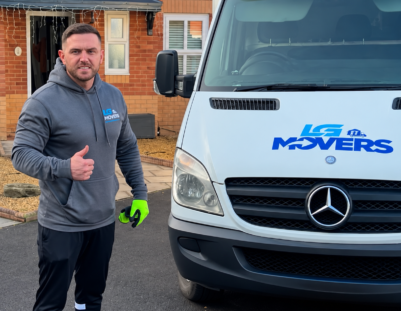
liam at LG Movers, Manchester
Liam Gilmore from LG Movers, Manchester

HighLevel, also known as GoHighLevel, can be used as a CRM and marketing automation platform for removals companies. It can help organise enquiries, follow up quotations, share WhatsApp conversations across a team, answer calls using Voice AI, collect payments and request reviews.

But rather than start with a software demonstration, let me explain how a furniture move sparked a conversation about growing a removals business.

A furniture move from Stockport to West Didsbury

Today I needed some furniture moving from Stockport to West Didsbury, Greater Manchester.

LG Movers came highly recommended, and that is how I encountered Liam Gilmore, the owner. From the outset, he was responsive, helpful and happy to answer our questions. On the day, he delivered a great service.

If you need furniture moving in the Manchester area, I can personally recommend Liam and LG Movers.

Being fairly hands-on, I jumped in to help carry the furniture.

During the move, I noticed Liam recording a video on his phone. He explained that it was for social media.

That made me suspect he was the owner. Here was someone doing the physical work while also thinking about how to promote the business.

As the morning progressed, we got chatting. Sure enough, Liam was the boss.

I mentioned that I work in marketing automation.

That description did not mean much to him initially. Fair enough. When you are busy running a removals company, “marketing automation” probably sounds less immediately useful than another pair of hands.

But when we started talking about leads, WhatsApp and missed calls, the conversation became much more relevant.

Great service generates referrals. Growth needs a consistent flow of enquiries

Liam explained that referrals bring him work.

That is a good starting point. My own booking was evidence that recommendations were working.

But he wants more leads to grow the business.

This is a familiar situation for small business owners. You deliver a good service. Customers recommend you. Yet the flow of new enquiries can still feel unpredictable.

For a removals company, several questions are connected:

  • How do more people discover you?
  • What happens when they enquire?
  • Who responds if the owner is busy?
  • Are quotations followed up?
  • Does each completed job create an opportunity for a review or referral?
  • How do you coordinate more work as the team grows?
  • How quickly do you collect payment?

A well-configured CRM can help organise these activities. HighLevel goes further by bringing customer management together with marketing, communications and automation.

However, the starting point should always be what the business needs.

Back to Liam, and the opportunities we discussed while moving furniture…

Turn social media posting into a system with HighLevel Social Planner

Liam was already creating content while doing his everyday work.

That is valuable. Real footage shows the people, care and effort behind the service. It gives prospective customers something more convincing than a generic photograph of a removal van.

The opportunity is to organise that content so posting becomes a manageable routine.

HighLevel’s Social Planner lets a business connect supported social accounts, prepare content and schedule posts through a shared calendar. Content can be prepared in batches and scheduled ahead, rather than relying on Liam finding time to publish between jobs.

For a removals company, that could include:

  • Videos from recent moves, with customer permission.
  • Packing and furniture protection tips.
  • Answers to common moving questions.
  • Introductions to the team.
  • Customer feedback and testimonials.
  • Advice about access, parking and moving-day preparation.

Liam could continue capturing the raw material. Another team member could help prepare and schedule the posts.

That turns an occasional activity into a systematic, scalable marketing process.

The business can maintain a consistent presence even when everyone is busy delivering the service.

Give that content a longer life on the website

Social media is useful, but a busy feed moves quickly.

A post can continue reaching people after publication. However, relying entirely on social media means relying on what the platform chooses to show people.

But having a website with useful website content creates another opportunity: being discovered when someone is actively looking for help.

Liam felt his website could be better. My suggestion was to make more use of the experience and content he was already collecting.

Our furniture move from Stockport to West Didsbury could become a short job story explaining what needed moving, how the team approached it and what the customer thought afterwards.

That gives the business something specific and credible to publish, supported by its own experience.

Build a new removals website with HighLevel AI Studio

Creating a better website does not necessarily mean commissioning an expensive development project.

Using AI Studio in HighLevel, Liam could describe the website he wants and use AI to build it himself. That could include a blog or content section for content, advice and job stories.

He would still need to check the details, wording, photographs and finished pages. AI can help with the build, but Liam’s knowledge is what would make the website useful.

The website could explain:

  • Which removals and furniture-moving services are available.
  • Which locations the business covers.
  • What information customers need to provide for a quotation.
  • How the team handles common moving challenges.
  • What previous customers say.
  • How to request a quote or start a WhatsApp conversation.

But the website itself is only the starting point.

What you publish on it gives people a reason to visit.

They Ask, You Answer: the book I recommend to my clients

There is a brilliant book I recommend to my clients: They Ask, You Answer by Marcus Sheridan.

Its approach centres on answering the questions customers actually ask, openly and helpfully.

For a removals business, that could mean publishing answers to questions such as:

  • How much does it cost to move furniture in Manchester?
  • Can you collect a single sofa or something bought on Facebook Marketplace?
  • What affects the price of a removal?
  • Do I need to dismantle furniture before collection?
  • What happens if there are stairs or difficult parking?
  • How far ahead should I book?
  • What should I check before choosing a removal firm?
  • What information do you need for an accurate quotation?

Liam will already answer questions like these in conversations with customers.

Publishing those answers turns his everyday knowledge into useful marketing content (and a knowledge centre to train VoiceAI agents to answer the phone, more on this later).

With permission, the footage from a job could support a social post, a website article and an answer to a common customer question.

One job can provide material for several useful pieces of content.

Help local customers find you through Google and AI searches

People looking for a removals company may search Google, use Maps or ask an AI search tool for help.

They might search:

Furniture removals from Stockport to West Didsbury.

Or ask:

Can you recommend a reliable company to collect a sofa in Manchester?

My recommendation would be to publish clear, specific answers backed by genuine experience.

Explain what the business does, where it operates and how it handles the practical concerns customers have. Support that information with real job stories, photographs and customer feedback.

This is more useful than producing numerous near-identical pages that simply swap one town name for another.

There are no guaranteed Google rankings or AI recommendations. But clear answers and credible examples give customers and search systems more information about the business.

Liam was already creating content. The opportunity was to give that effort a clearer direction and a permanent home.

Google Ads can reach people actively looking for removals

Liam had considered Facebook and Google advertising.

For a business seeking immediate removals enquiries, I would usually start by exploring Google Search Ads.

Someone searching for “removals company Stockport” is actively looking for help. That is a different situation from someone scrolling through Facebook who happens to see an advert.

Facebook can still have a useful role in awareness and retargeting. But Google Search offers a way to reach people who already have a relevant need.

HighLevel’s Ad Manager supports creating and managing Google Search campaigns, including relevant keywords and negative keywords to help exclude unwanted searches.

The important part is what happens after the click.

An advert should lead to a relevant page, an easy enquiry process and prompt follow-up. Otherwise, you can pay to attract a potential customer and still lose the opportunity before a conversation begins.

Which brings us to the part of our discussion that really caught Liam’s attention.

What happens when the phone rings while you are carrying a sofa?

Liam explained that when he speaks to prospective customers, he is good at winning the work.

The problem is getting to the phone.

When everyone is busy, or a call comes outside working hours, an unanswered enquiry can become a lost job.

You cannot always stop halfway down a staircase with a piece of furniture to answer a call. Meanwhile, the caller may move straight on to another company.

HighLevel’s Voice AI can be configured to answer incoming calls, respond to common questions and collect caller information. Call routing can be arranged so the AI handles calls when appropriate, including when the team cannot answer.

For a removals business, we could configure an AI receptionist to ask for:

  • The customer’s name and contact details.
  • Collection and delivery locations.
  • Their preferred moving date.
  • An outline of what needs moving.
  • Relevant access details.
  • A suitable time for a callback.

Liam could then return to a captured enquiry with useful information.

The AI would need clear instructions about what it can promise. Capturing a requested moving date is different from confirming that a suitable van and crew are available.

The practical benefit is straightforward: more callers receive a response, and the team has more opportunities to win the work.

Want to hear an AI receptionist? Call Jenny to experience an AI receptionist demo on 07458 008 090.

Share WhatsApp enquiries across the team

Liam told me the business already uses WhatsApp Business, but the conversations live only on his phone.

WhatsApp makes sense for removals enquiries.

Customers can send furniture photographs, explain access arrangements, share locations and ask quick questions.

But if responding depends on the owner, what happens when he is driving, carrying furniture or taking a day off?

With WhatsApp connected to HighLevel, authorised team members can handle customer conversations through the CRM.

HighLevel also supports WhatsApp Business App coexistence for eligible accounts, allowing the business to continue using the app alongside the CRM. The existing number and setup would need checking during onboarding.

Another team member could pick up an enquiry, see the previous conversation and help the customer without waiting for Liam.

That is a practical step towards a business that can grow beyond the owner’s personal availability.

Use Google reviews to strengthen local visibility and trust

There was something else I did not get around to mentioning while we were carrying furniture: reviews.

Later that day, I left LG Movers a Google review. At the time, I could see 43 Google reviews.

Reviews do more than reassure someone who already knows your name.

Google says that more reviews and positive ratings can help a business’s local ranking. Local results also depend on relevance, distance and how prominent a business is.

Reviews are also relevant to the wider conversation about AI search.

Someone might ask:

Can you recommend a reliable furniture removals company near West Didsbury?

Depending on the AI tool and the sources it accesses, customer reviews may form part of the information used to assess or describe local businesses.

That does not mean the company with the most five-star reviews automatically gets recommended. Different tools use different sources, and service relevance, location and other evidence matter too.

My practical advice is to build a strong, genuine review profile alongside useful website content.

That helps customers assess the business and strengthens the public evidence of the service it delivers.

Make review requests and replies part of the process

After a busy day, remembering to request a Google or Facebook review is another task on the owner’s list.

HighLevel can make it a consistent part of completing a job.

Marking a move as completed could trigger a thank-you message and a request for an honest Google review. HighLevel supports manual and automated review requests.

Its Reviews AI can also help draft replies or respond automatically, depending on the settings chosen.

A sensible setup could make routine acknowledgements easier while leaving sensitive feedback for personal attention.

The opportunity is to turn more completed moves into visible evidence that helps win the next one.

Collect video testimonials for the website

Written reviews are useful. Hearing a customer describe their experience on video adds another dimension.

Moving can be stressful. A customer explaining how the team made the day easier can help someone understand what to expect.

HighLevel can collect video testimonials, which the business can review and display on its website through the review widget.

A short testimonial could explain how easy the move was to arrange, how the team treated the furniture and why the customer would recommend the company.

Liam was already recording the work. Video testimonials could add the customer’s perspective alongside it.

Follow up removal quotations before opportunities go cold

Not every enquiry becomes a booking during the first conversation.

A customer might be comparing options, waiting for a moving date or checking arrangements with someone else.

A removals company CRM should make it easy to see:

  • New enquiries.
  • Customers needing a survey or further information.
  • Quotations sent.
  • Quotations awaiting a decision.
  • Confirmed bookings.
  • Completed jobs.
  • Outstanding payments.

A HighLevel pipeline can be configured around those stages, with appropriate follow-up.

That might include a helpful message after a quotation, a reminder for a team member to call or a request for missing information.

Follow-up should stop or change when the customer replies, books or declines.

The purpose is to make sure a promising enquiry does not disappear simply because everyone became busy.

Keep customers informed before moving day

Winning the booking is only part of the customer experience.

Customers also need to know what happens next.

A removals business could use HighLevel workflows to send agreed booking details, preparation guidance and reminders about access or parking.

Forms could gather missing information before the job.

These details matter because a better-prepared customer can mean fewer surprises for the team on moving day.

They also reduce the routine messages someone has to remember to send manually.

Furniture delivered. Why leave getting paid as another job for later?

My last contact with Liam was that he would be in touch regarding payment.

There was no problem with that from my perspective. But it left another task on his list: contact me, arrange payment and check that the money had arrived.

Multiply that across a busy week and it becomes more administration for the owner.

With HighLevel, Liam could easily raise an invoice in the HighLevel mobile app and collect payment before leaving the customer.

With a compatible phone and supported payment provider connected, Tap to Pay lets the customer tap their contactless debit card, credit card or digital wallet against his phone. No separate card reader is required for that setup.

Furniture delivered. Invoice raised. Payment collected.

“Simples!” as the Compare the Market meerkats would say.

For a removals business, that means less payment chasing, fewer outstanding tasks and payment collected while everyone is still there.

It illustrates the wider opportunity: helping the business handle everything from the first enquiry to getting paid.

Build relationships with people who can refer regular work

Individual customers may only need a removals company occasionally.

Other businesses regularly encounter people who need one.

Estate agents, letting agents, storage businesses, furniture retailers and property managers could all be relevant referral contacts.

A CRM can help organise those relationships, record conversations and prompt appropriate follow-up.

For a removals business, a small number of strong referral relationships could become a valuable source of enquiries alongside customer recommendations.

Schedule removal jobs with HighLevel Service Calendars

Once a customer accepts a quotation, the next question is: when can you fit the job in?

HighLevel’s Service Calendars can help organise bookings for the services your removals business. Depending on the setup, that could include furniture collections, smaller moves or pre-move survey appointments.

For Liam, the opportunity would be to bring scheduling into the same system as the customer’s enquiry and follow-up, rather than arranging everything through separate messages.

A sensible process could be:

  1. Capture the enquiry and moving requirements.
  2. Confirm the scope, price and suitable availability.
  3. Schedule the agreed service.
  4. Send booking confirmations and preparation reminders.
  5. Trigger the next steps after completion, such as payment follow-up and a review request.

For straightforward services with predictable durations, online booking may be appropriate. Larger removals usually need an assessment of the furniture, journey, access and crew requirements before confirming a slot.

The aim is to make booking easier without allowing customers to reserve a move the business cannot deliver.

Service Calendars provide a starting point for scheduling. If the business later needs more advanced dispatching, route planning and visibility of teams on the road, we could then explore FieldTask.

Add FieldTask to help manage jobs and crews

There was another tool I forgot to mention to Liam: FieldTask.

FieldTask is an additional field service app built for HighLevel. It adds capabilities including scheduling, dispatching, route planning, GPS tracking, job photographs and mobile access for the team.

For a growing removals business, we could explore using it to:

  • Assign jobs to crews.
  • Share customer details and instructions.
  • View team locations on a map.
  • Track job progress.
  • Capture photographs and completion records.

Think of the visibility of an Uber-style map, applied to coordinating your own mobile team.

The exact fit would depend on requirements, particularly for inventories, vehicle capacity and complex moves. A business already using specialist removals software may have good reasons to retain it.

The opportunity is to connect winning the work with organising the people who deliver it.

By the end of our conversation, Liam had made his immediate priority clear.

My advice to Liam: focus on getting found first

He wants more leads so he can grow the business.

So, before thinking about implementing HighLevel, my suggestion was to focus on creating useful content on his website, aimed at the questions people ask through Google and AI search tools.

He already has the experience. He has real jobs to talk about. He is already taking out his phone and creating content.

The next step is to give that effort a clearer direction: answer customer questions, show the work, explain the areas he serves and build a growing collection of useful information.

He does not have to replace his website or buy a new platform to start.

And if that approach succeeds, it should create a new challenge.

More enquiries to answer. More quotations to follow up. More bookings to coordinate. More customers expecting a prompt response while Liam and the team are moving furniture.

That is where HighLevel can really add value.

Voice AI can help capture calls when everyone is busy. Shared WhatsApp conversations can let the team respond without everything waiting for Liam. Automated follow-up can help keep enquiries moving, while pipelines give the business visibility of potential work.

Service Calendars can support scheduling. Mobile payments can reduce administration after the job. Review requests can help the next customer discover the business. As the operation grows, FieldTask could help coordinate jobs and crews.

Together, these processes can support the next stage: enough demand to sustain a larger team, and systems that allow that team to take more responsibility.

The ambition is bigger than keeping Liam busier.

It is to help him spend more time working on the business, developing the team and planning its future, while capable people and reliable systems support the day-to-day work.

HighLevel cannot create that growth on its own. But with demand, good people and the right processes, it can help a removals business handle far more than the owner could personally manage.

Could HighLevel help your removals business grow?

If you run a removals company and recognise these challenges, book a 20-minute discovery call. We can identify your immediate priority and the practical steps that would help.

Book a Discovery Call

And if you need furniture moving in the Manchester area, give Liam at LG Movers a shout. He did a great job for us.

Frequently asked questions about HighLevel for removals companies

Can HighLevel be used as a CRM for a removals company?

Yes. HighLevel can organise contacts, enquiries, quotations, conversations and sales opportunities. It can also support marketing, follow-up, payments and review requests. It needs configuring around the company’s process.

Can GoHighLevel follow up removal quotations automatically?

Yes. Workflows can send follow-up messages and create tasks for staff. They should be configured to respond appropriately when a customer replies, accepts, declines or changes their plans.

Can the team share access to WhatsApp enquiries?

Yes. With a supported WhatsApp setup connected to HighLevel, authorised users can manage customer conversations through the CRM. Existing numbers and eligibility should be checked before implementation.

Can Voice AI answer calls while the removals team is busy?

Yes. Voice AI can be configured to handle calls, answer approved questions and capture enquiry details. Any promises about availability, pricing or bookings need to reflect what the system can reliably confirm.

Can HighLevel schedule removal jobs?

Service Calendars can support scheduling for appropriately configured services and survey appointments. More complex moves need their scope, duration and resource requirements assessed before a booking is confirmed. FieldTask is an additional option for more advanced field operations.

Does HighLevel replace specialist removals management software?

That depends on the business. HighLevel offers CRM, communications and marketing automation, but specialist inventories, storage administration and complex move planning may require dedicated software. Assess the operational requirements before replacing anything.

Can a removals company collect card payments through the mobile app?

Yes. Supported mobile payment options include Tap to Pay, subject to a compatible device, app and payment provider setup. This can allow payment collection at the end of a job.

Julian Mills HighLevel Consultant and Marketing Automation Strategist

About the Author

Julian Mills

HighLevel Consultant & Marketing Automation Strategist

Julian Mills helps business owners automate lead generation, sales follow-up, customer communication and business processes using HighLevel and MarketerM8. Since 2009 he has helped businesses implement CRM, marketing automation and AI-powered systems that save time, improve customer experience and generate more sales.

About Julian
Book a Discovery Call
Join a Free HighLevel Workshop
Learn About HighLevel with MarketerM8


HighLevel for Paintball Venues: More Group Bookings, Repeat Players and Less Chasing

HighLevel for Paintball Venues | Marketing & Bookings
HighLevel for Paintball Venues | Marketing & BookingsRunning a successful paintball venue involves much more than delivering a great day on the field.

Someone has to answer enquiries, help organisers choose a package, follow up with undecided groups and make sure players know what to expect.

Then, once the day is over, there is another opportunity: getting those players back.

HighLevel can help paintball venues build a marketing and follow-up system around their business, turning enquiries into group bookings and first-time players into returning customers.

That includes WhatsApp enquiries, an AI receptionist for out-of-hours calls, corporate event follow-up, player communications, video testimonials and an evergreen marketing programme throughout the year.

I have previously worked with a UK nationwide paintball business, so the opportunities around group organisers, enquiries and repeat visits are familiar to me.

Keep your paintball booking system. Build the marketing around it.

Your venue may already have software managing session availability, group sizes, deposits, packages, waivers and check-in.

If it works well, there may be no reason to replace it.

Booking and venue management platforms serving paintball businesses include:

  • Resova: activity booking software serving paintball operators, with scheduling, payments, automated messages, promotions and marketing integrations.
  • RecTech: recreation venue software serving paintball fields, with reservations, digital waivers, check-in and built-in marketing campaigns.
  • SkirmOps: software aimed at UK paintball, airsoft and laser tag venues, with bookings, digital waivers, equipment management and automated communications.

These are examples of relevant platforms, rather than a ranking of the most widely used systems.

Do paintball booking platforms already include marketing?

Yes. Their capabilities vary, but some go well beyond taking reservations.

Resova lists promotional codes, abandoned booking recovery, feedback requests and Mailchimp integration. RecTech advertises player segmentation and multi-step email campaigns. SkirmOps describes automated confirmations, reminders and follow-up.

The question is whether your current setup delivers the complete marketing and sales process your venue needs.

Do WhatsApp enquiries receive consistent follow-up? Are corporate proposals tracked? Are previous players encouraged to organise their own groups? Are out-of-hours calls answered? Does someone maintain your marketing throughout the year?

HighLevel can provide a central CRM, communication and automation system around those requirements.

We would review your existing capabilities first, decide which system should handle each task and check the available integration options.

Let your booking platform handle the operational tasks it does well, then use HighLevel to build the wider marketing and sales process.

A direct HighLevel connection to Resova, RecTech, SkirmOps or any other booking platform should not be assumed. Available integrations, accessible data and subscription requirements need checking individually.

1. Turn WhatsApp questions into paintball bookings

Booking paintball often starts with a conversation.

“How many people do we need?” “What does the package include?” “Do you offer junior or low-impact paintball?” “Can you accommodate our work team?”

A WhatsApp button on your website gives potential customers an easy way to ask those questions while discussing plans with their group.

With WhatsApp connected to HighLevel, you can build a process around the enquiry:

  • Capture the organiser’s details.
  • Ask about group size, preferred date and the occasion.
  • Send information about suitable packages.
  • Explain what is included and any additional costs.
  • Direct them to the appropriate booking page.
  • Follow up while they confirm numbers with their group.

The aim is to help the organiser get their event booked, rather than leave them to work everything out alone.

Someone arranging a junior birthday party needs different information from someone organising a corporate event. Your conversations and follow-up should reflect that.

You can read more about adding a WhatsApp option alongside your website enquiry form.

2. Follow up while the organiser gathers the group

A paintball enquiry may come from someone who is interested but still needs to persuade everyone else.

They might be arranging a birthday, stag or hen party, corporate event or weekend with friends.

One reply is not always enough.

HighLevel can help you create a follow-up process that provides useful information, prompts staff when personal attention is needed and stops when the booking is confirmed.

For example, you could send the organiser a simple package summary they can share with their group.

That summary might explain the session length, equipment provided, paintball allowance, available extras and how to reserve places.

WhatsApp can carry quick questions and replies. Email can provide more detailed information.

Clear information makes it easier for the organiser to turn a tentative idea into a confirmed event.

3. Keep players informed, not just the booker

The person making the booking is only one member of the group.

If all communication goes to that person, they become responsible for passing on arrival instructions, clothing advice and registration links.

Instead, you could invite the organiser to share a player registration link.

Each participant enters their own details and is associated with the booking.

In HighLevel, each person you want to message would have a contact record. A Booking custom object could hold the date, venue, session, package and booking status.

Contacts can be linked as Booker or Player, with the organiser having both roles where appropriate. There is no need to create a duplicate contact when a player later becomes a booker.

If more detailed attendance history is needed, a Player Participation custom object could link each person to each visit and record visit-specific information.

Custom objects organise the booking and player relationships. Messages are sent to the associated contact records.

With the appropriate setup and communication permissions, practical messages could be sent by email, text or WhatsApp covering:

  • Where to go and when to arrive.
  • Suitable clothing and footwear.
  • What the chosen package includes.
  • Links to your existing registration or waiver process.
  • Food arrangements and other venue-specific information.
  • Relevant changes to the booking.

For junior bookings, communications should be designed around the parent or guardian and your venue’s existing procedures.

Your booking and waiver software should continue handling the operational requirements it already manages well. We would also check which messages it sends to avoid duplicate reminders.

4. Turn previous players into future organisers

Someone who attends a friend’s birthday might later organise their own party.

A player who comes with colleagues might return with a different group.

If you only retain the booker’s details, you miss the opportunity to build relationships with the other participants.

With appropriate marketing permission, HighLevel can help you stay in touch with previous players and encourage them to take the lead next time.

A campaign could say:

“You’ve played with your friends. Now organise your own team.”

The follow-up might introduce group packages, explain the booking process and invite them to ask questions through WhatsApp.

They already know what the experience feels like. Your marketing can help them picture the next occasion.

5. Build an evergreen marketing programme

Paintball has a useful advantage: customers can enjoy returning to the same venue.

Different teammates, opponents, game formats and occasions can give them reasons to play again.

An evergreen marketing programme can keep those possibilities in front of previous bookers and players throughout the year.

Once eligible customers enter the programme, they receive a planned sequence of useful, varied messages. You do not have to start from scratch every time you want to promote your venue.

The sequence could cover:

  • Returning with a different group.
  • Birthday packages.
  • Corporate team-building.
  • Stag and hen events.
  • Beginner-friendly sessions.
  • New game areas or formats.
  • Walk-on days and special events, where offered.

Email can provide the backbone, with selected WhatsApp messages for customers who have opted in.

The messages should reflect the customer. A corporate organiser, a parent arranging a junior party and a regular player have different interests.

Seasonal campaigns can run alongside the evergreen programme, while recent bookings and communication preferences determine who receives what.

The aim is to give previous customers relevant reasons to return and bring someone new.

6. Give corporate enquiries a proper sales process

Corporate paintball bookings can involve several conversations before a decision is made.

The organiser may need pricing, approval from a manager, catering information or an invoice.

A HighLevel pipeline can track the process:

New enquiry → Requirements confirmed → Proposal sent → Follow-up due → Booking confirmed

Your team can see who owns the enquiry, what has been discussed and what needs to happen next.

WhatsApp can support quick conversations, while email carries the detailed proposal.

After the visit, an appropriate follow-up can open the conversation about another team day.

A successful corporate event can be the start of a repeat relationship.

7. Promote the sessions you want to fill

Your marketing should reflect your capacity and commercial priorities.

Perhaps weekends are busy, but you want more weekday corporate groups. Perhaps selected sessions need more players, or you want to increase advance bookings.

HighLevel can support campaigns around those specific objectives.

You could promote:

  • A weekday package to previous corporate organisers.
  • A suitable school holiday session to parents.
  • A special event to regular players.
  • A group package to previous birthday organisers.
  • Selected quieter sessions to an appropriate local audience.

Email, opted-in WhatsApp messaging and social media can work together to support the campaign.

Customers should be directed to your booking system for current availability and prices.

Any campaign offering particular dates or packages needs to remain accurate as availability changes.

8. Collect reviews and video testimonials on site

After a paintball session, players have something to talk about.

The teamwork, memorable moments and friendly competition can make for engaging testimonials.

You could create a small recording area in reception or another suitable area where players have finished their session and equipment has been made safe.

Add a branded background, good lighting and a QR code linking to your video testimonial collection page.

Simple prompts could include:

  • What was the best part of your day?
  • What would you tell someone trying paintball for the first time?
  • Would you bring another group?

HighLevel’s Video Testimonials feature can provide the collection link and display selected submissions in website widgets.

Players who prefer to respond later could receive the link through email or WhatsApp.

Participation should be optional, with permission covering publication. For children, use the appropriate parent or guardian permission process.

You can also invite honest written reviews after completed visits. If your booking software already handles these requests, we would assess that process first.

Real customers describing their day can help prospective players feel more confident about booking.

9. Keep social media active with Social Planner

Paintball venues have plenty of potential content. Finding the time to publish it consistently can be the challenge.

Your content could include:

  • Team photos shared with permission.
  • Player testimonials.
  • Staff and marshal introductions.
  • Game area previews.
  • Beginner FAQs.
  • Package explanations.
  • Corporate event ideas.
  • Upcoming event announcements.

HighLevel Social Planner helps you prepare and schedule content across connected social accounts from one calendar.

You can batch useful evergreen posts, then add fresh venue content as it becomes available.

Recurring posts can help keep relevant messages in circulation, provided the content is varied and offers remain current. Available publishing options and formats vary by platform.

A post can invite people to enquire through WhatsApp, linking your social activity to the enquiry and booking process.

Your social content and customer follow-up can work towards the same objective: more suitable bookings for your venue.

10. Answer enquiries with a Voice AI receptionist, even out of hours

Potential customers do not always call during opening hours. Someone might be organising a birthday party in the evening or discussing a corporate event after work.

A HighLevel Voice AI receptionist can answer those calls when your team is unavailable, helping you capture enquiries that might otherwise be lost.

We could configure the receptionist to answer common booking questions, collect the caller’s name and contact details, and ask about their preferred date, group size and occasion.

It could then record the enquiry in HighLevel, notify your team and trigger an appropriate follow-up.

Where configured and permitted, that could include an email or WhatsApp message with package information and a booking link.

Live availability and confirmed bookings would depend on a tested connection to your booking system.

A second AI agent for player questions

You could also have a separate Voice AI agent focused on helping players prepare for their visit.

Using your venue’s approved information, it could answer questions such as:

  • How do we find the venue, and where can we park?
  • What time should we arrive?
  • What clothing and footwear should we wear?
  • What equipment is provided?
  • What is included in our package?
  • Are food, lockers or changing facilities available?
  • What should we do if we are running late?
  • Where can we find the registration or waiver link?

Answers about a particular customer’s booking or package would require access to reliable booking information. Otherwise, the agent can explain your general options and pass individual questions to your team.

This gives you one agent focused on new booking enquiries and another focused on practical player support.

Calls could reach the appropriate agent through separate numbers or a configured phone menu.

For booking changes, individual circumstances or questions outside its approved information, the agent should collect a message or transfer the caller to your team when available.

Your staff can concentrate on running the venue, while callers can still get useful help before their visit.

A missed-call text-back workflow can also provide a fallback for unanswered calls, with the phone setup configured so customers receive the appropriate response.

What could the customer journey look like?

  1. An enquiry arrives: an organiser contacts you through WhatsApp, your website or a phone call answered by your team or AI receptionist.
  2. The enquiry is followed up: useful messages answer questions, and staff handle anything needing personal attention.
  3. The group books: the reservation is made through your booking system, and confirmed booking information stops the enquiry sequence.
  4. Players register: participants submit their details and are linked to the booking.
  5. The group prepares: the appropriate system sends practical information, and a player-support AI agent can answer common questions.
  6. The group attends: attendance is recorded.
  7. Feedback is invited: customers can leave an honest review or an optional video testimonial.
  8. The relationship continues: eligible bookers and players receive relevant marketing about future visits.

Each stage needs to reflect your venue’s processes, the information available from your systems and the customer’s communication permissions.

Using WhatsApp properly

WhatsApp is a useful option for the conversations involved in organising a group activity.

However, a booking or player registration does not automatically give permission for every future promotional message.

We would configure WhatsApp around its opt-in, customer service window and template requirements. Business-initiated messages outside the service window require approved templates.

Practical booking communications should be distinguished from future promotional campaigns, and customers should be able to choose how they hear from you.

Start with the marketing plan

Before building automations, we need to identify where your venue is missing opportunities.

Are organisers struggling to gather their group? Are corporate enquiries going cold? Are out-of-hours calls being missed? Are previous players forgotten? Are quieter sessions difficult to fill?

At MarketerM8, Atticus and I take a strategy-first, “Done With You” approach.

We review your existing systems, create a Marketing Automation Plan and build around the priorities that matter.

We also train someone in your team to become your CRM Champion, giving you the knowledge to manage and develop the system.

My previous work with a UK nationwide paintball business gives me relevant experience. The examples here describe systems we could design for your venue, rather than promised results.

Read more about how I help businesses with HighLevel, or explore our customer reviews and testimonials.

Frequently asked questions

Is HighLevel suitable for paintball venues?

HighLevel can help manage enquiries, follow up with organisers, communicate with registered players, handle calls through Voice AI and market to previous customers. Its value depends on your objectives and the capabilities of your existing systems.

Can HighLevel replace our paintball booking software?

Potentially, but specialist requirements such as capacity, packages, equipment, waivers and check-in need careful assessment. Keeping your existing booking software may be the best starting point.

Can HighLevel work alongside Resova, RecTech or SkirmOps?

Potentially. We would check each platform’s integration options, accessible data and subscription requirements before recommending a connection. A direct integration should not be assumed.

Do these platforms already offer marketing?

Yes. Some offer substantial marketing features. We would identify where HighLevel adds useful capabilities and avoid duplicating processes that already work.

Can we message players who did not make the booking?

Yes, provided they have contact records, suitable details and the appropriate communication permissions. Players can be associated with bookings without being the organiser.

Do players need contact records as well as custom object records?

Each person you want to message should have a contact record. Custom objects can hold booking or participation information and link it to those contacts. Simply storing an email address in a custom object does not make that record a messaging recipient.

Can we use WhatsApp for paintball enquiries?

Yes. It can support questions, group planning and appropriate follow-up, with the correct channel setup and messaging permissions.

Can a Voice AI receptionist answer out-of-hours calls?

Yes, with the appropriate phone routing and agent configuration. It can answer approved questions, capture enquiry details and notify your team. Checking live availability or confirming bookings requires a suitable, tested integration.

Can we have a separate AI agent for player questions?

Yes. A second agent can focus on approved practical information such as directions, arrival times, clothing, facilities and registration instructions. Individual booking questions require reliable booking data or escalation to your team.

Can we market to previous players throughout the year?

Yes. An evergreen programme can encourage repeat visits and new group bookings, with messages tailored to customer interests, booking history and marketing permissions.

Can HighLevel help collect video testimonials?

Yes. Its Video Testimonials feature provides a shareable collection link. You could display a QR code at your venue or send the link afterwards, then showcase selected submissions with the appropriate publication permission.

Want to improve the marketing behind your paintball venue?

If you want more group bookings, more returning players and less time spent chasing enquiries, let’s discuss where the biggest opportunities are.

We can review your booking software, WhatsApp enquiries, phone handling and customer follow-up, then create a practical plan around your venue.

Book a 20-minute Discovery Call

Julian Mills HighLevel Consultant and Marketing Automation Strategist

About the Author

Julian Mills

HighLevel Consultant & Marketing Automation Strategist

Julian Mills helps business owners automate lead generation, sales follow-up, customer communication and business processes using HighLevel and MarketerM8. Since 2009 he has helped businesses implement CRM, marketing automation and AI-powered systems that save time, improve customer experience and generate more sales.

About Julian
Book a Discovery Call
Join a Free HighLevel Workshop
Learn About HighLevel with MarketerM8

HighLevel Subscriptions vs HighLevel Recurring Invoices: Which Should You Use?

HighLevel Subscriptions vs Recurring Invoices: Which to Use?
HighLevel Subscriptions vs Recurring Invoices: Which to Use?If you want to charge a customer every month in HighLevel, you have two options: subscriptions and recurring invoices.Both can collect payment automatically. Both can work well for ongoing services. So which should you choose?For me, the decision goes beyond getting this month’s payment collected. I also want to know what happens to the billing if the business or its software changes in the future.

That is where an important difference becomes apparent.

What is a subscription in HighLevel?

A subscription is an individual customer’s ongoing purchase of a product or service, billed at an agreed interval.

For example, you might sell website support for £150 per month. Each customer who signs up has their own subscription to that service.

Other examples include:

  • £49 per month for a membership.
  • £200 per month for a coaching programme.
  • An annual subscription for access to online training.

What does HighLevel mean by a “recurring product”?

This terminology can cause confusion. You hear “recurring product”, “subscription” and “recurring invoice”, and it sounds as though there are three different billing options.

For the purposes of this article, we are looking at two ways to collect repeating payments in HighLevel: subscriptions and recurring invoices. A recurring product is the offer you sell, with a repeating price.

When setting up your product in HighLevel, you choose whether its price is one-time or recurring.

For website support, that could mean:

Price setting What the customer buys
One-time: £150 Website support for a single payment of £150
Recurring: £150 per month Website support paid monthly

HighLevel calls the second option a recurring product. The setting tells the system how much to charge and how often, but creating the product alone does not start collecting payments.

When a customer purchases it through a supported checkout or payment link, their subscription is created using that price. You can also create a subscription manually using supported payment options.

So you have:

  • The product: Website support.
  • Its recurring price: £150 per month.
  • The customer’s subscription: Their ongoing billing arrangement for that service.

You do not need an additional “repeating product” or a separate recurring invoice schedule to collect the same subscription payment.

HighLevel’s recurring pricing settings can also include trial periods and setup fees, where supported.

How does a Stripe subscription work?

With a genuine Stripe-backed subscription, the recurring billing arrangement exists in Stripe.

The subscription contains the customer, recurring price, billing interval and payment method. Stripe then generates subscription invoices and attempts to collect payment each billing cycle.

Take our website support example.

The customer signs up for £150 per month through a supported HighLevel checkout. Their subscription is created in Stripe, and Stripe runs the monthly billing schedule.

HighLevel connects the purchase to the customer’s CRM record and can receive payment and subscription status information from Stripe. You can also review supported subscriptions in Payments → Subscriptions in HighLevel and use the available management controls.

Managing a subscription through HighLevel does not necessarily mean HighLevel controls the underlying billing schedule.

What is a recurring invoice in HighLevel?

A recurring invoice is an invoice template that HighLevel uses to generate and send bills on a schedule.

For example, an accountant might create a monthly invoice for bookkeeping, or an agency might set up quarterly invoices for an ongoing service.

You define the invoice details and frequency. HighLevel then generates the invoices according to that schedule.

You can amend the template, adjust the schedule and include client-specific notes or terms.

This approach suits businesses where the customer relationship is organised around an agreed service and regular invoices.

Can recurring invoices collect payment automatically?

Yes. Recurring invoices do not have to mean asking the customer to pay manually every month.

With Auto-Pay enabled and a valid card available, HighLevel can automatically charge the customer when each recurring invoice becomes due.

If no card is available when you create the schedule, the customer may need to pay the first invoice manually. Future invoices can then collect automatically after that successful payment.

Using Stripe as the payment provider, the practical distinction is:

Billing approach Which system runs the repeating schedule? How is payment collected?
Genuine Stripe subscription Stripe Stripe collects payment as part of its subscription billing cycle
HighLevel recurring invoice with Auto-Pay HighLevel HighLevel generates the invoice and initiates collection through Stripe when it becomes due

Both can collect £150 every month for website support. The difference is where the instruction to keep collecting that £150 lives.

Can subscriptions generate invoices and receipts too?

Yes. You do not need to choose recurring invoices simply because your customers need an invoice every month.

With a genuine Stripe subscription, Stripe automatically generates an invoice for each billing cycle. When payment is successfully collected, that invoice is marked as paid.

Stripe can also email the customer a payment receipt and provide the associated billing documents when the appropriate customer email settings are enabled.

A customer paying £150 per month for website support can therefore have:

  • Automatic monthly payment collection.
  • An invoice for each monthly billing cycle.
  • An emailed receipt confirming each successful payment.

HighLevel can also send automatic sales receipts for subscription payments. However, I would choose which system sends the receipts to avoid customers receiving duplicate emails.

My preference is to let Stripe handle the subscription billing and its invoice and receipt emails. That keeps the billing arrangement and customer payment documentation together in the business’s own Stripe account.

The difference between subscriptions and recurring invoices is therefore not whether customers can receive an invoice. It is which system controls the repeating billing schedule and how you want to manage it.

When would I use a subscription?

I would generally choose a subscription for a clearly defined ongoing offer that customers join.

Typical examples include:

  • Memberships and paid communities.
  • Ongoing coaching programmes.
  • Software subscriptions.
  • Website support and maintenance packages.
  • Monthly support plans.
  • Subscription access to courses or training.

Subscriptions are particularly useful when you want a consistent signup process or a trial before paid billing begins.

They also give you subscription events to build automations around. HighLevel’s Subscription workflow trigger can respond to events such as a new subscription, activation after a trial and cancellation.

You can use these events to start onboarding, notify your team or run appropriate access-related workflows. The access actions still need to be configured for the service you are selling.

When would I use recurring invoices?

I would consider recurring invoices when billing is more specific to an individual client.

For example:

  • Monthly bookkeeping with a breakdown of agreed services.
  • A bespoke agency service package.
  • Quarterly maintenance charges.
  • Regular IT support invoices.
  • An agreed series of service payments.

The invoice gives you a clear place for descriptions, payment terms and client-specific information.

You can also choose whether to collect automatically or let the customer pay each invoice. That flexibility can be useful where the client expects to receive and approve a bill before paying it.

These are practical starting points, rather than rigid rules. Our £150 monthly website support service could use either approach.

Future-proofing your recurring revenue

No one knows exactly what will change with their business, HighLevel or the wider software market over the coming years.

Your business might grow in a different direction. Your requirements might change. You might decide another platform suits you better. Or HighLevel itself might change in ways that affect how you want to use it.

That is why I prefer to keep genuine subscriptions established in the business’s own Stripe account.

Stripe holds the recurring billing arrangement and runs the payment collection. Provided those subscriptions remain active, you can continue managing them directly in Stripe while deciding what to do with the rest of your systems.

For me, that provides an important fallback: changing CRM does not have to mean rebuilding the mechanism that collects your monthly income.

Of course, nothing protects against every possible future scenario. God forbid something happens with Stripe itself. Customers can also cancel, cards can fail and payments can be declined. No setup guarantees revenue forever.

But keeping the billing in Stripe removes one dependency: you do not need HighLevel’s recurring invoice schedule to keep those Stripe subscriptions billing.

Why rebuilding billing can be a real pain

If you leave HighLevel with recurring invoice schedules, you need to replace those schedules to continue collecting payment.

Even where payment methods remain saved in Stripe, the instruction to generate the next invoice and collect payment still needs replacing.

Depending on the setup, you may be able to reuse saved payment methods. In other cases, you may need to contact customers and ask them to complete a new signup or provide payment details again.

Having to reach out manually to customers to reinstate their recurring payments is a real pain. It creates extra administration, delays and opportunities for payments to fall through the cracks.

With genuine Stripe subscriptions already in place, the aim is to keep the existing billing running while you change the systems around it.

Before closing or disconnecting HighLevel, verify that the subscriptions are present and manageable in your own Stripe account, and that the chosen exit process will leave them active. Disconnection behaviour can depend on how subscriptions were created.

That is the future-proofing benefit I value: keeping control of recurring billing and reducing the risk of disruption when something else changes.

Do all HighLevel payment gateways work like Stripe?

No, and this is an important qualification.

HighLevel documents integrations with:

  • Stripe.
  • PayPal.
  • Square.
  • Authorize.Net.
  • NMI.
  • Razorpay.
  • Adyen.
  • Mercado Pago.

It also supports custom payment provider integrations through marketplace apps.

Availability and capabilities vary by country, payment method and HighLevel feature. Connecting a provider does not mean it supports every subscription or invoice option.

Why the payment provider matters

NMI and Authorize.Net illustrate why this matters.

HighLevel explicitly states that subscriptions created through these integrations do not use the providers’ own Automatic Recurring Billing systems. The subscriptions are managed in HighLevel, while the merchant portal shows the individual charges.

So something labelled “Subscription” in HighLevel is not automatically an independent subscription held by the payment provider.

The question to ask is: can this recurring billing arrangement continue and be managed without HighLevel?

For other providers and custom integrations, check the particular setup before assuming the answer is yes.

HighLevel also has different agency SaaS billing architectures. Its SaaS V1 uses Stripe as the billing system of record, while SaaS V2 uses a selected HighLevel agency sub-account. This is another reason to check the actual arrangement rather than rely on the word “subscription”.

Why I personally prefer Stripe

My preference is to use Stripe.

I find it easy to use, and it seems to do everything I need for the businesses I work with.

Its webhooks are particularly useful. They allow me to build automations around subscription events and handle the finer details of recurring payments and VAT within the systems I set up.

The webhooks provide the event information. The VAT-related logic and actions are configured separately as part of the implementation.

Stripe may not offer the cheapest processing rates, but price is only one consideration. For me, ease of use, flexibility and the way it works with my systems make it a very good fit.

I also value having genuine subscriptions held in the business’s own Stripe account. It gives the business a way to keep managing billing if it changes CRM platforms in the future.

A few details to check before choosing

Trial periods

HighLevel warns that putting a recurring product on an invoice does not apply the product’s subscription trial. If you use recurring invoices, arrange the billing start date separately.

Changes to individual invoices

Editing a generated recurring invoice before its automatic charge can pause Auto-Pay for that invoice. Check collection after making adjustments.

Failed payments

Retry and recovery behaviour varies by billing setup and provider. Test what happens when a payment fails, including customer notifications and any follow-up workflows.

Invoice and receipt details

Check that your billing documents contain the business, customer and tax information you need. Generating an invoice and configuring its contents correctly are separate parts of the setup.

Ownership of the payment account

For billing independence, make sure the payment provider account belongs to the business and that the business has direct access to manage its customers and subscriptions.

Which would I recommend?

For a standard ongoing offer, especially where billing continuity matters, my preference is a genuine Stripe subscription held in the business’s own Stripe account.

You can collect payment automatically, generate invoices and send receipts, while keeping the recurring billing arrangement in Stripe.

Recurring invoices remain useful for client-specific billing, detailed service invoices and customers who expect to pay each invoice themselves.

The choice should reflect how you sell, how your customers pay and what you want to happen if your systems change.

Frequently asked questions

What is the difference between a subscription and a recurring invoice in HighLevel?

A subscription is a customer’s ongoing billing arrangement for a product or service. A recurring invoice is a schedule that generates invoices for a customer.

With a genuine Stripe subscription, Stripe runs the billing schedule. With HighLevel recurring invoices, HighLevel runs the invoice schedule and initiates payment collection when Auto-Pay is enabled.

Is a recurring product another way to collect payment?

No. “Recurring product” means a product configured with a repeating price, such as website support at £150 per month.

Creating the product does not start collecting money. A customer’s subscription uses that price to establish their ongoing billing.

Can HighLevel recurring invoices charge customers automatically?

Yes. With Auto-Pay enabled and a valid card available, HighLevel can automatically collect payment when each recurring invoice becomes due. Otherwise, the customer can pay the invoice manually.

Will customers receive an invoice if I use a Stripe subscription?

Yes. Stripe automatically generates an invoice for each subscription billing cycle and marks it paid when payment succeeds.

You can also configure Stripe to email receipts after successful payments. You do not need a separate HighLevel recurring invoice schedule for the same charge.

Will my subscriptions continue if I leave HighLevel?

Genuine subscriptions held in your own Stripe account can continue billing independently, provided they remain active.

Before leaving, confirm that you can manage them directly in Stripe and that your chosen cancellation or disconnection process will not cancel them. This does not apply automatically to every subscription setup or payment provider.

What happens to recurring invoices if I leave HighLevel?

If HighLevel is no longer running your recurring invoice schedules, you need to replace those schedules to continue billing.

Saved payment methods may still be available in your payment provider account, but a saved card alone does not instruct the provider to collect money every month.

Would my customers need to enter their card details again?

Not necessarily. If a reusable payment method remains saved in your own payment provider account, you may be able to establish replacement billing without asking for card details again.

However, this depends on the original setup and the replacement system. Check before moving rather than assuming every saved payment method can be reused.

Do all HighLevel payment providers manage subscriptions like Stripe?

No. HighLevel’s NMI and Authorize.Net integrations, for example, do not create subscriptions using those providers’ own Automatic Recurring Billing systems.

Check where the subscription schedule actually lives. The word “subscription” in HighLevel does not guarantee that billing can continue independently of HighLevel.

Can I use subscriptions and recurring invoices in the same business?

Yes. You might use subscriptions for standard monthly packages and recurring invoices for bespoke client services.

Avoid setting up both to collect the same charge, as this could result in the customer being billed twice.

Which approach does Julian recommend?

For standard ongoing services, my preference is a genuine Stripe subscription held in the business’s own Stripe account.

Stripe works well for me, supports the automations I need and allows subscription billing to be managed separately from the CRM. Recurring invoices remain useful where client-specific invoice details or manual payment processes are the priority.

Need help setting up recurring payments in HighLevel?

The payment is only one part of the setup. You also need the right onboarding, payment notifications, VAT-related processes and failed-payment follow-up.

If you want help choosing and implementing the right approach for your business, book a 20-minute discovery call.

Book a 20-minute discovery call

Further reading

Julian Mills HighLevel Consultant and Marketing Automation Strategist

About the Author

Julian Mills

HighLevel Consultant & Marketing Automation Strategist

Julian Mills helps business owners automate lead generation, sales follow-up, customer communication and business processes using HighLevel and MarketerM8. Since 2009 he has helped businesses implement CRM, marketing automation and AI-powered systems that save time, improve customer experience and generate more sales.

About Julian
Book a Discovery Call
Join a Free HighLevel Workshop
Learn About HighLevel with MarketerM8
CRM for Blinds and Shutter Businesses: How HighLevel Helps You Follow Up and Win More Work

HighLevel CRM for Blinds & Shutter Installers

HighLevel CRM for Blinds & Shutter InstallersRunning an independent blinds and shutters business involves much more than measuring windows and fitting products.

You need to answer enquiries, arrange home surveys, prepare quotations, follow them up, order products, schedule installations and keep customers informed.

Then there are the sales opportunities that are easy to forget.

Someone wants shutters but has not accepted your quotation. A previous customer plans to do the bedrooms next year. A new prospect phones while you are halfway through an installation.

HighLevel can help independent blind and shutter resellers and fitters manage enquiries, automate follow-up, organise appointments and generate more opportunities from existing customers.

You can keep your specialist blinds software, use HighLevel’s built-in Service Appointments, or add FieldTask for more advanced field operations.


Part 1: Turn More Enquiries Into Customers

Keep track of enquiries, surveys and quotations

A useful CRM should show you who needs attention and what needs to happen next.

For a blinds and shutters business, customer records might include:

  • Address and postcode.
  • Products of interest, such as plantation shutters, roller blinds or motorised blinds.
  • Rooms and windows being considered.
  • Preferred styles and fabrics.
  • Survey appointment details.
  • Quotation value and follow-up date.
  • Future plans for other rooms.

Your sales pipeline could track:

Stage What your team needs to know
New enquiry Has someone responded?
Survey booked Who is visiting and when?
Survey completed Is the quotation ready?
Quotation sent When should we follow up?
Decision pending What questions or concerns remain?
Order accepted What happens next?

A customer who says “come back to me after the decorating” should have that information recorded, with a suitable follow-up date.

That makes the CRM useful in everyday work, rather than simply becoming another address book.

An AI receptionist while you are fitting or outside office hours

When you are measuring windows or fitting shutters, you cannot always stop to answer the phone.

Customers may also call after your office has closed.

HighLevel’s Voice AI can act as an AI receptionist, handling enquiries while you are unavailable. Its working hours and call routing can be configured around your business.

Your AI receptionist could:

  • Ask whether the caller wants blinds, shutters or both.
  • Collect contact details and requirements.
  • Answer common questions using information you have supplied.
  • Take a message for your team.
  • Help arrange an appointment through a suitably configured calendar.

For example, a homeowner calls in the evening about roller blinds for three bedrooms.

The AI receptionist can capture their enquiry and either help book a consultation or arrange for your team to follow up.

Questions needing expert advice, precise product pricing or confirmed delivery dates should be passed to a person.

Follow up quotations consistently

Customers may need time to compare styles, discuss the purchase or decide which rooms to complete first.

A useful follow-up gives them an opportunity to ask questions.

HighLevel supports estimates and workflows based on estimate status, including when an estimate is viewed. This can help organise follow-up around quotations produced within HighLevel.

A sequence could include:

  1. Check that the quotation arrived.
  2. Invite questions about the proposed products.
  3. Share a relevant installation example or customer testimonial.
  4. Ask whether they want to proceed or revisit the project later.

Messages should stop or change when the customer accepts, declines or requests a later follow-up.

If quotations come from specialist software, we would assess how their status can be recorded or exchanged before building the automation.


Part 2: Organise Home Surveys and Installations

Use service appointments for visits to customers’ homes

HighLevel’s Service Appointments support different services, staff availability, appointment durations and buffers.

Services v2 also includes an “Ask the Booker Location” option, allowing the customer’s service address to be saved against the appointment.

Possible appointment types include:

Appointment Purpose
Home survey and consultation Discuss options, show samples and take measurements.
Blinds installation Fit products once the order is ready.
Shutter installation Reserve sufficient time for the particular job.
Aftercare visit Manage adjustments, repairs or snagging.

Confirmations and reminders can explain who is attending, when the visit takes place and whether the customer needs to clear access to the windows.

For installations, your team should normally control booking once product availability and fitting time are confirmed.

Choose from three approaches to service delivery

1. Keep your existing specialist software

There is already software designed specifically for businesses selling and installing blinds and shutters.

Specialist options include:

  • Once Connected, including Once Mobile and Once Track: tools for on-site product pricing and quotations, quote and order tracking, supplier ordering and staff appointment calendars.
  • BlindMatrix: industry-specific software for blinds, curtains, shutters and awnings, connecting office staff, mobile workers and customer information.
  • Blindata: software for window-covering retailers and manufacturers, including ordering, scheduling, customer notifications and operational records. Its background is particularly strong in manufacturing.
  • ShutQuote: room-by-room quotations, pricing and margin calculations, with a job pipeline from accepted order through to installation completion.

If your existing system handles measurements, supplier prices, orders and fitting work effectively, there may be good reasons to keep it.

HighLevel can support the marketing and customer follow-up around that process.

We would assess which system holds each piece of information, what needs to be shared and whether an integration is available. These examples do not imply that ready-made HighLevel integrations exist.

2. Use HighLevel’s built-in Service Appointments

For businesses with straightforward scheduling needs, HighLevel’s own appointment tools may be sufficient.

You can create separate services for surveys, fitting and aftercare, assign staff and set suitable durations. Installation services can be hidden from the public booking list so your team controls scheduling.

Buffers can reserve time between visits. They do not automatically calculate driving time between customers, so service areas and travel still need planning.

3. Add FieldTask for more advanced field operations

If you manage several surveyors or fitting teams, you may need more detailed job scheduling and coordination.

FieldTask is a third-party app available through the HighLevel Marketplace. Its advertised features include:

  • Scheduling and dispatch.
  • Route planning and optimisation.
  • Work orders and job information.
  • Job photographs and checklists.
  • Signatures and time tracking.

It has additional user-based pricing and needs assessing against your requirements.

Read my guide: FieldTask for HighLevel: What It Is, How It Works and How to Get It.

FieldTask’s field operations features should be assessed separately from specialist blinds pricing. Do not assume that general quotation tools support your supplier price grids or made-to-measure calculations.

Keep customers informed as their order progresses

Customers want to know what happens after they place an order.

Your process can prompt staff to send updates, or trigger messages when confirmed milestones are recorded.

For example:

  • Your order has been placed.
  • Your products have arrived.
  • We are ready to arrange installation.
  • Your fitting appointment is confirmed.
  • Here is your aftercare information.

The information must be accurate. Automated messages should reflect confirmed progress and dates.


Part 3: Use Email Campaigns to Generate More Sales

A CRM can help a blinds company increase sales by recording customer interests and prompting relevant follow-up at the right time.

Here are eight campaign ideas. These are proposed examples, rather than claims about results achieved by our clients.

1. Turn enquiries into home surveys

Audience: People who enquired but have not booked a visit.

Example subject: “Ready to arrange your home blinds consultation?”

Explain what happens during the visit, how customers can see samples and how to arrange an appointment.

2. Follow up outstanding quotations

Audience: Customers with an unanswered quotation.

Example subject: “Any questions about your shutter quotation?”

Invite a reply and help resolve concerns about products, fitting arrangements or next steps.

3. Complete the rest of the home

Audience: Previous customers who bought for selected rooms or mentioned future plans.

Example subject: “Thinking about shutters for the bedrooms next?”

A customer buys shutters for the front windows and mentions decorating upstairs next spring. Record that plan and agree when to follow up.

Your later email can refer to the conversation and offer another survey.

4. Run relevant seasonal campaigns

Audience: Contacts with suitable interests and marketing permissions.

Example subject: “Are lighter mornings disturbing your sleep?”

Introduce appropriate blackout products or shading options for sunny rooms. Explain their actual benefits and limitations.

5. Introduce new products and upgrades

Audience: Customers whose interests or previous purchases match the offer.

Example subject: “Considering motorised blinds for your home?”

Introduce relevant products and offer to assess suitability. Check compatibility before suggesting an existing installation can be upgraded.

6. Revisit postponed projects

Audience: Prospects who delayed their purchase.

Example subject: “Is now a better time to revisit your blinds project?”

Use the recorded reason and timeframe to make the message relevant.

7. Encourage referrals

Audience: Customers after installation.

Example subject: “Know someone looking for new blinds or shutters?”

Make it easy to pass on your details or share a consultation link. If you offer a referral incentive, explain the actual terms.

8. Showcase local installations

Audience: Relevant contacts within your service area.

Example subject: “See how these shutters transformed a local home”

With permission, show the finished installation and explain why the customer chose those products. A short video testimonial can add the homeowner’s perspective.

Each campaign needs accurate records, appropriate marketing permissions and rules that stop or change messages when the customer’s situation changes.


Part 4: Build Trust With Reviews and Video Testimonials

Request reviews after completed installations

A completed installation is a natural point to ask about the customer’s experience.

HighLevel can send a review request through a workflow when an appropriate completion trigger is recorded.

A simple message can thank the customer and provide a direct review link.

Request, capture and display video testimonials

HighLevel can also request, capture and display customer video testimonials.

Customers receive a collector link and can record or upload a video from their phone or computer without installing an app. Your team can review submissions and display selected videos on your website through HighLevel’s review widgets.

For a blinds and shutters business, video offers useful social proof. Prospective customers can hear a homeowner describe the experience and, if they show it, see the finished installation.

You could ask:

  • What were you hoping to achieve?
  • How did you find the consultation and fitting?
  • What do you think of the finished result?

With permission, those videos can also be used in social posts, emails and product pages.

A homeowner explaining their new plantation shutters can help another customer picture what might work in their own home.

Build review and testimonial requests into your after-installation process, so collecting social proof becomes a consistent part of how you work.


Part 5: Build a System Around Your Business

Measure where sales opportunities are being lost

Useful measures include:

Measure What it helps you assess
Enquiries by source Where opportunities originate.
Enquiry-to-survey conversion Whether enquiries become appointments.
Quotation-to-order conversion How effectively quotations turn into sales.
Time spent awaiting a decision Where follow-up may be needed.
Reasons for postponing or declining What is preventing purchases.
Additional customer purchases Whether previous customers return.

These figures depend on consistent record keeping.

They can help you decide whether to focus on generating enquiries, booking surveys or improving quotation follow-up.

Start with strategy and train a CRM Champion

At MarketerM8, we begin by understanding how your business attracts enquiries, conducts surveys, prepares quotations and delivers installations.

Then we agree the priorities and build around your process.

That could mean retaining specialist software while introducing HighLevel for follow-up. It could mean using Service Appointments or adding FieldTask for a growing fitting team.

We also help train an internal CRM Champion, so someone in your business understands the setup and helps your team use it consistently.

You can read more about how I work with HighLevel clients.

For an overview of the platform and support available, visit MarketerM8’s HighLevel software and marketing automation website.


Frequently Asked Questions

Is HighLevel suitable for independent blind and shutter fitters?

Yes. It can be configured to manage customer records, enquiries, sales follow-up and appointments. Specialist pricing, supplier ordering and installation requirements should be assessed before choosing the setup.

Can HighLevel work alongside Once Connected, BlindMatrix or Blindata?

You can retain specialist software and use HighLevel alongside it. Whether information can be exchanged automatically depends on the software’s integration options and your requirements.

Can HighLevel answer calls while I am out fitting?

Yes. Voice AI can be configured to handle enquiries, capture details, answer supplied FAQs and help arrange appointments through suitable calendars. Working hours and call routing determine when it answers.

You can try our AI receptionist by calling Jenny on 07458 800 090.

Can HighLevel manage home surveys and installations?

Yes. Service Appointments support visit types, staff availability, durations and buffers. Services v2 can collect the address for the appointment.

What if I need fitter dispatch and route planning?

FieldTask adds field service capabilities to HighLevel, including dispatch and route optimisation. It is an optional third-party app with additional costs.

Read more in my FieldTask for HighLevel guide.

How can a CRM help a blinds company increase sales?

It helps organise quotation follow-up, revisit postponed projects and identify relevant opportunities with previous customers, such as completing additional rooms. It also helps your team record the next action for each opportunity.

Can HighLevel collect video testimonials?

Yes. Customers can record or upload videos through a collector link, and selected testimonials can be displayed in a website review widget.

Can HighLevel calculate made-to-measure product prices?

HighLevel supports estimates, but you should assess supplier price grids, dimensions and product configuration separately. Specialist blinds software may remain the best place to produce those calculations.


Want Help Setting Up HighLevel for Your Blinds and Shutters Business?

Whether you already use HighLevel or are considering it for the first time, we can help you work out how it fits your business.

We can review your current software, customer follow-up, survey booking and fitting process, then agree where improvements would be most useful.

Book a 20-Minute Discovery Call

Julian Mills HighLevel Consultant and Marketing Automation Strategist

About the Author

Julian Mills

HighLevel Consultant & Marketing Automation Strategist

Julian Mills helps business owners automate lead generation, sales follow-up, customer communication and business processes using HighLevel and MarketerM8. Since 2009 he has helped businesses implement CRM, marketing automation and AI-powered systems that save time, improve customer experience and generate more sales.

About Julian
Book a Discovery Call
Join a Free HighLevel Workshop
Learn About HighLevel with MarketerM8

🎓 HighLevel Live Training Workshop #11 : eCommerce & Ad Manager Training : 9 February 2027

highlevel marketerm8 workshop ecommerce and ad manager

HighLevel can help you do much more than capture leads and automate follow-up.

You can also use it to sell products and services online, take payments, sell gift cards and manage paid advertising campaigns through HighLevel Ad Manager.

That gives us two very different but closely related marketing activities:

  • eCommerce – turning visitors into customers and taking payment;
  • Ad Manager – driving the right people towards your offers, landing pages and funnels.

And because both can sit alongside your HighLevel CRM, workflows, forms, websites, pipelines and customer data, you can potentially create a much more joined-up sales system.

For example:

Advert → Landing page → Product or offer → Checkout → Payment → CRM updated → Follow-up workflow → Repeat purchase or upsell

That’s what we’ll explore in our free HighLevel eCommerce & Ad Manager training workshop.

This workshop is part of MarketerM8’s rolling programme of 13 free live HighLevel training workshops.


GoHighLevel eCommerce and Ad Manager training workshop

Want to Sell Online and Run Ads With HighLevel?

Join our free live HighLevel eCommerce & Ad Manager workshop and learn how to sell products, take payments, offer gift cards and manage advertising from inside HighLevel.

Register for the next Free HighLevel eCommerce & Ad Manager Training Workshop

What Can You Sell With HighLevel?

HighLevel’s Payments area lets you create products and sell them through several different checkout experiences.

HighLevel currently supports products including:

  • physical products;
  • digital products;
  • one-time offers;
  • services;
  • recurring subscriptions;
  • and gift cards.

You don’t necessarily need a traditional eCommerce business to find this useful.

A consultant might sell a paid strategy session.

A training company might sell a workshop.

A membership organisation might sell recurring access.

A salon, restaurant or leisure business might sell gift cards.

An online retailer might build a complete product store.

The first question should therefore be:

“What are we actually selling, and what is the simplest customer journey for buying it?”

HighLevel Products Are the Foundation of eCommerce

Before somebody can buy something, HighLevel needs to understand what the product is and how it is priced.

Products are managed inside the Payments area.

Depending on what you’re selling, you may need to define:

  • product name;
  • description;
  • price;
  • one-time or recurring billing;
  • variants;
  • images;
  • tax treatment;
  • and where the product should be available for purchase.

Once the product exists, you can decide how the customer should buy it.

HighLevel Online Stores

HighLevel includes a dedicated eCommerce store builder.

A typical store can include:

  • product listings;
  • product detail pages;
  • a shopping cart;
  • checkout;
  • and an order confirmation or thank-you page.

Customers can browse products, add items to their cart and complete the purchase online.

HighLevel can then track orders and transactions inside the Payments area.

Physical Products vs Digital Products

The customer journey may look very different depending on what you’re selling.

A physical product needs to be delivered.

A digital product may need immediate access.

A service may involve a booking.

A subscription may create an ongoing relationship.

So don’t think only about the checkout.

Think about what should happen after the payment succeeds.

HighLevel Can Track Orders and Fulfilment

For physical products, HighLevel allows businesses to track orders and manage fulfilment information.

This means the customer journey can extend beyond payment into the fulfilment process itself.

Sell Without Building a Full Online Store

Not every business needs a shopping cart.

Sometimes you simply need to take payment for one particular product or service.

HighLevel supports several ways to do this.

For example:

  • payment links;
  • order forms;
  • forms with payment;
  • sales funnels;
  • calendars and services;
  • course offers;
  • invoices;
  • or a complete online store.

HighLevel’s payment links are particularly useful where you simply want to send somebody a link and let them pay without building a complete webpage.

HighLevel Payment Links

A payment link gives you a simple hosted checkout page.

You create the product and price, generate the payment link and share it with the customer.

That could be useful in:

  • emails;
  • SMS messages;
  • WhatsApp;
  • sales conversations;
  • quotations;
  • or follow-up after a call.

This can be considerably simpler than asking somebody to navigate through a complete online store for a purchase they have already decided to make.

Sell Gift Cards With HighLevel

HighLevel also includes dedicated Gift Cards functionality inside the Payments area.

This gives businesses another way to generate revenue, attract new customers and encourage repeat purchases.

You can create branded digital gift cards with:

  • your own artwork and branding;
  • different denominations;
  • expiry dates;
  • terms and conditions;
  • and different delivery options.

Customers can buy a gift card for themselves or send it to somebody else.

You can even allow the gift card to be delivered immediately or scheduled for a future date.

Customer buys gift card → Gift card delivered → Recipient becomes a customer → Gift card redeemed → Remaining balance tracked

Different Ways to Sell HighLevel Gift Cards

HighLevel gives you several ways to sell gift cards.

Depending on your setup, you can use:

  • a dedicated gift card checkout page;
  • an embedded checkout on your website;
  • a QR code;
  • HighLevel Forms;
  • Funnels;
  • Stores;
  • Payment Links;
  • Invoices;
  • Websites;
  • and supported Calendars.

This means gift cards can fit naturally into the way customers already buy from your business.

For example, a salon, clinic, restaurant, leisure business, training company, consultant or service business could sell gift cards without needing a completely separate gift-card platform.

Use QR Codes to Sell Gift Cards Offline

One particularly interesting option is using a QR code.

Imagine a restaurant putting a gift card QR code on the bill.

A salon could put one at reception.

A leisure attraction could include one on printed material.

A business could even put one on a Christmas promotion.

The customer scans the code on their phone and is taken directly to the gift card purchase experience.

This creates a useful bridge between offline and online marketing.

HighLevel Gift Cards Aren’t Only for Gifting

Gift cards can also be used as a marketing and customer-retention tool.

HighLevel allows businesses to issue gift cards directly to contacts without requiring them to make a payment.

That could be useful for:

  • customer loyalty rewards;
  • VIP perks;
  • service recovery;
  • promotional credit;
  • referral rewards;
  • competition prizes;
  • or simply thanking an important customer.

For example, imagine a valued customer has had a poor experience.

Instead of simply apologising, you might issue them a £25 gift card towards their next purchase.

Or perhaps you want to reward your best customers with credit they can spend with you.

This turns gift cards into both a sales tool and a customer retention tool.

HighLevel Tracks Gift Card Balances and Redemptions

Once a gift card has been issued, HighLevel can track information such as its status, original value, remaining balance and redemption.

That is important because a customer doesn’t necessarily have to spend the full gift card value in one transaction.

The remaining balance can continue to be available for future supported purchases.

HighLevel can also now support gift card redemption when businesses collect certain payments directly inside the platform, rather than requiring the customer to complete the checkout themselves.

HighLevel Can Sell Recurring Products and Subscriptions

Not every sale is a one-off transaction.

HighLevel can also support recurring products and subscriptions.

That could be useful for:

  • memberships;
  • software;
  • support plans;
  • recurring services;
  • subscription products;
  • or ongoing training.

This turns the CRM relationship into something longer term.

Rather than focusing only on:

“Did we make the sale?”

you can start thinking about:

“How do we retain, support and grow this customer over time?”

Coupons and Promotions in HighLevel

HighLevel also supports coupon codes.

Coupons can be used across supported areas including:

  • funnels;
  • stores;
  • websites;
  • payment links;
  • calendars;
  • services;
  • and gift card sell pages.

You can create percentage or fixed-value discounts and control which eligible products, prices or variants the coupon applies to.

Again, use discounts because they support a marketing strategy.

Don’t train customers to wait for a coupon simply because the feature exists.

Payments Should Trigger the Next Customer Journey

A completed checkout shouldn’t necessarily be the end of the process.

It may be the start of the customer relationship.

For example:

Order placed → Payment received → Customer updated → Confirmation sent → Fulfilment started → Onboarding begins → Review request later

This is where HighLevel’s eCommerce functionality becomes much more useful when connected with Automation & Workflows.

eCommerce Data Can Feed Your CRM

A purchase tells you something important about the customer.

They have moved from being a prospect to someone who has actually spent money with you.

Depending on your setup, that information can influence:

  • customer segmentation;
  • future email marketing;
  • upsell opportunities;
  • customer onboarding;
  • review requests;
  • renewal communication;
  • reactivation;
  • and sales reporting.

This is one of the biggest advantages of connecting eCommerce directly to the CRM.

Don’t Treat Every Customer the Same After Purchase

Someone who purchased Product A may need a different customer journey from somebody who bought Product B.

A subscription customer may need different communication from a one-off customer.

A gift card purchaser may be different from the person who eventually redeems the gift card.

A £10 purchaser may require a different sales strategy from somebody who bought a £10,000 service.

Good CRM data allows you to recognise those differences.

What Is HighLevel Ad Manager?

The second major part of this workshop is HighLevel Ad Manager.

Ad Manager provides a central place inside HighLevel for creating, managing and monitoring paid advertising campaigns.

HighLevel currently supports advertising across:

  • Meta, including Facebook and Instagram;
  • Google Ads;
  • and LinkedIn Ads.

This brings advertising closer to the CRM, landing pages, forms and wider sales process.

HighLevel Ad Manager and Meta Ads

HighLevel Ad Manager can connect to Meta advertising assets so users can create and manage Meta campaigns.

That means businesses can manage Facebook and Instagram advertising from within HighLevel.

The relevant Meta advertising assets need to be connected before campaigns can be created and managed.

HighLevel Ad Manager and Google Ads

HighLevel also supports Google advertising.

This is particularly interesting for businesses trying to reach people who are actively searching for a product or service.

For example:

Google Search → Advert → HighLevel Landing Page → Enquiry → CRM → Sales Pipeline → Follow-Up → Sale

That lets us start thinking beyond the click and look at what happens to the prospect afterwards.

HighLevel Ad Manager and LinkedIn Ads

HighLevel’s Ad Manager also supports LinkedIn advertising.

That can be particularly relevant for B2B businesses where professional roles, companies and business audiences matter.

For example, a business selling services to Finance Directors, HR Managers or Managing Directors might consider LinkedIn alongside other advertising channels.

The exact campaign types and available settings vary by advertising platform.

Start With the Marketing Objective, Not the Ad Platform

This is another area where people often start in the wrong place.

Don’t begin with:

“Should we run Facebook ads?”

Start with:

“What are we trying to achieve?”

For example:

  • generate leads;
  • sell a product;
  • book appointments;
  • promote an event;
  • build awareness;
  • generate website traffic;
  • sell gift cards;
  • or reach a particular audience.

Only then decide whether Meta, Google, LinkedIn or another channel is the right fit.

Objective → Audience → Offer → Message → Landing page → Advertising platform

The Ad Isn’t the Whole Campaign

A good advert can still produce a poor result if everything after the click is weak.

Think about the whole journey:

Advert → Landing page → Form or checkout → CRM → Follow-up → Sale

If the landing page doesn’t match the advert, conversion can suffer.

If nobody follows up the lead, the advertising budget is wasted.

If tracking is poor, you may not even know which campaigns generate real business.

Advertising needs to be thought about as part of the wider sales process.

Connect HighLevel Ads to Landing Pages and Funnels

HighLevel’s own Websites & Funnels can be particularly useful for advertising campaigns.

You can create a campaign-specific landing page that closely matches the advert.

For example:

Google Ad for Boiler Installation → Boiler Installation Landing Page → Quote Form → Pipeline Opportunity → Sales Follow-Up

That’s usually a more coherent customer journey than sending every advert to a generic homepage.

Advertising Leads Should Enter the CRM Properly

Generating leads isn’t enough.

The business needs to do something with them.

Ideally, a lead generated through paid advertising should become visible inside HighLevel with enough information to help your team understand:

  • where the lead came from;
  • what they were interested in;
  • who is responsible for following up;
  • what happened next;
  • and whether the lead ultimately became a sale.

This is where advertising and Sales Pipelines & Opportunities begin working together.

Track Real Outcomes, Not Just Clicks

Advertising platforms naturally show metrics such as:

  • impressions;
  • clicks;
  • cost per click;
  • leads;
  • and conversions.

But the business ultimately cares about things such as:

  • qualified leads;
  • appointments;
  • proposals;
  • sales;
  • revenue;
  • and profit.

The goal isn’t simply to buy traffic cheaply.

The goal is to understand whether that traffic is generating worthwhile business.

AI Is Now Part of HighLevel Ad Manager

HighLevel has also started bringing AI directly into Ad Manager.

AskAI for Ad Manager allows users to interact with supported advertising workflows using natural-language conversations.

You can describe what you’re trying to achieve and use AskAI to help with areas such as:

  • campaign creation;
  • audience setup;
  • campaign management;
  • performance analysis;
  • and connecting advertising accounts.

The current AskAI functionality supports Meta and Google Ads workflows.

HighLevel keeps publication and destructive actions behind explicit confirmation, so the user retains control.

This is a good example of where AI can reduce technical friction.

But the marketing principle doesn’t change.

AI can help build the campaign. It still needs a worthwhile offer, audience and strategy.

Don’t Let AI Write Generic Ads

AI can produce ad copy quickly.

That doesn’t automatically make it persuasive.

Your strongest advertising often comes from understanding:

  • the customer’s problem;
  • the language they actually use;
  • the objections they have;
  • the result they want;
  • your evidence;
  • and why your offer is different.

AI can help turn those inputs into variations.

It shouldn’t replace the underlying marketing thinking.

eCommerce and Advertising Work Together

This is where the two halves of the workshop meet.

Advertising brings people into the customer journey.

Your eCommerce setup gives them somewhere to buy.

Your CRM records who they are.

Your workflows handle the follow-up.

For example:

Meta Ad → Product Landing Page → Purchase → Customer Added to CRM → Confirmation → Upsell → Review Request → Reactivation Later

That’s a much more useful way of thinking about advertising than treating the campaign as something that ends when somebody clicks the advert.

Don’t Forget Existing Customers

eCommerce marketing isn’t only about acquiring new customers.

Existing customers may represent:

  • repeat purchases;
  • upsells;
  • cross-sells;
  • subscription opportunities;
  • gift card sales;
  • renewals;
  • referrals;
  • and reviews.

Sometimes the cheapest sale is the one from somebody who already knows and trusts you.

Your HighLevel database can help identify those opportunities.

eCommerce & Ad Manager Training Backed by Real Marketing Experience

This is another area where my background influences how I teach HighLevel.

I’ve worked hands-on in direct marketing since 1996 and with CRM and marketing automation since 2009.

Since 2009, I’ve helped hundreds of businesses improve, automate and systemise their marketing.

I’m also a Certified Entrepreneurs Circle Marketing Coach and have helped Entrepreneurs Circle GenieAI subscribers implement AI and marketing automation within their businesses.

Through my own HighLevel agency, MarketerM8, I’ve personally onboarded more than 100 HighLevel users.

So when we’re looking at eCommerce or advertising, I’m not simply asking:

“How do we create the product?”

or:

“How do we launch the ad?”

I’m asking:

  • Who are we selling to?
  • What do they actually want?
  • What is the offer?
  • How should the checkout work?
  • What should happen after the sale?
  • Which advertising channel makes sense?
  • What should the landing page say?
  • How do we follow up?
  • And how do we measure whether the marketing generated real revenue?

That’s the difference between learning the software and using HighLevel as part of a genuine sales and marketing system.

What Will You Learn in the HighLevel eCommerce & Ad Manager Workshop?

This free live workshop is designed to help you understand both HighLevel’s selling tools and its advertising functionality.

We’ll explore areas such as:

  • HighLevel products;
  • physical and digital products;
  • one-time products;
  • subscriptions and recurring products;
  • online stores;
  • shopping carts and checkout;
  • payment links;
  • order forms;
  • coupons and discounts;
  • orders and transactions;
  • fulfilment;
  • HighLevel Gift Cards;
  • creating branded gift cards;
  • selling gift cards online;
  • selling gift cards through stores, funnels, payment links and QR codes;
  • scheduled gift card delivery;
  • gift card balances and redemption;
  • using gift cards for loyalty, promotions and customer service;
  • connecting purchases to workflows;
  • customer follow-up;
  • HighLevel Ad Manager;
  • Meta advertising;
  • Google Ads;
  • LinkedIn Ads;
  • advertising objectives;
  • audiences and targeting;
  • landing pages;
  • CRM attribution;
  • advertising performance;
  • AskAI for Ad Manager;
  • and common eCommerce and advertising mistakes to avoid.

The objective isn’t simply to create a store or launch an advert.

It’s to understand how HighLevel can help create a joined-up journey from attention to purchase and beyond.


Free GoHighLevel eCommerce and Ad Manager training workshop

Learn HighLevel eCommerce & Ad Manager Live

Join Julian Mills for this free live HighLevel eCommerce & Ad Manager workshop and learn how to sell online, take payments, sell gift cards and connect advertising to your CRM.


Register for the next Free HighLevel eCommerce & Ad Manager Training Workshop

eCommerce & Ad Manager Is Part of Our Free HighLevel Training Programme

This workshop is part of MarketerM8’s rolling programme of 13 free live HighLevel training workshops.

The programme is designed to help you learn HighLevel one practical area at a time.

If you’re completely new to the platform, start with our HighLevel Foundations for Beginners workshop.

eCommerce & Ad Manager also connects particularly closely with:

Do I Need to Be a MarketerM8 Customer?

No.

You don’t need to be a MarketerM8 subscriber to attend our free live HighLevel training workshops.

You can attend whether you’re already using HighLevel, considering the platform or simply want to understand more about its eCommerce and advertising functionality.

What If I Need Help With My Own HighLevel eCommerce or Advertising Setup?

A live workshop can teach you the functionality and principles.

But your own sales process may need more detailed work.

Perhaps you need help:

  • creating products;
  • setting up an online store;
  • building payment links;
  • setting up subscriptions;
  • creating and selling gift cards;
  • creating coupon campaigns;
  • connecting purchases to workflows;
  • building landing pages;
  • configuring Ad Manager;
  • connecting Meta or Google Ads;
  • setting up conversion tracking;
  • mapping advertising leads into your sales pipeline;
  • or training your team.

That’s where I can provide remote HighLevel training and Done-With-You implementation.

For larger projects and teams, on-site HighLevel training and implementation is also available throughout the UK and internationally.

If you’re experiencing a technical problem rather than needing implementation or training, take a look at my guide to HighLevel support in the UK.

Frequently Asked Questions About HighLevel eCommerce & Ad Manager

Does GoHighLevel Have eCommerce?

Yes.

HighLevel includes product, payment and online store functionality that can be used to sell products and services online.

It can support physical products, digital products, one-time offers, recurring subscriptions and gift cards.

Can I Build an Online Store in HighLevel?

Yes.

HighLevel includes an online store builder with product listings, product pages, cart, checkout and order confirmation pages.

Can HighLevel Sell Physical Products?

Yes.

HighLevel can be used to sell physical products and manage orders and fulfilment information.

Can HighLevel Sell Digital Products?

Yes.

HighLevel supports digital products as well as other product types.

The customer journey after purchase should be designed around how access or delivery needs to work.

Can HighLevel Sell Subscriptions?

Yes.

Recurring products and subscription models are supported.

This can be useful for memberships, recurring services, software and other ongoing offers.

Can HighLevel Create Payment Links?

Yes.

HighLevel Payment Links allow you to create a hosted checkout page and send customers a direct link to pay.

This can be useful when a complete store or funnel would be unnecessary.

Can HighLevel Sell Gift Cards?

Yes.

HighLevel includes dedicated Gift Card functionality inside Payments.

You can create branded digital gift cards and sell them through dedicated checkout links and supported HighLevel checkout experiences.

Can Customers Buy HighLevel Gift Cards for Someone Else?

Yes.

Customers can purchase gift cards for themselves or as a gift for another person.

Gift cards can be delivered immediately or scheduled for a future date.

Can HighLevel Gift Cards Be Sold Using a QR Code?

Yes.

HighLevel can generate a QR code that directs customers to the gift card checkout.

This can be useful for printed materials, counters, venues, events and other offline marketing.

Can HighLevel Gift Cards Be Sold Through an Online Store?

Yes.

Gift cards can be sold through supported HighLevel selling experiences, including Stores.

Can HighLevel Gift Cards Be Used With Payment Links?

Yes.

A gift card can be added as a product to a HighLevel Payment Link and that checkout can then be shared directly with customers.

Can HighLevel Track Gift Card Balances?

Yes.

HighLevel tracks issued gift cards, including their status, balance and redemption information.

Can I Send a Free Gift Card to a Customer in HighLevel?

Yes.

HighLevel allows businesses to issue gift cards directly to contacts without requiring payment.

This can be useful for loyalty rewards, VIP benefits, service recovery, promotional credit or customer goodwill.

Can HighLevel Use Coupon Codes?

Yes.

HighLevel supports both percentage-based and fixed-value coupon discounts.

Coupons can be used across supported payment experiences and targeted to eligible products or pricing options.

Can HighLevel Accept Apple Pay and Google Pay?

Yes, in supported payment areas and where the relevant payment-provider configuration is in place.

Payment-method availability can vary depending on the checkout type and payment provider.

Can HighLevel Track Orders?

Yes.

Orders and payments can be tracked through the Payments area.

Can a HighLevel Purchase Trigger a Workflow?

Yes.

Payment and order activity can be used as part of automated workflows.

This means a purchase can trigger confirmation, onboarding, fulfilment notifications or other customer communication.

Can HighLevel Replace Shopify?

For some businesses, potentially.

HighLevel now has genuine online store and product functionality.

However, Shopify remains a specialist eCommerce platform with a very large ecosystem.

Whether HighLevel should replace Shopify depends on the complexity of your store, fulfilment, inventory, apps and wider business requirements.

What Is HighLevel Ad Manager?

HighLevel Ad Manager is a central advertising tool that allows users to create, manage and monitor campaigns across supported advertising platforms.

It helps bring advertising closer to the CRM, landing pages and sales process.

Which Advertising Platforms Does HighLevel Ad Manager Support?

HighLevel currently supports advertising across Meta, Google and LinkedIn.

Exact campaign types and available features differ between platforms.

Can HighLevel Manage Facebook Ads?

Yes.

HighLevel Ad Manager supports Meta advertising, which includes Facebook and Instagram.

Can HighLevel Manage Google Ads?

Yes.

HighLevel Ad Manager supports Google Ads campaign creation and management.

Can HighLevel Manage LinkedIn Ads?

Yes.

LinkedIn Ads are supported within HighLevel Ad Manager and can be particularly useful for B2B advertising.

Can HighLevel Ads Connect to My CRM?

That is one of the major strategic benefits.

Advertising leads can ultimately be captured into HighLevel and managed using CRM data, workflows and pipelines.

The exact setup depends on the campaign and conversion journey.

Does HighLevel Ad Manager Have AI?

Yes.

HighLevel now includes AskAI for Ad Manager.

It can assist with supported Meta and Google advertising workflows using natural-language interaction.

Can AI Create My HighLevel Ads Automatically?

AI can assist with campaign creation and advertising workflows, but you should still review what is produced.

The most important inputs remain your audience, offer, evidence and marketing strategy.

Should I Use Meta Ads or Google Ads?

It depends on your objective and audience.

Google can be particularly useful when people are actively searching for something.

Meta can be powerful for reaching audiences before they are actively searching.

The correct channel depends on the buying journey and offer.

Can HighLevel Advertising Send Leads Into a Sales Pipeline?

Yes, depending on how your lead capture and workflow process is configured.

This allows paid advertising leads to become visible opportunities rather than simply names on a spreadsheet.

Is the HighLevel eCommerce & Ad Manager Workshop Free?

Yes.

The eCommerce & Ad Manager workshop is part of MarketerM8’s programme of free live HighLevel training workshops.

There’s no charge to attend the live workshop.

Do I Need to Be a MarketerM8 Customer to Attend?

No.

You can attend our free HighLevel training workshops without being a MarketerM8 subscriber.

Can I Ask Questions During the eCommerce & Ad Manager Workshop?

Yes.

That’s one of the advantages of live HighLevel training.

You can see the eCommerce and advertising tools being explained and ask questions about the functionality and marketing principles we’re discussing.

What Should I Learn After HighLevel eCommerce & Ad Manager?

If you’re sending advertising traffic to dedicated pages, our HighLevel Websites & Funnels workshop is particularly relevant.

If purchases and advertising leads need automated follow-up, move on to HighLevel Automation & Workflows.

You can explore all the subjects in our free HighLevel training programme.

Ready to Sell More With HighLevel?

Don’t think of eCommerce as simply:

“How do we take payment?”

And don’t think of advertising as simply:

“How do we get more clicks?”

Think about the complete journey.

Who are we targeting?

What are we offering?

Where should they land?

How do they buy or enquire?

What happens after that?

And did the campaign actually generate profitable business?

Audience → Advert → Page → Product or Lead → Payment / Opportunity → CRM → Follow-up → Customer value

That’s exactly what our eCommerce & Ad Manager workshop is designed to help you understand.


Register for free HighLevel eCommerce and Ad Manager training

Ready to Connect Advertising With Sales?

Join our free live HighLevel eCommerce & Ad Manager workshop and learn how to attract customers, sell online, take payments, sell gift cards and connect the whole journey back to your CRM.


Register for the next Free HighLevel eCommerce & Ad Manager Training Workshop

Julian Mills HighLevel Consultant and Marketing Automation Strategist

About the Author

Julian Mills

HighLevel Consultant & Marketing Automation Strategist

Julian Mills helps business owners automate lead generation, sales follow-up, customer communication and business processes using HighLevel and MarketerM8. Since 2009 he has helped businesses implement CRM, marketing automation and AI-powered systems that save time, improve customer experience and generate more sales.

About Julian
Book a Discovery Call
Join a Free HighLevel Workshop
Learn About HighLevel with MarketerM8

How to Fix a HighLevel Account Someone Else Built

How to Fix a HighLevel Account Someone Else BuiltYou’ve got a HighLevel account. Somebody set it up for you, perhaps an agency, a freelancer, a consultant or even a former employee.

But there’s a problem.

You don’t really know how it works.

There are workflows running in the background, pipelines full of opportunities, tags and custom fields that nobody remembers creating, and perhaps a collection of funnels, forms and calendars.

Some of it works. Some of it doesn’t.

And whenever you want to make a change, you’re worried about breaking something else.

Sound familiar?

I’ve encountered this situation many times over the years, both with HighLevel and other CRM and marketing automation platforms.

The good news is that you probably don’t need to throw everything away and start again.

In fact, rebuilding your account from scratch could be an expensive mistake.

Here’s how I’d approach getting your HighLevel account back under control.

Too Many Cooks in the HighLevel Kitchen?

Here’s something else I’ve noticed over the years.

Often, the problem isn’t that somebody has set up HighLevel badly.

It’s that too many different people have worked on the account over time.

Perhaps an agency originally set everything up.

Then a freelancer came along to build some automations.

A member of staff created a few more workflows.

Another consultant reorganised the sales pipeline.

And somebody else added new forms, tags and custom fields.

Each person probably had perfectly good intentions. They may all have been competent at what they were doing.

But here’s the problem.

Everybody has their own way of doing things.

One person uses tags to trigger automations. Another prefers custom fields. Somebody names workflows one way, while somebody else uses a completely different naming convention.

Before long, you’ve got several different approaches operating inside the same HighLevel account.

It’s a classic case of too many cooks spoiling the broth.

And the result?

An account that becomes increasingly difficult to understand, maintain and improve.

Worse still, the next person brought in to make a change might not understand why something was built a particular way. So rather than modifying what’s already there, they create something new.

And the complexity grows.

This is one of the reasons I believe every business using HighLevel should have its own internal CRM Champion.

Not necessarily somebody who builds every workflow themselves, but somebody who understands the overall system, knows why things have been configured a particular way and makes sure that everyone working on the account follows a consistent approach.

We’ll come back to the CRM Champion later in this article, because I think it’s one of the most important ways to prevent these problems happening again.

1. Don’t Start by Rebuilding Everything

When you inherit a poorly configured HighLevel account, it’s tempting to think the easiest solution is to start again.

Delete the workflows. Clear out the pipelines. Build a new account.

But hold on.

There could be some valuable work already sitting in that system.

Perhaps an automation is successfully following up new enquiries. Maybe your appointment booking process works perfectly. Or your customer database contains years of useful information.

Starting again could mean losing those valuable assets, disrupting existing processes and spending money rebuilding things that were already working.

My advice is to investigate before you renovate.

Think of it like buying a house that somebody else has renovated.

You wouldn’t necessarily demolish the entire building because you didn’t like the kitchen.

You’d inspect what’s there, identify the problems and decide what actually needs changing.

HighLevel should be approached in much the same way.

2. Find Out What You’ve Actually Got

Before making changes, you need to understand what’s already been built.

And I don’t just mean counting the number of workflows.

You need to understand how the different parts of HighLevel connect to your business.

For example:

  • Where do new enquiries enter the system?
  • What happens when somebody completes a website form?
  • Which workflows are triggered when a prospect books an appointment?
  • How are sales opportunities created and updated?
  • What happens when somebody becomes a customer?
  • Which emails and SMS messages are being sent automatically?
  • What happens when a prospect doesn’t respond?

You might be surprised by what you discover.

I’ve seen CRM systems where automations have been running for years without anybody remembering why they were originally created.

Sometimes they still serve a useful purpose.

Sometimes they’re doing absolutely nothing.

And occasionally, they’re actually getting in the way of the sales process.

The first job is to understand the existing setup, not immediately change it.

3. Identify What’s Working Before Looking at What’s Broken

This is an important distinction.

An account can be messy without being ineffective.

Equally, an account can look beautifully organised while delivering very little commercial value.

That’s why I like to start with business results.

For example:

Is HighLevel helping you respond to enquiries quickly?

Are your salespeople following up opportunities consistently?

Are appointments being booked?

Are quotations being followed up?

Are existing customers being encouraged to buy again?

If something is already producing good results, we should be very careful about changing it.

On the other hand, if a complicated workflow isn’t contributing anything useful, perhaps it doesn’t deserve to survive simply because somebody spent hours building it.

The objective isn’t to preserve everything. It’s to preserve what’s valuable.

If you’re unsure how to assess your existing account, I’ve put together a HighLevel Audit Checklist: 10 Things Every Business Owner Should Check.

There’s also a free printable checklist you can work through yourself.

4. Check for Automations That Could Be Causing Problems

This is one area where I’d be particularly cautious.

HighLevel workflows are powerful, but when several people have been building automations over time, things can become complicated.

For example, imagine somebody completes a form on your website.

That might trigger a welcome email.

But perhaps another workflow also sends a welcome email because the contact has been given a particular tag.

And a third workflow might send an SMS because an opportunity has been created in your sales pipeline.

Suddenly, your new prospect has received three messages when you only intended to send one.

Other problems might include:

  • Customers continuing to receive prospect follow-up messages after purchasing.
  • Old promotional emails being sent long after an offer has expired.
  • Multiple workflows updating the same contact information.
  • Salespeople receiving unnecessary or duplicate notifications.
  • Automations stopping prematurely or failing to trigger.

Before switching anything off, though, you need to understand what else might depend on it.

One workflow might trigger another. A tag might be used in several different places.

Making changes without understanding those connections can create more problems than it solves.

And remember, fixing the technical configuration is only part of the job.

As I explained in Why Your HighLevel Automations Aren’t Generating More Sales, a workflow can function perfectly while the marketing behind it is ineffective.

5. Look at Your Sales Process, Not Just Your HighLevel Settings

This is where my approach can be a little different from somebody who concentrates entirely on the technical side of HighLevel.

I’ve worked in direct response marketing since 1996 and CRM and marketing automation since 2009.

So when I look at a HighLevel account, I’m not simply asking whether the workflows are configured correctly.

I’m asking whether the business has a sensible marketing and sales process in the first place.

For example, suppose your sales pipeline contains these stages:

New Lead → Contacted → Quotation Sent → Won

That might be perfectly adequate for one business.

But for another business, it might miss several important steps.

Perhaps prospects need an initial consultation, a site visit or a demonstration before receiving a quotation.

If the pipeline doesn’t reflect how your business actually sells, no amount of clever automation will solve the underlying problem.

Your HighLevel account should support your business processes. You shouldn’t have to change your business to fit somebody else’s HighLevel setup.

That’s why understanding the business comes before deciding what needs rebuilding.

6. Make Sure You Own and Control Your Important Assets

Here’s something that can be overlooked when an external agency or freelancer has set up your account.

Who actually controls everything?

You might have access to HighLevel, but what about the other systems connected to it?

For example:

  • Your domain name and DNS settings.
  • Your business email accounts and sending domain.
  • Your telephone numbers.
  • Your Facebook and Google advertising accounts.
  • Your payment integrations.
  • Your website and landing pages.
  • Your customer data.

These are important business assets.

You should understand who owns them, who has access and what would happen if you stopped working with your current provider.

That doesn’t mean there’s anything wrong with using an agency-hosted HighLevel account.

At MarketerM8, we provide HighLevel accounts to our own clients.

But I believe businesses should understand how their important assets are managed and what their options are.

If you’re considering moving your HighLevel account to another agency, it’s particularly important to understand which assets, settings and services can be transferred, and whether any rebuilding or reconfiguration will be required.

Don’t assume that everything will automatically move across without disruption.

7. Create a Prioritised Improvement Plan

Once you understand the account, you can decide what needs to happen next.

And this is where I’d encourage you to resist another temptation.

Trying to fix everything at once.

You might have identified 25 different things that could be improved.

But which three are likely to make the biggest difference to your business?

For example:

Perhaps new enquiries aren’t being followed up quickly enough.

That’s potentially costing you sales right now.

Or maybe your quotation follow-up process is inconsistent.

Fixing that could produce a measurable improvement without spending another penny on advertising.

Perhaps your contact database contains hundreds of old prospects who could be reactivated.

That might represent an opportunity for additional business.

Compare those opportunities with something like reorganising your tags or renaming workflows.

Those housekeeping tasks may be useful, but they might not deserve to be your first priority.

I always prefer to focus on the improvements that are most likely to generate additional revenue, save time or reduce risk.

Get the quick wins working first.

Then tackle the more complicated changes.

8. Build an Internal HighLevel CRM Champion

Remember our earlier example of too many cooks in the HighLevel kitchen?

This is where having an internal CRM Champion can make an enormous difference.

You might still use external consultants, freelancers or agencies to help with particular projects. There’s nothing wrong with that.

But somebody within your business needs to understand the bigger picture and ensure everyone is working towards the same objectives.

Otherwise, you risk fixing today’s problems only to recreate the same confusion six months down the line.

And here’s another situation I want to help businesses avoid.

You pay somebody to fix your HighLevel account.

They do a great job.

Everything is working again.

But six months later, nobody in your business understands what they’ve built.

So you’re back to square one.

You’re dependent on somebody else every time you want to make a change.

That’s why I encourage clients to develop an internal HighLevel CRM Champion.

This is somebody within the business who understands both the marketing and sales processes and how HighLevel supports them.

They don’t need to become an expert in every HighLevel feature.

But they should be comfortable managing everyday tasks, making routine changes and understanding how the important automations work.

Crucially, they should also help establish some consistency.

For example, agreeing how workflows should be named, how tags and custom fields should be used, and making sure new automations don’t duplicate something that already exists.

That way, when an external consultant comes in to help with a particular project, there’s somebody who understands the wider system and can coordinate the work.

At MarketerM8, our approach is Done With You, rather than simply Done For You.

We work alongside clients and their nominated CRM Champions, helping them understand the system while we’re improving it.

My objective is to get clients as self-sufficient as quickly as practical.

Because a successful consulting project shouldn’t create permanent dependency on the consultant.

9. Don’t Repeat the Same Mistake with Your Next Consultant

If you’ve had a disappointing experience with somebody who previously built your HighLevel account, it’s understandable that you might be cautious about hiring another consultant.

But I wouldn’t necessarily judge the next person purely on how much technical HighLevel knowledge they have.

I’d want to know whether they understand marketing and sales.

Do they ask questions about your business?

Do they want to understand how you generate enquiries and convert customers?

Can they explain why they’re recommending particular changes?

Are they interested in training your team?

And importantly, do they have a sensible plan for improving what’s already there, rather than immediately suggesting you start again?

Technical expertise matters, of course.

But so does commercial understanding.

You don’t just want somebody who knows which buttons to click in HighLevel.

You want somebody who understands what those buttons are supposed to achieve for your business.

10. Remember, HighLevel Is a Tool, Not the Strategy

I think this is worth repeating.

HighLevel is an incredibly capable platform.

But it won’t automatically fix a poor sales process, an unconvincing marketing message or a lack of consistent follow-up.

And a beautifully configured HighLevel account doesn’t guarantee that your business will generate more sales.

That’s why I believe the best results come from combining good marketing strategy with effective implementation.

Sometimes the answer is a new automation.

Sometimes it’s improving the wording of your follow-up emails.

Sometimes it’s simplifying the sales pipeline.

And sometimes it’s simply making sure somebody actually calls the prospect!

The technology should make your marketing and sales processes more effective, not more complicated.

So, Should You Fix Your Existing HighLevel Account or Start Again?

In most cases, I’d investigate the existing account before making that decision.

There may be good reasons to rebuild parts of your setup.

Occasionally, a fresh start might be the most practical option.

But that should be a decision based on a proper assessment, not simply because the existing account looks confusing.

The approach I’d recommend is straightforward:

  1. Understand what’s already been built.
  2. Identify what’s working and what’s causing problems.
  3. Review the underlying marketing and sales processes.
  4. Prioritise improvements based on business impact.
  5. Make changes carefully, without unnecessarily disrupting existing systems.
  6. Train somebody internally to understand and manage the improved setup.

If you’re experiencing some of the issues described here, you might also recognise the warning signs in my article 7 Signs Your HighLevel Account Isn’t Set Up Properly.

Would You Like Me to Take a Look at Your HighLevel Account?

I’ve been working in direct response marketing since 1996, CRM and marketing automation since 2009, and HighLevel since 2023.

I’m also an Entrepreneurs Circle Certified Marketing Coach, and our MarketerM8 agency now hosts over 100 HighLevel sub-accounts.

I’m offering a Free 30-Minute HighLevel Audit for business owners who want an experienced second opinion on their existing setup.

During a one-to-one Zoom session, we’ll discuss what’s happening in your business, look at the relevant areas of your HighLevel account and identify practical opportunities for improvement.

You don’t need to be a MarketerM8 customer.

In fact, if your HighLevel account was built by another agency or freelancer, that’s absolutely fine.

There’s no obligation to move your account or engage us for consulting work.

The objective is to help you understand your options and identify a sensible way forward.

Book Your Free 30-Minute HighLevel Audit →

Frequently Asked Questions

Can somebody else fix my existing HighLevel account?

Yes. An experienced HighLevel consultant can review and improve an account originally configured by another agency, freelancer or employee, provided the appropriate access is available.

Do I need to rebuild my HighLevel account from scratch?

Not necessarily. Many problems can be addressed by improving existing workflows, pipelines, integrations and marketing processes. A review should establish whether targeted improvements or a more substantial rebuild would be appropriate.

Can I change HighLevel agencies without losing my data?

HighLevel supports transferring sub-accounts between agencies in certain circumstances. However, the exact process and what transfers can depend on the account configuration, ownership and connected services. It’s important to review these details before arranging a move.

What if nobody knows how our HighLevel automations work?

This is a common reason to arrange an account review. A consultant can help identify the purpose of existing workflows, document important processes and train somebody within your business to manage them.

Can you help if my HighLevel account is hosted by another agency?

Yes. You can book a free 30-minute HighLevel audit regardless of which agency currently hosts your account. There’s no requirement to transfer your account to MarketerM8.

Julian Mills HighLevel Consultant and Marketing Automation Strategist

About the Author

Julian Mills

HighLevel Consultant & Marketing Automation Strategist

Julian Mills helps business owners automate lead generation, sales follow-up, customer communication and business processes using HighLevel and MarketerM8. Since 2009 he has helped businesses implement CRM, marketing automation and AI-powered systems that save time, improve customer experience and generate more sales.

About Julian
Book a Discovery Call
Join a Free HighLevel Workshop
Learn About HighLevel with MarketerM8

HighLevel Audit Checklist: 10 Things Every Business Owner Should Check

HighLevel Audit Checklist: 10 Things Every Business Owner Should Check

You’ve got HighLevel up and running. Your contacts are in the system, you’ve probably built a few workflows, and perhaps you’re using calendars, pipelines and email marketing.

But here’s a question worth asking.

When did you last take a proper look at how well your HighLevel account is working?

Not whether you can log in and everything appears to be functioning.

I mean whether HighLevel is genuinely helping you generate more enquiries, convert more sales, save time and make better use of your existing customer database.

I’ve been working with CRM and marketing automation systems since 2009, and one thing I’ve learned is that even a well-configured system can gradually become less effective as a business changes.

New staff join. Sales processes evolve. Someone builds another workflow. A form gets changed. A marketing campaign finishes, but the automation behind it keeps running.

Before long, the account can become rather more complicated than anyone intended.

That’s why I recommend periodically reviewing your HighLevel setup.

Here are 10 things every business owner should check, even if you’re not particularly technical.

Free Download: Printable HighLevel Audit Checklist

Want to work through these 10 checks properly?

I’ve created a free, printable HighLevel Audit Checklist to accompany this article.

It’s a four-page PDF workbook you can print out and use while reviewing your own HighLevel account.

It includes:

  • Practical tick-box checks covering all 10 areas.
  • Space to record problems, ideas and opportunities.
  • A simple action plan to identify your three most important improvements.

You don’t need to be a HighLevel expert to use it, and there’s no form to complete. Just download the PDF and get started.

Download Your Free HighLevel Audit Checklist (PDF) ↓

Free PDF download | 4 printable A4 pages | No registration required

1. Are All Your New Enquiries Being Captured?

Let’s start with the basics.

When somebody completes a form on your website, sends a message, books an appointment or responds to an advertisement, does that enquiry reliably make its way into HighLevel?

And does the right person in your business know about it?

It’s surprisingly easy for enquiries to slip through the cracks.

Perhaps a website form was replaced but nobody updated the integration. Or a Facebook advertising campaign is generating leads that aren’t being assigned to the correct salesperson.

What to check:

  • Submit a test enquiry through each of your main website forms.
  • Check that the contact appears in HighLevel.
  • Confirm the appropriate notifications are sent.
  • Make sure the enquiry enters the correct sales pipeline, where appropriate.

If you’re spending money generating enquiries, the last thing you want is to lose them before anyone has the opportunity to follow up.

2. How Quickly Are You Following Up New Leads?

Capturing an enquiry is only the beginning.

What happens next?

Does the prospect receive an immediate acknowledgement? Is someone prompted to call them? What happens if the first attempt to make contact is unsuccessful?

One of HighLevel’s biggest strengths is its ability to automate these initial steps.

For example, an enquiry could trigger an email or SMS, notify the appropriate person and create a task for further follow-up.

But don’t assume that because you’ve built a workflow, everything is working correctly.

What to check:

  • How long does it take for a new enquiry to receive a response?
  • Is the correct team member notified?
  • What happens if nobody manages to speak to the prospect?
  • Is there a clear process for following up unanswered enquiries?

The speed and quality of your follow-up can be just as important as the number of leads you’re generating.

3. Does Your Sales Pipeline Reflect Reality?

Open your HighLevel opportunities pipeline.

Does it give you an accurate picture of what’s happening in your business?

Or is it full of old opportunities that haven’t moved for months, prospects who have already purchased and deals that nobody remembers?

A sales pipeline should be a useful management tool, not simply somewhere to store names.

What to check:

  • Are your pipeline stages clearly defined?
  • Are opportunities being moved as the sales process progresses?
  • Can you identify which prospects need attention?
  • Are won and lost opportunities being recorded correctly?
  • Can you see the potential value of your current sales opportunities?

Ideally, the pipeline should also work with your automations.

For example, moving a prospect to the quotation-sent stage could trigger an appropriate follow-up sequence.

4. Are Your Workflows Actually Achieving Anything?

This is where I think many HighLevel users should spend more time.

It’s easy to become impressed by clever automations.

A workflow might contain multiple triggers, conditions, delays, emails, SMS messages and other actions.

But here’s the question I always come back to.

What business result is this automation supposed to produce?

Perhaps it’s designed to generate appointments, convert quotations, reduce no-shows or reactivate previous customers.

Whatever the objective, you should be able to explain it.

What to check:

  • Which workflows are currently active?
  • Do you understand what triggers each important workflow?
  • Are contacts receiving the correct messages?
  • Do workflows stop or change when somebody becomes a customer?
  • Can you measure whether the automation is achieving its objective?

And remember, a workflow can be technically perfect while delivering poor marketing results.

I’ve explored that distinction in more detail in Why Your HighLevel Automations Aren’t Generating More Sales.

5. Is Your Contact Database Organised and Useful?

Your database should be one of your most valuable marketing assets.

It contains prospects, existing customers, previous customers and people who have shown an interest in your business.

But can you actually make good use of that information?

For example, could you quickly identify everyone who requested a quotation during the past six months but didn’t purchase?

Could you send a relevant campaign to customers who bought a particular service?

Could you identify previous customers who might be ready to buy again?

What to check:

  • Are there duplicate or outdated contact records?
  • Are tags and custom fields being used consistently?
  • Can you distinguish prospects from customers?
  • Are important customer details being captured?
  • Can you create useful Smart Lists for targeted marketing?

A well-organised database creates opportunities for better marketing long after the original enquiry has been received.

6. Are You Missing Opportunities for Repeat Business?

Many businesses concentrate almost entirely on generating new leads.

But what about the people who have already bought from you?

Depending on your business, existing customers might need regular servicing, replacement products, additional services or simply a reminder that you’re still there.

HighLevel can help you build processes that keep in touch with customers after the initial sale.

For example, a business could automatically send a reminder when a service is due, invite previous customers to book again or introduce customers to another relevant product.

What to check:

  • Do customers receive appropriate follow-up after purchasing?
  • Are there opportunities for repeat purchases or renewals?
  • Are previous customers included in relevant marketing campaigns?
  • Could you introduce additional services to existing customers?

Sometimes the easiest marketing opportunity is sitting in your existing database rather than waiting to be generated through another advertising campaign.

7. Are You Asking Customers for Reviews and Referrals?

Here’s another area where HighLevel can make a real difference.

After you’ve completed a job or delivered a service, what happens?

Do you ask the customer for a Google review?

Do you encourage them to recommend your business to somebody else?

Or does everyone simply move on to the next job?

HighLevel’s reputation management features can help automate review requests and follow-up.

For example, completing a job or moving an opportunity to a particular pipeline stage could trigger a review request.

What to check:

  • Are satisfied customers being invited to leave reviews?
  • Are review requests sent at an appropriate point in the customer journey?
  • Are you responding to customer reviews?
  • Do you have a process for encouraging referrals?

Of course, review requests should be genuine and compliant with the relevant review platform’s policies.

But if you’re not systematically asking customers for feedback and recommendations, you could be missing a valuable marketing opportunity.

8. Are You Paying for Software HighLevel Could Replace?

One of the things I regularly hear from HighLevel users is:

“We’re probably only using about 10% of what HighLevel can actually do.”

Sound familiar?

There’s nothing wrong with using only the features you need.

But it’s worth reviewing whether you’re paying for separate tools that HighLevel could potentially replace.

For example:

  • Email marketing platforms.
  • Appointment scheduling software.
  • Landing page and funnel builders.
  • Review management systems.
  • Social media scheduling tools.
  • Online course and membership platforms.
  • Electronic document signing and contract management tools.
  • Event management, registrations and QR code ticketing platforms.

Depending on your requirements, bringing some of these functions into HighLevel could reduce costs and simplify your marketing processes.

There can also be benefits from having fewer disconnected systems holding customer information.

I’ve written more about this in Do You Use Lots of Separate Online Marketing Tools? Could That Be a Security Risk?

My advice is not to try to use every feature.

Identify the next 10% of HighLevel that could make the biggest difference to your business.

9. Can You See Which Marketing Activities Generate Customers?

HighLevel provides a range of reporting and tracking features.

But are they giving you information you can actually use?

For example, you might know how many enquiries came from a particular advertising campaign.

But do you know how many of those enquiries became customers?

And how much revenue they generated?

Without that information, it becomes difficult to make informed decisions about your marketing budget.

What to check:

  • Can you identify where enquiries are coming from?
  • Are appointments and sales being tracked?
  • Are opportunity values recorded accurately?
  • Can you compare marketing activity with actual sales results?
  • Are your reports helping you make better decisions?

Not every business needs complicated reporting dashboards.

But every business should understand which marketing activities are helping it grow.

10. Does Somebody in Your Business Really Understand HighLevel?

This final point is particularly important.

Who in your business understands how HighLevel has been configured?

Who knows which workflows are active, how the pipelines work and what happens when a new enquiry arrives?

And what would happen if that person left tomorrow?

I’ve seen businesses become unnecessarily dependent on an external freelancer, agency or individual member of staff because nobody else understands the system.

That’s why I encourage clients to develop an internal HighLevel CRM Champion.

Somebody who understands the business and can confidently manage the everyday requirements of the system.

They don’t need to become a highly technical specialist.

But they should know enough to make routine changes, identify problems and understand when specialist help is needed.

What to check:

  • Is somebody clearly responsible for HighLevel?
  • Do they understand the important workflows and processes?
  • Can they make routine changes without outside assistance?
  • Is the account documented well enough for somebody else to take over?
  • Do you have a plan if your main HighLevel person leaves?

At MarketerM8, our approach is Done With You rather than simply Done For You.

We want our clients and their CRM Champions to become self-sufficient as quickly as practical.

What Did Your HighLevel Audit Reveal?

Having worked through these ten questions, you may have discovered that your HighLevel account is in pretty good shape.

Excellent.

But perhaps you’ve identified a few areas that could be improved.

That’s useful too.

The important thing is not to rush off and start rebuilding everything.

Instead, think about which improvements are likely to have the biggest impact on your business.

For example, improving enquiry follow-up might be more valuable than redesigning your website.

Getting your sales team to use the pipeline consistently might deliver more value than adding another sophisticated workflow.

And training somebody internally to manage HighLevel could be a better long-term investment than continually paying somebody else to make small changes.

If you’ve recognised several warning signs, you might also find my article 7 Signs Your HighLevel Account Isn’t Set Up Properly useful.

The objective isn’t to create the most complicated HighLevel account possible. It’s to build a system that helps your business generate better results.

Have you completed your checklist yet?

If not, you can download my free printable HighLevel Audit Checklist here.

Use the action plan on the final page to identify the three improvements that could make the biggest difference to your business.

Would You Like a Second Opinion on Your HighLevel Setup?

I’ve been working in direct response marketing since 1996, with CRM and marketing automation systems since 2009 and HighLevel since 2023.

I’m also an Entrepreneurs Circle Certified Marketing Coach, and our MarketerM8 HighLevel agency now hosts over 100 sub-accounts.

I’m offering a Free 30-Minute HighLevel Audit for businesses that want to get more from their existing setup.

During a one-to-one Zoom session, we’ll discuss your business goals, look at the relevant parts of your account and identify practical opportunities for improvement.

You’ll come away with action points you can implement yourself or with your team.

There’s no obligation, and you don’t need to be a MarketerM8 customer. Your account can be hosted with another agency.

Book Your Free 30-Minute HighLevel Audit →

Frequently Asked Questions

How often should I audit my HighLevel account?

A review every few months is a sensible starting point, particularly if your business is actively using HighLevel for marketing and sales. You should also review your setup after significant changes to your team, processes or marketing campaigns.

Can I audit my HighLevel account myself?

Yes. This checklist is designed to help business owners identify potential problems and opportunities without needing advanced technical knowledge. An experienced consultant can provide an additional perspective where needed.

What’s the difference between a HighLevel audit and a technical troubleshooting session?

Technical troubleshooting focuses on identifying and fixing specific faults. A broader HighLevel audit considers how effectively the account supports your marketing, sales and customer management processes.

Do I need to use every HighLevel feature?

No. The objective is to use the features that make a meaningful difference to your business. A smaller number of well-implemented features can be more valuable than a complicated account full of unused tools.

Can I book a free HighLevel audit if my account is with another agency?

Yes. My free 30-minute HighLevel audit is available to existing HighLevel users regardless of which agency hosts their account. There’s no requirement to transfer to MarketerM8.

Julian Mills HighLevel Consultant and Marketing Automation Strategist

About the Author

Julian Mills

HighLevel Consultant & Marketing Automation Strategist

Julian Mills helps business owners automate lead generation, sales follow-up, customer communication and business processes using HighLevel and MarketerM8. Since 2009 he has helped businesses implement CRM, marketing automation and AI-powered systems that save time, improve customer experience and generate more sales.

About Julian
Book a Discovery Call
Join a Free HighLevel Workshop
Learn About HighLevel with MarketerM8

Why Your HighLevel Automations Aren’t Generating More Sales

Why Your HighLevel Automations Aren't Generating More SalesYou’ve built some workflows in HighLevel. Your emails are going out, your SMS messages are being delivered and your contacts are moving through the automations.

Everything appears to be working.

But there’s one problem.

You’re not generating any more sales.

So what’s going wrong?

When business owners ask me to look at their HighLevel automations, they often expect me to find a technical problem.

And sometimes I do. A trigger isn’t firing, a contact is being added to the wrong workflow or an important follow-up message isn’t being sent.

But quite often the technology is doing exactly what it’s been told to do.

The problem isn’t the automation. It’s the marketing strategy behind it.

I’ve been working in direct response marketing since 1996 and with CRM and marketing automation systems since 2009. One thing I’ve learned is that automating a poor marketing process doesn’t magically turn it into a good one.

It simply allows you to run that poor process more efficiently!

Let’s look at some of the reasons your HighLevel automations might not be generating the results you expected.

1. You’re Automating Without a Clear Marketing Objective

One of the first questions I ask when reviewing an automation is:

What is this workflow supposed to achieve?

That might sound obvious, but you’d be surprised how often the answer is unclear.

Somebody has created a workflow because they saw a demonstration of a clever HighLevel feature, downloaded a snapshot or followed a tutorial.

Now the workflow is running, but nobody has really defined what success looks like.

Every marketing automation should have a clear purpose.

For example:

  • Convert new enquiries into booked appointments.
  • Encourage prospects to accept outstanding quotations.
  • Reactivate previous customers who haven’t purchased recently.
  • Reduce appointment no-shows.
  • Generate more Google reviews from satisfied customers.
  • Encourage existing customers to buy additional services.

Once you’ve defined the objective, you can design the messages, timing and actions around achieving it.

And importantly, you can measure whether it’s working.

2. Your Follow-Up Messages Aren’t Persuasive

Let’s imagine somebody enquires about your services.

HighLevel immediately sends an email saying:

“Thank you for your enquiry. We will be in touch shortly.”

That’s fine as an acknowledgement.

But what happens next?

Perhaps the prospect receives another email three days later saying:

“Just following up to see if you’re still interested.”

And then another one a week later:

“Just checking in again.”

Technically, you’ve got an automated follow-up campaign.

But from a direct response marketing perspective, it’s not particularly compelling.

Why should the prospect respond?

What new information have you given them?

Have you addressed any concerns or objections they might have?

Have you demonstrated why they should choose your business rather than a competitor?

Good follow-up marketing should give people a reason to take the next step.

That might involve sharing a relevant customer success story, answering a frequently asked question, explaining the benefits of your service or making a specific offer.

HighLevel can automate the delivery of your marketing messages. It can’t automatically make those messages persuasive.

3. You’re Treating Every Prospect the Same

Not every prospect is at the same stage of the buying process.

Some people are ready to buy immediately.

Others are researching their options.

Some have already received a quotation, while others are simply gathering information.

Yet I regularly see businesses sending everybody the same automated email sequence.

That’s a missed opportunity.

One of HighLevel’s strengths is the ability to tailor follow-up based on information about the contact and their interactions with your business.

For example, somebody who has requested a quotation might need a different sequence from somebody who has downloaded a free guide.

An existing customer might be interested in an additional service, while a brand-new prospect needs to understand why they should trust your business in the first place.

HighLevel gives you tools such as tags, custom fields, pipeline stages, forms and workflow conditions to help make your communications more relevant.

But somebody still needs to design the marketing strategy.

The more relevant your messages are to the recipient, the better your chances of generating a response.

4. Your Automations Stop Too Soon

Here’s another common problem.

A new enquiry comes in, the prospect receives an email and perhaps an SMS, and somebody attempts to call them.

If they don’t respond, that’s the end of the process.

But what if the prospect was simply busy?

What if they weren’t ready to make a decision that day?

What if they were planning to revisit the project in three months?

Without a structured follow-up process, those opportunities can easily be forgotten.

HighLevel makes it possible to create longer-term nurturing campaigns that keep your business in touch with prospects over time.

That doesn’t mean bombarding people with endless sales messages.

It means providing useful, relevant communications that help keep your business in mind until the prospect is ready to take the next step.

For example, a quotation follow-up sequence might run over several weeks, while a longer-term educational campaign could continue over several months.

Of course, you should always respect people’s communication preferences and ensure your marketing complies with applicable consent and data protection requirements.

The important thing is to have a deliberate follow-up strategy rather than simply giving up after one or two attempts.

5. Your Automations Aren’t Connected to Your Sales Pipeline

Your HighLevel sales pipeline and your marketing automations should work together.

Unfortunately, that’s not always what happens.

I’ve seen accounts where workflows send messages independently of what’s happening in the sales process.

That can lead to some awkward situations.

For example, a prospect accepts a quotation and becomes a customer, but continues receiving emails asking whether they’re ready to proceed.

Or a salesperson has already spoken to somebody and agreed the next step, but an automated sequence continues sending generic reminders.

These are the sorts of problems that can make a business appear disorganised.

Ideally, your workflows should respond to meaningful changes in the customer’s journey.

For example:

  • A new enquiry creates an opportunity in the appropriate pipeline.
  • Booking an appointment updates the opportunity and triggers reminders.
  • Sending a quotation starts a relevant follow-up sequence.
  • Accepting the quotation stops the sales follow-up and begins onboarding.
  • Completing the work triggers an appropriate review request.

When these processes are joined together properly, HighLevel becomes much more than a tool for sending automated messages.

It becomes a system that helps your team manage the entire customer journey.

6. You’re Not Testing or Improving Your Automations

It’s tempting to build a workflow, switch it on and move on to the next project.

But marketing automation shouldn’t be a set-and-forget exercise.

Just because a workflow is running doesn’t mean it’s producing the best possible results.

For example, you might discover that one email generates significantly more replies than another.

Or that prospects respond better when you ask them to book an appointment rather than simply reply to an email.

Perhaps a particular follow-up message is being sent too soon, or too late.

These are opportunities to improve performance.

Depending on your campaign and the information available, you might monitor:

  • How many enquiries turn into appointments.
  • How many appointments are attended.
  • How many quotations are accepted.
  • How many prospects reply to follow-up messages.
  • How many opportunities become paying customers.

The aim is to identify what’s working, what isn’t and what you should change next.

A small improvement in conversion rates can sometimes be worth far more than adding another complicated automation.

7. Nobody Understands the Marketing Strategy Behind the Workflows

Perhaps you hired a freelancer to build your HighLevel automations.

Or an agency installed a snapshot containing dozens of workflows.

Everything looked impressive when it was demonstrated.

But now, several months later, nobody in your business really understands how the automations fit together or what they’re supposed to achieve.

That’s a problem.

Because as your business changes, your marketing processes need to change too.

You might introduce a new service, change your sales process or discover that a particular follow-up campaign isn’t generating results.

If nobody understands the system, making even relatively small improvements can become difficult.

That’s one reason I encourage clients to develop an internal HighLevel CRM Champion.

Somebody who understands the business, knows how the marketing and sales processes work and can confidently manage the everyday requirements of HighLevel.

At MarketerM8, our approach is Done With You rather than simply Done For You.

We want clients to become self-sufficient, not permanently dependent on us for every little change.

If any of these problems sound familiar, you might also find my article 7 Signs Your HighLevel Account Isn’t Set Up Properly useful.

The Real Question: Is Your Marketing Working?

When reviewing a HighLevel account, it’s easy to get distracted by the technology.

There are workflows, triggers, conditions, webhooks, tags, custom fields and countless other features to explore.

And yes, it’s important that they’re configured correctly.

But from my perspective, the most important questions are much simpler.

Are you generating more enquiries?

Are you converting more of those enquiries into customers?

Are you generating more repeat business and referrals?

And are you making better use of the marketing opportunities already sitting in your database?

If the answer is no, then it’s worth looking beyond the technical setup and reviewing the marketing strategy itself.

Sometimes that means improving the messages.

Sometimes it means changing the follow-up process.

And sometimes it means simplifying an overly complicated system.

The objective isn’t to build more automations. It’s to build automations that help generate better business results.

Book a Free 30-Minute HighLevel Audit

I’ve been working in direct response marketing since 1996, with CRM and marketing automation systems since 2009 and HighLevel since 2023.

I’m also an Entrepreneurs Circle Certified Marketing Coach, and our MarketerM8 agency now hosts over 100 HighLevel sub-accounts.

If your HighLevel automations are running but you’re not seeing the marketing and sales results you expected, let’s take a look.

During a Free 30-Minute HighLevel Audit, we’ll discuss your business goals, look at relevant parts of your setup and identify practical opportunities for improvement.

You’ll leave with action points you can implement yourself or with your team.

There’s no obligation, and you don’t need to be a MarketerM8 customer.

Book Your Free 30-Minute HighLevel Audit →

Frequently Asked Questions

Why aren’t my HighLevel workflows generating more sales?

There could be a technical problem, but often the issue is the marketing strategy behind the workflow. Poor messaging, inadequate follow-up, irrelevant communications and a lack of clear objectives can all reduce results.

How can I improve my HighLevel automations?

Start by identifying the objective of each workflow. Check that the messages are relevant and persuasive, the timing makes sense, and the automation responds appropriately to changes in your sales pipeline. Then measure the results and make improvements.

Should I use email or SMS for HighLevel follow-up?

Both can be effective, depending on your audience and the purpose of the communication. Email is useful for sharing detailed information, while SMS can work well for timely reminders and short messages. Make sure you have the appropriate permissions and respect communication preferences.

Do I need to rebuild my HighLevel workflows?

Not necessarily. Many existing workflows can be improved by adjusting their triggers, timing, messages or conditions. It’s worth reviewing what’s already working before rebuilding everything.

Can you review my HighLevel automations if I’m with another agency?

Yes. My free 30-minute HighLevel audit is available to businesses regardless of which agency hosts their account. There’s no requirement to transfer to MarketerM8.

Julian Mills HighLevel Consultant and Marketing Automation Strategist

About the Author

Julian Mills

HighLevel Consultant & Marketing Automation Strategist

Julian Mills helps business owners automate lead generation, sales follow-up, customer communication and business processes using HighLevel and MarketerM8. Since 2009 he has helped businesses implement CRM, marketing automation and AI-powered systems that save time, improve customer experience and generate more sales.

About Julian
Book a Discovery Call
Join a Free HighLevel Workshop
Learn About HighLevel with MarketerM8

7 Signs Your HighLevel Account Isn’t Set Up Properly

7 Signs Your HighLevel Account Isn't Set Up ProperlyYou’ve invested in HighLevel. Perhaps you’ve spent weeks getting it configured, hired somebody to build your automations, or inherited an account that was set up by a previous agency.

But there’s a nagging question.

Is your HighLevel account actually doing what it should be doing for your business?

I regularly speak to business owners who are paying for HighLevel, have plenty of features switched on, and yet aren’t seeing the marketing and sales results they expected.

Sometimes the problem is technical. A workflow isn’t firing, a calendar isn’t connected properly, or contacts are disappearing into the wrong pipeline.

But often the bigger problem is that nobody has really thought through how HighLevel should support the business’s marketing and sales strategy.

And that’s a very different issue.

Here are seven warning signs that your HighLevel account might not be set up as effectively as it could be.

1. New Enquiries Aren’t Being Followed Up Consistently

Imagine somebody visits your website, completes an enquiry form and asks for a quotation.

What happens next?

Do they immediately receive an acknowledgement? Does the right person in your business get notified? Is the enquiry added to your sales pipeline? And what happens if nobody manages to speak to them?

In many businesses, the answer is that somebody gets an email notification and hopefully remembers to follow up.

That’s a missed opportunity.

One of HighLevel’s biggest strengths is its ability to automate the initial response and subsequent follow-up.

For example, a new enquiry could trigger an immediate email or SMS, notify your sales team, create an opportunity in your pipeline and schedule further follow-up if the prospect doesn’t respond.

The important thing isn’t simply that the automation works. It’s that the follow-up process is designed to help convert enquiries into customers.

If you’re still relying on people remembering to chase prospects, your HighLevel account probably has room for improvement.

2. Your Sales Pipeline Doesn’t Reflect What’s Actually Happening

HighLevel’s sales pipelines can be extremely useful.

But only if they accurately reflect the way your business sells.

I’ve seen businesses with pipelines containing opportunities that haven’t moved for months, stages that nobody understands and deals that have already been won or lost but are still showing as open.

At that point, the pipeline stops being a useful management tool.

Ideally, you should be able to open HighLevel and quickly understand:

  • How many active opportunities you have.
  • Which prospects need following up.
  • Where potential customers are getting stuck.
  • How much business is likely to close.
  • Which sales activities are producing results.

And, wherever practical, movement through the pipeline should trigger appropriate automations.

For example, moving an opportunity to a quotation-sent stage could start a structured follow-up sequence.

Moving it to won could trigger customer onboarding.

Your pipeline should help drive the sales process, not simply record what happened after the event.

3. You’ve Got Automations, but Nobody Really Knows What They Do

This is a surprisingly common problem.

Somebody sets up a collection of workflows. They appear to be doing something useful, so everybody leaves them alone.

Six months later, nobody is entirely sure which workflows are active, what triggers them or whether they’re still relevant.

There might even be several automations doing similar things.

That’s when problems start.

A prospect receives two conflicting messages. A customer gets an email intended for a lead. Or an important follow-up stops because somebody changed a form without realising it was connected to a workflow.

A well-organised HighLevel account should have workflows that are understandable, documented where necessary and aligned with specific business objectives.

And every automation should have a purpose.

For example:

What is this workflow supposed to achieve, and how will we know whether it’s successful?

If nobody can answer that question, it’s worth reviewing.

There’s also a bigger marketing issue here.

You can build an automation that sends emails at exactly the right intervals. But if the emails aren’t persuasive, don’t address customer objections or don’t encourage the next step, the technology might be working perfectly while the marketing achieves very little.

I’ve explored this in more detail in Why Your HighLevel Automations Aren’t Generating More Sales.

4. Your Contact Database Is Disorganised

Your contact database should be one of your business’s most valuable marketing assets.

After all, these are people who have already expressed an interest in your products or services, bought from you or had some form of relationship with your business.

But it’s difficult to market effectively when the database is a mess.

Typical problems include duplicate contacts, inconsistent tags, missing information, outdated records and no clear distinction between prospects and customers.

This creates two issues.

First, your team wastes time trying to understand who people are and where they are in the buying process.

Second, it becomes much harder to send relevant marketing messages.

For example, you might want to send one campaign to people who requested a quotation but never purchased, another to existing customers and another to prospects interested in a particular service.

HighLevel can help you segment those audiences, but only if the underlying data and processes have been organised properly.

Good marketing automation starts with a database you can trust.

5. You’re Only Using 10% of HighLevel’s Capabilities

One of the comments I hear regularly from HighLevel users is:

“We’re probably only using about 10% of what HighLevel can actually do.”

And I suspect many business owners reading this will recognise that feeling.

Perhaps you originally signed up for HighLevel to manage your contacts and send emails. Or maybe you wanted a sales pipeline and a few automated follow-up messages.

That’s all working reasonably well.

But every time you hear about another HighLevel feature, you realise there’s something else you haven’t explored.

Calendars, review automation, social media scheduling, websites, funnels, AI, courses, communities, events and ticketing. The list keeps growing.

Now, I’m certainly not suggesting you should use every feature simply because it’s available.

The real question is whether you’re missing opportunities to improve your marketing, generate more sales or save money by replacing other software.

For example, you might be paying separately for email marketing, appointment scheduling, review management and landing page software when HighLevel could potentially handle all four.

And there’s another benefit to bringing these tools together.

Instead of having disconnected systems, you can create a joined-up customer journey, from the initial enquiry through to the sale, repeat business and referrals.

There’s also the question of data security when customer information is spread across multiple platforms. I recently wrote about this in Do You Use Lots of Separate Online Marketing Tools? Could That Be a Security Risk?

So if you feel you’re only using 10% of HighLevel, don’t worry about the other 90%.

Start by identifying the next 10% that could make the biggest difference to your business.

6. Your Reporting Doesn’t Tell You What’s Actually Generating Business

Here’s a question I often think business owners should be asking.

Which of your marketing activities are actually producing paying customers?

Not just website visitors.

Not just leads.

Actual customers.

HighLevel provides reporting and tracking capabilities, but they need to be configured around the information that’s important to your business.

For example, you might want to understand how many enquiries came from a particular advertising campaign, how many booked appointments, how many received quotations and how many eventually purchased.

Without that visibility, you could be spending money generating enquiries that never convert.

Or worse, you might stop a marketing activity that’s actually producing profitable customers because you’re only looking at the initial cost per lead.

Of course, reporting is only as reliable as the data being captured and maintained.

If your pipelines aren’t updated, attribution isn’t configured or opportunities don’t have meaningful values, the reports may not tell you very much.

The purpose of reporting is to help you make better marketing decisions, not simply to produce attractive dashboards.

7. Nobody in Your Business Really Understands Your HighLevel Setup

This is one of the biggest warning signs of all.

Perhaps an agency built your account.

Perhaps a freelancer configured the workflows.

Or perhaps an enthusiastic member of staff spent months setting everything up and has since moved on.

Now nobody really understands how it all fits together.

So every time something needs changing, you have to ask somebody else.

That’s not an ideal position for a business to be in.

My preferred approach is to help clients develop their own internal HighLevel CRM Champion.

This is somebody who understands the business, knows how the account has been configured and can confidently manage the everyday requirements.

They don’t need to become a programmer or a highly technical automation specialist.

But they should understand enough to make routine changes, spot potential problems and know when specialist assistance is genuinely needed.

At MarketerM8, our approach is very much Done With You rather than simply Done For You.

The objective is to get the business and its CRM Champion self-sufficient as quickly as practical.

I consider that a successful consulting project, even though it means the client no longer needs to pay me for ongoing consulting days.

And there’s another benefit.

When the people inside the business understand HighLevel, they’re much more likely to spot new opportunities to use it.

If you’ve inherited an account that nobody understands, you might also find my article How to Fix a HighLevel Account Someone Else Built useful.

So, What Should You Do If You Recognise Some of These Problems?

First, don’t assume you need to start again.

In many cases, an existing HighLevel account can be improved without rebuilding everything.

The sensible approach is to identify what is already working, understand where the problems are and prioritise the changes most likely to make a difference.

For example, if you’re generating plenty of enquiries but failing to follow them up, that’s probably a more urgent problem than redesigning your dashboard.

If your sales team doesn’t use the pipeline, improving that process could be more valuable than introducing another sophisticated automation.

And if nobody understands the account, some practical training might be the best investment you can make.

The starting point should always be your business objectives, not a list of HighLevel features.

If you’d like to make an initial assessment yourself, take a look at my HighLevel Audit Checklist: 10 Things Every Business Owner Should Check.

Book a Free 30-Minute HighLevel Audit

I’ve been working in direct response marketing since 1996, with CRM and marketing automation systems since 2009 and HighLevel since 2023.

I’m also an Entrepreneurs Circle Certified Marketing Coach, and our MarketerM8 agency now hosts over 100 HighLevel sub-accounts.

That experience has taught me that the biggest improvements often come from asking the right marketing questions before making technical changes.

That’s why I’m offering a Free 30-Minute HighLevel Audit.

During a one-to-one Zoom session, we’ll discuss your business goals, look at relevant parts of your existing HighLevel setup and identify opportunities to improve your marketing and sales processes.

You’ll come away with practical action points.

There’s no obligation, and you don’t need to be a MarketerM8 customer. Your HighLevel account can be hosted with another agency.

Book Your Free 30-Minute HighLevel Audit →

Frequently Asked Questions

How do I know if my HighLevel account is set up correctly?

Start by checking whether enquiries are followed up consistently, your sales pipeline reflects real activity, your automations achieve their intended purpose and your reporting helps you make decisions. A technically functioning account isn’t necessarily an effective marketing system.

Can a badly configured HighLevel account be fixed?

Often, yes. The first step is to understand the existing configuration and identify which problems need addressing. Some issues may be resolved with relatively small changes, while others may require more substantial restructuring.

Do I need a HighLevel consultant to review my account?

Not necessarily. If you understand HighLevel and your business processes, you can review many areas yourself. However, an experienced consultant can provide an outside perspective and help identify opportunities you might have overlooked.

Should I rebuild my HighLevel account from scratch?

Usually, that shouldn’t be your first assumption. It’s worth assessing what already works before deciding whether to improve, reorganise or rebuild parts of the account.

Can I have my HighLevel account audited if it’s hosted by another agency?

Yes. You can book my free 30-minute HighLevel audit regardless of which agency hosts your account. There’s no requirement to transfer to MarketerM8.

Julian Mills HighLevel Consultant and Marketing Automation Strategist

About the Author

Julian Mills

HighLevel Consultant & Marketing Automation Strategist

Julian Mills helps business owners automate lead generation, sales follow-up, customer communication and business processes using HighLevel and MarketerM8. Since 2009 he has helped businesses implement CRM, marketing automation and AI-powered systems that save time, improve customer experience and generate more sales.

About Julian
Book a Discovery Call
Join a Free HighLevel Workshop
Learn About HighLevel with MarketerM8

Do You Use Lots of Separate Online Marketing Tools? Could That Be a Security Risk?

Is HighLevel Secure & GDPR Compliant in the UK? Data Security Explained

Is HighLevel Secure & GDPR Compliant in the UK? Data Security Explained

There has been a trend in business software over the past decade that I think is worth questioning.

Every time we need to do something new, we add another piece of software.

Need email marketing? Add an email platform.

Need online appointments? Add a calendar system.

Need forms? Add a form builder.

Need a sales pipeline? Add a CRM.

Need social media scheduling, reviews, courses, funnels, automation or AI? There is an app for each of those too.

Before long, a business can have a collection of different systems all connected together with APIs, webhooks, Zapier, Make and various other integrations.

It can work extremely well.

But there is another question that I think businesses increasingly need to consider:

What does this do to your data security?

Every additional system is another system you have to secure

Using lots of different software platforms does not automatically make your business insecure.

But it does increase the number of things you have to manage.

Every additional platform can potentially mean:

  • another username and password
  • another set of user permissions
  • another company processing your customer data
  • another API or integration
  • another database containing some of your information
  • another account that needs closing when a member of staff leaves

It can also mean customer data moving between multiple systems.

A prospect fills in a form. Their details are passed to your CRM. The CRM talks to an automation platform, which triggers an email system and perhaps updates another application used for reporting.

None of those individual systems necessarily has a security problem.

The issue is that the overall architecture becomes more complicated.

And complexity matters when it comes to security.

This is an overlooked benefit of HighLevel

One of the things I increasingly like about HighLevel is consolidation.

HighLevel now effectively provides more than 22 different business, sales and marketing tools within one platform.

Instead of stitching together separate systems for CRM, email marketing, SMS, calendars, funnels, websites, forms, surveys, pipelines, reputation management, social media, courses, communities, automation and increasingly AI, much of it can operate within the same ecosystem.

That’s normally discussed as a cost or convenience benefit.

Instead of paying for lots of different software subscriptions, you have one platform. Instead of your team learning numerous systems, they can become proficient in one.

But there is another potential benefit:

Data security and data governance can become simpler.

You potentially have fewer suppliers processing your data, fewer integrations to maintain and fewer places where customer information needs to be transferred.

That doesn’t make HighLevel immune from cyber attacks. No software platform can sensibly make that claim.

It simply means there may be fewer moving parts to manage.

But how secure is HighLevel itself?

Of course, if we’re talking about consolidating more customer data and business processes into HighLevel, there’s an obvious question:

How secure is HighLevel itself?

HighLevel has invested significantly in security and achieved SOC 2 Type II certification in 2026, an independent assessment of how its security controls operate over time.

Its published security measures include AES-256 encryption for stored data, TLS encryption for data in transit, two-factor authentication, user permissions, audit logs, security monitoring, vulnerability scanning and penetration testing. HighLevel also holds ISO/IEC 27001 certification, the internationally recognised standard for information security management.

At MarketerM8, we add our own security precautions too.

For example, we enforce a four-hour inactivity timeout on our HighLevel accounts. If you’ve been inactive for four hours, HighLevel automatically logs you out.

We do occasionally have clients complain about this. They would understandably prefer to stay permanently logged in rather than having to enter their details again.

And I completely understand why. It can be a little inconvenient.

But we have to explain that the inconvenience is deliberate. It’s there for their security.

If somebody walks away from a computer while still logged in, or a device falls into the wrong hands, we don’t want an authenticated HighLevel session sitting there indefinitely.

It’s a small example of an important distinction:

HighLevel is responsible for securing the platform. We’re responsible for how we configure and use it.

The slightly scary thing about AI-built software

This whole subject has become considerably more important because of AI.

Tools such as Lovable and Claude Code have made software development incredibly accessible.

I’m not a software developer, but today I can describe a tool I want in plain English and potentially have a working application within an hour.

That’s an amazing feeling.

“I’ve just built my own software!”

And connecting that new application to your CRM is becoming increasingly easy too.

Give the AI access to an API, explain what you want to happen and you can have information flowing backwards and forwards remarkably quickly.

But there is a question the excitement can make very easy to forget:

Who thought about security?

Traditionally, if you commissioned a professional developer to build an application that accessed your customer database, you would expect security to form part of the development process.

  • Who should be allowed to access the application?
  • What information should each user be able to see?
  • Where are API keys stored?
  • Could somebody manipulate a request to retrieve another customer’s information?
  • Does the application really need access to your entire CRM database?
  • What gets logged?
  • Where is data stored?
  • What happens if somebody discovers a vulnerability?

With AI-assisted development, a business owner can go from an idea to a working application extraordinarily quickly, without necessarily knowing that these are questions they should even be asking.

The AI may have written perfectly functional code.

Functional doesn’t necessarily mean secure.

The one-hour software developer

We’re entering a world where somebody who has never written a line of code can create an application over their lunch break and connect it to a CRM containing thousands of customer records.

That’s incredibly exciting.

It’s also something we should treat with respect.

The barrier to creating software has collapsed.

The barrier to understanding application security hasn’t.

You might not know what authentication, authorisation, API scopes, server-side secrets, database permissions or input validation mean.

Your application doesn’t care.

The moment you connect it to real customer data, those things matter.

This doesn’t mean businesses shouldn’t use Lovable, Claude Code or other AI development tools.

Quite the opposite.

I think they’re going to enable businesses to create incredibly useful applications that previously would have been too expensive or time-consuming to develop.

But the fact that we can create something in an hour shouldn’t lead us to assume that it’s ready to be connected to sensitive customer information an hour later.

This is where HighLevel AI Studio gets interesting

HighLevel has now added another possibility.

AI Studio increasingly allows us to create our own websites, applications and online tools from prompts within the HighLevel ecosystem.

Imagine that my business needs:

  • a customer portal
  • a quotation calculator
  • an assessment tool
  • a lead qualification application
  • a reporting dashboard
  • a specialist booking tool
  • something completely specific to the way that business operates

Previously, I might have looked for another SaaS product or used something such as Lovable to create it and then connected that application to HighLevel.

That can be a perfectly good solution.

But now there is another question worth asking:

Can I build it in HighLevel AI Studio instead?

If the application primarily exists to work with information already inside HighLevel, that raises an interesting security and data governance question:

Why take that data outside HighLevel if I don’t need to?

AI Studio now supports server-side functionality, APIs and secure storage for sensitive credentials, making it possible to build significantly more sophisticated applications within the platform than was previously possible.

That doesn’t automatically make an AI Studio application secure.

Nor does it make an application created with Lovable or Claude Code insecure.

Security still depends on what you build and how you build it.

But there is an architectural difference.

If I build externally, I may be introducing another application, another supplier, another API connection and potentially another database that needs access to my CRM data.

If I can achieve the same result within the existing HighLevel environment, I may be able to avoid some of those additional moving parts.

From 22 tools to “tool number 23”

This is where I think HighLevel’s direction becomes really interesting.

I’ve talked previously about HighLevel effectively replacing more than 22 separate sales and marketing tools.

But what happens when somebody says:

“That’s great, but our business needs this very specific little application…”

Previously, that might have meant introducing software product number 23.

Another subscription.

Another supplier.

Another integration.

Another set of permissions.

Another system that potentially needs access to your data.

Increasingly, my first question is going to be:

Can we build tool number 23 in HighLevel AI Studio instead?

If the answer is yes, the benefit could be considerably greater than simply reducing your software bill.

We may also have avoided another external system that needs access to our customer data.

There is a trade-off

There is, of course, a counterargument to putting more functionality into one platform.

If you consolidate more of your business into HighLevel, securing access to HighLevel becomes even more important.

Strong passwords, two-factor authentication, sensible user permissions and promptly removing access when somebody leaves become essential.

There is also no point trying to recreate specialist software inside HighLevel simply because you can.

Sometimes an established external application will be the better solution.

My approach would therefore be:

HighLevel first. External when necessary.

If the functionality revolves around data and processes already living inside HighLevel, first ask whether it can sensibly be built there.

If it can, great.

If it can’t, use the right external application and integrate it properly.

How many companies really need access to your customer data?

For me, that’s the bigger question.

The case for consolidating technology isn’t just about reducing your software bill.

It’s about simplifying the technology your team has to learn and manage.

It’s about reducing integrations.

And potentially, it’s about reducing the number of different companies, applications and databases that need access to your customer information.

AI development makes this question even more important.

We are rapidly reaching the point where almost anyone can say:

“I need a little application that does this.”

And an hour later, they can have one.

That’s extraordinary.

But before connecting that new creation to thousands of customer records, perhaps there should be a second question:

Do I actually need to give another application access to this data?

HighLevel already brings more than 22 sales and marketing tools together.

Now AI Studio introduces another possibility.

When your business needs something that isn’t already there, perhaps you don’t automatically need to go shopping for software product number 23.

And perhaps you don’t automatically need to build it somewhere else and connect it to your CRM either.

Perhaps you can build tool number 23 inside HighLevel instead.

Frequently Asked Questions

Is HighLevel secure?

HighLevel has a range of security controls designed to protect customer data, including encryption for data at rest and in transit, two-factor authentication, user permissions, audit logs, security monitoring, vulnerability scanning and penetration testing.

HighLevel achieved SOC 2 Type II certification in 2026 and also holds ISO/IEC 27001 certification.

However, security is a shared responsibility. HighLevel can secure the underlying platform, but businesses still need to manage passwords, user permissions, account access and the applications and integrations they connect to it.

Is HighLevel SOC 2 compliant?

Yes. HighLevel announced that it had achieved SOC 2 Type II certification in March 2026.

SOC 2 Type II involves independent assessment of security controls and how effectively those controls operate over a period of time.

Is HighLevel GDPR compliant in the UK?

HighLevel is designed to support businesses complying with both EU GDPR and UK GDPR.

HighLevel has a Data Processing Agreement covering UK GDPR, supports data access and deletion requests, and participates in mechanisms designed to provide appropriate safeguards for transfers of personal information from the UK to the United States.

However, simply using HighLevel does not automatically make your business GDPR compliant. As the business collecting and using customer information, you remain responsible for ensuring that you have an appropriate lawful basis for processing it and that you use the data appropriately.

If you’re considering using HighLevel in the UK through MarketerM8, this is an important distinction to understand.

Where does HighLevel store UK customer data?

HighLevel’s core product infrastructure is hosted in the United States, not the UK. HighLevel uses major cloud infrastructure providers including Google Cloud Platform and Amazon Web Services.

That does not by itself prevent a UK business from using HighLevel under UK GDPR. Personal data can be transferred internationally where appropriate legal safeguards are in place.

UK businesses should therefore not assume that their HighLevel contact database is physically stored on servers in the UK.

Is HighLevel AI Studio secure?

HighLevel AI Studio provides security-related capabilities including server-side functions and secure storage for secrets such as API keys and access tokens.

However, using AI Studio does not automatically make an application secure. Security still depends on how the application is designed, what information it can access and how authentication, permissions and sensitive data are handled.

Is it safer to build an application in HighLevel AI Studio than Lovable?

Not necessarily. An application built properly using Lovable or another development platform can be secure.

The potential advantage of AI Studio arises when the application primarily needs to work with data already held inside HighLevel.

Building within the same ecosystem may mean you don’t need to introduce another external application, supplier, database or API connection with access to your CRM data.

Why take customer data outside HighLevel if you don’t need to?

Are AI-built applications secure?

They can be, but the fact that an AI tool can create a working application doesn’t mean that application is automatically secure.

Tools such as Lovable and Claude Code have dramatically reduced the technical knowledge required to create software. A business owner can potentially create an application and connect it to their CRM without understanding authentication, API permissions, server-side secrets or database security.

The barrier to creating software has collapsed. The barrier to understanding application security hasn’t.

Does using lots of different software increase your cyber-security risk?

Not automatically, but every additional system can increase the number of things your business needs to secure and manage.

Another SaaS product can mean another supplier, login, set of permissions, integration, API credential and potentially another location where customer data is processed or stored.

Consolidating systems can therefore reduce complexity and the number of potential points of failure, provided the platform you consolidate onto has appropriate security controls.

Why does MarketerM8 automatically log HighLevel users out after four hours?

At MarketerM8, we enforce HighLevel’s four-hour inactivity timeout as an additional security precaution.

We occasionally have clients ask why they can’t simply remain logged in permanently. We understand that logging in again can be inconvenient, but the timeout reduces the risk of an unattended logged-in computer or device providing continued access to a client’s HighLevel account.

It’s a small inconvenience that we believe is worthwhile for the additional protection it provides.

If you need help setting up, securing or getting more from your HighLevel account, you can also see my HighLevel Support UK guide.


Julian Mills HighLevel Consultant and Marketing Automation Strategist

About the Author

Julian Mills

HighLevel Consultant & Marketing Automation Strategist

Julian Mills helps business owners automate lead generation, sales follow-up, customer communication and business processes using HighLevel and MarketerM8. Since 2009 he has helped businesses implement CRM, marketing automation and AI-powered systems that save time, improve customer experience and generate more sales.

About Julian
Book a Discovery Call
Join a Free HighLevel Workshop
Learn About HighLevel with MarketerM8