How to Build an AI-Powered Dream 100 B2B Prospecting System. Mark 1

How I’m using AI, HighLevel, Prospeo, QuickProsp, LinkedIn and direct mail to build a modern Dream 100 B2B prospecting system

How I’m using AI, HighLevel, Prospeo, QuickProsp, LinkedIn and direct mail to build a modern Dream 100 B2B prospecting systemMy 2026 take on Chet Holmes’ Dream 100 strategy, using Prospeo, QuickProsp, LinkedHelper 2, HighLevel, AI and good old-fashioned direct mail.

This is Mark 1.

I’m calling it that deliberately.

What follows isn’t the definitive way to implement Chet Holmes’ famous Dream 100 strategy using today’s technology.

It’s my 2026 take on how I would build it.

And I fully expect it to change.

I’ll run it. I’ll test it. I’ll find things that work brilliantly and probably discover other things that don’t work as well as I expected. New technology will appear. I’ll change the process.

And when I’ve learned enough, there will be a Mark 2.

But before we get anywhere near the technology, we need to understand what we’re actually trying to achieve.

We’re looking for Dream Clients.

Not leads.

Not names to put into an email campaign.

Not 10,000 people who happen to match a database search.

Businesses that we would genuinely love to have as clients.

Depending on your business, winning just one of these Dream Clients could be worth £20,000, £100,000, £250,000 or potentially considerably more over the lifetime of the relationship.

And that completely changes the economics of prospecting.

Dream 100 Is Not About Doing Things as Cheaply as Possible

If you’re buying a database containing 20,000 prospects for a conventional cold email campaign, you naturally start thinking about cost per prospect.

Dream 100 requires a different mindset.

If you’ve identified a business that could potentially be worth £250,000 to you, spending several hours researching the company and the people within it isn’t expensive.

It’s an investment.

Likewise, suppose you come up with a brilliant direct mail idea involving a £50 gadget that you know would appeal specifically to the Managing Director.

If it costs £100 by the time you’ve bought it, created the accompanying material, packaged it and had it delivered, is that extravagant?

Not necessarily.

If that business could become a £250,000 client, spending £100 to get noticed could be an extremely sensible investment.

Dream 100 is about spending disproportionately more time, thought and money pursuing disproportionately more valuable clients.

That’s one of Chet Holmes’ original principles I want to preserve in my Mark 1 system.

A Quick Recap. What Is Chet Holmes’ Dream 100?

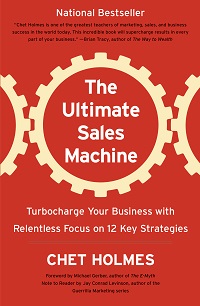
The Dream 100 concept comes from the late Chet Holmes, author of The Ultimate Sales Machine.

Holmes recognised that a relatively small number of companies represented a disproportionately large share of the potential business available to him.

Instead of spreading his sales effort equally across the entire market, he concentrated enormous effort on the relatively small group of companies he really wanted as clients.

The exact number isn’t really the point.

The principle is:

Who are the businesses that could make the biggest difference to your company if you managed to win them?

Holmes then pursued those businesses persistently using multiple forms of communication, education, direct mail and follow-up.

This wasn’t a seven-email automation followed by “prospect didn’t respond” and moving on.

It was long-term, determined pursuit of companies worth pursuing.

I’ve written separately about the history and principles behind the concept in my article The Dream 100 Strategy: A Modern Look at Chet Holmes’ Classic Client Acquisition Concept.

What I want to explore here is a different question.

What Would Chet Holmes’ Dream 100 Look Like If We Built It Today?

Chet didn’t have LinkedIn.

He didn’t have modern B2B databases.

He didn’t have AI.

He didn’t have modern marketing automation.

He didn’t have a CRM capable of coordinating email, telephone calls, pipelines, appointments, workflows, websites, forms, events and ticketing.

We do.

That gives us an opportunity to take the principles behind Dream 100 and build something Chet simply couldn’t have built at the time.

But there’s a danger too.

Technology makes it incredibly easy to turn a great strategy into another mass prospecting system.

That’s precisely what I don’t want to do.

The objective isn’t to use AI to turn the Dream 100 into the Dream 100,000.

It’s to use technology to give more carefully selected businesses the individual attention previously possible with only a very small number of accounts.

And that starts with human judgement.

Stage 1. Finding Potential Dream Clients

The first technology in my Mark 1 stack is Prospeo.

And this is where the Dream Client Conveyor Belt starts.

The objective isn’t simply to build a list of companies that happen to match a few database filters.

We want to identify potential Dream Clients.

Businesses that, if we won them, could become significantly more valuable than the average client.

A useful starting point is to look at the clients you already love working with.

Which existing customers are:

  • particularly profitable?
  • easy to work with?
  • growing?
  • buying several services?
  • staying with you for a long time?
  • introducing you to other clients?
  • exactly the sort of business you would like more of?

Those existing clients can help us define what a Dream Client actually looks like.

Prospeo can then help us search for other businesses and people with similar characteristics.

Its search tools allow us to narrow down potential targets using company and individual characteristics such as industry, location, seniority, role, size, revenue and other business criteria.

It can also use AI Lookalikes to help identify companies or people resembling examples we’ve already identified as a good fit.

That changes the starting question.

Instead of:

“Find me 10,000 businesses in this industry.”

we’re trying to get closer to:

“These are the sorts of companies we genuinely want as clients. Help us find more businesses that look like them.”

Prospeo can then help us identify the relevant people inside those businesses and obtain useful information such as:

  • name
  • job title
  • verified work email
  • mobile number
  • LinkedIn profile
  • company information
  • company address information

That gives us much more than an email list.

It gives us much of the raw information required to approach a potential Dream Client through several different channels.

AI Finds Candidates. Humans Decide Who Gets In.

This may be one of the most important principles in the whole Mark 1 system.

Technology can identify possible Dream Clients.

AI can help us analyse them.

But a human should still decide whether a business actually deserves Dream Client treatment.

Someone should look at the company properly.

Visit its website.

Look at its LinkedIn presence.

Understand what it does.

Research the people running it.

Look at its size and structure.

Look for growth, change or other useful signals.

Think about what the business could realistically be worth as a client.

And ask:

If we could choose our clients, would we genuinely choose this company?

If the answer is yes, it earns its place in the Dream Client system.

If not, it doesn’t.

We’re using technology to find the needles in the haystack, then applying human judgement before deciding which companies justify the extra time, creativity and investment that Dream 100 deserves.

Stage 2. From a Dream 100 List to a Dream Client Conveyor Belt

This is probably the biggest departure in my 2026 interpretation of Chet Holmes’ original methodology.

Traditionally, we think about creating the Dream 100 list.

You identify your ideal clients and systematically pursue them.

But modern technology means I don’t think the list needs to be static.

Instead, I think we can build a Dream Client Conveyor Belt.

Imagine our initial searches identify 100 businesses each month that appear to match our Dream Client criteria.

Those 100 don’t automatically enter the programme.

They’re researched and qualified.

Perhaps only 20 or 25 make the cut.

Those companies enter our Dream Client programme.

Next month another 20 or 25 enter.

And another group the following month.

Meanwhile, companies already in the system are progressing at different speeds.

Some engage with an email.

Some connect on LinkedIn.

Some speak to us on the telephone.

Some receive direct mail.

Some attend a workshop.

Some request a meeting.

Some become active sales opportunities.

Some aren’t ready and remain in long-term nurture.

Some are disqualified.

And some eventually become clients.

As businesses move through the system, carefully selected new Dream Clients continually enter at the top.

That’s why I call it a conveyor belt.

At 25 new companies per month, after a year we could have introduced 300 carefully selected businesses into our Dream Client programme.

That’s very different from putting 300 businesses into an automated sales sequence.

We’re scaling Chet Holmes’ methodology, not turning it into mass marketing.

The Dream 100 B2B Prospecting System. Mark 1

FIND POTENTIAL DREAM CLIENTS
Prospeo + AI
Companies • people • email • mobile • LinkedIn • company information

↓

HUMAN RESEARCH & QUALIFICATION
Would we genuinely choose them as a client?
Value • fit • opportunity • people • timing

↓

APPROVED DREAM CLIENT
Enter the Dream Client Conveyor Belt

↓

HIGHLEVEL: THE OPERATING SYSTEM BEHIND IT ALL

Cold Email via QuickProsp + AI
↓
LinkedIn via LinkedHelper 2 / human activity
↓
Telephone managed through HighLevel
↓
Direct Mail automated or deliberately handmade
↓
Education through workshops, events and useful content

AI supports research, personalisation, signals, analysis and next-best actions across the entire system.

↓

ENGAGE → NURTURE → OPPORTUNITY → DREAM CLIENT

While new researched and approved Dream Clients continue entering at the top.

Stage 3. QuickProsp. AI-Personalised Cold Email

Yes, we are cold emailing our Dream Clients.

For Mark 1, I’m using QuickProsp to do this.

But there’s an important difference between what I’m describing here and taking a database of 20,000 people and sending everybody essentially the same cold email.

By this point in the Dream Client Conveyor Belt, we already know quite a lot.

We know who the company is.

We know why it fits our Dream Client profile.

We’ve researched the business.

We’ve identified the appropriate people within it.

And we have information about both the company and the person we’re approaching.

QuickProsp can use AI to research the individual prospect and their company, look at information such as the company website and relevant signals, and then adjust the email around something genuinely relevant to that recipient.

That allows us to create a much more personal first approach.

This is where I think AI is especially useful.

We’re not using AI simply so that we can send more emails.

We’re using it to help us write a better cold email to a prospect who matters.

If somebody is one of 20,000 prospects in a database, there’s an obvious temptation to optimise for volume.

If the company has been specifically selected because it could potentially become a £100,000 or £250,000 client, I want the recipient to feel that we’ve actually taken an interest in them and their business.

AI helps us scale that personalisation.

And because this is Dream 100, email is only one part of the strategy.

QuickProsp gives us one route into the business.

LinkedIn gives us another.

Telephone gives us another.

Direct mail gives us another.

Workshops and events give us yet another.

The objective isn’t to make email do all the work.

It’s to make each channel contribute to one coordinated Dream Client relationship.

Stage 4. LinkedHelper 2. Building the LinkedIn Relationship

I’ve been interested in combining Dream 100 with LinkedIn for years.

In fact, I’ve previously written about using LinkedHelper 2 as part of a LinkedIn Dream 100 strategy.

LinkedIn gives us another route into the companies we’ve deliberately selected.

We can identify relevant people.

Connect.

Follow their activity.

See what they’re talking about.

Engage where appropriate.

Share useful material.

And gradually build familiarity.

Again, I don’t see this as an excuse to automate hundreds of generic LinkedIn messages.

The whole point is that these people matter more to us than an ordinary prospect.

QuickProsp and LinkedIn therefore aren’t two separate prospecting campaigns.

They’re two channels within one coordinated Dream Client strategy.

A Note on LinkedIn Automation

LinkedHelper 2 can automate a number of LinkedIn activities, but LinkedIn’s rules prohibit unauthorised third-party software that automates actions on the platform.

If you choose to use tools of this type, you should understand the potential account risk and review LinkedIn’s current rules before deciding how you use them.

That doesn’t undermine the multi-channel strategy.

It simply means each business needs to decide how much of its LinkedIn activity should be automated and how much should remain manual.

Stage 5. Telephone. HighLevel Helps Us Manage the Calling

Another channel available to us is the telephone.

And sometimes the best thing to do with a telephone number is surprisingly simple.

Call it.

A well-researched human telephone call may be far more effective than another automated message.

Because we’ve already researched the business, the call doesn’t have to begin:

“Hi, can I speak to the person responsible for…”

We should already have a pretty good idea who we’re trying to reach, what their role is and why we want to speak with them.

And this is where HighLevel can help us organise, make, record and manage the calling process.

HighLevel can help us:

  • organise who needs calling
  • create tasks and reminders
  • make and record calls
  • capture notes and outcomes
  • trigger follow-up activity
  • update opportunities and pipeline stages
  • schedule future callbacks
  • use AI to assist with conversation summaries and next actions

If somebody says:

“Interesting, but call me again in September.”

that’s valuable information.

The system should make sure somebody actually calls them in September.

If we speak with another person inside the same Dream Client company, that information should become part of our wider understanding of the account.

If the call creates a genuine opportunity, that should feed directly into the sales process.

Use HighLevel and AI to manage the process so the human can concentrate on having a better conversation.

Stage 6. Direct Mail. Don’t Automate Everything

This is one of my favourite parts of Chet Holmes’ original Dream 100 methodology.

Direct mail.

I started in direct response marketing in the 1990s, so perhaps I have a natural bias towards it.

But I actually think physical mail may have become more interesting because digital communication has become so easy.

We can certainly automate direct mail today.

HighLevel could trigger an integration with a digital print and mailing service such as Stannp.

There are plenty of situations where that makes perfect sense.

But for our most valuable Dream Clients, I think there’s a strong argument for deliberately not automating it.

Someone in your office could actually handwrite the envelope.

Put the contents inside.

Add a handwritten note.

Include something unusual.

A book.

A relevant report.

A small gift.

A physical object connected to the message.

The sort of lumpy, memorable direct mail that Chet Holmes enthusiastically taught.

You Cannot Automate Memorable

When your prospect receives hundreds of emails, another email is easy to ignore.

When they receive endless digital messages, another one is easy to ignore.

A handwritten package containing something interesting is different.

And we come back to the economics.

If this company could potentially become a £250,000 client, does spending £100 creating and delivering something memorable really sound expensive?

I don’t think it does.

Technology should help us decide who deserves the expensive human attention. It doesn’t mean technology has to deliver every interaction.

Stage 7. Stop Asking for Meetings. Give Them Something Valuable

Another aspect of Chet Holmes’ thinking that I believe fits beautifully into a modern Dream Client system is education.

Rather than repeatedly asking prospects:

“Would you like a 30-minute call?”

give them a reason to engage.

Teach them something.

Invite them to something genuinely useful.

That could be:

  • an online workshop
  • an in-person workshop
  • a webinar
  • a breakfast briefing
  • a roundtable
  • a seminar
  • a demonstration
  • an expert Q&A
  • a small invitation-only event

I’ve taken this idea considerably further and built my own Workshop Marketing System using HighLevel.

It uses regular workshops as an ongoing way to educate prospects, demonstrate expertise and build relationships rather than constantly asking people to book a sales call.

I’ve even created a free Workshop Marketing with HighLevel blueprint and Snapshot showing how the system works.

For Dream 100, I think this becomes particularly powerful.

We’re not inviting 10,000 random people to another generic webinar.

We can create genuinely useful events around the interests, challenges and opportunities faced by the businesses we most want to work with.

And HighLevel’s Events functionality makes this even more interesting because registrations, attendee information, reminders, follow-up and the CRM can increasingly sit within the same ecosystem.

Think what that does to our Dream Client Conveyor Belt.

Instead of:

Cold email → Sales meeting

we might have:

Research → Personalised email → LinkedIn → Direct mail → Telephone → Workshop invitation → Workshop attendance → Follow-up → Sales conversation

That’s a very different experience for the prospect.

And importantly, the workshop shouldn’t simply be a disguised sales pitch.

It should be genuinely useful.

We’re demonstrating expertise before asking the Dream Client to buy anything.

Stage 8. HighLevel. The Operating System Behind It All

You may have noticed that I’ve already mentioned HighLevel several times before we’ve even reached the section specifically about HighLevel.

That’s deliberate.

HighLevel isn’t simply another channel alongside QuickProsp, LinkedIn, telephone and direct mail.

It’s the operating system sitting behind the whole Dream Client Conveyor Belt.

Prospeo helps us find and enrich potential Dream Clients.

Humans and AI help us research and qualify them.

QuickProsp helps us initiate personalised cold email conversations.

LinkedIn gives us another relationship-building channel.

HighLevel can help us manage telephone activity.

Direct-mail actions can be recorded and, where appropriate, triggered from the system.

Our workshops and events can run through HighLevel.

Appointments can be booked through HighLevel.

Opportunities can be managed through HighLevel.

Follow-up and longer-term nurture can be managed through HighLevel.

So although HighLevel keeps appearing throughout this article, this is the point where its role becomes clear.

HighLevel is where we orchestrate the whole system.

This also ties into something I’ve written about elsewhere. I increasingly see HighLevel as an AI Operating System for your marketing and business.

Individual AI tools can be enormously useful, but the really interesting part is what happens when the tools, data, communication and customer journey all connect into one underlying system.

A Dedicated Dream Client Pipeline

I’d create a dedicated Dream Client pipeline.

The exact stages will undoubtedly evolve as Mark 1 is tested, but initially they might look something like:

Potential Dream Client
↓
Research & Qualification
↓
Approved Dream Client
↓
Initial Outreach
↓
Engaging
↓
Education / Workshop
↓
Conversation
↓
Active Opportunity
↓
Client

But the pipeline is only the visible part.

Behind it, HighLevel can help manage:

  • contacts and companies
  • opportunities
  • pipeline stages
  • tasks
  • telephone activity
  • appointments
  • notes
  • emails
  • workflows
  • forms and surveys
  • events and ticketing
  • reminders
  • long-term nurture

And that’s what makes the conveyor-belt model practical.

Once the system has been running for a while, we may have hundreds of carefully selected Dream Clients at different points in the relationship.

Some may be brand new.

Some may have attended three workshops.

Some may have spoken to us six months ago.

Some may be active opportunities.

Some may have told us to come back next year.

Nobody can reliably keep all of that in their head.

The technology can.

HighLevel’s job is to give us the structure, memory and automation needed to scale Chet Holmes’ persistence without losing the individual relationships that made the Dream 100 strategy powerful in the first place.

Stage 9. AI Becomes the Intelligence Layer

So where does AI fit?

Everywhere.

But I don’t want AI to become the headline act.

The strategy is still Dream 100.

AI makes the system smarter.

It can help us:

  • research potential Dream Clients
  • summarise websites
  • understand what companies do
  • research individual decision makers
  • identify recent developments
  • analyse news and business signals
  • personalise communication
  • suggest direct-mail ideas
  • prepare telephone calls
  • summarise conversations
  • recommend next actions
  • identify disengaged accounts
  • help prepare workshop content
  • analyse which approaches are working

We can go further still.

I’ve also been experimenting with tools such as Browse AI.

I’ve written about combining Browse AI and HighLevel for lead generation research and business intelligence.

For a Dream Client strategy, this opens up the possibility of continuously monitoring our most valuable target companies.

Imagine watching the websites of your Dream Clients.

A new director appears.

A new office opens.

A new service launches.

A recruitment page suddenly has 20 vacancies.

A major announcement appears.

That information could feed into our system and create a task:

Something has changed at Dream Client X. Take a look.

Now AI isn’t simply helping us write emails.

It’s helping us know when there is a good reason for a human to make contact.

I think that’s much more powerful.

Stage 10. The Complete Mark 1 Dream Client Conveyor Belt

Put everything together and my initial system looks like this:

DEFINE
What does a genuinely valuable Dream Client look like?

↓

FIND
Use Prospeo, search criteria and AI Lookalikes to identify potential companies and relevant people.

↓

RESEARCH
Use humans supported by AI to investigate each potential Dream Client.

↓

QUALIFY
Would we genuinely choose this company as a client?

↓

ENRICH
Build the contact picture. Email, mobile, company information, LinkedIn and relevant decision makers.

↓

ENTER HIGHLEVEL
Create the company, contacts and Dream Client opportunity.

↓

EMAIL
Use AI-personalised cold outreach through QuickProsp.

↓

LINKEDIN
Build familiarity and relationships through LinkedIn.

↓

TELEPHONE
Create opportunities for genuine human conversations, managed through HighLevel.

↓

DIRECT MAIL
Use automated mail where appropriate, but deliberately use handwritten and lumpy mail where the potential value justifies it.

↓

EDUCATE
Invite Dream Clients to genuinely valuable workshops, webinars, roundtables and events.

↓

ENGAGE
Track interactions, conversations, attendance and buying signals.

↓

NURTURE
Stay useful and visible even when the timing isn’t right.

↓

OPPORTUNITY
When a genuine requirement emerges, move into the appropriate sales process.

↓

DREAM CLIENT

And all the time, new potential Dream Clients are being identified, researched and qualified at the top.

That’s the conveyor belt.

What Would You Spend to Win a £250,000 Client?

I keep coming back to this because I think it’s the question that keeps the entire system honest.

If a prospect could genuinely be worth £250,000 to your business, what would you sensibly invest to win them?

£10?

£100?

£1,000?

Several days of somebody’s time spread over two years?

There’s no universal answer.

But it almost certainly isn’t:

“As little as humanly possible.”

And that’s why I don’t want this system to become another automated prospecting machine.

Automation should remove unnecessary administration.

AI should improve our intelligence.

Data should help us find the right businesses.

The CRM should make sure nothing falls through the cracks.

But those efficiencies allow us to invest more human thought, creativity and attention where it matters most.

That’s the paradox at the heart of my 2026 Dream 100 system.

I’m using AI and automation so that I can afford to be more human, not less.

Mark 1. Not the Finished System

This is Mark 1.

There will almost certainly be things I change.

Maybe 25 new Dream Clients a month is too many.

Perhaps it’s too few.

Maybe certain combinations of email, LinkedIn, telephone and direct mail work better than others.

Perhaps workshops turn out to be the most effective component.

Perhaps AI monitoring identifies opportunities I haven’t considered yet.

Maybe I’ll replace one of the tools.

That’s precisely why I’m calling this Mark 1.

I want to build it, use it, measure it and learn from it.

And then I’ll build Mark 2.

But one thing I don’t expect to change is the underlying principle Chet Holmes taught.

Some potential clients are dramatically more valuable to your business than others.

Identify them.

Understand them.

Invest in them.

Educate them.

Stay visible.

Be persistent.

And give yourself enough time to be there when the opportunity eventually appears.

Chet Holmes gave us the Dream 100.

My Mark 1 experiment is to find out just how far we can take it with the technology available to us in 2026.

Resources & Tools Mentioned in This Article

Here are the main tools and resources I’ve referenced in building my Mark 1 Dream 100 B2B Prospecting System.

  • HighLevel via MarketerM8
    The CRM and marketing automation platform I use as the operating system behind the Dream Client Conveyor Belt. MarketerM8 is our HighLevel agency, where we provide HighLevel alongside implementation, consultancy, training and support.
    Visit MarketerM8
  • Prospeo
    B2B prospecting and enrichment software for finding potential companies and decision makers, including verified contact and company information.
    Visit Prospeo
  • QuickProsp
    The cold email platform I’m currently using for AI-personalised prospecting. Its AI can research individual prospects and companies and help make outreach more relevant to each recipient.
    Visit QuickProsp
  • LinkedHelper 2
    LinkedIn automation software that can assist with prospect identification, connection campaigns and LinkedIn messaging. Remember that LinkedIn restricts unauthorised third-party automation, so understand the current platform rules before deciding how you use it.
    Visit LinkedHelper 2
  • Browse AI
    A no-code web scraping and monitoring platform. I see particular potential for using it within Dream 100 to monitor target companies for website changes, new staff, services, vacancies, announcements and other useful signals.
    Visit Browse AI
  • Stannp
    A direct mail platform that can print and send letters, postcards and other physical mail. Useful when we want to automate part of the direct-mail element of the Dream Client system.
    Visit Stannp

Further Reading from Julian Mills

Would You Like to Build Your Own Dream Client System?

If you’d like help working out how HighLevel, AI, automation and a Dream 100-style approach could work inside your business, let’s have a conversation.

We can look at how you currently find, nurture and follow up your most valuable potential clients and where HighLevel could sit behind the process.

Book a Discovery Call with Julian

Julian Mills HighLevel Consultant and Marketing Automation Strategist

About the Author

Julian Mills

HighLevel Consultant & Marketing Automation Strategist

Julian Mills helps business owners automate lead generation, sales follow-up, customer communication and business processes using HighLevel and MarketerM8. Since 2009 he has helped businesses implement CRM, marketing automation and AI-powered systems that save time, improve customer experience and generate more sales.

About Julian
Book a Discovery Call
Join a Free HighLevel Workshop
Learn About HighLevel with MarketerM8

Get a free copy of my book - The Entrepreneurs Marketing System 
The Entrepreneurs Marketing System has been written by myself and Nigel Botterill and has taken the best part of 10 years to hone, refine and test and is the foundation of the Entrepreneurs Circle coaching system.

It gives SME business owners a proven step-by-step system to get and retain all the customers they'll ever need.... Rhythmically & consistently -  just like clockwork.

You'll need a deep understanding of the Entrepreneurs Marketing System if you are going to use it in your business and this is exactly what our new book provides. If you would like a copy you just pay the postage and packing.

>> GET YOUR FREE COPY <<

    

Why Buying More Leads Is Rarely the Fastest Way to Grow a Trades Business

trade 2 leads sales follow up reactivation old leads

trade 2 leads sales follow up reactivation old leadsIf you are searching for lead generation companies, or you are already buying leads from providers like Leads 2 Trade, you are not doing anything wrong. Demand matters. Enquiries matter. Without leads, there is nothing to convert.

But here is the uncomfortable truth most trades businesses discover too late. Buying more leads rarely fixes the real growth problem.

The fastest growth usually comes from what happens after the lead arrives, not from where it came from.


The assumption that holds businesses back

Most trades businesses operate with an unspoken assumption.

If we want more work, we need more leads.

On the surface, this feels logical. In practice, it creates a cycle where businesses constantly spend more, chase more enquiries, and still feel busy but stuck.

The real issue is not lead volume. It is lead leakage.


What actually happens to most trade leads

Across boiler installers, window companies, solar firms, and general home improvement businesses, the pattern is consistent.

  • A new lead comes in
  • Someone is busy on a job
  • A call is missed or a message is left too long
  • Follow-up becomes inconsistent
  • The lead goes cold

This does not happen because businesses do not care. It happens because most small teams rely on memory, inboxes, spreadsheets, or best intentions.

Once a lead is cold, it is often written off as “bad quality”, even though the real issue was timing and follow-up.


The hidden cost of buying leads without a system

When businesses buy leads but do not have a structured follow-up system, three things usually happen.

1. Speed drops

Response time stretches from minutes into hours or days. In competitive trades, that alone kills conversions.

2. Consistency disappears

Some leads get chased. Others do not. There is no reliable process.

3. Old leads are ignored

Once a lead does not convert quickly, it is forgotten, even though many buyers need weeks or months to decide.

This is why buying more leads often increases workload without increasing profit.


Lead generation is step one, not the solution

Lead providers like Leads 2 Trade play an important role. They help create demand and put opportunities in front of you.

But lead generation is only the start of the sales process.

The businesses that grow consistently treat leads as assets, not interruptions. Every enquiry enters a system designed to respond fast, follow up properly, and stay in touch over time.

This is where most growth is unlocked.


The biggest missed opportunity. Old leads

Almost every trades business already has a database of old enquiries.

  • People who asked for a quote
  • People who booked a call but did not proceed
  • People who went quiet
  • People who said “not right now”

These leads cost money to generate. The cost has already been paid.

Most businesses leave them sitting idle because manually chasing old leads feels awkward, time-consuming, or impossible to manage at scale.

In reality, these old leads are often the easiest wins.


Why reactivation works so well in trades

Trades buying cycles are rarely instant.

  • Boilers break at the wrong time
  • Budgets change
  • Incentives appear
  • Circumstances shift

When follow-up is handled properly, many “dead” leads turn into booked jobs weeks, months and even years later.

Reactivation works because it is timely, polite, and consistent. It checks in without pressure and restarts conversations that were never finished.


Where AI & automated systems beat effort every time

Relying on human effort means remembering who to chase and when. Systems remove that burden.

A proper follow-up and reactivation system ensures.

  • Every new lead gets an immediate response
  • Missed calls are followed up automatically
  • Leads are nurtured over weeks and months
  • Old enquiries are reactivated without manual chasing
  • No lead is forgotten

This is not about spamming. It is about professionalism and timing.


How MarketerM8 fits into the picture

MarketerM8 does not sell leads. We leave that the the experts like Leads 2 Trade.  That is deliberate.

Instead, MarketerM8 focuses on helping businesses get more value from the leads they already have, whether those leads come from lead generators, Google Ads, Facebook, referrals, or past enquiries.

This includes structured follow-up, CRM automation, and AI-powered lead reactivation.

You can see how this works here:
https://www.marketerm8.com/marketerm8-ai-lead-reactivation-system

The goal is simple. Turn more existing enquiries into real conversations, appointments, and jobs.


Why this approach outperforms buying more leads

Businesses that fix follow-up before increasing spend usually see.

  • Higher conversion rates
  • Shorter sales cycles
  • More predictable pipelines
  • Better return on existing marketing spend
  • Less stress chasing new enquiries

In many cases, reactivating old leads alone produces enough additional work to delay or reduce new lead purchases altogether.


Who this guide is for

This approach is especially relevant if.

  • You already buy leads and want better results
  • You feel enquiries slip through the cracks
  • You have a database full of old leads
  • You want growth without increasing ad spend
  • You want a system, not more admin

If any of those sound familiar, the issue is not lead generation. It is lead management.


Final thought

Buying leads is not a mistake. Relying on leads alone is.

The quickest wins usually come from improving speed, consistency, and follow-up on the enquiries you already paid for.

That is where automated systems that support the sales team outperform human hustle every time.

Written by Julian Mills – HighLevel consultant and marketing strategist.
About Julian Mills

Get a free copy of my book - The Entrepreneurs Marketing System 

The Entrepreneurs Marketing System has been written by myself and Nigel Botterill and has taken the best part of 10 years to hone, refine and test and is the foundation of the Entrepreneurs Circle coaching system.

It gives SME business owners a proven step-by-step system to get and retain all the customers they'll ever need.... Rhythmically & consistently -  just like clockwork.

You'll need a deep understanding of the Entrepreneurs Marketing System if you are going to use it in your business and this is exactly what our new book provides. If you would like a copy you just pay the postage and packing.

>> GET YOUR FREE COPY <<

    

The Dream 100 Strategy: A Modern Look at Chet Holmes’ Classic Client Acquisition Concept, by Julian Mills

ultimate sales machine

dream 100 list concept ultimate sales machine. HighlevelThe Dream 100 strategy is one of the most powerful client acquisition methods ever developed. Originally created by Chet Holmes and documented in his book The Ultimate Sales Machine, it is built on focus, persistence, and relationship building. This article by Julian Mills explains how to execute the timeless Dream 100 method with modern tools, AI technology, and CRM automation to generate predictable growth in 2025 and beyond.


Where the Dream 100 Strategy Came From

The Dream 100 concept was created by Chet Holmes while working with Charlie Munger at a publishing company. He identified 167 key prospects who controlled the majority of ad spend in his market. Instead of chasing thousands of leads, he focused on that small group with disciplined, structured follow-up.

Within a year, dozens of those companies became clients. This disciplined focus became known as the Dream 100 strategy.

Further reading: Chet Holmes – The Story of the Dream 100 Strategy.

Core Principles That Have Not Changed

  • Focus – zero in on your 100 most valuable prospects.
  • Research – understand their world before making contact.
  • Multi-channel contact – use varied touchpoints to build familiarity.
  • Persistence – it can take 8-12 touchpoints to get noticed.
  • Relationship building – trust and value over time win the deal.

The Modern Dream 100 Framework (2025 Edition)

  1. Identify your Dream Clients using segmentation and the 80/20 rule.
  2. Research deeply with AI tools and data platforms.
  3. Map a multi-channel campaign across email, social, phone, events, and direct mail.
  4. Personalise messaging and outreach.
  5. Nurture relationships over time with automated yet human-feeling touchpoints.
  6. Build micro-commitments that lead to larger engagements.
  7. Systemise everything with a CRM to make it repeatable and scalable.

Building Your Dream 100 List with AI

Chet’s team built lists manually. Today, that step is faster and smarter.

  • Use Outscraper or similar tools to extract targeted business data from Google Business.
  • Use ChatGPT or enrichment tools like Clay or Apollo to find senior decision makers and append job titles, emails, and LinkedIn profiles.
  • Segment by priority, geography, industry, or revenue. Score and rank for tiered outreach.

Why CRM Is Now Essential

Chet Holmes was obsessive about structured follow-up. He relied on call sheets and sales discipline. In 2025, a CRM does the heavy lifting.

HighLevel – and by extension MarketerM8 (UK agency, setup and support) – is ideal for Dream 100 because you can:

  • Create a dedicated Dream 100 pipeline with clear stages.
  • Automate personalised follow-up via email, SMS, calls, WhatsApp, and social prompts.
  • Log every interaction and handoff so nothing is missed.
  • Trigger nurture workflows when prospects engage.
  • Report on activity, conversion rates, and ROI with dashboards for accountability.

Lumpy Mail 2.0 – Offline Meets Online

Chet popularised “lumpy mail” to cut through the noise. Today, merge offline impact with online tracking:

  • Add QR codes linked to personalised landing pages.
  • Trigger CRM workflows the moment a scan occurs.
  • Sync follow-up emails, calls, and LinkedIn messages automatically.
  • Track delivery and engagement in real time.

10 Modern Innovations That Supercharge the Dream 100

  1. AI enrichment – ChatGPT, Clay, Apollo to build rich profiles quickly.
  2. Advanced CRM – HighLevel automates follow-up and pipeline control.
  3. Hyper-personalised video – Loom or Bonjoro to introduce yourself at scale.
  4. Retargeting ads – stay visible after the first touch on Google, Meta, and LinkedIn.
  5. LinkedIn Sales Intelligence – warm up prospects before outreach.
  6. Voice AI receptionists – never miss inbound calls and qualify 24-7.
  7. Smart direct mail – QR codes and triggers make post fully measurable.
  8. AI follow-up agents – persistent outreach without extra headcount.
  9. Workshop funnels – webinars, replays, and calendar booking to build authority. (Check out my free ebook on how to run live workshops using HighLevel)
  10. Zapier or Make integration – connect enrichment, CRM, campaigns, and reporting.

Execution Rhythm and Sales Cadence

The tools are powerful, but the cadence wins deals. Turn your strategy into a repeatable rhythm:

  • Run a weekly Dream 100 pipeline review.
  • Schedule automated and manual touchpoints.
  • Layer digital retargeting with human contact.
  • Treat this as a rhythm – not a one-off campaign.

Common Mistakes to Avoid

  • Targeting too many prospects – the clue is in the name: 100.
  • Insufficient research before outreach.
  • Stopping after one or two touchpoints.
  • Treating it as a short campaign rather than a long-term play.
  • Failing to align sales and marketing inside the CRM.

FAQs

What is the Dream 100 strategy?

The Dream 100 strategy is a focused marketing approach developed by Chet Holmes. It targets your 100 most valuable prospects with persistent, personalised outreach to build trust and win business.

How can AI help with Dream 100?

AI tools like ChatGPT and Outscraper can automate list building, contact enrichment, and research, so you can spend more time on strategy and follow-up.

Why use a CRM for Dream 100?

A CRM like HighLevel structures your pipeline, automates touchpoints, and ensures no opportunity slips away. It bakes discipline into your system.

Does direct mail still work in 2025?

Yes. When paired with QR codes, personalised URLs, and automated follow-up, direct mail becomes highly measurable and effective.

How do I modernise Chet Holmes’ method?

Layer AI enrichment, CRM automation, retargeting, LinkedIn intelligence, and workshop funnels on top of his proven focus and persistence.

Resources and References


Written by Julian Mills – HighLevel consultant and marketing automation strategist. About Julian Mills.


Get a free copy of my book - The Entrepreneurs Marketing System 

The Entrepreneurs Marketing System has been written by myself and Nigel Botterill and has taken the best part of 10 years to hone, refine and test and is the foundation of the Entrepreneurs Circle coaching system.

It gives SME business owners a proven step-by-step system to get and retain all the customers they'll ever need.... Rhythmically & consistently -  just like clockwork.

You'll need a deep understanding of the Entrepreneurs Marketing System if you are going to use it in your business and this is exactly what our new book provides. If you would like a copy you just pay the postage and packing.

>> GET YOUR FREE COPY <<
    

Why and How to Use ChatGPT to Update and Refresh Blog Posts for Better SEO

how to use chatgpt to update blog posts for SEO

how to use chatgpt to update blog posts for SEOIn the fast-evolving world of digital marketing, maintaining relevance and visibility on search engines is essential for any business. One of the most effective ways to achieve this is by regularly updating and refreshing your blog posts.

However, the process of keeping blog content up-to-date can be time-consuming. This is where ChatGPT comes into play — an advanced AI tool that can help streamline the process and ensure your SEO rankings stay strong. In this post, we’ll explore why you should update your blog posts and how you can leverage ChatGPT to maintain their freshness and SEO performance.

Why You Should Update and Refresh Blog Posts

1. Improve SEO Rankings

Search engines like Google are constantly updating their algorithms, meaning strategies that worked for SEO in the past may no longer be effective today. By refreshing your blog posts regularly, you ensure your content remains relevant and in line with current search trends, giving you a better chance of ranking higher on search engine results pages (SERPs). This also involves revisiting keywords, adding new sections, and improving internal links—all of which can have a positive impact on SEO.

2. Keep Content Relevant and Accurate

Information changes over time. Whether it’s due to shifting trends, new statistics, or product updates, content can quickly become outdated. Regularly refreshing your blog posts ensures your audience is receiving the most accurate, up-to-date information. This builds trust and credibility with your audience, and search engines favour content that reflects the latest developments in a field.

3. Increase Organic Traffic

Even if your blog post is ranking well today, it may lose visibility as newer, more relevant content emerges. Updating older content gives it a second life and allows you to continue driving organic traffic to your site. Google rewards websites that consistently refresh their content, making it more likely that your blog will maintain visibility in search results.

4. Boost Conversion Rates

Outdated content may not resonate with your target audience. By keeping blog posts fresh, you ensure that they reflect the latest industry insights, helping your content to better align with the needs of your audience. This can lead to higher conversion rates, whether you’re encouraging visitors to subscribe, make a purchase, or book a consultation.

How ChatGPT Can Help You Update and Refresh Blog Posts

1. Content Expansion and Detail Enhancement

Over time, you may find that your original blog post doesn’t have the depth or detail needed to stand out in today’s competitive SEO landscape. ChatGPT can help you expand your content by adding relevant new information, case studies, or updated facts and figures. Simply input your original blog post and request suggestions for how to improve and expand it.

Example prompt for ChatGPT: “Can you expand on the section about SEO tips for small businesses by including the latest statistics and examples?”

2. Keyword Optimisation

SEO relies heavily on the use of relevant keywords. Over time, some keywords may become less effective, while new ones emerge. ChatGPT can assist in identifying these new keywords and incorporating them into your blog posts. The tool can also help you optimise headings, meta descriptions, and image alt text, all of which can improve your search engine visibility.

Example prompt for ChatGPT: “What are the current trending keywords in the SEO industry that I can incorporate into my blog post on SEO strategies?”

3. Improve Readability

Google places significant emphasis on user experience, which includes the readability of your content. If your blog post is overly complex or difficult to read, it could harm your SEO rankings. ChatGPT can help by suggesting ways to make your content clearer and more engaging. This could involve rewriting sentences for better clarity, breaking up long paragraphs, or adjusting the structure to improve flow.

Example prompt for ChatGPT: “Please rewrite the introduction to my blog post in a clearer and more engaging way.”

4. Fixing Broken Links and Adding Internal Links

As time goes on, links in your blog posts may become broken, which can negatively impact your SEO. ChatGPT can help you identify these broken links and suggest relevant new links to replace them. Additionally, adding internal links to other pages or blog posts on your website improves site navigation and strengthens SEO by passing link equity through your content.

Example prompt for ChatGPT: “Can you suggest internal links to other blog posts or pages on my website that I can add to this post on marketing automation?”

5. Content Rewriting for New Angles

Even after refreshing content, some blog posts may still feel a bit stale. ChatGPT can help you rewrite your content from a fresh perspective, incorporating new insights or offering a different viewpoint that resonates better with today’s audience. This allows your content to stay dynamic and adaptable to the ever-changing digital landscape.

Example prompt for ChatGPT: “Can you rewrite this blog post with a focus on how new AI tools are changing the way businesses approach digital marketing?”

6. Generate SEO-Friendly Titles and Meta Descriptions

A compelling title and a concise, keyword-rich meta description are essential for improving click-through rates (CTR) from search engine results. ChatGPT can generate multiple variations of blog post titles and meta descriptions that adhere to SEO best practices, helping to boost visibility and engagement.

Example prompt for ChatGPT: “Can you provide 5 SEO-friendly title ideas for my blog post on updating old content for SEO?”

Best Practices for Using ChatGPT to Update Blog Posts

  • Start with a Clear Goal: Before you begin updating your blog post, have a clear objective in mind. Are you aiming to increase traffic, improve readability, or update outdated content? This will help guide how you use ChatGPT to optimise the post.
  • Review the Output: While ChatGPT is an incredibly powerful tool, it’s important to review and refine the content it generates. Ensure that the updates align with your brand’s voice and tone.
  • Be Specific with Prompts: The more detailed your prompt, the better the results. If you need to expand a particular section, adjust the angle, or optimise for specific keywords, make sure to specify that in your request to ChatGPT.
  • Use ChatGPT in Stages: Don’t feel the need to update the entire blog post in one go. You can break the process into smaller tasks, such as enhancing one section at a time, reworking the introduction, or adding relevant links.

Conclusion

Using ChatGPT to update and refresh blog posts is an effective way to ensure your content remains relevant, accurate, and optimised for SEO. With the right prompts and approach, you can breathe new life into old blog posts, boost your SEO rankings, and continue to engage your audience. Whether you need to expand content, optimise for new keywords, or improve readability, ChatGPT is a valuable tool to help you maintain high-quality content.

If you’re ready to update your blog and ensure it stays ranking high in search engines, give ChatGPT a try for your next content refresh!


Here is another Post you may find of interest:

25 Powerful ChatGPT Tips and Hacks Every Marketer Should Know

Get a free copy of my book - The Entrepreneurs Marketing System 

The Entrepreneurs Marketing System has been written by myself and Nigel Botterill and has taken the best part of 10 years to hone, refine and test and is the foundation of the Entrepreneurs Circle coaching system.

It gives SME business owners a proven step-by-step system to get and retain all the customers they'll ever need.... Rhythmically & consistently -  just like clockwork.

You'll need a deep understanding of the Entrepreneurs Marketing System if you are going to use it in your business and this is exactly what our new book provides. If you would like a copy you just pay the postage and packing.

>> GET YOUR FREE COPY <<
    

25 Powerful ChatGPT Tips and Hacks Every Marketer Should Know

chatgpt marketer tips and hacks for marketing

chatgpt tips for marketers and hacks for marketingIf you’re a marketer looking for ChatGPT tips to help you work smarter, not harder — you’re going to love this. ChatGPT isn’t just for writing blog posts and tinkering with emails. Used well, it’s a Swiss Army knife for marketers: a productivity booster, content machine, and thinking partner rolled into one.

In this post of ChatGPT tips, I’ve pulled together 25 of the most useful, creative, and under-the-radar ways marketers are using ChatGPT every day — plus a few time-saving ChatGPT tips I’ve picked up along the way.


The best way to think about ChatGPT is this: it’s like having a personal assistant in your pocket. And yes — there’s a mobile app. If you haven’t downloaded it yet, you’re missing out.

Once you start using ChatGPT this way — like a quick-access sidekick for questions, content, ideas, or tasks — you’ll be amazed how many times a day you end up saying, “Let me just ask ChatGPT.”

🔧 Automation & Workflow Time-Savers

1. Clean & Format CSVs
Exported a messy lead list or a CRM data dump? Paste it into ChatGPT and ask it to:

  • Remove duplicates
  • Split full names
  • Reformat into usable columns for import

Great for prepping lists for email marketing, ads, or pipeline uploads.

2. Resize / Optimise Images for Email or Social
Upload a bulky image and ask for a resized 600px version for email. Or compress it for faster loading on social. Super useful when you need quick image tweaks without opening Canva or Photoshop. Recent post.

3. Generate Meta Descriptions in Bulk
Paste your blog titles or summaries and ask ChatGPT to generate SEO-friendly meta descriptions (150 characters max). You can even request keyword inclusion or tone tweaks.

4. Create UTM Tracking URLs in Bulk
Running a multi-channel campaign? Drop your base link and ask ChatGPT to build proper UTM-tagged URLs for each source (e.g. email, LinkedIn, ads). Google Analytics tracking made easy.

5. Summarise Reports, PDFs, or Meeting Notes
Upload meeting transcripts, SEO audits, or long reports and ask for bullet point summaries, action steps, or a one-page slide outline. A real game-changer for internal comms and client updates.


🌟 Content & Creative Power-Ups

6. Brainstorm Social Post Variations
Got a caption? Ask for 10 variations — serious, cheeky, persuasive, short-form — perfect for A/B testing or cross-platform use.

7. Write YouTube Hooks & Descriptions
Need a punchy opener, summary, and keyword-rich description for your next video? ChatGPT can do the lot, even timestamps.

8. Repurpose Long Content into Carousels or Reels
Drop in a blog post and ask for slide-by-slide captions or short-form video scripts. Excellent for giving old content new life on social.

9. Rewrite in Different Tones or Personas
Ask ChatGPT to rewrite something in a professional, fun, casual, or Gen Z tone. Or tailor it to different buyer personas.

10. Craft Scroll-Stopping Subject Lines
Tell it your email topic and ask for subject lines that use curiosity, urgency or humour. Helps lift open rates fast.


📊 Insights & Strategy

11. Analyse Competitor Copy
Paste in a landing page or ad and ask ChatGPT to break down their angle, tone, audience, and offer structure. Learn what they’re doing — and how to beat it.

12. Build Customer Avatars
Describe your product or service and ask ChatGPT to create buyer personas — complete with goals, pain points, objections and decision triggers.

13. Analyse Survey Results
Drop in open-ended survey responses and let ChatGPT group answers into themes, highlight quotes, or extract common feedback.

14. Cluster Keywords & Plan Blog Content
Feed in a long list of keywords from a tool like Ahrefs or Semrush and ask for clustered content ideas or pillar-cluster strategies.

15. Convert Podcast Transcripts into Blogs
Paste a transcript and ask for a blog summary, tweet thread, or pull-quote graphics. Brilliant for content repurposing.


🛠️ Funnels & Follow-Ups

16. Build Workshop or Webinar Outlines
Ask ChatGPT to structure a 60-minute workshop with an intro, teaching points, breakout Q&A, and call to action.

17. Create Lead Magnet Follow-Up Sequences
“Write me a 5-part email nurture sequence for people who downloaded my PDF on X.” Simple, on-brand, and fast.

18. Script AI Chatbots or Voice Assistants
Use it to create a branded chatbot script for website enquiries, FAQs or even AI voice agents.

19. Audit Funnel Copy for Gaps
Paste in your sales page and ask: “Where is trust missing?” or “What objections haven’t I handled?”

20. Generate High-Converting Hero Sections
Provide your offer and ask for a homepage headline, subhead and CTA combo — formatted and ready to test.


🧠 Thinking Partner & Creative Sparring Tool

21. Refine Your Positioning Statement
Ask ChatGPT to sharpen your elevator pitch. Or give it a try writing three different versions for three customer types.

22. Challenge Your Strategy
Say, “Play devil’s advocate — what’s weak or missing in this marketing plan?” Let it surface blind spots.

23. Roleplay Sales Objections
Use it to simulate sales conversations — “Act like a hesitant client, challenge me on price.” Great training.

24. Turn Testimonials into Case Studies
Drop in a raw client testimonial and ask it to rewrite it into a proper case study using STAR or PAS framework.

25. Invent Lumpy Mail Campaigns
Tell it your campaign goal and ask for direct mail ideas involving physical items (“lumpy mail”) that tie into your message.


Final Thought

If you’re only using ChatGPT to write blogs or captions, you’re barely scratching the surface. The real magic happens when you start using it as your virtual marketing assistant, strategist, editor, analyst, and designer — all in one window. And be sure to install and use it on your mobile.

Do you have any smart ChatGPT tips that are not on the list? Let me know.  Julian


Get a free copy of my book - The Entrepreneurs Marketing System 

The Entrepreneurs Marketing System has been written by myself and Nigel Botterill and has taken the best part of 10 years to hone, refine and test and is the foundation of the Entrepreneurs Circle coaching system.

It gives SME business owners a proven step-by-step system to get and retain all the customers they'll ever need.... Rhythmically & consistently -  just like clockwork.

You'll need a deep understanding of the Entrepreneurs Marketing System if you are going to use it in your business and this is exactly what our new book provides. If you would like a copy you just pay the postage and packing.

>> GET YOUR FREE COPY <<
    

How to Add a Link at the Top of Your LinkedIn Profile (Desktop and Mobile Guide)

linkedin link top of profileIf you’re trying to drive traffic to your website, booking page, or lead magnet, then here’s a quick win you can implement in minutes — adding a clickable link right at the top of your LinkedIn profile.

This feature is officially called a “custom button” and it appears just below your profile picture and headline. It’s visible to anyone who views your profile (even if they’re not a connection) — making it prime real estate.

Here’s how to set it up.


🖥️ On Desktop

  1. Go to your LinkedIn profile
    Click on the Me icon at the top right of LinkedIn and select View Profile.

  2. Click the pencil icon
    This is in the top-right corner of your introduction section (next to your photo and headline).

  3. Scroll down to the “Website” section
    You’ll see a section titled Custom button.

  4. Paste your URL and write a title
    This could be your booking link, portfolio, newsletter, or lead magnet.
    For example:

    • Link: https://yourdomain.com/booking

    • Title: Book a Discovery Call

  5. Click Save
    That’s it! You’ll now have a clear, clickable link right at the top of your profile.


📱 On Mobile (LinkedIn App)

  1. Open the LinkedIn app on your phone.

  2. Tap your profile photo at the top left and select View Profile.

  3. Tap the pencil icon next to your name and headline.

  4. Scroll down to find the Website section.

  5. Enter your URL and a short, compelling title.

  6. Tap Save.


💡 Pro Tips

  • Keep the button text short and action-based (e.g. Download My Free Guide, Book a Call, View Portfolio).

  • Use a clean, branded link (a long, messy URL doesn’t look great).

  • Consider updating this link regularly depending on what you’re promoting.


Final Thoughts

If you’re actively using LinkedIn for business, then this button is a no-brainer. Whether you’re a consultant, coach, freelancer, or job-seeker, this gives you a way to drive profile visitors to take meaningful action — straight from your headline area.

It takes less than 5 minutes to set up and could bring you qualified leads every week.


Need help turning your LinkedIn profile into a lead-generation asset?
Book a Discovery Call with Julian

Reference. LinkedIn help doc.

Get a free copy of my book - The Entrepreneurs Marketing System 

The Entrepreneurs Marketing System has been written by myself and Nigel Botterill and has taken the best part of 10 years to hone, refine and test and is the foundation of the Entrepreneurs Circle coaching system.

It gives SME business owners a proven step-by-step system to get and retain all the customers they'll ever need.... Rhythmically & consistently -  just like clockwork.

You'll need a deep understanding of the Entrepreneurs Marketing System if you are going to use it in your business and this is exactly what our new book provides. If you would like a copy you just pay the postage and packing.

>> GET YOUR FREE COPY <<
    

Why You Need a Knowledge Centre and How to Set It Up

Knowledge Centre

Knowledge CentreIn today’s hyper-competitive digital landscape, the way we engage with prospects and clients has fundamentally shifted. They want answers, and they want them now. If they can’t find what they’re looking for on your website, they’ll simply click away to your competitors. That’s where a well-structured Knowledge Centre comes in. Inspired by Marcus Sheridan’s brilliant framework in They Ask, You Answer (Read my review here), let’s break down why you need a Knowledge Centre and how you can go about setting it up.

Why You Need a Knowledge Centre

The core idea of They Ask, You Answer is simple but powerful: Anticipate your audience’s questions and answer them better than anyone else. When you do this effectively, you build trust, authority, and drive more qualified traffic to your website. A Knowledge Centre serves as the backbone of this approach. Here’s why:

  1. Builds Authority and Trust: When you openly address the most pressing questions your audience has, you position yourself as a trusted expert in your field.
  2. Improves SEO Performance: Regularly publishing high-quality, informative content that answers questions directly boosts your visibility on search engines.
  3. Enhances User Experience: When visitors can easily find the information they need, they are more likely to engage with your business, rather than bouncing off your site in frustration.
  4. Streamlines Sales Conversations: By providing answers upfront, your sales team spends less time educating prospects and more time closing qualified leads.

How to Set Up Your Knowledge Centre

Setting up a Knowledge Centre may sound daunting, but with the right approach, it’s entirely achievable. Here’s a step-by-step guide:

Step 1: Identify Your Audience’s Questions

Use tools like Google’s People Also Ask, forums, competitor research, and – most importantly – your own sales and support teams. What are the most common questions prospects and clients ask? List them out.

Step 2: Categorise Your Content

Group questions into categories that make sense for your business. For example, if you’re a HighLevel consultant, you might create categories like “Setup Guides”, “Automation Tips”, “Integrations”, and “Troubleshooting”.

Step 3: Create High-Quality Content

For each question, create detailed, honest, and helpful content. Don’t shy away from talking about cost, potential issues, or even comparing yourself to competitors. Transparency builds credibility.

Step 4: Structure Your Knowledge Centre

Create a dedicated Knowledge Centre page on your website, with categories neatly laid out for easy navigation. Think of it as a library where users can quickly find answers.

Step 5: Optimise for Search Engines

Apply SEO best practices to each piece of content. Make sure your titles are clear, use keywords naturally, and structure your content to be easily scannable.

Step 6: Regularly Update and Expand

The beauty of a Knowledge Centre is that it’s never truly finished. Continuously add new content based on evolving audience questions and feedback.

The Tools You’ll Need

  • Content Management System (CMS): WordPress, HighLevel, or HubSpot.
  • SEO Tools: Ahrefs, SEMrush, or even Google Analytics.
  • Knowledge Base Platforms: If you want a more structured setup, tools like Help Scout or Zendesk can be valuable.

Final Thoughts

A well-built Knowledge Centre is a content marketing powerhouse. It drives traffic, builds authority, and turns your website into the ultimate resource for your audience. And the best part? Once set up, it continues to work for you around the clock.

If you haven’t read They Ask, You Answer yet, you can grab a copy from Amazon here.

If you’re ready to elevate your marketing game with a robust Knowledge Centre or want some expert guidance, book a Discovery Call with Julian here.

Get a free copy of my book - The Entrepreneurs Marketing System 

The Entrepreneurs Marketing System has been written by myself and Nigel Botterill and has taken the best part of 10 years to hone, refine and test and is the foundation of the Entrepreneurs Circle coaching system.

It gives SME business owners a proven step-by-step system to get and retain all the customers they'll ever need.... Rhythmically & consistently -  just like clockwork.

You'll need a deep understanding of the Entrepreneurs Marketing System if you are going to use it in your business and this is exactly what our new book provides. If you would like a copy you just pay the postage and packing.

>> GET YOUR FREE COPY <<
    

Have you read “The Ultimate Sales Machine” by Chet Holmes ⭐⭐⭐⭐⭐

ultimate sames machine chet holmesI read “The Ultimate Sales Machine” by Chet Holmes after a client recommended it. Have you read it?


For instance, I learnt that only 10% of people will proactively learn and enjoy doing so? 90% will only do so when they have to as part of their job. That is what sorts the best from the rest.

A main theme throughout the book is the need for “Pig headed determination” to bring about change. And the same I see with HighLevel clients – the ones with pig-headed determination to “work their HighLevel system” have the greatest success.

“The Dream 100 Concept” is one of the major strategies outlined first by Chet Homes in The Ultimate Sales Machine. A super-powerful strategy. I was just watching Youtube video from Russell Brunson on how he uses the Top 100 strategy, well worth a watch  https://youtu.be/DqeTvepQvgg?si=ze4otMxQyrlzKi5Chttps://youtu.be/nol9a1LIbcY

It is the best business book I have read in ages and certainly resonates with “HighLevel thinking”.

I would definitely recommend it to HighLevel users as this could transform your sales process. Here is an article I wrote about how to use HighLevel to implement the Dream 100 strategy.

Here is the Amazon link (Note I do not earn commission) https://www.amazon.co.uk/Ultimate-Sales-Machin…/…/1591841607

If you are a HighLevel user then I can show you how to build a Dream 100 Workflows to enable you to easily co-ordinate an integrated follow-up campaign containing not only emails but direct mail, telephone, text and social media. To learn more simply schedule a Discovery call.

ultimate sales machine

Get a free copy of my book - The Entrepreneurs Marketing System 

The Entrepreneurs Marketing System has been written by myself and Nigel Botterill and has taken the best part of 10 years to hone, refine and test and is the foundation of the Entrepreneurs Circle coaching system.

It gives SME business owners a proven step-by-step system to get and retain all the customers they'll ever need.... Rhythmically & consistently -  just like clockwork.

You'll need a deep understanding of the Entrepreneurs Marketing System if you are going to use it in your business and this is exactly what our new book provides. If you would like a copy you just pay the postage and packing.

>> GET YOUR FREE COPY <<
    

Free Google Review Card with NFC and QR code – ReviewBoost-Pro

google review nfc qr card reviewboost-proDo you want to capture more Google Reviews from your customers? Do you interact with your customers face to face? Say in a restaurant, shop, dental practice etc etc?  If yes, then a Google Review card makes it super easy to ask for and capture Google reviews from your happy customers.

It all starts with a ReviewBoost-Pro NFC / QR code enabled card. Simply tap the card on the customers phone – or scan the QR code and your Google My Business review page pops up immediately. So making it really easy to ask happy customers there and then for a Google Review.

Want to give it a try? Get a free card – just pay £2 towards postage and packing. (one card per customer/company)


Get a free copy of my book - The Entrepreneurs Marketing System 

The Entrepreneurs Marketing System has been written by myself and Nigel Botterill and has taken the best part of 10 years to hone, refine and test and is the foundation of the Entrepreneurs Circle coaching system.

It gives SME business owners a proven step-by-step system to get and retain all the customers they'll ever need.... Rhythmically & consistently -  just like clockwork.

You'll need a deep understanding of the Entrepreneurs Marketing System if you are going to use it in your business and this is exactly what our new book provides. If you would like a copy you just pay the postage and packing.

>> GET YOUR FREE COPY <<
    

Julian launches a new tool to get Google Reviews – ReviewBoost-Pro

google reviews nfc qr cardJulian has just launched a new tool to make it easy for businesses to ask for and capture Google reviews. It is called ReviewBoost-Pro.

google review nfc qr card reviewboost-proIt all starts with a NFC / QR code enabled card. Simply tap the card on the customers phone – or scan the QR code and your Google My Business review page pops up immediately. So making it really easy to ask happy customers there and then for a Google Review.

For more information please visit ReviewBoost-Pro.com


Get a free copy of my book - The Entrepreneurs Marketing System 

The Entrepreneurs Marketing System has been written by myself and Nigel Botterill and has taken the best part of 10 years to hone, refine and test and is the foundation of the Entrepreneurs Circle coaching system.

It gives SME business owners a proven step-by-step system to get and retain all the customers they'll ever need.... Rhythmically & consistently -  just like clockwork.

You'll need a deep understanding of the Entrepreneurs Marketing System if you are going to use it in your business and this is exactly what our new book provides. If you would like a copy you just pay the postage and packing.

>> GET YOUR FREE COPY <<