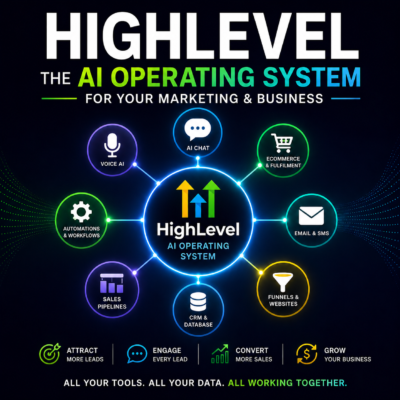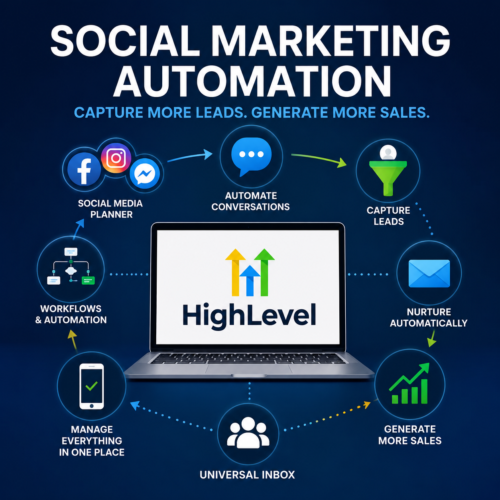
Social Marketing Automation with HighLevel in 2026 and beyond. Capture More Leads and Generate More Sales

social marketing automation with highlevel

social marketing automation with highlevelMost businesses do not actually have a social media problem.

They have a systems problem.

The average business today is trying to run its marketing using a disconnected collection of tools:

  • Mailchimp
  • Pipedrive
  • Google Sheets
  • Facebook Messenger
  • Instagram DMs
  • WhatsApp on the boss’s phone
  • post-it notes
  • separate booking systems
  • separate CRM systems

The result? Leads fall through the cracks. Follow-up gets forgotten. Customers are lost and money gets left on the table.

Social media marketing is no longer just about posting content and hoping somebody messages you. Modern marketing is about creating connected systems that capture leads, nurture prospects and automate follow-up across multiple channels.

That is where HighLevel comes in.

The Problem with Most Social Media Marketing

Most businesses are trying to do the right things:

  • create content
  • post on Facebook and Instagram
  • generate engagement
  • follow up with leads
  • build relationships

The problem is that their systems do not talk to one another.

A Facebook enquiry sits in Messenger. An Instagram conversation sits in DMs. An email lead ends up in Mailchimp. A sales conversation is tracked in a spreadsheet. WhatsApp messages are sitting on somebody’s mobile phone.

Everything becomes fragmented.

Over time, businesses end up building what can only really be described as a “Frankenstack” of disconnected marketing tools held together with digital duct tape and endless integrations.

And the bigger the business grows, the bigger the problem becomes.

Standalone Social Media Tools Create More Complexity

Most businesses already understand the value of automation.

For example, many businesses use standalone social media scheduling tools such as Hootsuite or Buffer to automate posting content across Facebook, Instagram and LinkedIn.

Then they discover they also need another separate platform such as ManyChat to automate comment replies, Messenger follow-up and lead capture workflows.

The problem is that each additional tool creates:

  • another subscription
  • another integration
  • another database
  • another learning curve
  • another potential point of failure

This is where HighLevel becomes particularly powerful.

The HighLevel Social Media Planner can replace tools such as Hootsuite and Buffer for scheduling and managing content.

At the same time, HighLevel Workflows and automation can replace many of the functions businesses use ManyChat for, including:

  • automated comment responses
  • DM automation
  • lead capture
  • follow-up workflows
  • CRM updates
  • conversation nurturing

But the real advantage is not simply replacing tools.

The real advantage is that everything operates inside one interconnected system.

Your social media activity, CRM, automation, AI conversations, pipelines, email marketing, WhatsApp messaging and follow-up workflows are all connected together rather than spread across multiple disconnected platforms.

Why Leads Fall Through the Cracks

This is where social marketing automation becomes critical.

Without automation and connected systems:

  • enquiries get missed
  • follow-up becomes inconsistent
  • team members forget to reply
  • no one knows where leads came from
  • opportunities disappear
  • businesses lose visibility of their sales process

One of the biggest problems with relying purely on social media messaging is that you do not truly own the relationship.

For example, Facebook and Instagram messaging windows can expire after periods of inactivity. A conversation that looked promising yesterday can quickly become difficult to continue.

More importantly, many businesses never properly capture the lead’s:

  • email address
  • phone number
  • interests
  • enquiry type
  • sales history

They simply have a Facebook profile name and a message trail.

That is not a marketing system.

The Power of the Universal Inbox

One of the most underrated features inside HighLevel is the Universal Inbox.

In many businesses, communication is spread everywhere:

  • emails in one system
  • Facebook messages somewhere else
  • Instagram DMs on somebody’s mobile phone
  • WhatsApp conversations on another device
  • text messages disconnected from the CRM
  • phone calls logged nowhere

This creates confusion, duplication and missed opportunities.

With HighLevel, businesses can see the entire communication history with a contact in one place, including:

  • emails
  • SMS messages
  • WhatsApp conversations
  • Facebook messages
  • Instagram messages
  • call recordings
  • voicemail drops
  • notes and internal updates

Everything appears in chronological order inside a single conversation feed.

That means if a customer messages on Instagram today, replies to an email tomorrow, calls the office next week and then sends a WhatsApp message later, the full history is still visible inside one connected system.

This is incredibly powerful for both sales and customer service.

Team members can instantly see:

  • previous conversations
  • promises made
  • previous enquiries
  • follow-up history
  • booked appointments
  • previous purchases

And because HighLevel works across desktop and mobile devices, business owners and staff can access these conversations whether they are in the office or out on the road using the mobile app.

Perhaps most importantly, communication no longer lives on one employee’s phone.

The whole team can access the customer journey, creating far better continuity, visibility and follow-up.

What Makes HighLevel Different?

HighLevel is not just another standalone marketing tool.

It is a connected suite of over 21 marketing, CRM and automation tools built into one platform.

You can manage:

  • CRM
  • email marketing
  • SMS marketing
  • WhatsApp messaging
  • calendars
  • websites
  • funnels
  • automation workflows
  • AI conversations
  • social media planning
  • reputation management
  • forms
  • surveys
  • pipelines
  • Voice AI
  • memberships
  • reporting
  • advertising campaigns
  • and much more

All from one system.

The built-in Ad Manager also allows businesses to manage and track advertising campaigns across:

  • Facebook
  • Instagram
  • LinkedIn
  • Google

Further reducing the need for disconnected third-party tools.

It is one of the reasons many people now describe HighLevel as:

“The WordPress of CRM and marketing automation systems.”

Unlike many traditional platforms which might release major updates every few months, HighLevel evolves incredibly quickly. New features and improvements are constantly being added.

More importantly, AI is built into the core of the platform. It is not simply a few isolated AI features bolted onto an older system.

That distinction matters.

Social Media Is Only the Starting Point

One of the biggest misconceptions about social media marketing is that the job ends when somebody comments on a post or sends a DM.

In reality, that is where the marketing system should begin.

And this is where the ecosystem approach becomes particularly powerful.

Businesses are no longer simply scheduling posts.

Using HighLevel, they can:

  • run advertising campaigns
  • schedule social media content
  • automate comment follow-up
  • capture leads
  • trigger workflows
  • nurture prospects
  • manage conversations
  • track sales pipelines
  • monitor customer communication

All from one interconnected platform.

For example, using HighLevel, businesses can automate interactions from Facebook and Instagram comments and direct messages.

Instead of manually replying to every enquiry, workflows can automatically:

  • respond to comments
  • trigger DMs
  • deliver lead magnets
  • capture email addresses
  • capture mobile numbers
  • add leads into the CRM
  • trigger follow-up sequences
  • notify sales teams
  • start AI conversations

This transforms social engagement into a real business asset.

The goal is no longer just engagement. The goal is building a marketing database and nurturing relationships automatically.

Example. Gym Free Trial Campaign

Imagine a local gym running a Facebook or Instagram campaign promoting a free trial session.

The post says:

“Comment FREE TRIAL below and we’ll send you the details.”

When somebody comments:

  1. HighLevel automatically sends a DM.
  2. The system asks for their email address and phone number.
  3. The lead is automatically added into the CRM.
  4. The free trial information is delivered instantly.
  5. A follow-up WhatsApp message is triggered the next day.
  6. Conversation AI continues engaging with the lead.
  7. Questions are answered automatically.
  8. The lead is nurtured toward booking a session.

The business owner does not need to manually chase every lead.

This is where social media, automation, CRM and AI begin working together as a connected ecosystem.

The Role of AI in Social Marketing Automation

AI is rapidly changing what businesses can achieve with marketing automation.

Within HighLevel, AI can already assist with:

  • creating social media content
  • writing emails
  • generating marketing copy
  • handling conversations
  • answering questions
  • qualifying leads
  • automating follow-up

One particularly exciting development is HighLevel AI Studio and the wider Agent Studio ecosystem.

Although still early in its development, the direction is becoming clear.

In the near future, businesses will likely have multiple AI agents working together inside connected workflows.

For example:

  • one AI agent engages with somebody commenting on Facebook
  • another researches the prospect online
  • another generates a personalised report
  • another emails the report
  • another follows up later using Voice AI

This is far beyond basic chatbot automation.

It is the beginning of connected AI systems operating together inside a single platform.

The 10-80-10 Model for AI Content Creation

AI can dramatically speed up content creation, but human input still matters.

One of the best ways to approach AI-assisted marketing is through the 10-80-10 model.

  • The first 10% is human creativity, ideas and strategy.
  • The next 80% is AI handling the heavy lifting and production work.
  • The final 10% is human refinement, editing and polishing.

This creates a much stronger result than simply asking AI to generate content in isolation.

The businesses that succeed with AI will not be the ones removing humans completely from the process. They will be the ones combining human creativity with AI efficiency.

Why Integrated Systems Will Replace Standalone Tools

The future is moving toward connected systems.

Businesses are becoming increasingly frustrated with:

  • multiple subscriptions
  • disconnected databases
  • complicated integrations
  • fragmented reporting
  • duplicated work

Many standalone tools will struggle as integrated platforms continue to expand.

Particularly now that “vibe coding” tools allow businesses to rapidly create their own:

  • dashboards
  • apps
  • automations
  • lead capture systems
  • internal tools

Without needing expensive development teams.

Interestingly, in April 2026, HighLevel AI Studio launched directly inside HighLevel itself, bringing AI-assisted app and workflow creation even closer to the core platform.

This is another reason why platforms like HighLevel are increasingly becoming the central operating systems for modern businesses.

The Future of Social Marketing Automation

Over the next few years, social marketing automation will become:

  • more AI-driven
  • more connected
  • more personalised
  • more automated
  • more conversational

Businesses will increasingly expect their marketing systems to:

  • capture leads automatically
  • follow up instantly
  • personalise communication
  • answer questions
  • book appointments
  • generate reports
  • trigger workflows
  • operate across multiple channels simultaneously

The businesses that continue relying on disconnected tools and manual processes will increasingly struggle to compete.

The future belongs to connected AI ecosystems.

And HighLevel is positioning itself right at the centre of that shift.

Learn More in Our Free Social Media & Reputation Management Workshop

social marketing automation with the social media planner and reputation managementIf you would like to see Social Marketing Automation with HighLevel in action, we also run a free live workshop covering:

  • social media scheduling
  • automation workflows
  • lead capture
  • reputation management
  • AI conversations
  • follow-up systems
  • practical real-world use cases

The workshop is called Social Media & Reputation Management.

You can register for the next live workshop or watch the latest replay here:


Book the Free Social Media & Reputation Management Workshop


Written by Julian Mills. HighLevel consultant and marketing strategist.

Book a Discovery Call with Julian.

Explore MarketerM8 and join the free weekly HighLevel Workshops.
🎓 HighLevel Live Training Workshop #6 : Database Management Workshop : 15 December 2026

highlevel database management workshop marketerm8

Your HighLevel database is the foundation of almost everything else you do in the platform.

Email marketing depends on it.

Workflows depend on it.

Sales pipelines depend on it.

Appointment follow-up depends on it.

AI and automation increasingly depend on it too.

So if your database is disorganised, duplicated, incomplete or badly structured, the rest of your HighLevel account becomes harder to manage.

That’s why our free HighLevel Database Management workshop isn’t simply about showing you where contacts are stored.

It’s about understanding how to create a database that helps your business find the right people, understand them and communicate with them appropriately.

This workshop is part of MarketerM8’s rolling programme of 13 free live HighLevel training workshops.


GoHighLevel CRM and database management training workshop

Is Your HighLevel Database Working for You?

Join our free live HighLevel Database Management workshop and learn how to organise contacts, Smart Lists, fields, tags and CRM data properly.

Register for the next Free HighLevel Database Management Training Workshop

What Is the HighLevel Contact Database?

At the heart of HighLevel is your contact database.

A contact record can contain far more than somebody’s name, email address and telephone number.

Depending on how your account is structured, it can also include:

  • company information;
  • custom fields;
  • tags;
  • communication history;
  • appointments;
  • opportunities;
  • forms and survey responses;
  • source information;
  • workflow activity;
  • and other information relevant to your business.

The more useful and accurate that information is, the more effectively HighLevel can help you market, sell and communicate.

Your CRM Is More Than a List of Names

This is one of the most important ideas to understand.

A spreadsheet containing 10,000 names is not automatically a useful CRM database.

The real value comes from knowing things such as:

  • Who are these people?
  • Are they prospects, customers or past customers?
  • What are they interested in?
  • Where did they come from?
  • What have they bought?
  • When did they last engage with us?
  • Who should we communicate with?
  • Who should we not communicate with?
  • What should happen next?

That context turns contact data into something commercially useful.

A good CRM database doesn’t just tell you who someone is. It helps you understand the relationship you have with them.

Start With What You Need to Know

Before creating lots of fields, tags and categories, ask:

“What information do we actually need in order to market, sell or serve people better?”

For example, a dentist may care about treatment interest.

An accountant may care about business type or service required.

A trades business may care about location and job type.

A training company may care about which course somebody attended.

A B2B consultancy may care about company size, role and opportunity value.

Your database should reflect the information that matters to your business.

Use Custom Fields for Structured Information

Custom fields are one of the most useful ways of storing information that is specific to your business.

For example, you might want to record:

  • service interest;
  • company size;
  • renewal date;
  • customer type;
  • preferred location;
  • budget;
  • industry;
  • membership level;
  • or another piece of information important to your process.

The benefit of structured information is that you can use it later.

You may want to segment contacts, personalise communication, trigger automation or create Smart Lists based on those values.

Don’t Create Custom Fields Without a Reason

It’s very easy to create fields.

That doesn’t mean you should create dozens of them simply because you can.

Every field should have a purpose.

Ask:

  • Who will populate this?
  • Where will the information come from?
  • Who will use it?
  • What decision will it help us make?
  • Will it trigger automation?
  • Will we report or segment using it?

If nobody can explain why a field exists, it may simply add clutter.

What Are Tags in HighLevel?

Tags are another way of identifying or grouping contacts.

They can be useful for marking events, interests, sources or temporary states.

For example:

  • Attended Webinar
  • Interested in Solar
  • Referral Partner
  • Downloaded Guide
  • Customer Reactivation 2026

But tags can become messy very quickly if there are no naming rules.

You can easily end up with several tags that all mean almost the same thing.

So use tags deliberately and keep your naming consistent.

Tags vs Custom Fields: Which Should You Use?

This is a common database design question.

A simple way to think about it is:

Custom fields are often best for information about the contact. Tags are often useful for labels, events or categorisation.

For example:

Industry = Accountancy might make sense as a custom field.

Attended August Workshop might make more sense as a tag.

There are exceptions, but having a simple rule helps keep the CRM cleaner.

What Are HighLevel Smart Lists?

Smart Lists allow you to view contacts that meet particular criteria.

This can be extremely useful because you don’t have to create a separate static list every time you want to find a group of people.

For example, you might want a Smart List showing:

  • all current customers;
  • all prospects interested in a particular service;
  • all contacts added in the last 30 days;
  • all contacts with no assigned salesperson;
  • all customers approaching renewal;
  • all people who attended a particular event;
  • or contacts who meet several conditions at once.

As the underlying data changes, the people appearing in that Smart List can change too.

That makes Smart Lists useful for both day-to-day CRM management and marketing segmentation.

Think in Segments, Not One Giant Database

Your HighLevel account may contain thousands of contacts.

That doesn’t mean they should all be treated identically.

A prospect is different from a customer.

A customer is different from a lapsed customer.

Someone interested in Service A may have little interest in Service B.

A hot opportunity should probably be treated differently from somebody who downloaded a guide two years ago.

Segmentation allows your marketing to become more relevant.

And relevance is usually more useful than simply sending more messages.

Database Segmentation Makes Automation More Powerful

Good data allows workflows to make better decisions.

For example:

Customer Type = Existing Customer → Send customer communication

Customer Type = Prospect → Send prospect nurture

Or:

Service Interest = Boiler Replacement → Boiler journey

Service Interest = Solar → Solar journey

The workflow only becomes intelligent because the database contains useful information.

Importing Contacts Into HighLevel

Many businesses start using HighLevel by importing contacts from another CRM, email platform or spreadsheet.

This is a point where good planning matters.

Before importing thousands of records, check:

  • which fields you actually need;
  • whether the data is accurate;
  • whether columns are consistently formatted;
  • whether duplicates exist;
  • whether you need to preserve categories or status information;
  • and whether you have a legitimate reason to continue communicating with those contacts.

Don’t simply take years of messy CRM data and import the mess into HighLevel.

A CRM migration is often an opportunity to clean up the database, not merely move it.

Watch Out for Duplicate Contacts

Duplicates are one of the most common database problems.

The same person may appear more than once because:

  • different email addresses were used;
  • telephone numbers were formatted differently;
  • data came from several systems;
  • somebody manually created another record;
  • or historical imports introduced duplication.

Duplicates can cause confusion.

Your team may update the wrong record.

Communication history may become fragmented.

Contacts may receive duplicate messages.

So database cleanliness matters.

Bad Data Can Damage More Than Your CRM

Poor-quality contact data isn’t merely an administrative nuisance.

It can affect your marketing performance.

For example, if your database contains lots of invalid or fake email addresses, repeatedly sending to them can damage email deliverability and sender reputation.

Spam form submissions can also create unwanted contacts and fill your database with rubbish.

The cleaner your database, the more confidently you can use it for marketing and automation.

Be Careful With Bulk Actions

HighLevel gives users the ability to make changes to groups of contacts.

That’s useful.

It’s also a reason to be careful.

A bulk action can affect hundreds or thousands of records very quickly.

Before applying changes, make sure:

  • you’ve selected the right contacts;
  • you understand exactly what the action will do;
  • the change can be reversed if necessary;
  • and you aren’t accidentally triggering unwanted workflows or communication.

Automation and bulk tools amplify both good and bad decisions.

Your Database Needs an Owner

A CRM database tends to deteriorate when everybody is responsible for it and nobody actually owns it.

This is one reason I like businesses to develop an internal CRM Champion.

That person doesn’t have to do every database task themselves.

But somebody should understand:

  • how the database is structured;
  • what fields and tags mean;
  • how new contacts enter;
  • how duplicates are handled;
  • which automations depend on the data;
  • and what standards the team should follow.

A little governance can prevent a huge amount of mess later.

Use Clear Naming Conventions

As your HighLevel account grows, naming conventions become increasingly important.

This applies to:

  • custom fields;
  • tags;
  • Smart Lists;
  • workflows;
  • forms;
  • pipelines;
  • and other assets.

If five people create things using five different naming approaches, the account becomes difficult to manage.

Choose a simple structure your team understands and use it consistently.

Don’t Collect Data Just Because You Can

HighLevel gives you plenty of ways to collect information.

That doesn’t mean you need to know everything about everybody.

Collect information because it serves a useful purpose.

If a field will never be used to improve the sales process, customer service, reporting, segmentation or automation, ask whether you really need it.

More data is not automatically better data.

Database Management and Marketing Go Hand in Hand

This is why database management shouldn’t be treated purely as an IT or administration task.

Your database directly affects your marketing.

If you know which contacts are customers, you can communicate differently with them.

If you know what somebody is interested in, you can send more relevant information.

If you know when a customer last bought, you can identify reactivation opportunities.

If you know where a prospect sits in the sales journey, you can tailor the follow-up.

Good CRM data creates better marketing opportunities.

HighLevel Database Training Backed by Real Marketing Experience

This is why my approach to database management isn’t simply about tidying contact records.

I’ve worked hands-on in direct marketing since 1996 and with CRM and marketing automation since 2009.

Since 2009, I’ve helped hundreds of businesses improve, automate and systemise their marketing.

I’m also a Certified Entrepreneurs Circle Marketing Coach and have helped Entrepreneurs Circle GenieAI subscribers implement AI and marketing automation within their businesses.

Through my own HighLevel agency, MarketerM8, I’ve personally onboarded more than 100 HighLevel users.

So when we look at a database, I’m not simply asking:

“Where should we store this information?”

I’m also asking:

  • What will we use it for?
  • How will it improve the customer journey?
  • Can it improve segmentation?
  • Can it support better sales follow-up?
  • Can it trigger useful automation?
  • Can it help us identify opportunities?

That’s the difference between simply storing data and building a useful CRM.

What Will You Learn in the HighLevel Database Management Workshop?

This free live workshop is designed to help you understand how to organise and manage your HighLevel CRM database effectively.

We’ll explore areas such as:

  • how HighLevel contact records work;
  • contact information and CRM structure;
  • custom fields;
  • tags;
  • Smart Lists;
  • segmentation;
  • contact imports;
  • data clean-up;
  • duplicates;
  • bulk actions;
  • database naming conventions;
  • how data supports workflows;
  • how data supports email marketing;
  • how CRM data works with sales pipelines;
  • and common database management mistakes to avoid.

The objective isn’t simply to have a tidy database.

It’s to create a HighLevel database that helps your team market, sell and communicate more effectively.


Free GoHighLevel CRM and database management training

Learn HighLevel Database Management Live

Join Julian Mills for this free live HighLevel CRM training workshop and learn how to organise contacts, Smart Lists, tags, custom fields and segmentation properly.


Register for the next Free HighLevel Database Management Training Workshop

Database Management Is Part of Our Free HighLevel Training Programme

The Database Management workshop is part of MarketerM8’s rolling programme of 13 free live HighLevel training workshops.

The programme is designed to help you learn HighLevel one practical area at a time.

If you’re completely new to HighLevel, start with our HighLevel Foundations for Beginners workshop.

Database Management also connects closely with our Simple Email Marketing, Sales Pipelines & Opportunities and Automation & Workflows workshops.

Good data makes all three considerably more useful.

Do I Need to Be a MarketerM8 Customer?

No.

You don’t need to be a MarketerM8 subscriber to attend our free live HighLevel training workshops.

You can attend whether you’re already using HighLevel, considering the platform or simply want to understand how to organise and manage CRM data more effectively.

What If I Need Help Cleaning Up My Own HighLevel Database?

A live workshop can teach you the principles.

But your own CRM may need more detailed work.

Perhaps you need help:

  • cleaning up an existing database;
  • planning a CRM migration;
  • mapping fields from another system;
  • removing or managing duplicates;
  • deciding between tags and custom fields;
  • creating useful Smart Lists;
  • improving segmentation;
  • restructuring your contact data;
  • preparing data for automation;
  • or training your team to manage HighLevel consistently.

That’s where I can provide remote HighLevel training and Done-With-You implementation.

For larger projects and teams, on-site HighLevel training and implementation is also available throughout the UK and internationally.

If you’re experiencing a technical issue rather than needing CRM consulting or training, take a look at my guide to HighLevel support in the UK.

Frequently Asked Questions About HighLevel Database Management

Does GoHighLevel Have a CRM Database?

Yes.

HighLevel includes contact and CRM functionality at the heart of the platform.

Contact records can hold standard information alongside custom data, communication history, opportunities, appointments and other information connected with that person.

What Is a Contact in HighLevel?

A contact is a person or record within your HighLevel database.

That person might be a prospect, customer, past customer, partner or another individual your business interacts with.

The contact record becomes the central place where information about that relationship is stored.

What Are HighLevel Custom Fields?

Custom fields allow you to store information that is specific to your business.

For example, you might create fields for service interest, company size, renewal date, industry or customer type.

Custom fields can then be used for segmentation, automation, personalisation and CRM management.

What Are Tags in HighLevel?

Tags are labels that can be attached to contacts.

They can be useful for marking interests, events, sources, campaigns or other classifications.

Use a consistent naming structure because uncontrolled tags can quickly become confusing.

Should I Use Tags or Custom Fields in HighLevel?

It depends on the information.

Custom fields are often better for structured information about the contact, while tags can work well for labels, events or classifications.

For example, Industry = Accountant might work well as a field, while Attended Webinar may work well as a tag.

What Is a HighLevel Smart List?

A Smart List is a way of viewing contacts who meet particular criteria.

For example, you could create a Smart List for existing customers, new leads, contacts interested in a particular service or customers approaching renewal.

This can make segmentation and day-to-day CRM management much easier.

Do HighLevel Smart Lists Update Automatically?

Smart Lists are based on filters and criteria, so the contacts displayed can change as the underlying data changes.

This makes them particularly useful for dynamic groups rather than manually maintaining static lists.

Can I Import Contacts Into HighLevel?

Yes.

Businesses commonly import contacts when moving from another CRM, email system or spreadsheet.

Before importing, take the opportunity to clean the data, check field mappings and remove obvious problems rather than simply transferring old CRM mess into a new system.

Can I Import a CSV Into HighLevel?

HighLevel supports contact imports from structured data files such as CSVs.

The quality of the import depends heavily on how well the source data is prepared and how fields are mapped.

Always test before importing a large database.

What Should I Do About Duplicate Contacts in HighLevel?

Duplicates should be managed carefully because they can fragment communication history and cause contacts to receive duplicate communication.

Try to understand why the duplicates are being created as well as cleaning up the existing records.

Otherwise the problem may simply return.

Can HighLevel Segment Contacts?

Yes.

HighLevel contact data, tags, fields and Smart Lists can be used to organise contacts into meaningful segments.

This allows you to communicate differently with different groups rather than treating your entire database as one audience.

Why Is CRM Segmentation Important?

Because relevance matters.

A customer should not necessarily receive the same communication as a prospect.

A person interested in one service may not care about another.

Good segmentation helps you send more appropriate messages and build more relevant automation.

Can HighLevel Data Trigger Workflows?

Yes.

Contact information and changes within the CRM can be used as part of workflow logic and automation.

This is one reason accurate and consistent data is so important.

Can HighLevel Automatically Update Contact Information?

Workflows and other processes can update contact information depending on how your account is configured.

This can reduce manual administration, but use automation carefully so incorrect information isn’t written across large numbers of records.

Can HighLevel Be Used for Customer Reactivation?

Yes.

If your CRM can identify past or inactive customers, you may be able to create appropriate reactivation campaigns.

The quality of the opportunity depends on having accurate information about who those people are and your relationship with them.

How Often Should I Clean My HighLevel Database?

There isn’t a single correct timetable.

Database quality should ideally be maintained continuously rather than left until the CRM becomes unmanageable.

Periodic reviews can help identify duplicates, outdated data, unused fields, unnecessary tags and contacts that need attention.

Can Bad CRM Data Affect Email Deliverability?

Yes.

If a database contains large numbers of invalid or low-quality email addresses, sending to them can negatively affect email performance and sender reputation.

Good database management therefore supports email marketing as well as CRM organisation.

Should I Delete Old Contacts From HighLevel?

Not automatically.

An old contact may still have commercial value or historical importance.

Before deleting data, understand why it is being retained, whether you still have a legitimate reason to keep it and whether it is useful to the business.

Database management should balance usefulness, accuracy and appropriate data handling.

Can HighLevel Replace My Existing CRM?

Potentially, yes.

But whether it should depends on what your existing CRM does, what integrations you rely on and how your business processes work.

A CRM migration should begin by understanding requirements rather than simply moving contact records.

Is the HighLevel Database Management Workshop Free?

Yes.

The Database Management workshop is part of MarketerM8’s programme of free live HighLevel training workshops.

There’s no charge to attend the live workshop.

Do I Need to Be a MarketerM8 Customer to Attend?

No.

You can attend our free HighLevel training workshops without being a MarketerM8 subscriber.

Can I Ask Questions During the HighLevel Database Workshop?

Yes.

That’s one of the advantages of live HighLevel training.

You can see how contacts and database tools work and ask questions about the CRM concepts we’re discussing.

What Should I Learn After HighLevel Database Management?

If you want to use your database for better segmentation and communication, our Simple Email Marketing workshop is particularly relevant.

If you want CRM data to trigger automation, move on to HighLevel Automation & Workflows.

And if you want to collect better data in the first place, our Forms, Surveys & Quizzes workshop is a natural next step.

You can explore all the subjects in our free HighLevel training programme.

Ready to Get Your HighLevel Database Under Control?

A useful CRM shouldn’t feel like a digital filing cabinet full of names.

It should help you answer questions.

Who is this person?

What is our relationship with them?

What are they interested in?

What should happen next?

And how can we communicate with them more effectively?

That’s what good database management should help you achieve.

And that’s exactly what our HighLevel Database Management workshop is designed to help you understand.


Register for free HighLevel CRM and Database Management training

Ready to Build a Better HighLevel Database?

Join our free live HighLevel Database Management workshop and learn how to organise contacts, improve segmentation and turn your CRM data into something genuinely useful.


Register for the next Free HighLevel Database Management Training Workshop

Julian Mills HighLevel Consultant and Marketing Automation Strategist

About the Author

Julian Mills

HighLevel Consultant & Marketing Automation Strategist

Julian Mills helps business owners automate lead generation, sales follow-up, customer communication and business processes using HighLevel and MarketerM8. Since 2009 he has helped businesses implement CRM, marketing automation and AI-powered systems that save time, improve customer experience and generate more sales.

About Julian
Book a Discovery Call
Join a Free HighLevel Workshop
Learn About HighLevel with MarketerM8

Systeme.io vs HighLevel: Which Marketing Automation Platform Is Right for Your Business?

systeme.io_or_HighLevel_crm_marketing_automation

systeme.io_or_HighLevel_crm_marketing_automationIf you are researching marketing automation platforms right now, there is a good chance you have narrowed the shortlist down to two names. systeme.io and HighLevel.

On the surface they look similar.

Both promise an “all-in-one” system that can help you build landing pages, capture leads, automate follow-up, send emails, sell products, and manage your marketing from one place.

But in reality, they are built for slightly different types of businesses and users.

This article is designed to help you decide which platform may suit you best if you are just getting started with marketing automation.

What Is Systeme.io?

systeme.io is best known as a simple, affordable platform aimed at creators, coaches, course sellers, affiliate marketers, and small online businesses.

It combines:

  • Funnel builder
  • Email marketing
  • Online course hosting
  • Automation
  • Affiliate management
  • Basic CRM features
  • Blogging tools
  • Webinar functionality

One of its biggest attractions is its pricing. Systeme.io offers a permanent free plan and comparatively low monthly costs.

The platform focuses heavily on simplicity and speed.

For many people, especially beginners, that is a huge advantage.

What Is HighLevel?

HighLevel is a much broader CRM and marketing automation platform originally designed for marketing agencies, although it is now used by many types of businesses.

HighLevel combines:

  • CRM and pipeline management
  • Advanced workflow automation
  • Email and SMS marketing
  • Phone system and call tracking
  • Appointment scheduling
  • Websites and funnels
  • Memberships and courses
  • Reputation management
  • Social media scheduling
  • AI tools and conversational AI
  • Multi-location and multi-client management

HighLevel is increasingly being viewed as becoming the “WordPress of CRM systems”.

What does that mean?

WordPress became dominant because it evolved from being a simple blogging platform into a flexible ecosystem that could power almost any type of website.

Many people now see HighLevel evolving in a similar way.

It is no longer simply a CRM.

It is becoming an AI-powered business operating system that pulls together marketing, sales, communication, automation, websites, AI tools, workflows, and customer management into one central platform.

That is incredibly powerful for businesses wanting to scale.

But there is a trade-off.

The more flexible and powerful a platform becomes, the steeper the learning curve usually gets.

This is one of the biggest differences between HighLevel and Systeme.io.

The Core Difference Between the Two

This is probably the simplest way to think about it:

  • Systeme.io is designed to help you launch and sell online quickly.
  • HighLevel is designed to help you build and automate an entire business operation.

That distinction matters.

If your main goal is:

  • Building funnels
  • Selling courses
  • Growing an email list
  • Running webinars
  • Launching digital products

…then Systeme.io may feel cleaner and easier.

If your goal is:

  • Managing leads
  • Automating customer journeys
  • Running sales pipelines
  • Handling client communication
  • Replacing multiple business tools
  • Scaling a service business or agency

…then HighLevel may be the stronger option.

Especially if you believe the future of business software is moving toward one central AI operating system rather than dozens of disconnected apps.

Pricing Comparison

One reason Systeme.io has become popular is affordability.

At the time of writing:

  • Systeme.io offers a free forever plan
  • Paid plans start around $17-$27/month depending on plan and billing cycle
  • HighLevel plans typically start around $97/month

For someone starting a side hustle or first online business, that pricing difference can feel significant.

However, pricing alone does not tell the full story.

HighLevel includes many features that businesses would otherwise pay separate subscriptions for, including CRM, pipeline management, phone systems, SMS automation, review management, advanced workflow automation, AI conversation tools, and marketing automation.

This is one reason many businesses are moving toward consolidated platforms.

Instead of paying for:

  • A CRM
  • A funnel builder
  • An email platform
  • A scheduling tool
  • SMS software
  • Social scheduling
  • Chat widgets
  • AI tools
  • Automation software

…they are increasingly looking for one platform that brings everything together.

That is where HighLevel’s positioning as an “AI operating system” becomes particularly compelling.

Ease of Use

This is one area where many beginners lean toward Systeme.io.

Systeme.io generally feels:

  • Cleaner
  • Simpler
  • Faster to understand
  • Less overwhelming

Many users can get a funnel and email sequence live within a few hours.

HighLevel, on the other hand, is more like a professional-grade business operating system.

That flexibility comes with a learning curve.

You are dealing with:

  • Pipelines
  • Workflows
  • Automations
  • Conversations
  • Calendars
  • Triggers
  • Opportunities
  • Phone systems
  • AI tools
  • Multi-channel messaging

For some people, that is exciting.

For others, it feels overwhelming initially.

This is why many businesses either:

  • Invest time learning the platform properly
  • Work with consultants or agencies
  • Start small and gradually expand usage over time

Which Businesses Suit Systeme.io?

Systeme.io is often a strong fit for:

  • Course creators
  • Coaches
  • Affiliate marketers
  • Solo entrepreneurs
  • Bloggers
  • Content creators
  • Small digital product businesses
  • Beginners with limited budgets

It is especially attractive if you:

  • Want something simple
  • Mainly sell online
  • Do not need advanced CRM functionality
  • Are not managing sales teams
  • Are not heavily reliant on phone or SMS communication

For many creators, Systeme.io covers 80% of what they need without becoming overly technical.

Which Businesses Suit HighLevel?

HighLevel tends to suit businesses that need more operational power and automation.

Examples include:

  • Marketing agencies
  • Consultants
  • Service businesses
  • Local businesses
  • Multi-location businesses
  • Businesses with sales teams
  • Appointment-based businesses
  • Businesses relying on lead follow-up
  • Companies wanting AI and automation workflows

HighLevel becomes especially powerful when businesses need:

  • Advanced lead nurturing
  • SMS automation
  • Call tracking
  • AI receptionists
  • Team management
  • Multi-step automations
  • Sales pipeline visibility
  • Centralised communication

This is where the “WordPress of CRM systems” comparison becomes important.

As HighLevel expands, businesses can often grow into the platform rather than outgrowing it.

Pros and Cons of Systeme.io

Pros

  • Very affordable
  • Free plan available
  • Beginner-friendly
  • Fast to launch funnels and campaigns
  • Good for digital products and courses
  • Integrated affiliate management
  • Simple interface

Cons

  • CRM functionality is more basic
  • Less suited to complex automation
  • Fewer advanced business management tools
  • Limited phone/SMS functionality compared to HighLevel
  • Less suitable for larger teams or agencies

Pros and Cons of HighLevel

Pros

  • Extremely powerful automation
  • Strong CRM and pipeline management
  • Built for scaling businesses
  • Excellent for agencies and service businesses
  • SMS, phone, email, AI, and workflows in one place
  • Can replace many separate subscriptions
  • White-label and SaaS opportunities available
  • Rapidly evolving AI ecosystem

Cons

  • Steeper learning curve
  • More expensive starting point
  • Can feel overwhelming for beginners
  • Requires more setup and planning
  • Some features incur usage costs such as SMS and calling

So Which One Should You Choose?

Here is the honest answer.

Neither platform is “better” universally.

The right choice depends on:

  • Your business model
  • Your technical confidence
  • Your growth plans
  • Your budget
  • How much automation you actually need

Systeme.io may be best if:

  • You are launching your first online business
  • You mainly sell digital products or courses
  • You want simplicity
  • Budget is a major concern
  • You do not need advanced CRM features

HighLevel may be best if:

  • You run a service-based business
  • You want serious automation
  • You need CRM and pipeline management
  • You rely on appointments and lead follow-up
  • You want to scale operations long term
  • You want to consolidate multiple tools into one platform
  • You believe AI-driven automation will become central to business growth

Final Thoughts

One mistake people often make is choosing software based purely on features.

In reality, the best platform is usually the one you will actually use consistently.

A simpler system implemented well will outperform an advanced system that never gets fully set up.

Systeme.io is an excellent entry point into online marketing automation.

HighLevel is an excellent platform for businesses wanting a more complete sales and marketing operating system.

For many businesses, the decision comes down to this:

  • Do you primarily need a simple online business platform?
  • Or do you need a scalable CRM and automation engine for running and growing a business?

That answer usually points you toward the right platform.

And increasingly, businesses are asking a third question:

“Do I want a collection of separate marketing tools, or do I want one AI-powered operating system that pulls everything together?”

That is one of the biggest reasons HighLevel continues to gain momentum.


Written by Julian Mills . HighLevel consultant and marketing strategist.

Book a Discovery Call with Julian.

Explore MarketerM8 and the free weekly HighLevel workshops.

AI Search Optimisation in 2026: How I’m Getting Leads from ChatGPT, Gemini and Perplexity

AI Search Optimisation in 2026 How I’m Getting Leads from ChatGPT, Gemini and Perplexity

AI Search Optimisation in 2026 How I’m Getting Leads from ChatGPT, Gemini and PerplexityRecently I joined a Zoom discovery call with a potential client based in California.
Almost immediately she said:

“I want to be just like you.”

Naturally, I was a little bemused by this and asked what she meant.

She explained that whenever she searched on:

…they kept referencing:
Julian Mills for HighLevel.

And then she said something that really stuck with me:

“I want to become known for my thing, just like that.”

That conversation genuinely hit home for me.

Because it highlighted something I think is becoming increasingly important in 2026:

AI search optimisation is no longer just about ranking webpages.

It is increasingly about:

  • becoming associated with a topic
  • building recognisable expertise
  • reinforcing trust signals
  • creating a digital presence AI systems repeatedly encounter

And importantly, this is generating real-world business opportunities.

Over the past 12 months something interesting has started happening.

Increasingly, new enquiries are telling me:

“I keep seeing you everywhere in AI searches.”

Not Google searches.
AI searches.

Platforms like:

…are influencing how people discover businesses, experts and software recommendations.

And I think this is going to fundamentally change how we think about SEO and online marketing over the next few years.

Importantly, I do not think AI search optimisation is simply:
“traditional SEO with a new name”.

Something much bigger appears to be happening.

AI Search Appears To Reward Expertise And Reinforcement

One of the biggest patterns I’m seeing is this:

AI systems seem to favour people and businesses that become strongly associated with a specific topic.

For example, over time:

  • Julian Mills
  • julianmills.co.uk
  • workshops
  • HighLevel
  • CRM automation
  • AI receptionists
  • marketing automation

…have all become heavily interconnected throughout my content ecosystem.

This is not through keyword stuffing.

It is through:

  • repeated publishing
  • workshops
  • tutorials
  • FAQs
  • comparisons
  • videos
  • social posts
  • Eventbrite listings
  • courses
  • communities
  • reviews
  • recurring terminology

I believe AI systems build confidence when they repeatedly see the same entities associated together.

Consistent Topic
→ Repeated Associations
→ Stronger Entity Recognition
→ Increased AI Mentions
→ More Trust
→ More Leads

This feels very different from old-school SEO.

Historically:
pages ranked.

Increasingly:
entities may rank.

Why Specialists May Win In AI Search

In traditional SEO many businesses tried to rank for everything.

But AI systems appear to reward:
clarity of expertise.

AI systems seem to become more confident when somebody repeatedly publishes around a narrow specialist area.

This may explain why:
depth and repetition around one topic often outperform broad generic content.

Why Personal Brands May Become More Important In AI Search

This is another major shift I think businesses are underestimating.

When AI systems generate citations and recommendations, a visible expert with:

  • a real name
  • a real image
  • a specialist website
  • workshops
  • videos
  • reviews
  • articles

…often stands out far more than anonymous corporate content.

I have personally noticed this myself.

When AI search results show:

  • Julian Mills
  • my image
  • julianmills.co.uk

…it visually and psychologically stands out more than:
“acme-corporation.com”.

Especially in AI-generated responses where citations are often condensed and limited.

This creates more trust instantly.

Personal Brand
→ AI Search Visibility
→ Trust & Authority
→ Website Visits
→ Workshops & Content
→ MarketerM8.com
→ HighLevel Software Sales

This idea also connects closely to a concept I recently wrote about called:

Internal Influencers, AI Search and Building Your Own Media Company

I believe businesses may increasingly need:

  • visible specialists
  • named authors
  • workshop leaders
  • educators
  • technical experts
  • community leaders

Because AI systems appear to trust identifiable expertise more than faceless corporate copy.

AI Search Is About More Than Blog Posts

Another major shift is this:

AI visibility appears to be influenced by your entire digital ecosystem.

Not just your website.

For example, my workshops are:

  • hosted on WordPress
  • managed using HighLevel automations
  • promoted through social media
  • published on Eventbrite
  • turned into YouTube clips
  • supported by FAQs
  • connected to replay pages
  • linked to related blog posts

This creates multiple reinforcing signals around the same topic.

Workshop
↓
Replay Page
↓
FAQ Content
↓
YouTube Clips
↓
Social Posts
↓
Repeated AI Signals

I suspect AI systems gain confidence when they repeatedly see:
the same expertise reinforced consistently across multiple platforms.

Why I Think HighLevel Is So Interesting For AI Search

The more I explore this topic, the more I think HighLevel naturally supports many of the behaviours that may help with AI visibility.

Not because HighLevel is an “AI SEO tool”.

But because it helps businesses create:
consistent expertise signals at scale.

For example, using HighLevel you can:

  • create niche websites and landing pages
  • publish blogs
  • automate social posting
  • manage workshops and webinars
  • collect reviews
  • gather video testimonials
  • run courses and communities
  • automate follow-up
  • build FAQ pages
  • create funnels around specialist topics

All of these activities reinforce:
what your business is known for.

Why HighLevel May Become Extremely Valuable In The AI Search Era

The businesses likely to succeed in AI search may not simply be the businesses producing the most content.

They may instead be the businesses best able to create:

  • connected expertise ecosystems
  • repeated topic reinforcement
  • consistent publishing
  • reviews and testimonials
  • workshops, webinars and courses
  • communities and engagement
  • automated follow-up
  • multi-platform visibility

This is where platforms like HighLevel become particularly interesting.

Because HighLevel allows businesses to connect:

  • websites
  • blogs
  • social posting
  • CRM
  • email marketing
  • workshops / webinars
  • communities
  • reviews
  • funnels
  • automation
  • AI tools

…into one unified system.

That matters because AI search appears to reward:
consistency
and
reinforcement.

Workshop
→ Social Posts
→ Replay Page
→ FAQ Content
→ Email Follow-Up
→ Reviews
→ Community Discussion
→ More AI Signals

Traditionally, businesses often managed these activities across disconnected platforms.

But increasingly:
AI visibility may favour businesses able to create connected ecosystems of expertise and engagement.

That is one reason I believe HighLevel is becoming increasingly important.

Not simply as a CRM.

But as what I increasingly describe as:
an AI Operating System for marketing and business.

AI Search Rewards Content That Is Easy To Retrieve, Quote And Understand

AI systems are not reading webpages like humans.

They are:

  • chunking
  • extracting
  • summarising
  • comparing
  • synthesising

Which means content structure matters enormously.

I increasingly think one of the hidden factors in AI visibility is:
“Chunkability”.

In other words:
how easily can an AI system extract, understand and reuse your ideas?

Weak AI Retrieval Example

Businesses should create multiple supporting assets around workshops because this helps reinforce authority signals and creates additional opportunities for visibility across search systems and social platforms.

Strong AI Retrieval Example

Workshop
→ Replay Page
→ FAQ Content
→ YouTube Clips
→ Social Posts
→ Repeated AI Signals

The second example is:

  • easier to skim
  • easier to understand
  • easier to quote
  • easier to summarise
  • easier for AI systems to retrieve

Practical Formatting Tips For AI Retrieval

  • Use clear descriptive headings
  • Add FAQ sections
  • Use concise summaries
  • Create comparison tables
  • Include step-by-step processes
  • Use bullet points generously
  • Break up large paragraphs
  • Add practical examples
  • Use flow diagrams where appropriate
  • Reinforce named entities naturally

Don’t Let AI Write In Isolation

One of the biggest mistakes I think businesses will make in 2026 is allowing AI to churn out endless generic content with little or no human input.

When AI systems search for answers themselves, they do not need more AI-regurgitated summaries.

They already “know” the generic information.

What they increasingly appear to value is:

  • real-world experience
  • original observations
  • practical implementation
  • human perspective
  • genuine expertise
  • creativity
  • opinion
  • examples
  • lessons learned

The 10-80-10 Rule

The 10-80-10 Rule.

10% Human Ideas & Experience
↓
80% AI Assistance & Execution
↓
10% Human Refinement & Polish

The businesses that win may not be those using the most AI.

They may instead be the businesses best able to combine:
human expertise with AI leverage.

Ironically, in an AI-driven world, genuinely human insight may become more valuable than ever.

Podcasts And Public Speaking May Become Powerful AI Signals

Another area I think businesses are underestimating is the power of:

  • podcast interviews
  • guest appearances
  • webinars
  • conference talks
  • public speaking

These activities create something incredibly valuable in AI search:

Third-party authority signals.

Podcast Interviews
→ Third-Party Mentions
→ Stronger Entity Associations
→ Increased Authority Signals
→ More AI Visibility

Practical Tips To Improve AI Search Visibility

  1. Become known for one main topic
  2. Use named authorship
  3. Write from experience
  4. Use FAQ sections
  5. Create supporting content ecosystems
  6. Publish across multiple platforms
  7. Keep content fresh
  8. Use clear structure
  9. Encourage reviews and testimonials
  10. Teach publicly
  11. Build a personal brand
  12. Create consistent topic associations
  13. Use AI as an assistant, not a replacement
  14. Appear on podcasts and speak publicly
  15. Build external authority signals

Final Thoughts

Of course, this is still early and AI search algorithms will continue evolving rapidly.

But from what I’m personally seeing, the businesses likely to win are not those producing the most generic SEO content. Optimising for SEO these days is just the price of admission.

The winners may instead be the businesses that:

  • demonstrate real expertise
  • consistently publish around one topic
  • teach publicly
  • build strong digital ecosystems
  • reinforce trust across multiple platforms
  • create structured, retrievable knowledge
  • build recognisable personal brands

That appears to be what AI systems increasingly trust.

And importantly:
it is already generating real-world leads.


Written by Julian Mills – HighLevel consultant and marketing strategist.
Book a Discovery Call with Julian.
Explore MarketerM8 and join our free weekly HighLevel Workshops.

Cal.com and HighLevel Integration. Should You Use Both or Just HighLevel?

cal.com and highlevel integration.

cal.com and highlevel integration.HighLevel has announced a new integration with Cal.com, bringing Cal.com booking triggers and actions directly into HighLevel workflows.
At first glance, this may confuse some users because HighLevel already includes its own calendar and appointment booking system.

So why would somebody connect Cal.com to HighLevel instead of simply using HighLevel calendars on their own?

The answer comes down to flexibility, specialisation, compliance, developer needs, and how your business operates.

What Is Cal.com?

Cal.com is a dedicated scheduling platform designed primarily around appointment booking, availability management, routing, and developer flexibility.

Think of it as a modern alternative to tools like Calendly, SavvyCal, and Acuity Scheduling.

Cal.com focuses heavily on scheduling infrastructure.

Its strengths include:

  • Highly customisable booking flows
  • Team scheduling and round robin routing
  • Open API access
  • Self-hosting options
  • Advanced developer integrations
  • Multiple conferencing integrations
  • Workflow automations
  • Flexible event types
  • Embedded scheduling experiences
  • Enterprise compliance options

The important thing to understand is this:

Cal.com is primarily scheduling infrastructure.

That focus allows it to go very deep into advanced scheduling use cases.

What Is HighLevel?

HighLevel is very different.

HighLevel is not just a scheduling platform.

It is a complete CRM and marketing automation ecosystem that includes calendars as one feature inside a much larger connected business system.

HighLevel combines:

  • CRM
  • Email marketing
  • SMS marketing
  • Pipelines
  • Sales automation
  • Websites
  • Funnels
  • Forms
  • Surveys
  • Reputation management
  • AI tools
  • Memberships
  • Payments
  • Social media scheduling
  • Workflow automation
  • Phone systems
  • AI voice agents
  • Appointment booking

The easiest way to understand the difference is this:

Cal.com is primarily a scheduling platform.

HighLevel is a business operating system that happens to include scheduling.

This distinction matters.

For many businesses, HighLevel calendars are already more than sufficient because they are deeply connected to CRM records, workflows, conversations, pipelines, AI tools, marketing automation, and reporting.

For example:

  • A lead books an appointment
  • The contact is added to the CRM
  • A pipeline opportunity is created
  • SMS reminders are sent
  • Email confirmations are triggered
  • AI voice follow-up can happen
  • No-show sequences can launch automatically
  • Internal notifications can be triggered
  • Sales teams can be assigned

All inside one connected system.

What Has HighLevel Actually Announced?

The new integration allows HighLevel workflows to both react to Cal.com events and control Cal.com bookings directly.

The integration includes:

Triggers: Cal.com to HighLevel

  • Booking Created
  • Booking Rescheduled
  • Booking Cancelled
  • Meeting Ended
  • Out of Office Created/Updated

Actions: HighLevel to Cal.com

  • Create Booking
  • Cancel Booking
  • Reschedule Booking
  • Find Booking

The integration also includes webhook-speed triggers, rich booking payload data, programmatic scheduling, and workflow automation support.

In practical terms, this means you can now use Cal.com as the scheduling engine while still using HighLevel as the CRM and automation engine.

So Which Should You Choose?

This is the key question.

For most small and medium businesses, using only HighLevel will usually make the most sense.

Why?

Because introducing another scheduling platform can create:

  • Extra complexity
  • More integrations
  • Additional costs
  • More moving parts
  • More troubleshooting

If you already use HighLevel calendars successfully, there may be little reason to add Cal.com.

When HighLevel Alone Makes Sense

You Want Simplicity

One login. One CRM. One automation system. One calendar system. One source of truth.

This is a huge operational advantage.

You Want Everything Connected

HighLevel’s real strength comes from its unified ecosystem.

Appointments are not isolated. They are connected directly into pipelines, contacts, workflows, AI, conversations, marketing campaigns, and reporting.

You Are a Typical SME

Most local businesses do not need enterprise-grade scheduling infrastructure.

A dental practice, accountant, consultant, martial arts school, estate agent, or trades business will usually find HighLevel calendars more than capable.

You Want Fewer Monthly Subscriptions

Many businesses are actively trying to reduce their “Frankenstack” of disconnected software tools.

HighLevel’s biggest appeal is often consolidation.

When Cal.com + HighLevel Might Be Better

This is where things get interesting.

There are absolutely scenarios where Cal.com paired with HighLevel becomes very powerful.

HIPAA Compliance and Healthcare Requirements

One of the biggest reasons some organisations may choose Cal.com is compliance.

Cal.com offers HIPAA-compliant enterprise options designed for healthcare and privacy-sensitive industries. This can include features such as:

  • Signed Business Associate Agreements
  • Encrypted scheduling data
  • Audit logging
  • Role-based access control
  • Enterprise security options
  • Privacy-focused scheduling workflows

This can make Cal.com attractive for:

  • Therapists
  • Clinics
  • Telehealth companies
  • Wellness providers
  • Healthcare SaaS platforms

HighLevel also offers HIPAA compliance options, but this is handled differently and may require additional setup or paid upgrades depending on the account configuration.

This highlights an important distinction:

Cal.com specialises in scheduling infrastructure.

HighLevel specialises in CRM, automation, communication, and marketing systems.

Open Source and Self-Hosting

Another major difference is infrastructure control.

Cal.com became well known for its open-source roots and self-hosting capabilities.

Some organisations prefer:

  • Greater ownership of their systems
  • Private cloud deployment
  • Self-hosted infrastructure
  • Reduced vendor lock-in
  • More control over sensitive data

HighLevel is SaaS-only.

Cal.com offers more flexibility for technical teams wanting infrastructure-level control.

Developer-First Architecture

Cal.com is extremely developer friendly.

It is often used as scheduling infrastructure inside:

  • SaaS platforms
  • AI applications
  • Custom client portals
  • Marketplaces
  • Embedded booking systems
  • Internal enterprise applications

Rather than simply acting as a booking page, Cal.com can function more like programmable scheduling infrastructure.

More Advanced Scheduling Logic

Scheduling is Cal.com’s core focus.

As a result, it includes advanced booking capabilities such as:

  • Sophisticated round robin assignment
  • Collective team scheduling
  • Dynamic routing
  • Multi-host booking logic
  • Advanced availability rules
  • Routing forms
  • Team coordination workflows

For many SMEs, HighLevel calendars are more than sufficient.

But larger teams or operationally complex businesses may appreciate the extra scheduling sophistication available in Cal.com.

Better Fit for SaaS and Product Companies

HighLevel is primarily designed for agencies, SMEs, consultants, service businesses, and marketing teams.

Cal.com often appeals more to SaaS founders, product companies, developer teams, technical startups, and infrastructure-focused organisations.

The mindset is slightly different.

HighLevel aims to be a connected business operating system.

Cal.com aims to be highly flexible scheduling infrastructure.

Embedded and White-Label Scheduling Experiences

Cal.com also offers strong embedding and white-label capabilities.

This is useful if you want to:

  • Embed scheduling directly into your own software
  • Create native in-app booking experiences
  • Fully customise the booking flow
  • Maintain tighter UX/UI control

Again, this becomes particularly relevant for SaaS businesses and custom software platforms.

Existing Cal.com Users Can Now Add HighLevel

This integration is also valuable for companies already using Cal.com.

Instead of replacing their scheduling system, they can now connect it directly into HighLevel’s:

  • CRM
  • Pipelines
  • Automation workflows
  • AI systems
  • Marketing campaigns
  • Follow-up sequences

This allows businesses to keep their preferred scheduling infrastructure while using HighLevel as the central automation and customer communication engine.

Enterprise Security and Compliance Positioning

Cal.com also positions itself strongly around enterprise compliance and governance, including areas such as:

  • HIPAA
  • GDPR
  • SAML SSO
  • Audit logging
  • Enterprise security controls

For larger organisations with stricter procurement or IT governance requirements, these features may become an important factor.

The Bigger Trend Here

The really important takeaway is not simply “HighLevel integrates with Cal.com”.

It is what this says about where software is heading.

Increasingly, HighLevel is becoming the central operational hub that connects specialist tools together.

In many ways, HighLevel is evolving into an “AI Operating System” for marketing, sales, customer communication, and automation.

Sometimes that means replacing standalone tools entirely.

Other times it means integrating specialist tools into a central connected ecosystem.

This Cal.com integration is a good example of that strategy.

Rather than forcing users into a single approach, HighLevel is increasingly allowing businesses to combine:

  • Specialist tools
  • AI systems
  • Custom apps
  • External platforms
  • Vibe-coded applications
  • Developer workflows

Into one central automation layer.

That flexibility is becoming increasingly important in the AI era.

Final Thoughts

For most small and medium-sized businesses, HighLevel’s built-in calendar system will likely remain the simplest and smartest option.

It is deeply integrated, powerful, and already capable of handling most appointment booking requirements.

But for organisations needing advanced scheduling infrastructure, enterprise compliance, developer flexibility, self-hosting, embedded booking systems, or complex routing logic, the combination of Cal.com and HighLevel could become extremely powerful.

Rather than viewing this as “Cal.com vs HighLevel”, it may be more accurate to think of it as:

Specialist scheduling infrastructure connected to a complete business automation ecosystem.

And that is increasingly where modern software appears to be heading.


Written by Julian Mills – HighLevel consultant and marketing strategist.

Book a Discovery Call |
Explore MarketerM8 |
Join the free weekly HighLevel workshops

How and Why to Become a HighLevel Affiliate in 2026

why and how to become a highlevel affiliate

why and how to become a highlevel affiliate

The world of software is changing rapidly.

AI tools, automation, Voice AI, chat systems and “vibe coded” applications are transforming the way businesses operate. Small business owners are increasingly looking for connected systems that help them generate leads, automate follow-up, reduce admin, improve customer communication and streamline operations.

At the centre of this shift is HighLevel.

What WordPress became for websites over the last 20 years, HighLevel is increasingly becoming for CRM systems, marketing automation and AI-powered business operations.

And because of that, becoming a HighLevel affiliate in 2026 may represent a much bigger opportunity than simply earning commission from software referrals.

For many people, it is becoming:

  • a consulting business
  • an automation business
  • an AI implementation service
  • or even the foundation of a full recurring revenue SaaS agency

But there is an important catch.

The people succeeding with HighLevel are rarely the people simply dropping affiliate links online.

The successful affiliates are usually the people who genuinely understand:

  • the software
  • automation
  • marketing
  • and the real-world problems small business owners face every day

Sign Up as a HighLevel Affiliate Here.

What Is HighLevel?

HighLevel, also known as GoHighLevel, is an all-in-one CRM and marketing automation platform designed primarily for agencies, consultants and small businesses.

Instead of using a disconnected “Frankenstack” of tools, HighLevel brings everything together into one connected platform.

  • CRM
  • Email marketing
  • SMS marketing
  • WhatsApp messaging
  • Calendars and appointments
  • Sales pipelines
  • Websites and funnels
  • Forms and surveys
  • Memberships and courses
  • Automation workflows
  • Social media scheduling
  • AI tools
  • Voice AI
  • Reputation management

For many businesses, HighLevel replaces multiple standalone systems such as HubSpot, Mailchimp, Calendly, ClickFunnels, Kajabi and Keap.

Increasingly, businesses are not looking for “more software”. They are looking for fewer disconnected systems, connected AI tools, automation, simplicity, better lead follow-up and operational efficiency.

HighLevel Has Grown at Extraordinary Speed

Founded in 2018, HighLevel has rapidly become one of the biggest names in CRM and marketing automation for agencies and small businesses.

The company is now widely considered a “unicorn” SaaS business, with reports placing its valuation at over $1 billion.

Even more impressively, according to BuiltWith, HighLevel is now ranked the #1 marketing automation platform by usage on the web.

That growth has been achieved in a very unusual way.

Unlike traditional software companies, HighLevel’s growth has been driven far more by its affiliate and agency ecosystem than by traditional enterprise advertising and sales models.

If HighLevel Is So Big, Why Haven’t I Heard of It?

This is actually a very good question.

If HighLevel is valued at over $1 billion, ranked the #1 marketing automation platform by BuiltWith and powering huge numbers of businesses, why is it still relatively unknown outside marketing and agency circles?

The answer is simple.

Much of HighLevel’s growth has happened “under the radar” because agencies can completely white label the software as their own.

This means many end users never even realise they are using HighLevel infrastructure.

Instead, they see:

  • their agency’s branding
  • their agency’s logo
  • their agency’s custom domain
  • and what appears to be the agency’s own software platform

This creates a powerful incentive for agencies to join the ecosystem.

For around $497/month on the SaaS Pro plan, an agency can effectively position itself as a software company with:

  • its own branded platform
  • recurring software revenue
  • integrated AI tools
  • automation systems
  • and effectively unlimited software accounts to sell

Traditionally, building a SaaS company would require developers, infrastructure, support teams, hosting, huge investment and years of development.

HighLevel dramatically lowers that barrier.

Agencies can instead focus on solving business problems, onboarding clients, building niche solutions, creating automations and delivering services while HighLevel provides the underlying infrastructure.

And once you become aware of this ecosystem, you start seeing HighLevel everywhere.

Many marketing agencies, AI automation businesses, CRM consultants, lead generation companies, appointment booking systems and white-labelled “business platforms” are often powered by HighLevel behind the scenes.

Sign Up as a HighLevel Affiliate Here.

The Traditional Software Model vs The HighLevel Model

The Traditional Software Model

Software Company
↓
Advertising + Sales Teams
↓
End Users

Traditional software businesses often spend heavily on advertising, outbound sales, enterprise account managers, exhibitions, trade shows and large internal sales departments.

The HighLevel Model

HighLevel
↓
Affiliates
↓
Agencies
↓
Software End Users

HighLevel does not primarily grow by selling directly to end users.

Instead:

  • affiliates recruit agencies
  • agencies serve business owners
  • agencies build solutions using HighLevel
  • agencies onboard and support clients
  • agencies create niche solutions
  • agencies become implementation partners

This creates a decentralised growth engine.

Why the HighLevel Affiliate Model Creates So Much Excitement

When an agency signs up to HighLevel, they typically choose one of three plans:

  • Starter Agency, around $97/month
  • Unlimited Agency, around $297/month
  • SaaS Pro Agency, around $497/month

The affiliate who referred that agency can earn around 40% recurring commission for the lifetime of the account.

But the real “lightbulb moment” is what happens next.

Agencies on the Unlimited or SaaS Pro plans can then create and sell their own sub-accounts to end users.

HighLevel provides the infrastructure
↓
Agency builds a SaaS business on top of it
↓
Agency sells software and services to businesses
↓
Agency keeps the recurring revenue

For example, an agency on SaaS Pro might charge £97/month, £197/month or more for each client sub-account.

So hypothetically:

100 clients paying £97/month = £9,700/month recurring revenue

While the agency still only pays HighLevel its platform subscription fee.

Some agencies now operate at significantly larger scale than this, with hundreds or even thousands of sub-accounts.

Few software affiliate ecosystems operate at this scale while simultaneously allowing agencies to build recurring SaaS businesses on top of the platform.

My Own HighLevel Affiliate Journey

I was first introduced to HighLevel by another affiliate in July 2023.

Like many people, I initially signed up via a two-week free trial using their affiliate link.

At the time, I was already working as a marketing consultant, so admittedly I already had some momentum and an existing audience. But what immediately stood out to me was how different the HighLevel business model was compared to traditional software companies.

Very quickly, I launched my own white-labelled HighLevel agency: MarketerM8.

Initially, I started on the SaaS Pro plan at around $497/month.

By selling sub-accounts at the minimum £97/month level, I reached break-even within roughly the first month.

As the agency grew, I later switched from the monthly SaaS Pro plan to the annual SaaS Pro plan at approximately $4,979/year.

Because I had originally signed up via an affiliate link, the affiliate who introduced me received a commission payout of around $1,988 for that annual upgrade.

That was a real lightbulb moment for me.

I realised HighLevel was not just a software platform. It was an entire ecosystem built around agencies, affiliates, recurring revenue, white-labelled SaaS and business automation.

Since then, I have continued growing the agency while also becoming a HighLevel affiliate myself, helping other agencies and consultants implement similar models.

At the time of writing, I now have over 20 affiliate referrals signed up to HighLevel, generating more than $3,000/month in recurring commissions.

And I am currently 13 SaaS Pro referrals away from qualifying for the HighLevel Tesla reward programme.

Sign Up as a HighLevel Affiliate Here.

Am I Too Late to Become a HighLevel Affiliate?

This is probably one of the most common questions people ask.

And it is understandable.

When people hear that:

  • HighLevel has over 2 million users
  • the company is valued at over $1 billion
  • and it is now ranked the #1 marketing automation platform by BuiltWith

…it is natural to wonder whether the opportunity has already passed.

In my opinion, the answer is no.

In fact, I would argue we are still in the early stages.

Yes, HighLevel already has millions of users.

But in the grand scheme of global business software adoption, that is still a relatively small number.

Especially when you consider the number of small businesses worldwide, the rise of AI automation, the increasing demand for connected systems and the growing frustration businesses have with disconnected software stacks.

This is why I often describe HighLevel as becoming an “AI Operating System” for businesses.

Much like WordPress became the dominant operating system for websites over the last two decades, HighLevel is increasingly becoming the operational backbone for CRM, marketing automation, lead nurturing, AI tools, customer communication, workflows and business operations.

We are still incredibly early in the transition toward AI-powered business infrastructure.

Most small businesses still do not have proper automation, still miss leads, still rely on disconnected tools, still lack AI systems and still have inefficient customer communication processes.

That creates enormous opportunity.

In many ways, the market is not becoming saturated.

The market is just waking up.

And because HighLevel is built around agencies, consultants, educators and implementation partners, there is still huge room for people who understand the software, understand marketing, understand AI and understand small business problems.

The real opportunity is not simply “selling software”.

It is helping businesses modernise the way they operate.

If you would like to explore the opportunity for yourself, you can:

To Succeed as a HighLevel Affiliate, You Need More Than an Affiliate Link

Most SaaS affiliate programmes are relatively simple. Recommend software, earn a commission and move on.

HighLevel is different.

It is an incredibly powerful system, but it can also feel overwhelming to new users.

Businesses rarely buy HighLevel simply because they clicked an affiliate link.

Instead, they buy because somebody explained it properly, demonstrated a use case, solved a business problem, simplified the technology or showed them how AI and automation could improve their business.

Small business owners do not wake up in the morning wanting a CRM.

They want more leads, fewer missed calls, more appointments, faster responses, less admin and more sales.

HighLevel simply becomes the engine behind those outcomes.

This is also why education matters so much.

One of the best ways to understand HighLevel properly is to see how agencies and end users actually use the software in the real world.

You can explore our free workshops here:

MarketerM8 HighLevel Workshops.

The HighLevel Supercharged Affiliate Programme

HighLevel also heavily incentivises affiliate growth.

One of the most talked-about examples is the “Supercharged Affiliate” programme, where affiliates who achieve 50 SaaS Pro sign-ups can qualify for a Tesla car as a reward.

Realistically, most people are not going to achieve those numbers overnight.

But it demonstrates something important.

HighLevel is serious about building a long-term ecosystem of affiliates, educators, consultants, agency owners, implementation partners and automation specialists.

Final Thoughts

Becoming a HighLevel affiliate in 2026 is probably less about “affiliate marketing” in the traditional sense.

The bigger opportunity may actually be becoming a trusted advisor, automation specialist, AI implementation partner or the person helping businesses modernise the way they operate.

Because as AI, automation and connected systems continue to grow, businesses increasingly need guidance, not just software.

If you would like to explore the opportunity for yourself, you can:

Written by Julian Mills – HighLevel consultant and marketing strategist.

Book a Discovery Call with Julian.

Explore MarketerM8 and join our free weekly HighLevel Workshops.

Linear and HighLevel Integration: Connecting Product Development With Marketing Automation

Linear and HighLevel
Linear and HighLevelIf you build software, manage projects, or run a modern SaaS business, there is a good chance you have heard of Linear.
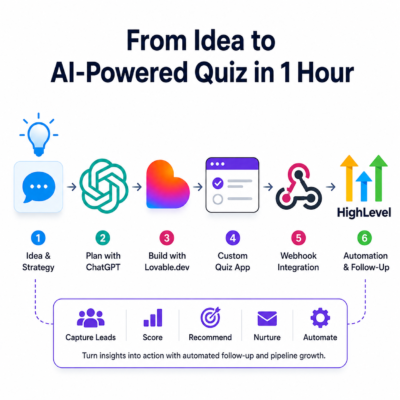
Linear has rapidly become one of the most popular project management and issue tracking tools for startups, developers, and product teams. Meanwhile, HighLevel has become one of the fastest-growing CRM and marketing automation platforms for agencies and growing businesses.

Now the two systems can work together.

HighLevel has introduced a native Linear integration via workflow triggers and actions. This opens up some very interesting opportunities for connecting product development, customer support, marketing automation, CRM workflows, internal operations, and customer communication into one connected system.

What is Linear?

Linear is a modern project management and issue tracking platform built primarily for software teams.

It is designed to help businesses manage:

  • Product roadmaps
  • Feature requests
  • Software bugs
  • Development queues
  • Sprint planning
  • Team collaboration
  • Deployment workflows
  • GitHub-linked development tasks

Linear is often viewed as a cleaner, faster, and more developer-friendly alternative to traditional systems such as Jira, Trello, Asana, and ClickUp.

One of Linear’s biggest strengths is its simplicity and speed. Rather than bloated enterprise project management software, Linear focuses on helping development teams move quickly while keeping communication, prioritisation, and deployment workflows organised.

What is HighLevel?

HighLevel is a CRM and marketing automation platform designed to help businesses centralise customer communication and operational workflows.

HighLevel includes tools for:

  • CRM management
  • Sales pipelines
  • Email marketing
  • SMS marketing
  • Automation workflows
  • Websites and funnels
  • Appointment booking
  • Forms and surveys
  • AI tools
  • Customer conversations
  • Reputation management

HighLevel is increasingly becoming the operational core for many businesses because it brings multiple disconnected tools together into one connected platform.

The HighLevel and Linear Integration

HighLevel now supports native workflow triggers and actions for Linear.

You can read the official HighLevel changelog here: Linear Workflow Actions and Triggers.

This means you can now connect operational development workflows directly into your CRM and marketing automation system.

Traditionally, software development tools and customer communication systems operated separately.

Now businesses can automate workflows between developers, customer support teams, sales teams, marketing departments, CRM systems, and customers.

This creates some extremely practical use cases.

Practical Use Case Examples

1. Automatically Create Linear Issues From HighLevel Support Requests

Imagine a customer submits a support request through a HighLevel form or support funnel.

Instead of manually copying the issue into Linear:

  • HighLevel captures the support request
  • A workflow automatically creates a Linear issue
  • The issue is assigned to the correct project
  • Internal notifications are triggered
  • The customer record is updated inside the CRM

This removes manual admin and ensures development teams receive issues instantly.

2. Feature Request Tracking

Feature requests are one of the hardest things for growing SaaS businesses to manage.

Without proper systems:

  • Requests get lost
  • Teams forget who asked for features
  • Customers never hear back
  • Product planning becomes chaotic

Using HighLevel and Linear together, you could:

  • Capture feature requests through HighLevel forms
  • Automatically create tagged Linear issues
  • Store customer interest in the CRM
  • Add contacts to feature-specific smart lists
  • Trigger follow-up campaigns when features launch

This creates a far more organised product feedback loop.

3. Bug Reporting and Resolution Workflows

A particularly useful application is bug reporting automation.

For example:

  1. Customer reports a bug through HighLevel
  2. Workflow creates a Linear issue
  3. Development team resolves the issue
  4. Linear status changes to “Completed”
  5. HighLevel automatically sends an email update, sends an SMS notification, requests customer feedback, and logs the interaction in the CRM

This dramatically improves customer communication and transparency.

4. Customer Communication After Feature Releases

One of the biggest frustrations customers have with software companies is never hearing back after requesting features.

The Linear integration could help solve this.

Imagine:

  • Customers request a feature
  • Requests are tracked in HighLevel
  • Linear development team builds the feature
  • Once deployed, HighLevel workflows automatically notify everyone who requested it

You could even trigger:

  • Product education emails
  • Webinar invitations
  • Upsell campaigns
  • Customer success sequences
  • Review requests

This transforms development updates into customer engagement opportunities.

5. Internal Team Notifications

The integration is not just useful externally. It can also improve internal operations.

For example, when an issue becomes blocked, you could:

  • Notify management via SMS
  • Send Slack alerts
  • Create escalation tasks
  • Trigger priority workflows

When deployment is completed, you could:

  • Notify support teams
  • Notify sales teams
  • Trigger release announcement campaigns
  • Update internal dashboards

This keeps departments aligned without endless manual communication.

6. SaaS Onboarding Automation

If you run a SaaS business, this integration becomes even more interesting.

Example workflow:

A customer upgrades to a premium plan inside HighLevel.

This could automatically:

  • Create onboarding tasks in Linear
  • Assign setup tasks to developers
  • Trigger implementation checklists
  • Launch onboarding campaigns
  • Notify account managers

This connects operational delivery directly into CRM automation.

Why This Integration Matters

Most businesses still operate using disconnected systems.

For example:

  • Customer support uses one platform
  • Developers use another
  • Marketing runs elsewhere
  • CRM data sits in a separate tool

The result is fragmented communication and inefficient workflows.

The HighLevel and Linear integration helps bridge the gap between product teams, operations, customer support, marketing automation, and CRM management.

This creates a far more connected business infrastructure.

HighLevel Is Becoming More Than Just a CRM

This integration is another sign that HighLevel is evolving beyond traditional CRM functionality.

Businesses increasingly need platforms that connect AI tools, customer communication, internal workflows, operational systems, marketing automation, and third-party applications.

Rather than simply storing customer records, HighLevel is increasingly becoming the operational layer that connects the entire business together.

Final Thoughts

The HighLevel and Linear integration is especially valuable for:

  • SaaS businesses
  • Software companies
  • Agencies with development teams
  • Membership platforms
  • Tech startups
  • Product-led businesses

By connecting development workflows with CRM automation and customer communication, businesses can create faster internal operations, better customer experiences, more organised product management, improved communication, reduced manual admin, and smarter automation workflows.

As businesses continue moving towards more connected operational systems, integrations like this are likely to become increasingly important.

Learn More


Written by Julian Mills – HighLevel consultant and marketing strategist.

Book a Discovery Call with Julian.

Explore MarketerM8 and join our free weekly HighLevel Workshops.

Why & How I Replaced ScoreApp With Lovable.dev and ChatGPT

Why & How I Replaced ScoreApp With Lovable.dev and ChatGPT

Why & How I Replaced ScoreApp With Lovable.dev and ChatGPTAI is changing software faster than most businesses realise.

For years, companies have relied on single-purpose SaaS tools for specific functionalities such as quizzes, assessments, forms, automation and lead generation funnels. But today, AI tools like ChatGPT and Lovable.dev allow businesses to rapidly create custom software themselves.

Recently, I replaced ScoreApp with a custom-built AI-powered quiz application. The first working version took about an hour to create.

The result was not just cheaper. It was more flexible, more tailored to my exact use case and easier to refine over time.

Quick Summary

I replaced ScoreApp with a custom AI-built quiz created using ChatGPT and Lovable.dev. The quiz includes scoring, personalised recommendations, webhook integrations and automated follow-up using HighLevel as the central AI Operating System for marketing automation and CRM.

Can You Replace ScoreApp With AI?

Yes. Tools like ChatGPT and Lovable.dev now allow businesses to rapidly create custom quiz funnels, assessments and lead generation tools without traditional software development.

For many businesses, this means they can now create bespoke tools instead of paying for additional monthly SaaS subscriptions.

That does not necessarily mean every SaaS platform disappears. But it does mean many single-purpose tools are becoming vulnerable to AI-generated alternatives.

What Is Vibe Coding?

Vibe coding is the process of building software conversationally using AI tools rather than writing traditional code manually.

Instead of hiring developers and writing long specifications, you describe what you want, refine the logic conversationally and iteratively improve the software.

That is exactly how this project was built.

Why I Wanted to Replace ScoreApp

I completely understand why ScoreApp became popular.

It solves genuine business problems:

  • Lead generation quizzes
  • Scoring systems
  • Assessments
  • Recommendations
  • Funnels

But increasingly, many businesses are questioning whether they still need separate single-purpose tools for every task.

In my case, I wanted to build a Voice AI Readiness Quiz for my website.

The purpose of the quiz was simple:

  • Ask a series of questions
  • Score the answers
  • Categorise the user
  • Provide recommendations
  • Trigger marketing automation follow-up

Traditionally, this would likely have meant another monthly subscription.

Instead, I decided to build the application myself using AI.

How I Built the Quiz

  1. Mapped out the quiz logic in ChatGPT
  2. Created scoring categories and recommendations
  3. Designed the assessment questions
  4. Built the front-end using Lovable.dev
  5. Refined the layout and logic conversationally
  6. Added webhook integrations
  7. Connected the quiz to HighLevel
  8. Tested and refined the user experience

The entire process felt far more conversational than traditional software development.

It started with a simple prompt:

“Can you help me create a ScoreApp style quiz for my website using Lovable.dev?”

From there, the application evolved step by step through conversation and refinement.

The Prompting Process Matters More Than The Coding

One of the biggest shifts AI introduces is that the real value increasingly comes from business logic, customer understanding and prompting rather than traditional programming knowledge.

The first stage was not coding. It was thinking.

I worked through:

  • The quiz structure
  • Result categories
  • Scoring logic
  • Recommendations
  • Customer journeys
  • Business use cases

Very quickly, the quiz became more sophisticated than the original idea.

For example, during the conversational refinement process, the concept of specialist AI routing emerged.

Rather than treating every enquiry the same, the system could eventually route enquiries to specialist AI agents.

An electrical contractor, for example, might eventually have:

  • An EV charger AI agent
  • An emergency call AI
  • A domestic wiring AI
  • A commercial enquiries AI

This is where AI-assisted development becomes powerful.

You are no longer constrained by the fixed structure of a SaaS platform. You can rapidly adapt software around your exact business process.

The Questions Matter More Than The Technology

One of the most important parts of the process was designing the actual assessment questions.

The quiz explored areas such as:

  • Missed calls
  • Lead handling
  • Voicemail follow-up
  • CRM usage
  • Repeat customer questions
  • Urgency of implementation
  • Average customer value

Some example questions included:

  • How many calls does your business miss in a typical week?
  • What percentage of your calls are new enquiries?
  • Would it help if calls were summarised and added to your CRM automatically?
  • How quickly do you want to improve your call handling?

This type of conversational business logic is where AI-generated software becomes extremely effective.

Then Came Lovable.dev

Once the structure and logic were clear, I used Lovable.dev to generate the first working version of the application.

This is where things become genuinely exciting for marketers, agencies, consultants and small businesses marketers.

Instead of:

  • Hiring developers
  • Writing technical specifications
  • Waiting weeks or months
  • Managing expensive development projects

I could simply continue the conversation.

I refined:

  • Layouts
  • Question flow
  • Recommendations
  • Styling
  • Scoring
  • Integrations
  • Calls to action

Because the system was already functional, every iteration became faster.

Lovable.dev vs ScoreApp

ScoreApp is a polished SaaS platform specifically designed for quizzes and assessments.

Lovable.dev is different.

Rather than giving you a fixed platform, Lovable.dev allows you to rapidly create bespoke tools using AI-generated development workflows.

Unlike traditional quiz platforms like ScoreApp, AI-generated tools can be customised around your exact business process.

This creates huge flexibility for businesses willing to experiment.

But Here’s the Important Point Most People Miss

I do not believe vibe coding completely replaces traditional software development.

What it does do is massively accelerate:

  • Prototyping
  • Testing
  • Experimentation
  • Validation
  • Deployment

The first version of an app may not be the final enterprise-grade system.

But it might be:

  • Good enough to launch
  • Good enough to test
  • Good enough to generate leads
  • Good enough to validate the idea

Later, the application can become more robust using tools like Claude Code or more traditional development approaches.

That dramatically changes the economics of software for small businesses.

The Finished Quiz

Here is the final result:

This is not just a static quiz.

The application includes:

  • Scoring
  • Categories
  • Personalised recommendations
  • Webhook integrations
  • Lead routing
  • CRM integration
  • Marketing automation triggers

Where HighLevel Fits In

Although this project was primarily about replacing ScoreApp, HighLevel still plays an important role.

Once somebody completes the quiz:

  • The data is sent via webhook
  • HighLevel captures the lead
  • Automation takes over
  • Follow-up sequences begin
  • Opportunities can be created
  • Workflows can trigger
  • Appointments can be booked

This is why I increasingly describe HighLevel as an AI Operating System.

The AI-generated front-end tools are becoming easier and easier to build.

But businesses still need a central operational layer that connects:

  • CRM
  • Automation
  • Communications
  • Lead nurturing
  • Workflows
  • Pipelines
  • AI systems

That is where HighLevel becomes incredibly powerful.

I wrote more about that concept here:

HighLevel Is Becoming the AI Operating System for Your Marketing and Business

The Bigger Opportunity

I think many business owners still underestimate what is happening here.

The barrier to software creation has dropped dramatically.

You no longer necessarily need:

  • A development agency
  • Months of planning
  • Large budgets
  • Technical expertise

Instead, businesses can increasingly:

  • Build tools themselves
  • Iterate rapidly
  • Test ideas quickly
  • Create bespoke workflows
  • Replace expensive subscriptions
  • Experiment at speed

Most importantly, businesses can increasingly create software that fits their process rather than forcing their business to fit somebody else’s software.

Frequently Asked Questions

Can ChatGPT build a quiz funnel?

ChatGPT can help structure quiz logic, scoring systems, recommendations, workflows and prompting. Then, combined with tools like Lovable.dev, businesses can rapidly build custom quiz funnels and lead generation systems.

What is Lovable.dev used for?

Lovable.dev is an AI-powered application builder that allows users to create websites, tools and applications conversationally using AI-assisted workflows.

Can AI replace SaaS tools?

In some cases, yes. AI-assisted development tools now allow businesses to rapidly create bespoke alternatives to many single-purpose SaaS applications.

How long does it take to build a quiz using AI?

Simple working versions can sometimes be created in hours rather than weeks, especially when using conversational AI development tools.

Do you still need developers?

Sometimes yes. Vibe coding is excellent for rapid prototyping, testing and deployment, but more robust enterprise systems may still benefit from traditional development practices.

Final Thoughts

I do not believe every SaaS tool will disappear overnight.

But I do think many single-purpose tools are going to face increasing pressure from AI-assisted custom development.

The businesses that benefit most will likely be the ones willing to:

  • Experiment
  • Prototype quickly
  • Integrate systems intelligently
  • Embrace AI-assisted workflows early

In my case, replacing ScoreApp with a custom AI-built solution took about an hour.

That would have sounded ridiculous even a couple of years ago.

Now it is becoming normal.

Written by Julian Mills – HighLevel consultant and marketing strategist. About Julian Mills.

Book a Discovery Call with Julian.

Check out HighLevel at HighLevel agency – MarketerM8.com

How Do HighLevel AI Studio and Lovable Compare (as of May 2026)?

how do HighLevel AI Studio and Loveable.dev compare

how do HighLevel AI Studio and Loveable.dev compare

AI “vibe coding” has moved fast. What used to take weeks of development can now be done in minutes with a well-written prompt.

Two platforms leading this shift are HighLevel AI Studio and Lovable. At first glance, they look very similar. You type what you want, the AI builds it. Job done.

But once you dig deeper, they are solving very different problems.

And more importantly, they are not necessarily competing in the way people think.

The headline difference

Lovable is an AI app builder.

HighLevel AI Studio is part of an AI-powered business operating system.

Lovable focuses on generating applications and digital tools. Frontend, backend, user experience, interfaces, and deployment.

HighLevel AI Studio sits inside a complete CRM and marketing platform. Anything you build has the potential to connect with contacts, pipelines, automations, calendars, and messaging.

So while both tools “build” / vibe code, what they build is fundamentally different.

What you can build with Lovable

Lovable is designed for building things such as:

  • SaaS products
  • Web apps
  • Dashboards
  • Client portals
  • Interactive tools
  • Lead generation quizzes

In simple terms, Lovable is trying to replace developers for a large class of applications.

What you can build with HighLevel AI Studio

HighLevel AI Studio is designed for building things inside the HighLevel ecosystem, such as:

  • Funnels and landing pages
  • Lead capture tools
  • Booking systems
  • Marketing assets
  • Internal business tools
  • CRM-connected experiences

The key difference is that HighLevel already includes the CRM, email marketing, SMS, automations, calendars, pipelines, forms, funnels, and follow-up systems.

That means the tool is not just about building something that looks good. It is about building something that can sit inside a working marketing system (AI Operating System).

The mistake most people make

Most comparisons try to pick a winner.

But I do not think that is the right way to look at HighLevel AI Studio and Lovable.

In many cases, it is not a case of choosing one or the other.

In fact, they can complement one another very well.

They are not necessarily competitors. They are complementary

The smarter approach may be to use each tool for what it is best at.

  • Use Lovable to build the front-end experience, app, tool, or quiz.
  • Use HighLevel to manage the CRM, automations, lead nurture, pipeline, email, SMS, and follow-up.

That combination is extremely powerful.

Lovable can build the experience. HighLevel can run the business process behind it.

———————————-
A real-world example

Here is a recent example from my own setup.

I wanted to create an online quiz to capture leads.

I could have used a tool like ScoreApp and paid another monthly subscription.

Instead, I spent about an hour building the quiz in Lovable.

Then I connected it to my HighLevel account via a webhook.

Now the process looks like this:

  1. The quiz is built and hosted using Lovable.
  2. A visitor completes the quiz.
  3. The quiz data is sent into HighLevel via a webhook.
  4. HighLevel creates or updates the contact.
  5. HighLevel then handles the marketing follow-up.

That follow-up could include emails, SMS messages, pipeline updates, internal notifications, appointment booking, lead scoring, or whatever else you want to happen next.

So Lovable handles the interactive quiz experience. HighLevel handles the marketing engine behind it.

Here is the example quiz:

———————————-

Code vs ecosystem

This is where the trade-off becomes clear.

Lovable gives you flexibility

Lovable is better suited when you want to create something more custom, more app-like, or more standalone.

You can build more bespoke experiences and tools that may not be possible inside a standard CRM or funnel builder.

HighLevel gives you the operating system

HighLevel is stronger when you want the thing you build to connect directly into your business systems.

Capturing a lead is only the first step.

The real value comes from what happens afterwards.

  • Does the lead get followed up?
  • Does the sales team get notified?
  • Does the contact enter the correct nurture sequence?
  • Does the opportunity move into the right pipeline?
  • Does the business have visibility of what happened?

HighLevel is rapidly becoming the AI Operating System of choice. That is where HighLevel becomes very powerful.

Ease of use

Lovable is very impressive out of the gate. You can describe what you want, and it can generate a polished interface quickly.

But with more flexibility comes more responsibility.

You may need to think about logic, integrations, data handling, webhooks, deployment, and testing.

HighLevel AI Studio is more constrained, but it lives inside a system that already contains many of the business tools you need.

So Lovable may give you more creative freedom.

HighLevel may give you a faster route to a working business process.

The timing factor

It is also worth remembering that HighLevel AI Studio is very new.

It was only launched in April 2026.

HighLevel have also expressed that AI Studio is expected to evolve rapidly.

So while Lovable may currently be ahead in some areas, especially around app-style building and design flexibility, I would not assume that gap will stay the same for long.

HighLevel already has the advantage of the wider ecosystem.

If AI Studio continues to improve quickly, that makes things very interesting.

Watch out, Lovable.

So which should you use?

The answer depends on what you are trying to achieve.

Use Lovable if:

  • You want to build a standalone app or tool.
  • You need a more custom user experience.
  • You want something that feels more like software than a funnel.
  • You are comfortable connecting it to other systems.

Use HighLevel AI Studio if:

  • You want to build inside your CRM and marketing platform.
  • You care about lead capture, follow-up, automation, and pipelines.
  • You want fewer tools and fewer subscriptions.
  • You want your AI-built assets to connect to your business processes.

Use both if:

  • You want a custom front-end experience connected to a serious CRM.
  • You want to replace standalone tools like quiz builders or calculators.
  • You want to capture leads in creative ways and automate the follow-up.
  • You want Lovable to build the experience and HighLevel to run the system.

The real takeaway

This is not a straight fight.

Lovable is trying to replace developers.

HighLevel is trying to replace your tech stack. It is already the #1 CRM & marketing automate system – with over 2 million users.

And increasingly, the real opportunity is not choosing between them.

It is combining them.

Build the experience with Lovable. Run the system with HighLevel.

That is where I think this space is heading.

Written by Julian Mills – HighLevel consultant and marketing strategist. About Julian Mills.

Would you like to learn more about HighLevel – check out HighLevel agency – MarketerM8

HighLevel Is Becoming the AI Operating System for Your Marketing – and Business

AI Operating System HighLevel

AI Operating System HighLevel
Right now, most business owners are focused on AI tools.

ChatGPT. Voice AI. Automation tools. Quiz builders. Landing page generators.

Every week there’s something new.

And they’re all impressive.

But there’s a bigger question almost nobody is asking:

Where does all of this actually come together?

Because tools on their own don’t build businesses.

Systems do.

The real problem with AI tools

AI has made it incredibly easy to build useful things.

I recently created a “missed call revenue” calculator in under an hour using AI tools. Something that previously would have required a dedicated platform like ScoreApp. (You can try it out below.)

The barrier to building tools has collapsed.

But that creates a new problem.

Because building the tool is no longer the hard part.

What happens next is what matters

When someone interacts with your AI tool:

  • Where is their data stored?
  • What triggers the follow-up?
  • How are they nurtured?
  • How are they tracked?
  • How does it turn into revenue?

This is where most businesses get stuck.

They end up with a collection of clever tools, but no system connecting them.

And without a system, nothing really works together.

This is where an AI Operating System comes in

What’s missing for most businesses isn’t more tools.

It’s a central system that:

  • stores the data
  • connects the tools
  • triggers the actions
  • manages the customer journey

This is what an AI Operating System actually is.

Not another tool.

But the system everything else runs through.

Want to see how this works in practice?
Book a Discovery Call with Julian

HighLevel as the AI Operating System

This is where HighLevel becomes so powerful.

HighLevel isn’t just another marketing tool.

It’s becoming the system that sits at the centre of everything.

It gives you:

  • A central CRM and database
  • Built-in automation and workflows
  • Communication tools, including email, SMS and WhatsApp
  • Pipelines to manage opportunities
  • Funnels and websites for presentation

And most importantly:

A single place where all your data lives and can be acted on.

Think of AI tools differently

Most people see AI tools as the solution.

In reality, they are just:

  • inputs, such as data capture, conversations and interactions
  • interfaces, such as voice, chat, forms and quizzes

They generate activity.

But they don’t create a system.

That only happens when everything connects into one place.

How it actually works

When you connect AI tools into a system like HighLevel:

  • A quiz captures a lead
  • A Voice AI answers a call
  • A chatbot qualifies an enquiry

All of that data flows into one place.

From there:

  • Automations trigger
  • Follow-up happens
  • Leads are nurtured
  • Opportunities are tracked
  • Conversations turn into customers

That is the difference between using AI and building a system powered by AI.

A quick analogy

If this concept feels familiar, it should.

It’s very similar to what WordPress did for websites.

WordPress didn’t win because it did everything itself.

It won because it became the platform everything connected into and it could be easily customised.

Third party plugins extended it.

Themes shaped it.

Everything worked through one core system.

We are now seeing the same shift happen with AI and marketing systems.

A real example

The missed call calculator I built is a simple example.

The tool itself is useful.

But the real value comes from what happens after someone uses it:

  • Their data is captured
  • It is sent into HighLevel via webhook
  • A workflow is triggered
  • Follow-up begins
  • The lead moves into a pipeline

Try it for yourself below:

Without the system, it’s just a calculator.

With the system, it becomes part of a revenue-generating process.

Want to learn how to build this for your business?
Book onto our next AI Employee Workshop

Why this matters now

Single-purpose tools are becoming easier to build.

In many cases, you can now recreate them yourself using AI.

That means their standalone value is decreasing.

But systems are becoming more important, not less.

Because the more tools you use, the more you need something to connect them.

Why not build your own system?

You could build your own setup using databases, APIs and custom integrations.

But for most businesses, that leads to:

  • complexity
  • maintenance
  • higher costs
  • more things to break

And even then, you’re still trying to recreate something that platforms like HighLevel already provide.

The shift that’s happening

We are moving into a world where:

  • tools are easy to build
  • AI is everywhere
  • customisation is expected

But the businesses that win will not be the ones using the most tools.

They will be the ones with the best system.

Final thought

HighLevel is becoming the AI Operating System for your marketing and customer workflows.

Not by replacing every tool.

But by giving you a central customisable system where everything connects, runs, and delivers results.

Ready to see how this could work in your business?
Book a Discovery Call with Julian

Looking to learn more about HighLevel – check out MarketerM8 – HighLevel reseller

Written by Julian Mills – HighLevel consultant and marketing strategist. About Julian Mills.