How Much Does a HighLevel Consultant Cost in the UK?

How Much Does a HighLevel Consultant Cost in the UK?If you’re considering bringing in a HighLevel consultant, one of your first questions is likely to be:

How much is this going to cost?

Unfortunately, there isn’t a simple answer.

You might find someone who will help you with HighLevel for a relatively modest hourly rate. At the other end of the scale, you could easily spend £10,000, £15,000 or considerably more on a major CRM implementation.

But I think there’s a more important question you should ask before comparing prices:

What exactly am I paying a HighLevel consultant to do, and what position will my business be in when they’ve finished?

Because in my experience, how you work with a consultant can matter far more than their headline fee.

What are you actually paying a HighLevel consultant for?

There are several very different services that tend to get bundled under the term “HighLevel consultant”.

You might simply need someone to carry out some technical setup.

You might need help migrating from another CRM such as HubSpot, Keap, Salesforce or Mailchimp.

You might want someone to build workflows, pipelines, calendars, forms, funnels, websites or AI automations.

You might need training for your team.

Or you might need someone who can look at your wider sales and marketing processes, understand what you’re trying to achieve and help determine what should actually be built in the first place.

Those are very different jobs.

And inevitably, they come with very different price tags.

The $15,000 “black box” mistake

One approach I would be very wary of is handing everything over to an outside consultant.

It might look something like this:

“Here’s our brief. Here’s $15,000. Come back in a month with our new HighLevel system.”

It sounds appealing.

You carry on running your business while somebody else disappears into HighLevel and builds everything for you.

A month later, they unveil the finished system.

The problem is that you can end up with a black box.

There might be dozens of workflows, pipelines, triggers, forms and automations. Technically, everything may even work exactly as specified.

But does anyone inside your business really understand it?

And what happens when your business changes?

Because it will.

Even the best HighLevel consultant doesn’t know your business like you do

This isn’t a criticism of consultants.

Even the best HighLevel consultant in the world cannot live and breathe your business in the same way you do.

They don’t hear every conversation your salespeople have with prospects.

They don’t know every objection customers raise.

They aren’t involved in the little operational problems that occur every week.

They don’t necessarily know that Sarah in accounts has developed a clever workaround for something, or that your sales team has quietly stopped following part of the sales process because it doesn’t work in the real world.

Your business is constantly evolving.

Your CRM and marketing automation therefore need to evolve with it.

That’s why I think it’s dangerous to completely abdicate responsibility for your marketing to an outside consultant.

Marketing is too important to your business to simply hand over and forget about.

You can outsource technical implementation.

You can bring in specialist knowledge.

You can ask someone experienced to challenge your thinking.

But I believe the knowledge and understanding of your marketing systems should ultimately exist inside your business.

This is why I believe every business needs a CRM Champion

When I work with a HighLevel client, one of my first objectives is to help them identify, train and develop an internal CRM Champion.

The CRM Champion doesn’t need to be an IT expert.

In fact, I’d generally prefer someone who understands, or is close to, your marketing, sales and customer journey.

They’re the person inside the business who gradually develops an understanding of how HighLevel supports the company.

They don’t necessarily have to know how to build every complicated automation themselves.

But they should understand what the system is doing, why it is doing it and what needs to change as the business evolves.

You can read more about how the CRM Champion fits into my wider approach on my How I Work With HighLevel Clients page.

For me, this is a much healthier model than making the business permanently dependent upon an outside HighLevel consultant.

Start with the business, not HighLevel

Another mistake is opening HighLevel and immediately starting to build things.

Before we start implementing, I want to understand the business.

What happens when somebody becomes a lead?

What should happen next?

What happens if they don’t respond?

How do they become a customer?

What communications do they receive?

Where are opportunities being lost?

What repetitive tasks could be automated?

And, importantly, what shouldn’t be automated?

This thinking then becomes what I call the Marketing Automation Plan, or MAP.

I often describe the MAP as the architect’s blueprint for the implementation.

Rather than randomly building workflows and automations, we have a plan showing what we’re trying to achieve.

And it isn’t a document that gets created once and then forgotten.

It’s a living blueprint that continues to evolve alongside the business.

I’ve explained the complete process, from the initial Discovery Call through to the MAP, implementation and ongoing support, on my How I Work With HighLevel Clients page.

So how much should a HighLevel consultant cost?

There isn’t a universal “correct” price.

A freelancer carrying out a clearly defined technical task might charge a few dollars.

Another consultant or agency might quote a fixed price for an implementation.

A major implementation involving strategy, migration, integrations, automation and training could run into many thousands of pounds.

My own consultancy rate is currently £1,500 per day.

But there’s something equally important about the way I charge.

Wherever possible, I prefer to work with clients on a pay-as-you-go basis rather than tying them into a long-term monthly consultancy retainer.

Why I don’t believe in retainers just for the sake of retainers

To be clear, there are circumstances where a retainer can make perfect sense.

If someone is continually managing campaigns, producing marketing, optimising advertising or carrying out a defined amount of work every month, there is an ongoing service to pay for.

What I don’t believe in is charging a consultancy retainer simply so that I can remain involved.

If we’ve done our job properly, there should come a point where you need less of me.

Your system is working.

Your internal CRM Champion understands it.

Your team can make routine changes.

You can build many of your own workflows and campaigns.

So why should I continue charging you a substantial amount every month if there isn’t a substantial amount for me to do?

Eventually, the client starts asking:

“What exactly are we paying this retainer for?”

The retainer gets cancelled which “burns bridges” and what had previously been a good relationship can end with both sides feeling dissatisfied.

I’d rather avoid that situation altogether.

My goal is actually to make you need me less

This might sound like a strange business model for a consultant.

But one of my measures of success is getting a client and their CRM Champion self-sufficient as quickly as reasonably possible.

If that means there are no more consultancy days for me to charge you for, that’s fine.

It means we’ve achieved what we set out to achieve.

I don’t want to deliberately create dependency simply to generate recurring consultancy fees.

And experience has taught me that something interesting happens when you work this way.

Happy clients tend to come back

The first thing that happens is that clients come back when they genuinely need help.

Their CRM Champion may become perfectly capable of handling most of the day-to-day work.

But as the business becomes more sophisticated with HighLevel, new ideas emerge.

Perhaps they want to introduce AI.

Perhaps there’s a particularly complicated automation.

Perhaps another system needs integrating.

Perhaps they want to completely rethink part of their customer journey.

That’s when it can make sense to bring me back in.

The difference is that they’re not paying me every month just in case they need me.

They’re paying for my time when there’s something valuable for us to work on together.

Happy clients also tell other people

The second thing that happens is referrals.

If a client feels that I’ve genuinely tried to make them self-sufficient rather than deliberately making them dependent upon me, then they’re much more likely to talk positively about the experience.

That leads to referrals and opportunities for me to work with new clients on new projects.

For me, that’s a much healthier business model than trying to maximise the amount I can charge every individual client each month.

One of my client relationships demonstrates this perfectly

My very first CRM consultancy client is a good example.

I started working with him in 2009.

HighLevel didn’t exist then. The CRM and marketing automation platform we were using was Infusionsoft, which subsequently became Keap.

When my client retired in 2010, he no longer needed my services.

There was no retainer to fight over and no awkward conversation about cancelling a contract.

We simply stopped working together and parted on good terms.

And that could easily have been the end of the story.

Except, fourteen years later, in 2024, he contacted me again.

He was involved in a new project launching an international art competition and needed a CRM and marketing automation system.

The technology had changed enormously since we’d originally worked together.

This time, HighLevel was the platform I recommended.

But when he needed CRM and marketing automation expertise again, I was his first choice.

For me, that’s what a successful consultancy relationship should look like.

I would rather have a former client who is delighted to call me again fourteen years later than a client who finally cancels a retainer wondering why they’ve been paying it for the previous six months.

Training your CRM Champion

Becoming self-sufficient doesn’t mean your CRM Champion has to work everything out alone.

We can combine training with implementation so that we’re working on your actual business and HighLevel account rather than using generic examples.

For more intensive help, I offer on-site HighLevel training and implementation, where we can work with your team on the actual systems and processes you need.

If you’re not ready for bespoke consultancy, you may not need to pay for training at all.

We also run a rolling programme of 13 free live HighLevel training workshops covering the major areas of the platform.

You can also read my guide to the best ways to learn HighLevel.

What should you ask before hiring a HighLevel consultant?

Price matters, but I wouldn’t choose a consultant based solely on their hourly rate, day rate or project fee.

I’d want to know:

  • Will they spend time understanding my business before they start building?
  • Do they understand marketing and sales, or primarily the HighLevel software?
  • Will they document what they’re building and why?
  • Will they train somebody inside my business?
  • Will we understand the system when they’ve finished?
  • Are they helping us become more self-sufficient or more dependent upon them?
  • What happens when our business processes change?
  • Are we being tied into an ongoing retainer?
  • If we stop paying the consultant, can we continue running and developing the system ourselves?

There’s another question I’d ask too:

Do I actually like and trust this person enough to work closely with them?

A good HighLevel implementation requires the consultant to understand a lot about how your business really works. That means there needs to be a mutual fit and some chemistry between both sides.

Freelancer, HighLevel technician or marketing consultant?

This is also why comparing HighLevel consultants purely on price can be misleading.

If you already know precisely what needs building and simply need somebody technically competent to build it, a good HighLevel freelancer may be exactly what you need.

There’s little point paying for strategic consultancy you don’t require.

But if the challenge is working out what should be built in the first place, you’re buying something different.

You’re paying for experience, questioning, strategy and judgement as well as technical HighLevel knowledge.

Personally, I describe my own positioning as marketing first, HighLevel second.

I’ve worked in direct-response marketing since 1996 and with CRM and marketing automation systems since 2009.

HighLevel is an extraordinarily capable tool, but ultimately it is still a tool.

Knowing which buttons to press isn’t the same as knowing what marketing and sales process you should create.

So, how much does a HighLevel consultant cost in the UK?

The answer could be anything from a relatively small amount for a few hours of specialist technical help to tens of thousands of pounds for a substantial implementation.

My own consultancy rate is £1,500 per day, normally working on a pay-as-you-go basis.

But I wouldn’t recommend choosing your HighLevel consultant by asking:

“Who can build this for the lowest price?”

And I wouldn’t simply ask:

“What will I get for £15,000?”

I’d ask:

“When this project is finished, what knowledge and capability will be left inside my business?”

If the answer is a mysterious black box that only the consultant understands, I’d be concerned.

If the answer is a well-designed HighLevel system, a documented plan, an increasingly capable internal CRM Champion and an experienced consultant you can call when you genuinely need them, that’s a very different proposition.

The objective shouldn’t be to become permanently dependent on your HighLevel consultant.

A good consultant should help you become increasingly capable without them.

And then be there when you need them for the next challenge.

Frequently Asked Questions About HighLevel Consultant Costs

How much does a HighLevel consultant cost in the UK?

There isn’t a standard industry rate. The cost will depend on whether you need a few hours of technical assistance, training, strategic consultancy or a substantial HighLevel implementation.

My own consultancy rate is currently £1,500 per day, normally on a pay-as-you-go basis rather than an ongoing consultancy retainer.

How much does it cost to have HighLevel set up for you?

That depends enormously on what you mean by “set up”.

Connecting your domain, email, calendars and basic settings is very different from designing sales pipelines, migrating data, creating workflows, building marketing campaigns and integrating HighLevel with other systems.

A substantial implementation can therefore cost many thousands of pounds. I’d be wary of comparing quotes until you understand exactly what each consultant is proposing to do.

Should I pay a fixed price for a HighLevel implementation?

Sometimes a fixed price makes sense when the scope is clearly defined.

My concern is with the “black box” approach where a business hands over a brief and a substantial sum of money, then expects a consultant to disappear for a month and return with the perfect finished system.

Your business will continue to change after the implementation is finished. I therefore prefer a Done-With-You approach where knowledge is transferred to somebody inside the business as we progress.

Do I need a monthly HighLevel consultant retainer?

Not necessarily.

A monthly retainer can make sense when there is genuine ongoing work to be done every month.

I don’t believe in charging a retainer simply to remain available. My preference is to help clients and their CRM Champions become increasingly self-sufficient and then charge for additional consultancy when they actually need my help.

Is a cheaper HighLevel freelancer a better option?

It can be.

If you know exactly what needs doing and simply need somebody technically competent to build it, a good freelancer could be a much more economical choice than an experienced marketing consultant.

The distinction becomes important when you don’t know exactly what should be built.

In that situation, you may need somebody who can understand and challenge your existing marketing and sales processes before deciding how HighLevel should be configured.

Should I hire a HighLevel expert from Fiverr?

Yes, you can, and in the right circumstances it can be a very cost-effective way to get help with HighLevel.

I would be most comfortable using a HighLevel freelancer from Fiverr, Upwork or a similar platform when you have a specific, clearly defined task and you already have a good working knowledge of HighLevel yourself.

For example, you might know exactly what you want a workflow to do, but would rather pay someone experienced to build it for you.

What I wouldn’t necessarily expect is for a freelancer hired for an individual task to develop a deep, long-term understanding of your business, your customers and your wider marketing strategy.

That’s not a criticism of the freelancer. You’re hiring them to complete a particular task, and that’s what you should expect them to concentrate on.

The danger comes when a business outsources lots of individual tasks without anybody internally understanding how all the pieces fit together.

So yes, hiring a HighLevel expert from Fiverr or a similar platform can make perfect sense. But I would recommend doing so when you know what you want built and somebody inside your business understands HighLevel well enough to oversee the work.

Should I hire a HighLevel Certified Admin?

A HighLevel Certified Admin can be a very good choice, particularly if you’re looking for somebody with strong knowledge of the HighLevel platform.

These people have invested in HighLevel’s Certified Admin Programme, which demonstrates that they’re serious about developing their HighLevel knowledge and working professionally with HighLevel clients.

I haven’t personally gone down the Certified Admin route because I position what I do somewhat differently.

I’m not primarily offering a HighLevel administration service. I’m a marketing automation consultant who uses HighLevel as the technology platform.

I’ve worked in marketing for over 30 years and with CRM and marketing automation since 2009. So when I’m working with a client, my role isn’t simply to ask, “How do we build this in HighLevel?”

I’m also asking, “Should we be doing this in the first place? What are we trying to achieve? And is there a better way of designing the marketing or sales process?”

So I wouldn’t regard the choice as Certified Admin versus non-Certified Admin.

I’d look at what your business actually needs.

If you need someone with strong HighLevel administration and implementation skills, a Certified Admin could be an excellent choice.

If you need someone to help you think through your marketing, sales processes and automation strategy as well as implementing the technology, I’d look for a consultant with that broader experience.

Can I set up HighLevel myself?

Yes.

HighLevel doesn’t require you to employ a consultant, and many businesses can learn to do a considerable amount themselves.

We actually encourage this. Our objective is to develop capability inside the business rather than create unnecessary dependence on an outside consultant.

If you’d like to learn the platform, see our free live HighLevel training workshops.

Should my business have an in-house HighLevel expert?

I recommend having someone internally who takes ownership of the CRM and marketing automation system.

I call this person the CRM Champion.

They don’t need to know everything HighLevel can do. Their role is to understand your business, your sales and marketing processes and how HighLevel supports them.

They can handle the everyday work and bring in specialist assistance when they encounter something more advanced.

How long should I need a HighLevel consultant for?

Ideally, your dependency on the consultant should reduce over time.

My objective is to get the client and their CRM Champion self-sufficient as quickly as reasonably possible.

That doesn’t necessarily mean we’ll never work together again. In my experience, successful clients frequently return with more ambitious projects where their CRM Champion wants additional advice or technical assistance.

What should I look for when hiring a HighLevel consultant?

I’d look beyond their knowledge of HighLevel itself.

Ask whether they understand marketing and sales, how they will learn about your business, whether they will document what they build, whether they will train your team and what happens when the initial implementation ends.

Most importantly, ask yourself whether their objective appears to be making your business more capable or making your business more dependent on them.

What’s the best way to get started with a HighLevel consultant?

I recommend starting with a conversation rather than asking immediately for an implementation quote.

My own process begins with a 20-minute Discovery Call. If there’s a mutual fit and it makes sense to continue, we can then have a more detailed Discovery and Strategy session before deciding what, if anything, needs to be built.

Book a 20-minute Discovery Call here.

Julian Mills HighLevel Consultant and Marketing Automation Strategist

About the Author

Julian Mills

HighLevel Consultant & Marketing Automation Strategist

Julian Mills helps business owners automate lead generation, sales follow-up, customer communication and business processes using HighLevel and MarketerM8. Since 2009 he has helped businesses implement CRM, marketing automation and AI-powered systems that save time, improve customer experience and generate more sales.

About Julian
Book a Discovery Call
Join a Free HighLevel Workshop
Learn About HighLevel with MarketerM8


🎓 HighLevel Live Training Workshop #10 : Events & Courses Workshop : 2 February 2027

HighLevel isn’t only a CRM, marketing automation and sales platform.

You can also use it to create and sell online courses, deliver training, run events and manage ticketing and create Communities.

That opens up a completely different range of possibilities for businesses, consultants, training providers, membership organisations and event organisers.

You could potentially use HighLevel to:

  • create an online course;
  • sell paid training;
  • deliver free customer education;
  • provide onboarding or staff training;
  • offer recurring membership-based learning;
  • run workshops and seminars;
  • manage conferences;
  • host webinars and online events;
  • sell event tickets;
  • run free RSVP events;
  • issue QR-code tickets;
  • check attendees in at the venue;
  • and automate communication before and after an event.

And because your courses and events can sit alongside your CRM, payments, email, SMS, workflows and customer data, you can create a much more joined-up experience.

That’s what we’ll explore in our free HighLevel Events & Courses training workshop.

This workshop is part of MarketerM8’s rolling programme of 13 free live HighLevel training workshops.

GoHighLevel Courses Events and Ticketing training workshop

Want to Build Courses, Run Events or build Communities in HighLevel?

Join our free live HighLevel Courses, Events & Ticketing workshop and learn how to create training, sell access, run events and manage attendees inside HighLevel.

Register for the next Free HighLevel Courses, Events & Ticketing Training Workshop

Can You Build Online Courses in HighLevel?

Yes.

HighLevel includes dedicated course functionality that lets you create, organise and deliver online learning.

A course can contain structured content that learners work through over time.

That might include:

  • video lessons;
  • written content;
  • training modules;
  • supporting resources;
  • downloadable material;
  • and other learning content.

HighLevel’s current course system allows you to create the course, organise the content, create an offer, configure pricing and then make the course available to learners.

Who Could Use HighLevel Courses?

The obvious use case is somebody selling online training.

But that’s far from the only one.

HighLevel courses could potentially be useful for:

  • coaches;
  • consultants;
  • training businesses;
  • membership organisations;
  • professional services firms;
  • software companies;
  • franchises;
  • customer onboarding;
  • internal staff training;
  • partner education;
  • and lead-generation programmes.

A course doesn’t necessarily need to be something you sell.

It could simply be the most effective way of delivering repeatable information.

Free Courses vs Paid Courses in HighLevel

HighLevel can support both free and paid course models.

You might create a free course to:

  • generate leads;
  • educate prospects;
  • support customer onboarding;
  • teach customers how to use your service;
  • or demonstrate your expertise.

Alternatively, the course itself may be the product.

HighLevel currently allows course pricing structures including free, one-time payment and recurring payment.

This means the platform can potentially support both straightforward course sales and ongoing membership-style training.

Start With the Learning Outcome, Not the Course Builder

This follows exactly the same philosophy we’ve used throughout these HighLevel workshops.

Don’t start with:

“How do I create a course in HighLevel?”

Start with:

“What should somebody know or be able to do when they’ve completed the course?”

Then work backwards.

What modules do they need?

What lessons?

What examples?

What supporting resources?

What order should everything be taught in?

Learning objective → Course structure → Lessons → Delivery → HighLevel setup

HighLevel is the delivery platform.

It doesn’t replace good training design.

Structure Your HighLevel Course Properly

A common mistake when building online courses is simply uploading a collection of videos and calling it a course.

A useful course should guide the learner through a logical journey.

Think about:

  • what they need to understand first;
  • what can be taught later;
  • how long lessons should be;
  • where examples will help;
  • what practical action they should take;
  • and how each lesson builds on the previous one.

The technology is easy compared with designing a genuinely useful learning experience.

HighLevel Courses Can Be Sold as Offers

Creating the course content is only one part of selling online training.

You also need to decide how somebody gets access to it.

HighLevel uses offers as part of this process.

This lets you package and sell access to your course with an appropriate pricing structure.

For example:

  • free access;
  • one-off course payment;
  • recurring membership;
  • or another suitable offer structure.

The commercial model should reflect the value you’re providing rather than simply copying what another course creator does.

Courses Can Become Part of a Wider Customer Journey

This is where using HighLevel becomes particularly interesting.

Imagine somebody purchases a course.

You may want the process to look something like this:

Customer buys course → Contact updated → Course access granted → Welcome email sent → Onboarding workflow begins → Follow-up communication scheduled

Now your online course isn’t isolated from your CRM.

It becomes part of the wider customer relationship.

Use Courses for Customer Onboarding

One of my favourite non-traditional uses of online courses is customer onboarding.

If every new customer needs to learn the same things, ask whether some of that education could be delivered systematically.

For example, an onboarding course could explain:

  • how your service works;
  • what happens next;
  • what information you need;
  • how customers should communicate with you;
  • how to use a portal or software platform;
  • common questions;
  • and how to get the best result from working with you.

This doesn’t necessarily replace personal service.

It can remove repetitive explanation so your team has more time for higher-value conversations.

Use HighLevel Courses for Staff Training

The same principle can apply internally.

Perhaps every new employee needs training on:

  • company processes;
  • systems;
  • customer service standards;
  • sales procedures;
  • compliance;
  • or specific job responsibilities.

Instead of relying entirely on one employee repeatedly delivering the same training, structured course content can create consistency.

That can be particularly valuable when a business is growing.

What About HighLevel Communities?

HighLevel also includes Communities.

This allows you to create a private or branded space where members can interact, access content and engage with each other.

A community could potentially sit alongside your course.

For example:

Course delivers structured learning → Community provides discussion, support and interaction

HighLevel also allows courses to be made available within communities, including paid-course models.

But for this workshop, we’ll keep the main focus on Courses and Events, with Communities as an additional option where it makes sense.

HighLevel Now Has Dedicated Events & Ticketing

This is one of the most significant developments in this part of HighLevel.

HighLevel now has a dedicated Events system for managing public-facing events.

This is different from simply creating an appointment calendar.

HighLevel Events is designed for things such as:

  • workshops;
  • seminars;
  • conferences;
  • webinars;
  • networking events;
  • open days;
  • live performances;
  • training events;
  • and other experiences where people register or buy tickets.

The event can then be managed from the same HighLevel account as your CRM, payments and marketing.

Ticketed Events vs RSVP Events

HighLevel currently supports two main event models.

Ticketed Events

A ticketed event can have ticket types and a checkout process.

That can be useful for:

  • paid workshops;
  • conferences;
  • training days;
  • concerts;
  • paid webinars;
  • VIP events;
  • and other events where a ticket is required.

RSVP Events

An RSVP event is designed for events where people need to register but don’t need to go through a payment checkout.

For example:

  • free workshops;
  • networking events;
  • open days;
  • free webinars;
  • internal events;
  • or community gatherings.

The distinction matters because the customer journey is different.

HighLevel Events Can Be In-Person or Online

Events aren’t restricted to physical venues.

HighLevel supports different location models.

An in-person event can include a physical venue and address.

An online event can include information such as:

  • meeting link;
  • joining instructions;
  • session information;
  • and access details.

This makes the event functionality relevant to both physical and virtual training.

Create a Public Event Page in HighLevel

Every event needs somewhere to explain what it is and why people should attend.

HighLevel Events allows you to create a public event experience including information such as:

  • event title;
  • description;
  • date and time;
  • location;
  • ticket or RSVP options;
  • event schedule;
  • speakers;
  • and registration.

That means you don’t necessarily need one system for the event page, another for ticket sales and another for your CRM.

Sell Multiple Ticket Types

HighLevel’s current event system supports multiple ticket types.

That opens up possibilities such as:

  • Standard Ticket;
  • VIP Ticket;
  • Early Bird Ticket;
  • Member Ticket;
  • Free Ticket;
  • or other pricing tiers.

You can also manage ticket pricing, inventory and sales windows.

This makes the system considerably more useful for events where different attendees need different access or pricing.

Use Ticket Limits to Manage Capacity

Physical venues have limits.

Some online events do too.

Your ticket setup can help control how many places are available.

This can prevent the awkward situation of selling more tickets than the event can accommodate.

HighLevel Events Can Use Coupon Codes and Add-Ons

The current Events platform also supports promotional functionality including coupon codes and add-ons.

This means the event sales process can potentially support:

  • discount codes;
  • promotional pricing;
  • additional purchases;
  • or event extras.

Again, only use these where they genuinely improve the offer.

Don’t add commercial complexity simply because the feature exists.

HighLevel Generates QR-Code Tickets

Once someone registers for a ticketed event, HighLevel can issue a QR-code ticket.

That QR code can then be used when the attendee arrives.

This brings the online registration process into the physical event itself.

Check Attendees In With the HighLevel Mobile App

At the event, staff can scan tickets using the HighLevel mobile app.

That lets you check attendees in and track attendance.

So the journey can become:

Visitor discovers event → Registers or buys ticket → Receives QR ticket → Arrives at event → QR scanned → Attendance recorded

That is a genuine event-management workflow rather than simply an online booking form.

Why Event Check-In Data Matters

Knowing who registered is useful.

Knowing who actually attended is even more useful.

There is often a meaningful difference between the two.

Attendance data can inform what happens next.

For example:

  • attendees may receive event follow-up;
  • no-shows may receive a recording or another invitation;
  • VIP attendees may follow a different journey;
  • or sales opportunities may be created based on attendance.

This is where Events and the HighLevel CRM begin working together.

Use Workflows Before and After Events

HighLevel Events can work with workflows.

That means you can potentially automate communication around the event.

For example:

Ticket purchased → Confirmation → Reminder → Event → Attendance recorded → Follow-up

Before the event you might send:

  • confirmation;
  • joining instructions;
  • venue details;
  • reminders;
  • or preparation information.

Afterwards you might send:

  • thank-you messages;
  • slides or resources;
  • recordings;
  • feedback requests;
  • review requests;
  • or an appropriate sales follow-up.

Events Can Feed Your HighLevel CRM

One of the most useful aspects of managing events inside HighLevel is that attendees can sit inside the same wider CRM environment as your other contacts.

That means you can potentially understand:

  • who registered;
  • which ticket they bought;
  • which event they’re attending;
  • whether they actually attended;
  • what previous relationship you have with them;
  • and what communication should happen next.

The event isn’t disconnected from the customer relationship.

Events Can Support Lead Generation

An event doesn’t necessarily need to generate ticket revenue to be commercially valuable.

Free workshops, seminars and webinars can be excellent lead-generation tools.

For example:

Prospect registers for free event → Attends → Receives valuable training → Enters follow-up → Books discovery call

The ticket price may be zero.

The commercial value may come from the relationship the event creates.

Paid Events Can Become a Revenue Stream

Alternatively, the event itself may be the product.

You could potentially charge for:

  • workshops;
  • training days;
  • seminars;
  • conferences;
  • masterclasses;
  • networking events;
  • or specialist sessions.

The important thing is to decide whether the primary objective is:

revenue, lead generation, customer education, community building, or a combination of those things.

Courses and Events Can Work Together

This is where the workshop becomes particularly interesting.

Courses and events don’t have to be separate strategies.

For example:

Customer buys course → Works through online training → Attends live workshop → Receives follow-up course material

Or:

Prospect attends free event → Receives introductory course → Upgrades to paid programme

You can combine self-paced learning with live experiences.

Courses, Events and Communities Can Form a Complete Learning Ecosystem

Although Communities aren’t the main focus of this workshop, they’re worth mentioning because they can connect the other pieces.

You could potentially have:

  • Courses for structured learning;
  • Events for live interaction;
  • Communities for discussion and peer support;
  • Workflows for communication and automation;
  • CRM for managing the underlying relationship.

That can create a much more complete learning or membership environment.

Course and Event Training Backed by Real Marketing Experience

This is where my background influences how I approach these tools.

I’ve worked hands-on in direct marketing since 1996 and with CRM and marketing automation since 2009.

Since 2009, I’ve helped hundreds of businesses improve, automate and systemise their marketing.

I’m also a Certified Entrepreneurs Circle Marketing Coach and have helped Entrepreneurs Circle GenieAI subscribers implement AI and marketing automation within their businesses.

Through my own HighLevel agency, MarketerM8, I’ve personally onboarded more than 100 HighLevel users.

So when we look at courses and events, I’m not simply asking:

“How do we create this inside HighLevel?”

I’m asking:

  • Who is this for?
  • What should they learn or experience?
  • Why should they attend or buy?
  • Should it be free or paid?
  • What should happen before they join?
  • What should happen afterwards?
  • How does it fit into the customer journey?
  • And how can HighLevel automate the repetitive parts?

That’s the difference between using the functionality and designing something commercially useful.

What Will You Learn in the HighLevel Courses, Events & Ticketing Workshop?

This free live workshop is designed to help you understand how HighLevel’s course and event tools work and how they can be used practically.

We’ll explore areas such as:

  • HighLevel Courses;
  • creating course content;
  • course structure;
  • offers;
  • free courses;
  • one-time paid courses;
  • recurring course access;
  • customer onboarding courses;
  • staff training;
  • using Communities alongside courses;
  • HighLevel Events;
  • Ticketed events;
  • RSVP events;
  • online and in-person events;
  • public event pages;
  • event schedules;
  • speakers;
  • multiple ticket types;
  • ticket pricing and inventory;
  • coupon codes and add-ons;
  • QR-code tickets;
  • attendee management;
  • mobile event check-in;
  • event workflows;
  • pre-event communication;
  • post-event follow-up;
  • using events for lead generation;
  • and common course and event mistakes to avoid.

The objective isn’t simply to build a course or create an event page.

It’s to understand how HighLevel can help you create a joined-up learning, event and customer journey.


Free GoHighLevel Courses Events and Ticketing training workshop

Want to Build Courses, Run Events or build Communities in HighLevel?

Join Julian Mills for this free live HighLevel Courses, Events & Ticketing workshop and learn how to deliver training, sell tickets and manage event attendees.

Register for the next Free HighLevel Courses, Events & Ticketing Training Workshop

Courses, Events & Ticketing Is Part of Our Free HighLevel Training Programme

This workshop is part of MarketerM8’s rolling programme of 13 free live HighLevel training workshops.

The programme is designed to help you learn HighLevel one practical area at a time.

If you’re completely new to HighLevel, start with our HighLevel Foundations for Beginners workshop.

Courses and Events also connect closely with:

  • Automation & Workflows, because course access and event communication can become part of automated customer journeys;
  • Database Management, because learners and attendees are contacts in your CRM;
  • and Websites & Funnels, because course sales and event registrations often start with a marketing page.

Do I Need to Be a MarketerM8 Customer?

No.

You don’t need to be a MarketerM8 subscriber to attend our free live HighLevel training workshops.

You can attend whether you’re already using HighLevel, considering the platform or simply want to understand more about its course, event and ticketing functionality.

What If I Need Help Building My Own HighLevel Course or Event?

A live workshop can teach you the functionality and principles.

But your own project may need more detailed help.

Perhaps you need assistance:

  • structuring an online course;
  • creating course offers;
  • setting up paid access;
  • building customer onboarding training;
  • creating a staff training programme;
  • setting up a ticketed event;
  • creating several ticket types;
  • building an RSVP event;
  • configuring event pages;
  • creating QR-ticket check-in;
  • automating attendee communication;
  • connecting event attendees to your CRM;
  • building event follow-up;
  • or training your team.

That’s where I can provide remote HighLevel training and Done-With-You implementation.

For larger projects and teams, on-site HighLevel training and implementation is also available throughout the UK and internationally.

If you’re experiencing a technical problem rather than needing implementation or training, take a look at my guide to HighLevel support in the UK.

Frequently Asked Questions About HighLevel Courses, Events & Ticketing

Can You Build Online Courses in GoHighLevel?

Yes.

HighLevel includes dedicated course functionality that allows businesses to create, organise and deliver online learning.

You can create course content, build offers, configure pricing and make the course available to learners.

Can You Sell Courses With HighLevel?

Yes.

HighLevel courses can be offered for free or sold using one-time or recurring pricing models.

This means the platform can support both standalone training products and ongoing learning programmes.

Can I Create a Free Course in HighLevel?

Yes.

A free course can be useful for lead generation, customer education, onboarding or providing additional value to existing customers.

Can HighLevel Courses Use Recurring Payments?

Yes.

HighLevel’s current course setup supports recurring pricing as well as free and one-time options.

This can be useful for ongoing training or membership-style programmes.

Can HighLevel Be Used for Customer Onboarding?

Yes.

Courses can be a useful way of delivering repeatable onboarding information.

For example, new customers could learn how your service works, what happens next and what they need to do.

Can HighLevel Courses Be Used for Staff Training?

Potentially, yes.

If staff need repeatable training, a structured course can help create consistency and reduce the amount of information that needs to be delivered manually.

Does HighLevel Have Communities?

Yes.

HighLevel Communities allows you to create branded spaces where members can interact and access content.

Communities can also sit alongside courses where discussion and peer interaction are useful.

Does GoHighLevel Have Event Management?

Yes.

HighLevel now has a dedicated Events system for public-facing events requiring registrations, tickets, schedules, speakers, attendee tracking or check-in.

Can HighLevel Sell Event Tickets?

Yes.

HighLevel supports ticketed events with free and paid ticket types.

You can configure pricing, ticket inventory and sales windows.

Can I Run a Free Event in HighLevel?

Yes.

HighLevel supports RSVP events where attendees register without going through a paid checkout.

This can work well for free workshops, webinars, networking events and open days.

Can HighLevel Have More Than One Ticket Type?

Yes.

HighLevel Events supports multiple ticket types.

For example, an event could offer Standard, VIP, Early Bird or other ticket options.

Can HighLevel Limit the Number of Event Tickets?

Yes.

Ticket inventory can be managed so that availability reflects the capacity of the event or individual ticket type.

Can HighLevel Use Discount Codes for Events?

Yes.

HighLevel Events includes promotional functionality such as coupon codes.

This can be useful for early-bird offers, members or particular marketing campaigns.

Can HighLevel Events Have Add-Ons?

Yes.

The current Events system supports add-ons as part of the ticketing process.

This could be useful for optional extras associated with an event.

Does HighLevel Generate QR Tickets?

Yes.

HighLevel can automatically issue QR-code tickets after registration for appropriate ticketed events.

The QR code can then be used during attendee check-in.

Can I Scan HighLevel Event Tickets at the Door?

Yes.

HighLevel’s mobile app can be used to scan QR tickets and check attendees into an event.

This lets you track who actually attended rather than simply who registered.

Can HighLevel Track Event Attendance?

Yes.

HighLevel Events includes attendee and check-in management.

This creates useful CRM information that can influence post-event communication and follow-up.

Can HighLevel Run Online Events?

Yes.

HighLevel Events supports online event locations where you can provide joining links and instructions.

This can be useful for webinars, online workshops and virtual training.

Can HighLevel Manage In-Person Events?

Yes.

In-person events can include physical venue details and can use QR-ticket check-in through the HighLevel mobile app.

Can HighLevel Event Registrations Trigger Workflows?

Yes.

Events can connect with HighLevel workflows, allowing businesses to automate communication around registration and attendance.

This could include confirmation, reminders and post-event follow-up.

Can I Send Event Reminders From HighLevel?

Yes.

HighLevel’s wider communication and workflow tools can be used to support reminder sequences around your events.

Think carefully about timing so reminders are useful rather than excessive.

Can HighLevel Events Be Used for Lead Generation?

Absolutely.

A free workshop, webinar or seminar can create a valuable reason for a prospect to enter your CRM and experience your expertise.

The commercial opportunity may come from what happens after the event rather than from ticket revenue.

Can Courses and Events Work Together in HighLevel?

Yes.

You can combine self-paced course content with live events as part of a wider learning or customer programme.

For example, learners could complete course material before attending a live workshop.

Is the HighLevel Courses, Events & Ticketing Workshop Free?

Yes.

The workshop is part of MarketerM8’s programme of free live HighLevel training workshops.

There’s no charge to attend the live workshop.

Do I Need to Be a MarketerM8 Customer to Attend?

No.

You can attend our free HighLevel training workshops without being a MarketerM8 subscriber.

Can I Ask Questions During the Courses & Events Workshop?

Yes.

That’s one of the advantages of live HighLevel training.

You can see the course, event and ticketing functionality being explained and ask questions about the concepts we’re covering.

What Should I Learn After HighLevel Courses & Events?

If you want course sales or event registrations to trigger automated communication, our HighLevel Automation & Workflows workshop is particularly useful.

If you need landing pages for selling courses or promoting events, our Websites & Funnels workshop is another natural next step.

You can explore all the subjects in our free HighLevel training programme.

Ready to Create Courses or Run Events With HighLevel?

Don’t start with:

“Which HighLevel feature should I use?”

Start with the experience you want to create.

If you’re teaching something:

What should the learner know or be able to do?

If you’re running an event:

Why should somebody attend, and what should happen before and after they do?

Then use HighLevel to support the process.

Create the experience → Register or sell access → Deliver → Track engagement or attendance → Follow up → Continue the customer relationship

That’s exactly what our Courses, Events & Ticketing workshop is designed to help you understand.


Register for free HighLevel Courses Events and Ticketing training

Ready to Deliver Training or Run Your Next Event?

Join our free live HighLevel Courses, Events & Ticketing workshop and learn how to create courses, sell tickets, manage attendees and automate the customer journey.

Register for the next Free HighLevel Courses, Events & Ticketing Training Workshop

Julian Mills HighLevel Consultant and Marketing Automation Strategist

About the Author

Julian Mills

HighLevel Consultant & Marketing Automation Strategist

Julian Mills helps business owners automate lead generation, sales follow-up, customer communication and business processes using HighLevel and MarketerM8. Since 2009 he has helped businesses implement CRM, marketing automation and AI-powered systems that save time, improve customer experience and generate more sales.

About Julian
Book a Discovery Call
Join a Free HighLevel Workshop
Learn About HighLevel with MarketerM8

Wagamama’s Free Tasting Events Are Clever Marketing. Here’s How HighLevel Could Take the Idea Even Further

wagamama tasting events eventbrite

I received an email from Wagamama this morning with a subject line that immediately caught my attention:

“fancy a free first taste?”

wagamana_free_event_invite_email

The idea is beautifully simple.

Wagamama is inviting members of its Soul Club to exclusive tasting events where they can try new dishes for free before they are launched to everyone else.

Click through from the email and you’re taken to an Eventbrite collection containing individual tasting events at Wagamama restaurants around the country.

Wagamama_tasting_event

And I really like this marketing.

They’re Not Just Giving Away Free Food

At first glance, you could look at this as Wagamama giving existing customers something for nothing.

I think that misses the point.

This is customer loyalty marketing.

Rather than constantly trying to tempt customers back with discounts, Wagamama is giving its regular customers something that feels exclusive:

Come and try something before everyone else does.

That makes customers feel like insiders.

It gives them another reason to engage with the Wagamama brand between normal restaurant visits. It potentially generates word of mouth and social media activity. And, importantly, it brings existing customers physically back into a restaurant.

There’s also something psychologically very different between:

“Here’s 20% off your next meal.”

and:

“We’d like you to be one of the first people to try our new dish.”

I’d take the second approach every time.

Then I Noticed They Were Using Eventbrite

There’s absolutely nothing wrong with Eventbrite. For this campaign it appears to be doing a relatively straightforward job.

Choose a restaurant. Reserve a free place. Turn up.

But it immediately made me think about the new HighLevel Events & Tickets functionality.

HighLevel can now create free RSVP events and paid ticketed events, manage capacity and registrations, issue tickets and check attendees in using QR codes.

For a relatively simple tasting event such as this, HighLevel could potentially replace Eventbrite.

I’ve previously written about using HighLevel as an Eventbrite alternative, but the really interesting part isn’t simply replacing another piece of software.

It’s what becomes possible when the event booking system is also connected to your CRM, WhatsApp, email, SMS, reputation management, social media and marketing automation.

Imagine Wagamama Had Run the Whole Campaign Through HighLevel

Someone receives:

Fancy a free first taste?

They click through and reserve a place at their local restaurant.

HighLevel now knows that customer has registered for that particular tasting event.

Before the event, workflows can automatically send confirmations and reminders.

Then the customer arrives at the restaurant and their QR code is scanned.

Now HighLevel knows something much more important:

They didn’t just book. They actually showed up.

And that single action can start an entirely different marketing journey.

This is where I’d start having some fun.

1. Build Anticipation Before the Tasting

Don’t just send a boring booking confirmation.

A couple of days beforehand:

“You’re one of the first people who’ll get to try our new dish. Any guesses what it might be?”

Perhaps reveal a clue.

Then another one on the morning of the event.

The event experience has started before the customer has even arrived.

2. Reduce No-Shows With Reminders

Free events have an obvious problem.

It’s very easy to reserve a free place and then decide not to bother going.

So use email, SMS or WhatsApp reminders in the run-up to the event.

You could even include:

“Can’t make it? Let us know and we’ll give your place to another Soul Club member.”

Now you’re potentially recovering capacity rather than simply accepting no-shows.

3. WhatsApp People When They Actually Arrive

This is where things start getting much more interesting.

When someone checks in, HighLevel can trigger an automation because that person has actually arrived at the event.

So perhaps 20 or 30 minutes after check-in they receive a WhatsApp:

“Enjoying your first taste? 🍜 You’re one of the first people to try our new dish. We’d love to know what you think…”

The timing matters.

Don’t ask them tomorrow.

Ask them while they’re sitting in the restaurant, eating the food and enjoying the experience.

4. Turn the Event Into a Video Testimonial Machine

This might be my favourite idea.

HighLevel now has Video Testimonials built into its reputation management functionality.

You can create a branded video testimonial request and send the customer a link by WhatsApp while they are still at the tasting.

The customer can then use their phone to record a short reaction.

So the WhatsApp message could say:

“You’re one of the first people in the country to try this. Fancy giving us your verdict? Tap below and record a quick 20-second video.”

Think about the timing.

They’ve just eaten something new.

They’re at an exclusive event.

They’re probably with other Wagamama fans.

They’re excited enough about the brand to have booked a tasting event in the first place.

That’s exactly when I’d ask for the testimonial.

Rather than a marketing department trying to manufacture social content afterwards, you’ve created the conditions for customers to create it for you.

5. Turn Those Videos Into Social Proof

Once somebody submits their video, another HighLevel workflow could be triggered.

So you could potentially have:

Customer checks in → receives WhatsApp → records video → grants marketing consent → marketing team is notified → video reviewed → approved content repurposed for social media.

I wouldn’t automatically publish every video without somebody reviewing it first.

That’s not a limitation. I’d deliberately build human approval into the process.

Imagine Wagamama running 20 tasting events and receiving 100 short videos.

The marketing team isn’t starting with a blank sheet of paper wondering what to post on Instagram, Facebook or TikTok.

They’ve got dozens of genuine reactions from real customers trying the product.

“We gave Soul Club members the first taste of our new dish. Here’s what they thought…”

That’s potentially fantastic social content.

And because HighLevel brings CRM and marketing automation together, the event doesn’t need to exist as an isolated marketing activity.

6. Ask Everyone for Their Verdict

Not everybody wants to record a video.

That’s fine.

After the event, send everyone who checked in a simple survey:

What did you think?

⭐
⭐⭐
⭐⭐⭐
⭐⭐⭐⭐
⭐⭐⭐⭐⭐

Now the event isn’t just marketing.

It’s also market research.

You can discover which dishes people loved, which divided opinion and potentially why.

And because this information sits against the contact in the CRM, it can influence what happens next.

7. Treat the People Who Loved It Differently

Suppose someone gives the dish five stars.

Don’t just record the answer in a spreadsheet and forget about it.

That’s a marketing signal.

When the dish officially launches, send them:

“Remember that dish you tried before everyone else?”

“It’s now officially on the menu.”

You could invite them back to have it again, perhaps with a friend.

That’s an incredibly natural reason to contact somebody.

You’re not sending another generic restaurant promotion.

You’re continuing a conversation that started when they attended the tasting.

8. Treat the No-Shows Differently Too

Imagine 100 people book and 80 actually check in.

Those two groups shouldn’t receive the same follow-up.

The 80 attendees might receive:

“Thanks for joining us. What did you think?”

The 20 people who didn’t attend might receive:

“Sorry we missed you. Would you like first refusal on our next tasting event?”

Same event.

Completely different follow-up based on customer behaviour.

9. Create a VIP Tasting Panel

Now think beyond a single event.

HighLevel is a CRM.

Over time, you could identify people who:

register → attend → give feedback → submit videos → engage with future invitations

Those people are telling you something.

They’re not merely customers.

They’re potentially some of your biggest brand advocates.

So why not create a Wagamama Tasting Panel?

Give those customers priority invitations to future tastings.

Ask them to help choose between two potential dishes.

Invite them to preview a seasonal menu.

Give them a vote on which discontinued dish should return.

Now the loyalty programme starts feeling like a genuine club rather than another database with a membership number.

10. Encourage Attendees to Bring Someone Next Time

Here’s another opportunity.

After somebody attends and gives the experience a high score:

“Glad you enjoyed it. Next time, would you like to bring a friend?”

That’s clever because your existing customer becomes the acquisition channel.

Their friend gets introduced to Wagamama through an exclusive experience rather than an advertisement.

If the objective is customer acquisition, I’d be measuring how many guests subsequently join Soul Club themselves.

11. Reward Your Best Advocates

You could take this further still.

Someone has attended three tastings.

They’ve completed every survey.

They’ve recorded two video testimonials.

They’ve brought a friend.

Why not recognise that?

Perhaps they get invited to a particularly exclusive menu preview.

Or receive a surprise reward.

Or get first access to the next tasting before invitations go to everybody else.

The technology makes it possible to recognise behaviour rather than treating every person in the database identically.

12. Close the Loop on Social Media

There’s one final twist I particularly like.

After somebody submits a video testimonial and gives permission for it to be used, send them:

“Thanks! We loved your reaction. Keep an eye on our socials. You might just spot yourself 👀”

Now you’ve potentially given them another reason to follow the brand.

And if their video does get used?

Tell them.

They’re quite likely to share it themselves.

So one customer interaction potentially becomes:

Event attendance → testimonial → Wagamama social content → customer shares Wagamama content → customer’s friends see it → more awareness of the next event.

Now you’ve created a marketing loop.

This Is Why I’m Excited About HighLevel Events

If all HighLevel did was issue tickets, I’d be considerably less interested.

There are already plenty of systems that can do that.

HighLevel Events & Tickets can create event pages, handle RSVP and ticketed registrations, control capacity, issue QR-code tickets and manage attendee check-in.

But that’s only the starting point.

The bigger opportunity is:

Invitation → Registration → Reminder → Attendance → WhatsApp → Feedback → Video testimonial → Marketing consent → Social proof → Segmentation → Follow-up → Repeat visit → Referral → Next event

And all of those interactions can potentially contribute to the same customer record.

That’s much more interesting than simply asking:

“Can HighLevel replace Eventbrite?”

For a relatively straightforward event like Wagamama’s tasting sessions, I think the better question is:

“What becomes possible when your event platform is also your CRM and marketing automation platform?”

What Can Other Businesses Learn From Wagamama?

I’m not suggesting Wagamama should rip out Eventbrite and install HighLevel.

I don’t know their technology stack, their requirements or what happens behind the scenes.

I’m highlighting their campaign because the marketing idea itself is excellent.

And it’s an idea businesses of almost any size can borrow.

A restaurant can run menu tastings.

A gym can invite members to an exclusive new class.

A dentist can hold an Invisalign information evening.

An accountant can run a Budget update.

An estate agent can host a property investment evening.

A software company can invite its best customers to preview a new feature.

A martial arts club can run gradings, tournaments and presentation evenings.

The event doesn’t necessarily need to make money.

Sometimes the purpose is to give your customers another reason to interact with you and another reason to feel good about being one of your customers.

Wagamama has done that with one very simple proposition:

Come and try our new food before everyone else.

I think that’s clever marketing.

But combine that idea with CRM data, event check-ins, WhatsApp, workflows, customer feedback, video testimonials and social media, and it could become something considerably more powerful.

If you’d like to explore the technology itself, I’ve written a more detailed guide to HighLevel Events & Tickets.

You can also join us for our free live HighLevel Courses, Events & Ticketing workshop, where we look at how these features can be used in a real HighLevel account.

So yes, Wagamama. I like this one.

And I’ll be particularly interested to see what they send me after the tasting event.

Julian Mills HighLevel Consultant and Marketing Automation Strategist

About the Author

Julian Mills

HighLevel Consultant & Marketing Automation Strategist

Julian Mills helps business owners automate lead generation, sales follow-up, customer communication and business processes using HighLevel and MarketerM8. Since 2009 he has helped businesses implement CRM, marketing automation and AI-powered systems that save time, improve customer experience and generate more sales.

About Julian
Book a Discovery Call
Join a Free HighLevel Workshop
Learn About HighLevel with MarketerM8

🎓 HighLevel Live Training Workshop #9 : Social Media & Reputation Management Workshop : 19 January 2027

HighLevel isn’t only a CRM and automation platform.

It can also help you manage two areas that have a major influence on how prospects see your business:

  • your social media presence;
  • and your online reputation.

With HighLevel’s Social Planner, you can plan, create, schedule and publish social media content from one place.

And with HighLevel Reputation Management, you can build processes around requesting, monitoring and making better use of customer reviews and testimonials.

Those two things are closely connected.

Social media helps people discover and understand your business.

Reviews and testimonials help provide the social proof that gives them confidence to choose you.

Our free HighLevel Social Media & Reputation training workshop is designed to show you how both areas work inside HighLevel and how they can support your wider marketing.

This workshop is part of MarketerM8’s rolling programme of 13 free live HighLevel training workshops.


GoHighLevel Social Media and Reputation Management training workshop

Want to Get More From HighLevel Social Media & Reviews?

Join our free live HighLevel Social Media & Reputation workshop and learn how to plan content, schedule posts, request reviews, collect video testimonials and build stronger social proof.

Register for the next Free HighLevel Social Media & Reputation Management Training Workshop

What Is HighLevel Social Planner?

HighLevel Social Planner is designed to let you manage social content from one central place.

You can connect supported social accounts, create content, schedule posts and view planned activity through a social media calendar.

HighLevel currently supports Social Planner connections across platforms including:

  • Facebook;
  • Instagram;
  • Threads;
  • Google Business Profile;
  • LinkedIn;
  • TikTok;
  • YouTube;
  • Pinterest;
  • HighLevel Community;
  • and Bluesky.

The available post formats and analytics vary by platform, but the central idea is straightforward:

Create once → Adapt where necessary → Schedule → Publish → Review performance

Why Manage Social Media From HighLevel?

The obvious benefit is convenience.

Instead of jumping between several social platforms simply to schedule content, you can manage much of the process from HighLevel.

But there’s another benefit.

Your social media activity is sitting inside the same wider platform as your:

  • CRM;
  • email marketing;
  • forms;
  • websites;
  • sales pipelines;
  • reputation management;
  • and automation.

That means social media stops feeling like a completely separate marketing activity.

Don’t Start With “What Should We Post?”

This is one of the most common social media questions.

But I’d start one step earlier.

Ask:

“What role should social media play in our marketing?”

Are you trying to:

  • build awareness?
  • demonstrate expertise?
  • show proof and results?
  • educate prospects?
  • drive people to your website?
  • promote events?
  • support recruitment?
  • generate enquiries?
  • stay front of mind with existing customers?

Once you know the objective, deciding what to post becomes much easier.

Marketing objective first. Content second. HighLevel scheduling third.

Plan Social Media Content Instead of Posting Randomly

One of the biggest benefits of a social planner is being able to think ahead.

Rather than realising at 4pm that you haven’t posted anything this week, you can build a content plan in advance.

For example, your content might include a mixture of:

  • educational posts;
  • case studies;
  • customer stories;
  • reviews;
  • video testimonials;
  • behind-the-scenes content;
  • FAQs;
  • blog content;
  • offers;
  • events;
  • team content;
  • and opinion or commentary.

The exact mix depends on your business and audience.

The important thing is that your social media becomes intentional rather than accidental.

Schedule Social Media Posts in Advance

HighLevel Social Planner allows you to schedule content for future publication.

This can be useful if you want to batch your social media activity.

For example, you might spend an hour creating several posts and then schedule them across the next few weeks.

That doesn’t mean your social media should become completely automated or robotic.

There will still be opportunities to respond to current events, conversations and comments.

But scheduling the core content can remove the pressure of constantly having to think of something new to publish.

HighLevel Social Planner Supports Post Approvals

This can be particularly useful if several people are involved in your marketing.

HighLevel supports social post approval workflows.

That means content can be prepared and then reviewed before publication.

HighLevel also supports an external approval process using a secure link, allowing somebody such as a client or stakeholder to approve or reject posts without needing to log into HighLevel.

This is useful for:

  • marketing teams;
  • agencies;
  • business owners reviewing staff content;
  • regulated businesses;
  • and organisations where several people need visibility before something goes live.

You Can Manage Social Comments From HighLevel

Social media isn’t only about publishing.

It’s about conversations too.

HighLevel’s Social Planner supports comment management for several major platforms, allowing users to view and respond to comments from one dashboard.

This can help reduce the need to constantly jump between different social applications.

But the principle remains the same:

Don’t simply broadcast. Pay attention to the conversation.

HighLevel Social Media Analytics

Scheduling content is only one part of the process.

You also need to learn what is actually working.

HighLevel includes Social Planner analytics across supported social platforms.

That can help you review social performance and understand which types of content are generating attention or engagement.

But don’t become obsessed with vanity metrics.

A post getting 5,000 views isn’t necessarily more commercially useful than a post getting 200 views from exactly the right people.

Think about what the business objective is.

What Is HighLevel Reputation Management?

The second major part of this workshop is Reputation Management.

For many businesses, online reviews and testimonials influence whether a prospect decides to contact you.

People want reassurance.

They want to know:

  • Have other people used you?
  • Were they happy?
  • Can they trust you?
  • Do you deliver what you promise?

A strong collection of genuine reviews and customer testimonials helps answer those questions.

Why Google Reviews Matter

Google reviews can influence both trust and local visibility.

If somebody searches for a local business and sees one company with dozens or hundreds of positive reviews while another has very few, that difference can influence which business gets the enquiry.

Reviews also provide something marketers have relied on for decades:

social proof.

It’s one thing for you to say you’re good.

It’s much more persuasive when customers say it for you.

HighLevel Can Help You Request Reviews

One of the most useful parts of HighLevel Reputation Management is the ability to build a repeatable review-request process.

HighLevel supports review requests through channels including email and SMS.

You can customise the messages, review links and follow-up sequence.

For example:

Job completed → Wait appropriate period → Send review request → Follow up if required → Review received

The objective isn’t to annoy customers into leaving reviews.

It’s to make it easy for a happy customer to do something they may genuinely be willing to do but would otherwise forget.

The Best Time to Ask for a Review

Timing matters.

You don’t necessarily want to ask for a review at an arbitrary point simply because a workflow says so.

Think about when the customer is likely to feel most positive about the result you’ve delivered.

That could be:

  • after a job is completed;
  • after a successful appointment;
  • after a product arrives;
  • after a positive customer service interaction;
  • or after somebody has achieved a result.

The better the timing, the more natural the request feels.

Don’t Wait Until Someone Remembers to Ask

This is where automation helps.

Many businesses say they want more reviews.

The real problem is that nobody consistently asks for them.

HighLevel can help turn review generation from:

“We should probably ask that customer for a review.”

into a repeatable business process.

That consistency can make a significant difference over time.

HighLevel Reviews Can Feed Back Into Social Media

This is where the two halves of this workshop connect nicely.

A good customer review isn’t only useful on Google or Facebook.

It can become marketing content.

HighLevel’s Social Planner includes functionality for sharing reviews as social media posts.

That means genuine customer feedback can potentially be repurposed as social proof across your social channels.

For example:

Customer leaves positive review → Review appears in HighLevel → Review becomes social content → More prospects see customer proof

That’s a much more joined-up approach than treating reviews and social media as two unrelated marketing activities.

HighLevel Can Request, Collect & Display Video Testimonials Too

Written reviews are powerful.

But sometimes seeing and hearing a real customer explain their experience can be even more persuasive.

HighLevel now includes a dedicated Video Testimonials feature within Reputation Management.

This allows you to create branded Video Collectors that make it easy for customers to record or upload a video testimonial.

They don’t need to download an app.

They can open the link on their phone or computer and record their testimonial.

You can also give them up to three questions to help guide what they talk about.

For example:


What problem were you trying to solve?

What was your experience of working with us?

What would you say to somebody considering using us?

This can make it considerably easier for customers who are happy to provide a testimonial but aren’t sure what to say.

Request Video Testimonials by Email, SMS or WhatsApp

HighLevel lets you send Video Testimonial requests through:

  • email;
  • SMS;
  • WhatsApp;
  • or by sharing the Video Collector link directly.

This means collecting video testimonials can become part of your customer follow-up process rather than something you have to organise manually every time.

For example:

Customer achieves a great result → Ask for a testimonial → Customer opens link → Records video → Testimonial saved in HighLevel → Display it on your website

That’s a potentially very powerful reputation-building process.

Display Video Testimonials on Your Website

Once you’ve collected a video testimonial, it doesn’t have to sit hidden away inside your HighLevel account.

HighLevel allows video testimonials to be displayed through its Review Widgets.

You can use them as social proof on your website or landing pages.

For example, video testimonials could be particularly effective on:

  • your homepage;
  • service pages;
  • landing pages;
  • sales pages;
  • booking pages;
  • and pages where prospects are close to making a decision.

A written five-star review tells somebody that a customer was happy.

A video testimonial can let the prospect see the customer, hear their story and understand the result in their own words.

That can provide a very different level of social proof.

Display Written Reviews on Your Website Too

Your written reviews can also support your website and landing pages.

HighLevel’s Reputation tools include review widget functionality for displaying customer reviews.

That can be useful on:

  • homepages;
  • service pages;
  • landing pages;
  • booking pages;
  • sales funnels;
  • and other places where trust matters.

The closer somebody gets to making a decision, the more useful genuine proof can become.

Reputation Management Isn’t About Hiding Bad Reviews

This is important.

A good reputation strategy isn’t simply about trying to manufacture a perfect five-star image.

Real businesses occasionally have unhappy customers.

What matters is:

  • understanding what went wrong;
  • responding appropriately;
  • learning from recurring complaints;
  • and improving the customer experience.

A negative review can sometimes expose a genuine operational problem that needs fixing.

Reputation management should therefore feed back into how the business operates.

Monitor Your Reputation, Not Just Your Review Count

HighLevel’s Reputation area provides more than a simple total number of reviews.

You can monitor information around areas such as:

  • review requests;
  • reviews received;
  • average rating;
  • review trends;
  • sentiment;
  • video testimonials;
  • and recent reviews.

That gives you a better picture of whether your reputation is improving and how consistently your review process is working.

Your Google Business Profile Matters Too

For many local businesses, Google Business Profile is an important part of their online presence.

HighLevel’s social and reputation tools include functionality around Google Business Profile.

This gives businesses another way to manage aspects of local visibility from within the platform.

Social Media and Reputation Should Support Each Other

I don’t see social media and reputation management as two completely separate activities.

They reinforce each other.

Your social media can demonstrate:

  • expertise;
  • personality;
  • experience;
  • activity;
  • customer stories;
  • and proof.

Your written reviews reinforce trust.

Your video testimonials bring those customer experiences to life.

And both can become content for your wider marketing.

Together, they help answer a prospect’s unspoken question:

“Can I trust this business?”

Don’t Automate the Personality Out of Social Media

This matters particularly now that AI can produce huge volumes of content.

Just because you can generate 30 posts in five minutes doesn’t mean you should publish them all.

Social media works best when there is something human behind it.

Experience.

Opinion.

Examples.

Stories.

Actual customer results.

AI and scheduling tools can help you create and distribute content more efficiently.

But they shouldn’t turn your business into a stream of generic posts that could have been written for anyone.

HighLevel Social Media Training Backed by Real Marketing Experience

This is another area where my background influences how I teach HighLevel.

I’ve worked hands-on in direct marketing since 1996 and with CRM and marketing automation since 2009.

Since 2009, I’ve helped hundreds of businesses improve, automate and systemise their marketing.

I’m also a Certified Entrepreneurs Circle Marketing Coach and have helped Entrepreneurs Circle GenieAI subscribers implement AI and marketing automation within their businesses.

Through my own HighLevel agency, MarketerM8, I’ve personally onboarded more than 100 HighLevel users.

So when we look at Social Planner and Reputation Management, I’m not simply asking:

“How do we schedule this post?”

or:

“How do we send this review request?”

I’m also asking:

  • Why are we posting?
  • Who are we trying to reach?
  • What evidence can we show?
  • What content builds trust?
  • When is the right time to ask for a review?
  • When should we ask for a video testimonial?
  • How can reviews and testimonials feed back into our marketing?
  • And how can automation make the process more consistent without making it impersonal?

That’s the difference between learning the software and learning how to use it as a marketer.

What Will You Learn in the HighLevel Social Media & Reputation Workshop?

This free live workshop is designed to help you understand HighLevel’s social media and reputation tools and how they can support your wider marketing.

We’ll explore areas such as:

  • HighLevel Social Planner;
  • connecting social accounts;
  • creating social posts;
  • scheduling content;
  • planning content in advance;
  • supported social platforms;
  • post approval workflows;
  • external client or stakeholder approvals;
  • comment management;
  • social analytics;
  • HighLevel Reputation Management;
  • Google reviews;
  • review requests;
  • review request email and SMS;
  • review follow-up;
  • HighLevel Video Testimonials;
  • creating branded Video Collectors;
  • using questions to guide customer testimonials;
  • requesting video testimonials by email, SMS and WhatsApp;
  • managing video testimonial responses;
  • displaying video testimonials on your website;
  • review widgets;
  • using written reviews as social content;
  • Google Business Profile;
  • reputation monitoring;
  • and common social media and reputation mistakes to avoid.

The objective isn’t simply to post more often or collect more stars.

It’s to build a more consistent system for visibility, trust and social proof.


Free HighLevel Social Media Planner Reputation Management and Video Testimonials training

Learn HighLevel Social Media & Reputation Live

Join Julian Mills for this free live HighLevel Social Media & Reputation workshop and learn how to schedule content, manage reviews, collect video testimonials and build stronger social proof.


Register for the next Free HighLevel Social Media & Reputation Management Training Workshop

Social Media & Reputation Management Is Part of Our Free HighLevel Training Programme

This workshop is part of MarketerM8’s rolling programme of 13 free live HighLevel training workshops.

The programme is designed to help you learn HighLevel one practical area at a time.

If you’re completely new to HighLevel, start with our HighLevel Foundations for Beginners workshop.

Social Media & Reputation also connects closely with:

Do I Need to Be a MarketerM8 Customer?

No.

You don’t need to be a MarketerM8 subscriber to attend our free live HighLevel training workshops.

You can attend whether you’re already using HighLevel, considering the platform or simply want to understand more about Social Planner, Reputation Management and Video Testimonials.

What If I Need Help With My Own Social Media or Reputation Setup?

A live workshop can teach you the principles and functionality.

But your own business may need something more specific.

Perhaps you need help:

  • setting up Social Planner;
  • connecting social accounts;
  • creating a content process;
  • building an approval workflow;
  • setting up review requests;
  • automating review follow-up;
  • creating Video Collectors;
  • designing testimonial questions;
  • requesting video testimonials;
  • displaying testimonials on your website;
  • connecting reviews to social content;
  • adding review widgets to your website;
  • improving your customer review process;
  • or training your team.

That’s where I can provide remote HighLevel training and Done-With-You implementation.

For larger projects and teams, on-site HighLevel training and implementation is also available throughout the UK and internationally.

If you’re experiencing a technical problem rather than needing implementation or training, take a look at my guide to HighLevel support in the UK.

Frequently Asked Questions About HighLevel Social Media & Reputation

Does GoHighLevel Have a Social Media Scheduler?

Yes.

HighLevel Social Planner allows users to create, schedule and publish social media content from one central calendar.

This can make managing several social accounts more efficient.

Which Social Media Platforms Does HighLevel Support?

HighLevel Social Planner supports platforms including Facebook, Instagram, Threads, Google Business Profile, LinkedIn, TikTok, YouTube, Pinterest, HighLevel Community and Bluesky.

The exact features and post formats available vary by platform.

Can HighLevel Schedule Instagram Posts?

Yes.

Instagram is one of the supported platforms within HighLevel Social Planner.

Can HighLevel Schedule Facebook Posts?

Yes.

Facebook content can be managed through Social Planner.

Can HighLevel Post to LinkedIn?

Yes.

HighLevel supports LinkedIn publishing within Social Planner.

Can HighLevel Post to TikTok?

Yes.

TikTok is supported within HighLevel Social Planner, subject to platform-specific post formats and requirements.

Can HighLevel Post to Google Business Profile?

Yes.

Google Business Profile is supported within HighLevel’s social and reputation tools.

Can HighLevel Manage Social Media Comments?

Yes, for supported platforms.

HighLevel provides comment management within Social Planner for several major social channels.

This lets users view and respond to supported social conversations from one place.

Can HighLevel Track Social Media Analytics?

Yes.

HighLevel Social Planner includes analytics across supported platforms.

Use the data to understand what content is working, but consider engagement metrics in the context of your wider marketing objectives.

Can Social Media Posts Be Approved Before Publishing?

Yes.

HighLevel supports post approval workflows within Social Planner.

This can be useful when content needs to be checked by a manager, client or another stakeholder before it goes live.

Can Someone Approve a HighLevel Social Post Without Logging In?

Yes.

HighLevel supports external social post approval using a secure link.

This allows clients or other stakeholders to review proposed content without needing their own HighLevel login.

Does GoHighLevel Have Reputation Management?

Yes.

HighLevel includes Reputation Management tools for requesting, monitoring and displaying reviews and testimonials.

Can HighLevel Ask Customers for Google Reviews?

Yes.

HighLevel can be configured to send review requests directing customers towards the appropriate review destination.

This can help businesses create a more consistent process for generating genuine customer reviews.

Can HighLevel Send Review Requests by SMS?

Yes.

HighLevel supports review request messaging by SMS where messaging is configured.

Can HighLevel Send Review Requests by Email?

Yes.

Email review requests are also supported, with customisable messaging and follow-up options.

Can HighLevel Automatically Follow Up Review Requests?

Yes.

HighLevel can support follow-up around review requests.

The objective should be to make reviewing easy without repeatedly pestering customers.

Does GoHighLevel Have Video Testimonials?

Yes.

HighLevel has a dedicated Video Testimonials feature within Reputation Management.

You can create branded Video Collectors that allow customers to record or upload video testimonials from a phone or computer.

Do Customers Need an App to Record a HighLevel Video Testimonial?

No.

Customers can record or upload their testimonial through the Video Collector using a modern desktop or mobile browser.

They don’t need to install a separate app.

Can HighLevel Ask Customers Questions During a Video Testimonial?

Yes.

You can add up to three questions to a Video Collector.

This is useful because many customers are happy to provide a testimonial but aren’t sure what to say.

A few carefully chosen questions can help them tell a much more useful story.

Can HighLevel Request Video Testimonials by WhatsApp?

Yes.

Video testimonial requests can be sent through email, SMS or WhatsApp.

You can also share the Video Collector link directly.

Can I Put HighLevel Video Testimonials on My Website?

Yes.

Video testimonials collected through HighLevel can be displayed using HighLevel Review Widgets.

This allows you to turn customer experiences into visible social proof on your website and marketing pages.

How Long Can a HighLevel Video Testimonial Be?

HighLevel currently allows video testimonials of up to 2 minutes and 30 seconds.

That’s generally enough time for a customer to explain their experience and the result they achieved without the testimonial becoming unnecessarily long.

Can HighLevel Display Written Reviews on My Website?

Yes.

HighLevel includes review widget functionality that can be used to display reviews as social proof on websites and marketing pages.

Can HighLevel Turn Reviews Into Social Media Posts?

Yes.

HighLevel Social Planner includes functionality for sharing reviews as social posts.

This is a useful way of turning customer feedback into ongoing social proof.

Can HighLevel Help Manage Google Business Profile?

Yes.

HighLevel provides Google Business Profile-related functionality within its social and reputation tools.

Should I Automate Every Review Request?

Not blindly.

Automation can create consistency, but think about whether the customer has actually reached an appropriate point in the journey.

Ask when they are most likely to feel satisfied with the result you’ve delivered.

Should I Respond to Negative Reviews?

Generally, a thoughtful and professional response can be useful.

Don’t become defensive or argue publicly.

Where there is a genuine problem, acknowledge it appropriately and use the feedback to improve the business.

How Many Google Reviews Should My Business Have?

There isn’t a universal target.

The more useful question is how your number, quality and recency of reviews compare with the businesses prospects are likely to consider alongside you.

Build reviews consistently rather than treating reputation as a one-off campaign.

Is the HighLevel Social Media & Reputation Workshop Free?

Yes.

The Social Media & Reputation workshop is part of MarketerM8’s programme of free live HighLevel training workshops.

There’s no charge to attend the live workshop.

Do I Need to Be a MarketerM8 Customer to Attend?

No.

You can attend our free HighLevel training workshops without being a MarketerM8 subscriber.

Can I Ask Questions During the Social Media & Reputation Workshop?

Yes.

That’s one of the advantages of live HighLevel training.

You can see the tools being explained and ask questions about the social media, reviews and video testimonial topics we’re discussing.

What Should I Learn After HighLevel Social Media & Reputation?

If you want to automate review requests and customer follow-up, our HighLevel Automation & Workflows workshop is particularly relevant.

If you want to display reviews and video testimonials on landing pages, our Websites & Funnels workshop is another useful next step.

You can explore all the subjects in our free HighLevel training programme.

Ready to Improve Your Social Media & Online Reputation?

Don’t think of social media as simply:

“We need to post more.”

And don’t think of reputation management as simply:

“We need more five-star reviews.”

Think about the bigger picture.

What do prospects need to see in order to know, like and trust your business?

Your social content demonstrates expertise, personality and activity.

Your written reviews provide proof.

Your video testimonials allow real customers to tell their own stories.

HighLevel can help make all three processes more organised and consistent.

Create useful content → Stay visible → Deliver a great experience → Ask for reviews and testimonials → Turn customer proof into more marketing

That’s exactly what our Social Media & Reputation workshop is designed to help you understand.


Register for free HighLevel Social Media Reputation and Video Testimonials training

Ready to Build More Visibility & Trust?

Join our free live HighLevel Social Media & Reputation workshop and learn how to plan content, generate reviews, collect video testimonials and turn happy customers into valuable social proof.


Register for the next Free HighLevel Social Media & Reputation Management Training Workshop

Julian Mills HighLevel Consultant and Marketing Automation Strategist

About the Author

Julian Mills

HighLevel Consultant & Marketing Automation Strategist

Julian Mills helps business owners automate lead generation, sales follow-up, customer communication and business processes using HighLevel and MarketerM8. Since 2009 he has helped businesses implement CRM, marketing automation and AI-powered systems that save time, improve customer experience and generate more sales.

About Julian
Book a Discovery Call
Join a Free HighLevel Workshop
Learn About HighLevel with MarketerM8
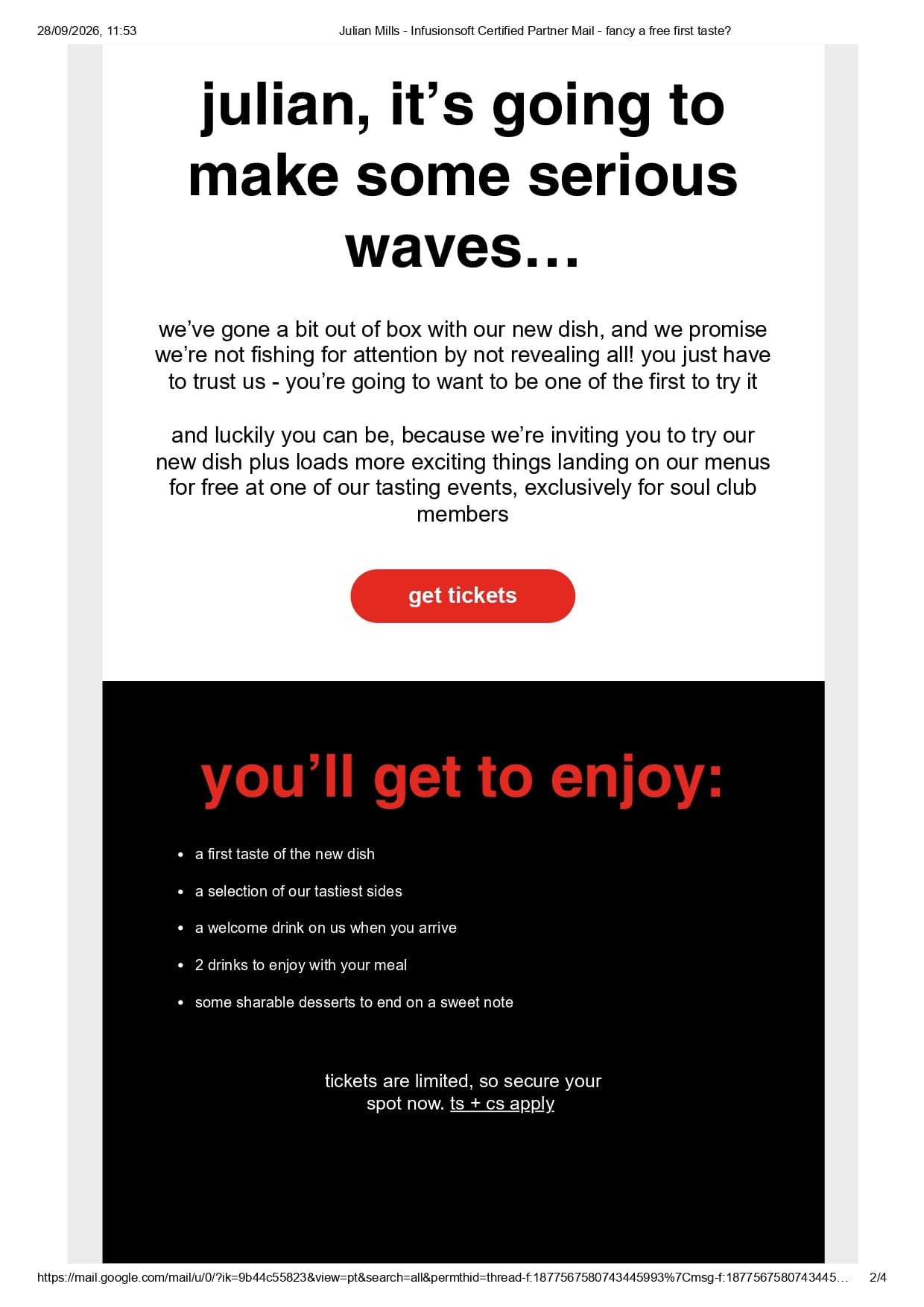
Run HighLevel from Your Personal WhatsApp: Ask AI Comes to WhatsApp

Run HighLevel from Your Personal WhatsApp: Ask AI Comes to WhatsAppWhat if you could update a contact, check your diary or move an opportunity forward without opening HighLevel?

HighLevel has introduced a WhatsApp connection for Ask AI, its built-in AI copilot. Once you connect your own WhatsApp number, you can send a message to your copilot from a normal WhatsApp conversation. It can answer questions and carry out supported actions in your HighLevel account. There is no need to open the HighLevel website or mobile app for every small task.

Important distinction: This is a free way to use your own WhatsApp to interact with Ask AI in your HighLevel sub-account. You do not need to purchase HighLevel’s separate paid WhatsApp add-on to connect this feature. It does not enable you to send WhatsApp messages to your contacts from HighLevel. Customer messaging through HighLevel is what the paid WhatsApp add-on is for.

I have recorded a quick demonstration so you can see the idea in action: watch my HighLevel Ask AI WhatsApp demo.

What can Ask AI do through WhatsApp?

According to HighLevel’s announcement, this is the same Ask AI copilot available inside HighLevel, rather than a separate, limited chatbot. HighLevel gives these examples:

  • Work with contacts: find a contact, add a note or update a field.
  • Keep your pipeline current: move an opportunity to another stage after speaking to a prospect.
  • Check your calendar: ask what is coming up today or next.
  • Draft content: request a blog draft or reusable email template.
  • Set tasks in motion: ask for a follow-up or a recurring summary of new leads.
  • Get help: ask a question about the product and receive an answer in the conversation.

For me, the most useful part is capturing work at the moment it happens. Imagine leaving a client meeting and sending a WhatsApp message asking Ask AI to add a note to the contact and move the opportunity to the next pipeline stage. That is much easier than trusting yourself to remember it when you return to your desk.

How is this different from HighLevel’s paid WhatsApp add-on?

Think of the direction of the conversation. With Ask AI in WhatsApp, you message HighLevel from your personal WhatsApp to ask questions or make changes inside your sub-account. Connecting it does not require the paid WhatsApp add-on.

With the paid WhatsApp add-on, your business uses HighLevel to send and receive WhatsApp messages with contacts and to include WhatsApp in customer communications and automations. Connecting Ask AI to your personal WhatsApp does not switch on those customer messaging features.

Each person connects their own number to their own Ask AI access. HighLevel says your exchanges can also be reviewed in the Dispatch tab. As with any AI action affecting customer records, check the contact and requested change carefully, especially where two people have similar names.

How do you connect it?

  1. In HighLevel, open Dispatch (or Customize → Dispatch) and choose Connect WhatsApp.
  2. Scan the QR code with your phone and send the first WhatsApp message to the number shown.
  3. Enter the verification code you receive in WhatsApp back in HighLevel.
  4. Once connected, message that number whenever you want to reach Ask AI.

These are the steps in HighLevel’s announcement. The menus available to you may depend on your account and access.

Does this mean you never need to log in again?

For many quick questions and updates, you can stay in WhatsApp. You will still want the HighLevel interface when reviewing detailed records, checking an AI-generated draft or building and testing a larger automation. The practical benefit is removing the friction from the small jobs that otherwise get put off.

The announced connection centres on WhatsApp messages. I would not assume that WhatsApp voice calls or voice notes offer the same functionality without testing them in your account.

Watch my demonstration

See my video demo of Ask AI in WhatsApp here. If you already use HighLevel, try a simple request first, such as checking your upcoming appointments or finding a contact. Then test an update and check the result in HighLevel.

If you want help setting up HighLevel so that your team actually uses it, book a 20-minute discovery call with me. We can talk through your sales process, the work your team does every day and where tools like Ask AI fit.

For the official feature details and connection steps, read HighLevel’s Ask AI WhatsApp changelog.

Julian Mills HighLevel Consultant and Marketing Automation Strategist

About the Author

Julian Mills

HighLevel Consultant & Marketing Automation Strategist

Julian Mills helps business owners automate lead generation, sales follow-up, customer communication and business processes using HighLevel and MarketerM8. Since 2009 he has helped businesses implement CRM, marketing automation and AI-powered systems that save time, improve customer experience and generate more sales.

About Julian
Book a Discovery Call
Join a Free HighLevel Workshop
Learn About HighLevel with MarketerM8
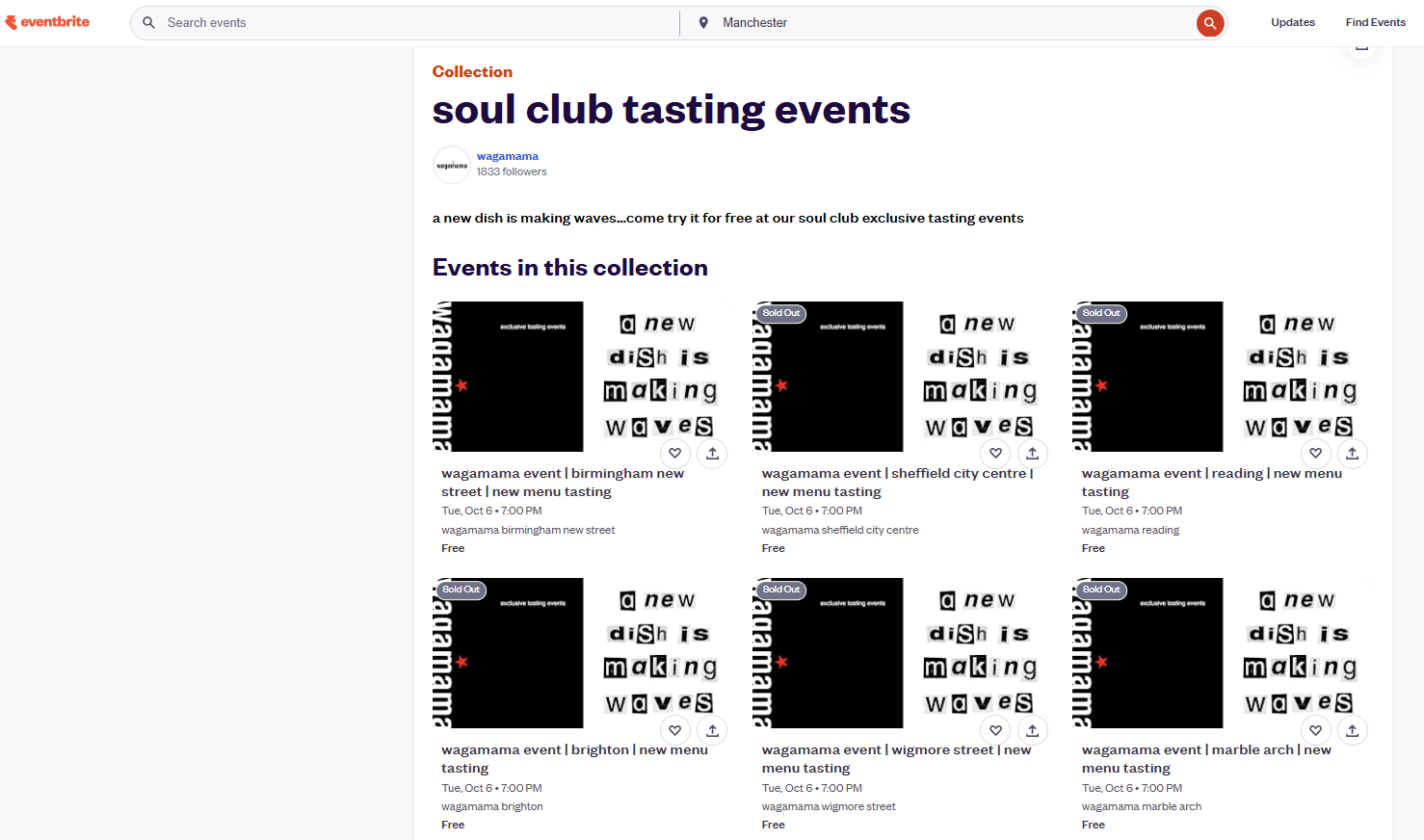
🎓 HighLevel Live Training Workshop #8 : Websites & Funnel Workshop : 12 January 2027

HighLevel isn’t only a CRM and marketing automation platform.

You can also use it to build websites, landing pages and sales funnels.

That means your website, forms, calendars, CRM, workflows and follow-up can all potentially sit inside the same system.

For example:

Visitor lands on page → Completes form → Contact created → Opportunity added → Workflow starts → Sales team notified → Follow-up begins

That’s where HighLevel websites and funnels become interesting.

You’re not simply building pages.

You’re building the front end of a customer journey that connects directly into your CRM and automation.

Our free HighLevel Websites & Funnels training workshop is designed to show you how the tools work and, more importantly, how to use them as part of your wider marketing system.

This workshop is part of MarketerM8’s rolling programme of 13 free live HighLevel training workshops.


GoHighLevel website and funnel training free live workshop

Want to Build Better HighLevel Websites & Funnels?

Join our free live HighLevel Websites & Funnels workshop and learn how to build pages that connect directly to your CRM, forms, calendars and automation.

Register for the next Free HighLevel Websites & Funnels Training Workshop

What Is the HighLevel Website Builder?

HighLevel includes a visual website builder that lets you create webpages without needing to code everything from scratch.

You can build pages using sections, rows, columns and content elements such as:

  • headlines;
  • text;
  • images;
  • buttons;
  • forms;
  • surveys;
  • calendars;
  • videos;
  • testimonials;
  • and other content.

The important advantage is that these pages can connect directly with the rest of your HighLevel account.

So if somebody completes a form or books an appointment, the CRM and automation can immediately take over.

What’s the Difference Between a Website and a Funnel?

This is one of the first things to understand.

A website normally gives visitors several choices.

They may browse:

  • your homepage;
  • services;
  • about page;
  • contact page;
  • blog;
  • or other information.

A funnel is usually more focused.

It is designed around a particular journey or conversion objective.

For example:

Landing page → Lead capture → Thank-you page → Booking page

Or:

Sales page → Order form → Upsell → Confirmation

The exact terminology matters less than understanding the objective.

What do you want the visitor to do next?

Start With the Customer Journey, Not the Page Builder

Before you start dragging sections onto a HighLevel page, ask what you’re trying to achieve.

For example:

  • Generate an enquiry?
  • Get somebody to book a call?
  • Sell a product?
  • Register somebody for an event?
  • Capture a lead magnet request?
  • Explain a service?
  • Get someone to complete an application?

Once you know the objective, the page becomes much easier to design.

Objective first. Customer journey second. Page design third.

A Pretty Website Isn’t Necessarily a Good Website

It’s very easy to get distracted by design.

Animations.

Fancy backgrounds.

Huge images.

Interesting layouts.

But none of those things automatically make a page effective.

A useful page needs to communicate clearly.

The visitor should quickly understand:

  • what you do;
  • who it’s for;
  • why they should care;
  • what action they should take;
  • and what happens next.

Design should support the message, not compete with it.

HighLevel Landing Pages

Landing pages are often used for a specific marketing campaign.

For example, you might create a dedicated page for:

  • a Google Ads campaign;
  • a Facebook or Instagram campaign;
  • a lead magnet;
  • a webinar;
  • an event;
  • a service offer;
  • or a particular audience.

A dedicated landing page can be much more focused than sending everyone to your homepage.

It lets you align the message closely with the advert, email or link that brought the visitor there.

Use HighLevel Forms to Capture Leads

One of the most natural integrations is between HighLevel pages and HighLevel forms, surveys and quizzes.

A visitor lands on the page.

They complete a form.

The data can go directly into your CRM.

From there you can potentially:

  • create a contact;
  • update custom fields;
  • create an opportunity;
  • notify your team;
  • send confirmation;
  • or trigger a workflow.

That’s much more useful than receiving another website enquiry in an inbox and hoping somebody remembers to deal with it.

Use HighLevel Calendars on Your Website or Funnel

You can also integrate HighLevel calendars into your customer journey.

For example:

Visitor reads service page → Books consultation → Confirmation sent → Reminder workflow starts → Sales opportunity updated

Now the webpage, calendar, CRM and automation are all working together.

Connect Your HighLevel Website to Workflows

This is where the wider platform becomes particularly valuable.

A webpage isn’t necessarily the end of the marketing journey.

It may simply be the point where somebody takes an action that triggers the next stage.

For example:

Landing page form submitted → Create contact → Add opportunity → Send acknowledgement → Notify salesperson → Begin follow-up workflow

You can learn more about that in our HighLevel Automation & Workflows workshop.

Websites and Sales Pipelines Can Work Together

If your website generates sales enquiries, those leads should ideally become visible in your CRM.

A form submission can potentially become a new opportunity in your HighLevel sales pipeline.

That helps your team answer:

  • Who has just enquired?
  • Who is responsible?
  • Has anyone followed up?
  • What stage is the opportunity at?
  • What might the sale be worth?

This is where your website stops being a brochure and starts becoming part of the sales system.

HighLevel Funnels Can Support Lead Generation

A funnel can be particularly useful when you want to guide somebody through a specific series of steps.

For example:

Ad → Landing page → Lead magnet form → Thank-you page → Nurture workflow

Or:

Email → Event page → Registration form → Confirmation → Reminder sequence

The funnel provides the visible journey.

HighLevel’s CRM and workflows can handle much of what happens behind the scenes.

HighLevel Funnels Can Support Sales

Funnels can also be used further down the buying journey.

For example:

  • sales pages;
  • order pages;
  • upsell pages;
  • confirmation pages;
  • application funnels;
  • consultation booking funnels;
  • or offer-specific landing pages.

Again, the structure should be driven by what you’re trying to achieve rather than simply copying somebody else’s funnel.

Don’t Make Every Page a Funnel

Funnels are useful.

That doesn’t mean every visitor should be forced through a tightly controlled journey.

Sometimes people want to explore your business.

They want to read about several services.

They want to know who you are.

They want to browse before taking action.

That’s what a traditional website is good at.

Use websites and funnels for the jobs they’re best suited to rather than treating one as universally better than the other.

HighLevel Websites Can Use Your Own Domain

For a professional website or funnel, you’ll normally want to use your own domain or subdomain rather than a generic temporary URL.

This helps keep your brand consistent and makes pages easier to present professionally.

Domain setup can feel technical the first time you do it, but it’s an important part of publishing a HighLevel website properly.

Think About Mobile First

Many visitors will see your page on a phone.

So don’t design the page on a large desktop screen and assume it will automatically work well everywhere else.

Check:

  • headlines;
  • font sizes;
  • buttons;
  • images;
  • forms;
  • spacing;
  • navigation;
  • and page length.

Make sure the important action is obvious on mobile too.

Page Speed Matters

A webpage that takes too long to load creates friction before the visitor has even read your offer.

Large images, unnecessary scripts and overly complicated pages can all contribute to poor performance.

Keep pages as lean as they reasonably can be.

Again, more design elements don’t necessarily create a better marketing result.

HighLevel Websites and SEO

If you’re building a website that you want people to discover through Google or AI search, content and structure matter.

You need to think about things such as:

  • page titles;
  • clear headings;
  • useful content;
  • search intent;
  • internal links;
  • image alt text;
  • meta descriptions;
  • and page structure.

SEO isn’t something you “switch on” after building the page.

The page needs to be created around what people are actually searching for and the questions they need answered.

AI Search Changes How We Should Think About Website Content

People increasingly ask AI tools questions instead of searching only through traditional Google results.

That means useful website content should be easy for both humans and AI systems to understand.

Clear headings, direct answers, FAQs, examples and specific evidence can all help make your content easier to retrieve and understand.

This is one of the reasons we’re increasingly creating pages like this one as genuine learning resources rather than thin promotional pages.

Use HighLevel Websites for More Than Your Main Website

You don’t necessarily need to move your entire existing website into HighLevel.

HighLevel can also be useful for focused marketing assets such as:

  • campaign landing pages;
  • event registration pages;
  • lead magnet pages;
  • booking pages;
  • offer pages;
  • temporary campaigns;
  • or niche-specific funnels.

This means you can potentially keep an existing WordPress or other website while using HighLevel for campaign-specific pages that need tight CRM integration.

Can HighLevel Replace WordPress?

For some businesses, yes.

For others, not necessarily.

HighLevel can build websites, pages and funnels, but WordPress has a huge ecosystem and can be extremely flexible for content-heavy or highly customised sites.

The right question isn’t:

“Which platform is better?”

It’s:

“Which platform is the better fit for what we’re trying to build?”

A business might even use both.

Can HighLevel Replace ClickFunnels?

For some businesses, potentially yes.

HighLevel includes funnel-building functionality alongside CRM, workflows, email, SMS, calendars and other tools.

That consolidation can be attractive.

But again, compare your actual requirements rather than simply replacing software for the sake of consolidation.

Test the Whole Journey, Not Just the Page

A page can look perfect and still fail operationally.

Test what happens after someone takes action.

If they complete a form:

  • Does the contact appear?
  • Are fields mapped correctly?
  • Does the workflow start?
  • Is the opportunity created?
  • Does the salesperson get notified?
  • Does the customer receive confirmation?

If they book:

  • Does the appointment appear correctly?
  • Are reminders triggered?
  • Does the sales process update?

Test the customer journey, not merely the webpage.

Website & Funnel Training Backed by Real Marketing Experience

This is where my background becomes particularly relevant.

I’ve worked hands-on in direct marketing since 1996 and with CRM and marketing automation since 2009.

Since 2009, I’ve helped hundreds of businesses improve, automate and systemise their marketing.

I’m also a Certified Entrepreneurs Circle Marketing Coach and have helped Entrepreneurs Circle GenieAI subscribers implement AI and marketing automation within their businesses.

Through my own HighLevel agency, MarketerM8, I’ve personally onboarded more than 100 HighLevel users.

So when we look at websites and funnels, I’m not simply asking:

“How do we make this page look nice?”

I’m also asking:

  • Who is the visitor?
  • What do they want?
  • What should the page communicate?
  • What action do we want them to take?
  • What should happen after they take it?
  • How does the CRM capture the information?
  • How should HighLevel follow up?
  • And how do we measure whether the page is doing its job?

That’s the difference between simply building a webpage and building a marketing system.

What Will You Learn in the HighLevel Websites & Funnels Workshop?

This free live workshop is designed to help you understand HighLevel’s website and funnel tools and how they fit into the wider platform.

We’ll explore areas such as:

  • the HighLevel website builder;
  • the HighLevel funnel builder;
  • websites vs funnels;
  • landing pages;
  • page structure;
  • headlines and calls to action;
  • forms and surveys;
  • calendar integration;
  • connecting pages to workflows;
  • connecting leads to sales pipelines;
  • domains and publishing;
  • mobile optimisation;
  • basic SEO considerations;
  • conversion-focused page design;
  • testing the complete customer journey;
  • and common website and funnel mistakes to avoid.

The objective isn’t simply to learn how to move boxes around a page.

It’s to understand how your pages can become part of a joined-up marketing, CRM and automation system.


Free GoHighLevel website and funnel builder training workshop

Learn HighLevel Websites & Funnels Live

Join Julian Mills for this free live HighLevel website and funnel training workshop and learn how to build pages that connect directly to your CRM and automation.


Register for the next Free HighLevel Websites & Funnels Training Workshop

Websites & Funnels Is Part of Our Free HighLevel Training Programme

This workshop is part of MarketerM8’s rolling programme of 13 free live HighLevel training workshops.

The programme is designed to help you learn HighLevel one practical area at a time.

If you’re completely new to HighLevel, start with our HighLevel Foundations for Beginners workshop.

Websites & Funnels also connects particularly closely with:

Do I Need to Be a MarketerM8 Customer?

No.

You don’t need to be a MarketerM8 subscriber to attend our free live HighLevel training workshops.

You can attend whether you’re already using HighLevel, considering the platform or simply want to understand more about its website and funnel capabilities.

What If I Need Help Building My Own HighLevel Website or Funnel?

A live workshop can teach you the tools and principles.

But your own website or funnel may need more detailed work.

Perhaps you need help:

  • planning a landing page;
  • designing a funnel journey;
  • building a lead generation page;
  • connecting forms to your CRM;
  • connecting calendars to your pages;
  • building workflow follow-up;
  • creating sales opportunities from enquiries;
  • setting up domains;
  • migrating from another website platform;
  • improving a page that isn’t converting;
  • or training your team.

That’s where I can provide remote HighLevel training and Done-With-You implementation.

For larger projects and teams, on-site HighLevel training and implementation is also available throughout the UK and internationally.

If you’re experiencing a technical problem rather than needing implementation or training, take a look at my guide to HighLevel support in the UK.

Frequently Asked Questions About HighLevel Websites & Funnels

Can GoHighLevel Build Websites?

Yes.

HighLevel includes a website builder that allows you to create webpages using a visual editing interface.

The benefit is that the website can connect directly with your HighLevel CRM, forms, calendars and automation.

Can GoHighLevel Build Funnels?

Yes.

HighLevel includes funnel-building functionality for creating more focused marketing and sales journeys.

Funnels can be used for lead generation, bookings, applications, sales and other conversion-focused processes.

What’s the Difference Between a HighLevel Website and Funnel?

A website typically allows visitors to explore several pages and different areas of your business.

A funnel is normally designed around a more focused journey with a particular action in mind.

Neither is universally better. Use the structure that best fits the visitor’s objective.

Can HighLevel Build Landing Pages?

Yes.

HighLevel can be used to create dedicated landing pages for campaigns, offers, lead magnets, events and other marketing activity.

A focused landing page can be particularly useful when you want the message to match a particular advert or campaign.

Can I Put HighLevel Forms on a HighLevel Website?

Yes.

HighLevel forms can be incorporated directly into pages and used to capture information into your CRM.

Those submissions can then trigger workflows and other actions.

Can I Put a HighLevel Calendar on a Website or Funnel?

Yes.

Calendars can be incorporated into the booking journey so prospects or customers can schedule directly from your pages.

That booking can then connect to confirmation, reminders and other automation.

Can HighLevel Websites Trigger Workflows?

The page itself doesn’t need to be thought of as the workflow trigger.

Actions visitors take on the page, such as submitting a form or booking an appointment, can be used to trigger HighLevel workflows.

This connects the visible website journey with what happens inside the CRM.

Can a HighLevel Website Create Sales Opportunities?

Yes, indirectly through forms, workflows and opportunity automation.

For example, a quote request submitted on a HighLevel page could result in a new opportunity appearing in your sales pipeline.

Can HighLevel Replace WordPress?

For some businesses, yes.

HighLevel can build complete websites and may simplify things for businesses that want their website tightly connected to CRM and automation.

However, WordPress remains extremely flexible and may still be the better fit for some content-heavy or highly customised websites.

Can I Use WordPress and HighLevel Together?

Yes.

You don’t necessarily have to choose one or the other.

A business may keep its main website on WordPress while using HighLevel for landing pages, forms, calendars, funnels and CRM automation.

Can HighLevel Replace ClickFunnels?

Potentially, yes.

HighLevel includes funnel-building functionality alongside CRM, automation, email, SMS, calendars and other features.

Whether you should replace ClickFunnels depends on how you use it and whether HighLevel meets your particular requirements.

Can I Connect My Own Domain to a HighLevel Website?

Yes.

HighLevel websites and funnels can be published using custom domains or subdomains.

This allows you to present pages under your own brand rather than relying on temporary platform URLs.

Can HighLevel Websites Be Mobile Friendly?

Yes, but you should still check and optimise the mobile experience.

Pay particular attention to headings, text size, buttons, images, forms and spacing.

Don’t assume the desktop design automatically produces the best mobile experience.

Can You Do SEO on a HighLevel Website?

Yes.

HighLevel pages can be structured with SEO considerations such as page titles, headings, content, URLs, image alt text and metadata.

But SEO depends far more on useful content and search intent than on the website builder alone.

Are HighLevel Websites Good for Google SEO?

They can be.

The platform itself isn’t what makes a page rank.

Search visibility depends on factors such as content quality, relevance, competition, technical setup, internal linking, authority and user experience.

Build pages to answer real search needs rather than simply trying to insert keywords.

Can HighLevel Websites Appear in AI Search?

Potentially, yes.

AI search systems can use publicly available web content in different ways.

Clear, specific content with direct answers, examples, evidence and useful structure can make a page easier for both humans and AI systems to understand.

Can I Sell Products From a HighLevel Funnel?

HighLevel includes commerce and payment functionality that can be used in wider funnel and sales processes.

The exact setup depends on what you’re selling and how you want the customer journey to work.

Can I Use HighLevel Funnels for Lead Magnets?

Yes.

A typical lead magnet funnel could include a landing page, form, thank-you page and automated follow-up.

That allows lead capture and nurture to happen inside one joined-up platform.

Can I Build Event Registration Pages in HighLevel?

Yes.

HighLevel pages, forms and event-related tools can be used as part of event registration and follow-up journeys.

The right setup depends on the type of event and whether you need tickets, payments or more advanced event management.

How Many Pages Should a HighLevel Funnel Have?

Only as many as the customer journey genuinely needs.

A simple lead capture funnel may need only a landing page and thank-you page.

A more complex sales process may require additional steps.

Don’t add pages simply to make the funnel look sophisticated.

Should My HighLevel Landing Page Have Navigation?

It depends on the page’s objective.

A focused campaign landing page may benefit from reducing distractions and giving visitors one obvious action.

A website page designed for research and exploration may benefit from normal navigation.

Is the HighLevel Websites & Funnels Workshop Free?

Yes.

The Websites & Funnels workshop is part of MarketerM8’s programme of free live HighLevel training workshops.

There’s no charge to attend the live workshop.

Do I Need to Be a MarketerM8 Customer to Attend?

No.

You can attend our free HighLevel training workshops without being a MarketerM8 subscriber.

Can I Ask Questions During the Websites & Funnels Workshop?

Yes.

That’s one of the advantages of live HighLevel training.

You can see the website and funnel tools being explained and ask questions about what we’re covering.

What Should I Learn After HighLevel Websites & Funnels?

If your pages capture information, our Forms, Surveys & Quizzes workshop is particularly useful.

If you want page activity to trigger automated follow-up, move on to HighLevel Automation & Workflows.

If you’re driving traffic through advertising, our later HighLevel Ad Manager / Advanced Marketing training is also relevant.

You can explore all the subjects in our free HighLevel training programme.

Ready to Build Better HighLevel Websites & Funnels?

Don’t start with:

“What page should I build?”

Start with:

“What do we want the visitor to do?”

Then build the journey around that objective.

Use the page to communicate clearly.

Use forms or calendars to capture action.

Use the CRM to store the relationship.

Use pipelines to track the opportunity.

Use workflows to manage the follow-up.

Traffic → Page → Action → CRM → Automation → Follow-up → Sale

That’s where HighLevel websites and funnels become far more powerful than simply being another website builder.

And that’s exactly what our Websites & Funnels workshop is designed to help you understand.


Register for free GoHighLevel Websites and Funnels training

Ready to Turn Your Pages Into a Marketing System?

Join our free live HighLevel Websites & Funnels workshop and learn how to connect pages, forms, bookings, CRM data and automation into one customer journey.


Register for the next Free HighLevel Websites & Funnels Training Workshop

Julian Mills HighLevel Consultant and Marketing Automation Strategist

About the Author

Julian Mills

HighLevel Consultant & Marketing Automation Strategist

Julian Mills helps business owners automate lead generation, sales follow-up, customer communication and business processes using HighLevel and MarketerM8. Since 2009 he has helped businesses implement CRM, marketing automation and AI-powered systems that save time, improve customer experience and generate more sales.

About Julian
Book a Discovery Call
Join a Free HighLevel Workshop
Learn About HighLevel with MarketerM8

Want More Website Enquiries? Add a WhatsApp Button to Your HighLevel Form

Add a WhatsApp button to your HighLevel form, respond with AI in 60 seconds and book calls before prospects start contacting your competitors

Add a WhatsApp button to your HighLevel form, respond with AI in 60 seconds and book calls before prospects start contacting your competitorsWhat if, instead of asking somebody to fill in your website contact form, press Submit and then wait for you to respond, you could start a WhatsApp conversation with them within 60 seconds?

Better still, what if you could answer their initial questions and even get a call booked before they felt the need to go back to Google and contact your competitors?

That’s the really exciting idea behind a very simple change we’ve recently been experimenting with on HighLevel forms.

Twice as Many Prospects Choose WhatsApp

Atticus and I were speaking with a client recently who had added an interesting twist to his HighLevel contact form.

At the bottom of the form, prospects have two choices.

They can press the traditional Submit button and expect a response within 24 hours.

Or they can press a large green WhatsApp button and get a much quicker response.

The client told us something that immediately got our attention:

Around twice as many people choose the WhatsApp button as the traditional Submit button.

That’s impressive on its own.

But I think the really interesting part is what happens next.

Because once you combine this simple button with HighLevel’s WhatsApp integration, Workflows, Conversation AI, WhatsApp Flows and Calendars, you’re no longer simply collecting an enquiry.

You’re starting a sales conversation while the prospect is still interested.

And that could be far more valuable than simply doubling your response rate.

I’ve Now Added the WhatsApp Button to My Own Contact Form

I liked the idea enough to try it myself.

You can see it working on my own Contact Us page.

Complete the form and, underneath the normal Submit button, you’ll see the green WhatsApp option.

But there is an important little bit of cleverness going on behind the scenes.

If somebody has already typed their name, email address, telephone number and enquiry into the form, I don’t want them to have to type it all again when they choose WhatsApp.

So the WhatsApp button grabs the information they’ve already entered and uses it to draft their WhatsApp message.

For example, somebody might complete the form with:

Name: John Smith
Email: john@example.com
Phone: 07123 456789
Enquiry: We’re currently using HubSpot and are considering moving to HighLevel. Can you help?

They press the green WhatsApp button.

WhatsApp opens with something like this already prepared:

Hi Julian,

I’m John Smith.

Email: john@example.com
Phone: 07123 456789

My enquiry:
We’re currently using HubSpot and are considering moving to HighLevel. Can you help?

All John has to do is press Send.

No retyping. No copying and pasting. No additional form.

We’ve simply made it easier for the prospect to start talking to us.

But Then We Realised This Could Go Much Further

Initially, we thought this was simply a clever way of making a HighLevel form more convenient.

Then we started thinking about what could happen after the prospect presses Send in WhatsApp.

With WhatsApp connected to HighLevel, that incoming message can become part of the prospect’s CRM conversation and trigger a HighLevel Workflow.

HighLevel allows a Customer Replied Workflow trigger to be filtered to Reply Channel = WhatsApp.

The Workflow can then bring Conversation AI into the conversation.

Suddenly our customer journey changes from:

Website → Form → Submit → Wait → Human responds

to:

Website → Form → WhatsApp → AI responds within 60 seconds → Conversation → Appointment booked

That’s a completely different experience.

The Biggest Benefit Isn’t Actually the 2x Response Rate

This, for me, is the killer idea.

Our client is seeing roughly twice as many people choose WhatsApp.

Great.

But think about what normally happens after somebody submits a contact form.

They see something like:

Thanks for your enquiry. We’ll respond within 24 hours.

What do they do next?

Twenty years ago, perhaps they waited.

I’m not convinced people behave like that today.

We’ve all completed online forms and never received a response. Or received one three days later. Or received an automated acknowledgement followed by silence.

People have become conditioned not to rely on a website form producing a quick response.

So imagine I’m looking for an accountant, solicitor, builder, mortgage adviser, dentist, IT company or marketing consultant.

I find your website.

I like what I see.

I submit your contact form.

But I still have a problem I want solving.

So what am I likely to do while I wait?

Go straight back to Google.

I find your competitor.

I submit their form as well.

Perhaps I contact a third company.

Now three businesses are competing for my attention and my business.

The first one to actually engage me has an enormous advantage.

I’ve written previously about why businesses can lose opportunities through slow WhatsApp responses. The same principle applies here. Every minute the prospect is left waiting is another opportunity for them to continue their search.

What If We Stop the Search?

Now consider the WhatsApp experience.

The prospect sends their question.

Within 60 seconds they receive a response.

We’re open about the fact that the immediate response is AI. There is no reason to pretend otherwise.

But it’s useful AI.

It understands their enquiry.

It asks a relevant question.

It answers something they wanted to know.

The prospect replies.

Now they’re engaged in a conversation.

Perhaps the AI answers their next question.

Then it asks:

Would you like to book a quick call with us to discuss this?

The prospect says yes.

And now we get the appointment booked.

At that point, why does the prospect need to return to Google?

We’ve satisfied their immediate need.

They wanted information. They got it.

They wanted to know whether we could help. We’ve established that.

They wanted reassurance. They’ve received it.

They wanted a next step. They now have an appointment.

We haven’t simply generated a lead.

We’ve potentially stopped the prospect’s search.

That, to me, is where this gets really exciting.

Response Speed Becomes a Competitive Advantage

This is why I think businesses sometimes underestimate response time.

Speed isn’t simply about giving better customer service.

It can become a competitive advantage.

The Traditional Contact Form

Prospect searches → Finds you → Submits form → Waits → Returns to Google → Finds competitors → Sends more enquiries → Businesses compete for prospect

HighLevel + WhatsApp + AI

Prospect searches → Finds you → Sends WhatsApp → Gets immediate engagement → Question answered → Conversation develops → Call booked

The prospect may never get as far as the next competitor.

That’s potentially worth considerably more than simply increasing the number of people who submit your form.

Could You Really Respond Within 60 Seconds?

Yes. Technically this is very achievable with HighLevel.

Once somebody sends you a WhatsApp message, HighLevel can use the Customer Replied Workflow trigger and filter it specifically for the WhatsApp channel.

That means an incoming WhatsApp message can immediately start a Workflow.

The Workflow can then use HighLevel’s Conversation AI to respond to the prospect based on the information and instructions you’ve given it.

Conversation AI is part of what HighLevel calls its AI Employee, bringing AI into conversations and other areas of the platform.

So rather than promising that a human being will personally respond within 60 seconds, your button could say:

Get a response within 60 seconds on WhatsApp

And underneath you could explain:

Our AI assistant can answer many questions immediately or help you book a call with our team.

Be Upfront That It’s AI

Personally, I would always tell the prospect that the immediate response is coming from AI.

There is a good marketing reason for doing that. I don’t believe you should trick somebody into thinking they’re talking to a human.

The objective is to be genuinely useful incredibly quickly.

But there is increasingly a legal reason to be transparent too.

In the European Union, transparency requirements under the EU AI Act now apply to certain AI systems that interact directly with people. In general, people need to be informed that they are interacting with AI unless that is already obvious from the circumstances.

The position in the UK is different. There isn’t currently an equivalent blanket requirement covering every business chatbot, but UK consumer-law guidance also emphasises that businesses should avoid misleading consumers about the use of AI agents.

So rather than trying to disguise your AI, why not make its speed and availability part of the benefit?

Your first WhatsApp response could begin:

Hi John, I’m Julian’s AI assistant. I can answer many questions immediately or help you book a call with Julian.

There’s no ambiguity.

The prospect knows they’re talking to AI, understands what it can do and can immediately take advantage of it.

Being upfront about AI isn’t a weakness. The fact that you’ve provided a useful response within 60 seconds is the selling point.

The AI Could Answer Their Question There and Then

Imagine our prospect asks:

We’re currently using HubSpot and are considering moving to HighLevel. Can you help?

Your Conversation AI could respond:

Hi John. I’m Julian’s AI assistant. Yes, we regularly help businesses migrate from other CRM systems to HighLevel. Are you mainly using HubSpot for your CRM and sales pipeline, or are you also using its marketing automation, forms and email tools?

John replies.

The AI can continue the conversation using the information and instructions you’ve provided.

It can answer straightforward questions.

It can collect additional information.

It can ask qualifying questions.

And when appropriate, it can move towards the next logical step.

For many businesses, that’s going to be booking an appointment.

They Don’t Even Have to Leave WhatsApp to Book

This is where another HighLevel feature makes the whole idea even more interesting.

HighLevel supports WhatsApp Flows for appointment booking.

That means we don’t necessarily have to send the prospect a calendar link and ask them to leave WhatsApp, open another webpage, choose an appointment and complete another form.

We can potentially keep the experience inside WhatsApp.

So our journey becomes:


Complete form
↓
Press WhatsApp button
↓
Press Send
↓
Conversation AI responds
↓
AI answers questions
↓
Prospect wants a call
↓
WhatsApp booking Flow appears
↓
Prospect selects an available appointment
↓
Appointment booked into the HighLevel calendar

And the prospect has remained inside WhatsApp.

Think about how little friction there is in that journey.

Every additional click, webpage and form we remove makes it easier for the prospect to take the next step.

And because HighLevel can bring WhatsApp conversations into the wider customer service process, the conversation doesn’t have to disappear onto somebody’s personal phone. It can become part of the customer’s ongoing CRM history.

How the HighLevel Automation Could Work

At a practical level, we would build the system something like this:

1. HighLevel Contact Form
The prospect enters their name, email, telephone number and enquiry.

2. WhatsApp Button
Some simple JavaScript takes those values and creates a pre-populated WhatsApp message.

3. Prospect Presses Send
Pressing the green button on your website doesn’t itself send the WhatsApp message. It opens WhatsApp with the message drafted. The prospect then presses Send.

4. Incoming WhatsApp Message Reaches HighLevel
If you’re using HighLevel’s WhatsApp integration, the conversation can come into HighLevel.

5. Customer Replied Workflow Trigger
Create a Workflow using Customer Replied, filtered so the Reply Channel is WhatsApp.

6. Conversation AI Responds
Conversation AI uses the prospect’s message, conversation history, your instructions and its training to provide an appropriate response.

7. The Conversation Continues
The AI can answer questions, collect information and establish what the prospect wants.

8. Identify Booking Intent
When the prospect indicates they would like to talk, the conversation can move towards appointment booking.

9. WhatsApp Appointment Booking Flow
The prospect can be presented with the opportunity to book from within WhatsApp itself.

10. Appointment Enters the HighLevel Calendar
Once the appointment has been booked, your normal HighLevel appointment confirmations, reminders, workflows and sales processes can take over.

That’s a serious sales process sitting behind one little green button.

The Code for the WhatsApp Button

The button itself requires surprisingly little code.

Here is a simplified example:

<div style="margin-top:12px;">
  <button
    type="button"
    id="julian-whatsapp-button"
    style="
      width:100%;
      background:#25D366;
      color:#ffffff;
      border:none;
      border-radius:30px;
      padding:15px 20px;
      font-size:16px;
      font-weight:700;
      cursor:pointer;
    ">
    Get a response within 60 seconds on WhatsApp
  </button>
</div>

<script>
document.getElementById('julian-whatsapp-button').addEventListener('click', function () {

  const form = this.closest('form') || document;

  const nameField =
    form.querySelector('input[name="name"]') ||
    form.querySelector('input[name="full_name"]');

  const emailField =
    form.querySelector('input[type="email"]');

  const phoneField =
    form.querySelector('input[type="tel"]');

  const messageField =
    form.querySelector('textarea');

  const name = nameField ? nameField.value.trim() : '';
  const email = emailField ? emailField.value.trim() : '';
  const phone = phoneField ? phoneField.value.trim() : '';
  const enquiry = messageField ? messageField.value.trim() : '';

  const message =
`Hi,

I'm ${name}.

Email: ${email}
Phone: ${phone}

My enquiry:
${enquiry}`;

  const whatsappURL =
    'https://wa.me/44712345678?text=' +
    encodeURIComponent(message);

  window.open(whatsappURL, '_blank');

});
</script>

You need to replace 44712345678 with the WhatsApp telephone number that should receive the enquiry.

Use the international format without the +, spaces or leading zero.

Depending on the fields in your particular HighLevel form, you may also need to adjust the field selectors in the JavaScript.

One Important Point About the Form Submission

There is an important technical distinction to understand.

Clicking the WhatsApp button does not automatically mean the visitor has submitted the normal HighLevel form.

The JavaScript reads what they’ve typed into the form and uses it to construct their WhatsApp message.

The important event then becomes the prospect pressing Send inside WhatsApp.

Once that message arrives through your connected WhatsApp account, HighLevel can identify the incoming conversation and your automation can take over.

If capturing the original form submission in HighLevel as well is important to your process, you would need to account for that separately.

Don’t Remove Your Normal Submit Button

I wouldn’t replace the normal HighLevel form.

Give people a choice.

Some prospects will prefer submitting a traditional form and receiving an email response.

Others will prefer WhatsApp.

That’s exactly what we’re trying to discover.

You might therefore have:

Submit Enquiry
We’ll normally respond within 24 hours.

followed by:

🟢 Get a response within 60 seconds on WhatsApp

Then measure what actually happens.

And don’t just measure button clicks.

Measure the whole journey:

Form submissions → WhatsApp conversations → Engaged conversations → Appointments booked → Sales

That’s where we’ll discover whether the idea really works.

It’s Not Really About the WhatsApp Button

This started with a very simple idea.

Add a second button to a HighLevel form.

Our client tells us that around twice as many prospects choose his WhatsApp option.

That’s fascinating.

But I now think the button is actually the least interesting part.

The real opportunity is what happens after somebody presses it.

HighLevel allows us to bring together:

Forms + WhatsApp + Workflows + Conversation AI + WhatsApp Flows + Calendars

to potentially move somebody from:

“I have a question.”

to:

“My question has been answered and I’ve booked a call.”

within a single WhatsApp conversation.

And perhaps most importantly, we’ve done it while their interest is at its highest.

They haven’t submitted a form and gone back to Google.

They haven’t contacted another three companies while waiting for somebody to respond.

We’ve engaged them.

We’ve helped them.

We’ve given them a next step.

Perhaps the real goal of rapid response isn’t simply to reply before your competitors do.

It’s to satisfy the prospect so quickly that they don’t feel the need to contact your competitors at all.

That’s the idea I’m now going to be testing.

Would You Like to Do This With HighLevel?

If you’re already using HighLevel, or considering using it, this is a good example of what becomes possible when you stop looking at Forms, WhatsApp, Workflows, AI and Calendars as separate features and start connecting them around your customer’s journey.

If you’d like to discuss how HighLevel could work within your business, book a discovery call with me.

Book a Discovery Call

Julian Mills HighLevel Consultant and Marketing Automation Strategist

About the Author

Julian Mills

HighLevel Consultant & Marketing Automation Strategist

Julian Mills helps business owners automate lead generation, sales follow-up, customer communication and business processes using HighLevel and MarketerM8. Since 2009 he has helped businesses implement CRM, marketing automation and AI-powered systems that save time, improve customer experience and generate more sales.

About Julian
Book a Discovery Call
Join a Free HighLevel Workshop
Learn About HighLevel with MarketerM8

What Is the Best CRM, Marketing Automation and AI Platform for a Lean Startup?

What is the best CRM for a Lean Startup? See how HighLevel supports Eric Ries's Build-Measure-Learn approach with CRM, automation and AI.

If you are following the Lean Startup methodology popularised by Eric Ries, choosing a CRM probably isn’t the first thing on your mind.

And nor should it be.

What is the best CRM for a Lean Startup? See how HighLevel supports Eric Ries's Build-Measure-Learn approach with CRM, automation and AI.One of the central ideas behind Eric Ries’s excellent book The Lean Startup is that you shouldn’t spend months, or large amounts of money, building something based purely on assumptions about what customers want.

Instead, you build, measure and learn.

You test your assumptions. You put something in front of real potential customers. You see what actually happens. You learn from the results. Then you improve, change direction or, in Lean Startup terminology, pivot.

You can read more about the principles behind Eric Ries’s Lean Startup methodology here.

So where does a CRM fit into this?

And if you also need landing pages, forms, email marketing, SMS, WhatsApp, calendars, sales pipelines, payments, marketing automation and increasingly AI, do you really want to assemble all of those from separate pieces of software?

I believe this is where HighLevel becomes particularly interesting for a Lean Startup.

Not simply because HighLevel is a CRM.

It is because HighLevel gives you a collection of tools that can help you test, measure and develop your business model, without having to build an expensive and complicated technology stack before you know what works.

And there is another interesting connection.

HighLevel itself has grown in a way that reflects many of the principles behind Lean Startup thinking.

What is the best CRM for a Lean Startup?

If you’re at the very beginning of testing a business idea, the best CRM may be no CRM at all.

Speak to potential customers first.

If your next step is talking to 20 people to discover whether the problem you think exists actually exists, a spreadsheet, notebook and telephone might be perfectly adequate.

In fact, spending three weeks configuring a sophisticated CRM before speaking to a single prospective customer would arguably be the opposite of Lean Startup thinking.

Once you need to systematically test offers, capture leads, book appointments, track opportunities, communicate with prospects and measure what converts, I believe HighLevel is one of the strongest CRM, marketing automation and AI platforms to consider for a Lean Startup.

The reason isn’t simply its CRM functionality.

HighLevel brings together CRM, marketing automation, websites, landing pages, forms, surveys, calendars, email, SMS, WhatsApp, sales pipelines, payments, advertising and AI.

You can see a broader overview of the tools and features available inside HighLevel here.

That allows a startup to introduce technology as it becomes necessary rather than assembling a large collection of separate systems before the business model has even been validated.

Eric Ries and the Build-Measure-Learn cycle

If you have read The Lean Startup, you’ll already be familiar with one of its central concepts:

BUILD → MEASURE → LEARN

Eric Ries describes the fundamental activity of a startup as turning ideas into products, measuring how customers respond and then learning whether to pivot or persevere.

The objective is to accelerate that feedback loop.

This is an important distinction.

Being “Lean” doesn’t simply mean being cheap.

The purpose is to learn what works as quickly as possible while uncertainty is still high.

Instead of spending months perfecting a product or service before exposing it to customers, you create something that enables you to test an important assumption.

This is where the concept of a Minimum Viable Product, or MVP, comes in.

The MVP isn’t necessarily a cheap or inferior version of the finished product.

Its purpose is learning.

Suppose you think owners of small accountancy practices would pay £500 per month for a particular service.

You could spend six months developing the service.

Or you could create a proposition, put it in front of 100 accountancy practices and see whether anybody wants to talk to you about it.

Better still, see whether anybody will actually buy it.

Someone giving you money is a much stronger signal than ten people telling you:

“That sounds like a great idea.”

HighLevel can become the technology behind Build-Measure-Learn

This is where I think HighLevel fits particularly well with Lean Startup methodology.

BUILD

HighLevel allows you to quickly create much of what you might need to test an idea.

You can create landing pages, websites, forms, surveys, quizzes, appointment calendars, sales pipelines, email campaigns, SMS and WhatsApp communication, automated workflows, payments, courses, advertising campaigns and AI-powered customer interactions.

But you don’t have to use all of them.

That’s actually the point.

Use the minimum required to test your current hypothesis.

If all you need today is a landing page, form and calendar, build those.

Don’t build everything else just because it’s there.

MEASURE

Once people start interacting with your experiment, HighLevel gives you somewhere to record what actually happens.

Rather than relying purely on opinions, you can start looking at behaviour.

  • How many leads did you get?
  • Where did they come from?
  • Did they book an appointment?
  • Did they turn up?
  • What stage of your sales pipeline did they reach?
  • How much was the opportunity worth?
  • Did they buy?
  • Which messages received responses?
  • Where are prospects getting stuck?

Your CRM is becoming more than a database.

It is becoming part of your learning process.

LEARN

This is arguably the most important part.

The objective isn’t to congratulate yourself because 500 people visited your landing page.

The question is:

What did we learn?

Perhaps people visited but didn’t enquire.

Perhaps they enquired but wouldn’t book an appointment.

Perhaps they booked appointments but didn’t buy.

Perhaps one type of customer bought and another didn’t.

Perhaps everybody asked the same question.

Perhaps the feature you thought was incredibly important wasn’t mentioned once, while customers repeatedly talked about something you considered relatively unimportant.

That’s information.

And information gives you your next experiment.

Change the proposition.

Change the page.

Change the price.

Change the audience.

Change the follow-up.

Then:

BUILD → MEASURE → LEARN

again.

Interestingly, HighLevel itself thinks in a very similar way

There is a nice symmetry here.

You can use HighLevel to operate your own Build-Measure-Learn process, while HighLevel itself describes using a remarkably similar approach to developing its software.

HighLevel’s engineering team calls this its “Skateboard Model.”

You can read HighLevel’s own explanation of its engineering and Skateboard Model here.

Imagine somebody needs to travel from A to B.

The ultimate solution might be a car.

But building the car takes a long time.

Instead, you solve the fundamental problem first.

You build a skateboard.

People use it.

You learn from them.

You improve the solution.

The skateboard might become a bicycle.

Eventually you build the car.

But critically, the eventual car is based on what customers have actually told you they need, rather than what you originally assumed they needed.

HighLevel says its own process involves speaking with customers, researching competitors and the market, identifying core features, building an MVP, releasing it, gathering feedback and then continually improving it.

In one example described by HighLevel’s engineering team, the company identified an opportunity around online courses during 2020. It spoke with existing customers, researched the market and competitors, built an MVP in two months, launched it and then used adoption and customer feedback to guide subsequent improvements.

If you’ve studied Eric Ries’s Lean Startup methodology, that philosophy should sound very familiar.

HighLevel’s approach is essentially to build with the customer, not in isolation.

That’s also a useful lesson when implementing HighLevel for your own startup.

Don’t try to build the car on day one.

Build your skateboard.

Don’t automate something you haven’t proved works

This is an area where I see businesses make mistakes with marketing automation.

HighLevel can automate an extraordinary amount.

But just because something can be automated doesn’t mean it should be automated immediately.

Imagine you have designed what you believe is the perfect sales process.

A prospect enquires.

They receive Email A.

Two days later they receive SMS B.

They enter Workflow C.

Depending upon their response, they enter Workflow D or E.

You spend days creating an elaborate automated system.

There’s only one problem.

You haven’t sold anything yet.

You don’t actually know whether your sales process works.

For a Lean Startup, I’d usually favour:

Do it manually → learn → repeat → prove it → automate it.

Have the conversations.

Send some emails personally.

Listen to the objections.

Find out what questions people ask.

Discover what causes somebody to buy.

Then start using HighLevel to automate the repetitive parts of the process you have demonstrated actually work.

Automation should help you scale learning and success.

It shouldn’t cement your untested assumptions into a complicated workflow.

HighLevel itself provides a fascinating startup example

There is another reason I think HighLevel is particularly appropriate for someone following Eric Ries’s methodology.

Look at how HighLevel itself developed.

In a December 2018 interview, around six months after HighLevel launched, co-founder Shaun Clark described a bootstrapped software company with only 10 agency customers, two full-time people and approximately $3,000 per month in revenue.

You can read that early interview with Shaun Clark here.

More interesting than the numbers is what happened next.

HighLevel hadn’t originally discovered its eventual agency market.

According to Clark, some of its first customers came through an integration with the DrChrono medical software marketplace.

A medical spa agency discovered HighLevel and effectively helped the founders recognise that there was a much bigger opportunity selling the technology through marketing agencies.

HighLevel listened.

It changed direction.

The team started reaching out to agencies and discovered what Clark described at the time as a natural fit between what HighLevel was providing and what those agencies needed.

That is important.

The product was developing.

But so was the business model.

If you’ve read The Lean Startup, that story should sound remarkably familiar.

Put something into the market → observe what happens → learn → change direction where necessary → build the next iteration.

HighLevel didn’t start as today’s enormous CRM, marketing automation and AI platform.

It found its way there.

From 10 agency customers to millions of businesses

The contrast is extraordinary.

HighLevel’s own company history says it had more than 1,000 customers by 2019, 10,000+ by 2021 and 20,000+ by 2022.

By 2023, HighLevel says it had exceeded 60,000 customers and $1 billion in revenue.

By 2025, HighLevel said its technology was powering 2.2 million businesses.

You can see HighLevel’s company history here.

More recently, co-founder Shaun Clark has said HighLevel is now the second-largest CRM in the world by number of users, behind only Salesforce.

Those latter figures are Shaun Clark’s own claim rather than independently verified CRM market-share data.

I explain this in more detail in my article:

HighLevel Is Now the World’s Second-Largest CRM Behind Salesforce, Says Shaun Clark

Whatever league table you use, going from 10 agency customers and $3,000 a month to a platform powering millions of businesses is a remarkable startup story.

And perhaps the most interesting part for someone following Lean Startup methodology is that HighLevel hasn’t stopped thinking iteratively.

Its Skateboard Model institutionalises much of that thinking as the organisation has grown.

HighLevel grew differently too

There is another fascinating part of the HighLevel story.

Shaun Clark has spoken publicly about HighLevel growing without the kind of conventional sales organisation you might expect from a software company of its scale.

Its agencies, customers, affiliates, partners and community have played an enormous part in spreading the platform.

Interestingly, even back in that 2018 interview, when HighLevel had just 10 agency customers, Clark was already talking about the affiliate model as an important potential route to growth.

This contains another useful Lean Startup lesson.

Your assumptions about how you will acquire customers are hypotheses too.

Your product can change.

Your market can change.

Your proposition can change.

Your pricing can change.

And your route to market can change.

The objective is to discover a repeatable and sustainable business model rather than stubbornly sticking to your original plan simply because that’s what you wrote down before speaking to customers.

Avoid creating Multi-System Chaos in your Lean Startup

There is another contradiction I frequently see with supposedly “lean” businesses.

The founder tries to minimise expenditure by choosing lots of individual software tools.

They might end up with:

  • WordPress for the website
  • Another system for landing pages
  • Mailchimp for email
  • Calendly for appointments
  • Typeform for forms
  • Pipedrive for CRM
  • Zapier to connect everything
  • A separate SMS platform
  • Another WhatsApp system
  • Another piece of software for reviews
  • Another for social media
  • Another AI tool
  • Stripe for payments

Individually, each decision might make sense.

Collectively, you’ve built a technology monster.

I call this Multi-System Chaos.

You now have multiple subscriptions, multiple logins, multiple databases, integrations that can fail and customer information scattered between different platforms.

I’ve written separately about how to avoid Multi-System Chaos using HighLevel.

For a Lean Startup, I think there is a strong argument for doing the opposite.

Start with very little.

Then switch on capabilities as you need them.

HighLevel gives you that option because so many of the tools are already within the same ecosystem.

What about HubSpot, Pipedrive, Attio or Salesforce?

There are plenty of good CRM systems.

If your startup simply needs a straightforward CRM for contacts and sales opportunities, something such as HubSpot, Pipedrive or Attio may be perfectly appropriate.

Salesforce is enormously capable and dominates the traditional CRM market, particularly at enterprise level.

I’m not arguing that HighLevel is automatically the best CRM for every startup.

The argument for HighLevel becomes much more interesting when you look at everything surrounding the CRM.

Do you also need:

  • CRM?
  • Landing pages?
  • Forms?
  • Surveys?
  • Appointment booking?
  • Email marketing?
  • SMS?
  • WhatsApp?
  • Sales pipelines?
  • Automated follow-up?
  • Payments?
  • Reviews?
  • Social media tools?
  • Advertising?
  • AI?

If the answer is increasingly “yes”, comparing HighLevel with a simple standalone CRM isn’t really comparing like with like.

You need to compare HighLevel with the collection of systems you would otherwise have to assemble around that CRM.

For a Lean Startup trying to minimise unnecessary complexity while retaining the ability to experiment, that’s an important distinction.

What about AI for a Lean Startup?

This has become increasingly important.

A modern startup isn’t simply choosing a CRM and email marketing platform anymore.

AI is becoming part of the technology decision too.

HighLevel increasingly incorporates AI across customer conversations, content creation, workflow automation, lead handling, chat and Voice AI.

Again, though, I would apply the Lean principle.

Don’t add AI simply because everyone is talking about AI.

Ask:

What hypothesis are we testing or what demonstrated problem are we solving?

If prospects aren’t being followed up quickly enough, AI might help.

If you’re missing telephone calls, an AI receptionist might be worth testing.

If leads repeatedly ask similar questions, conversational AI might help.

If your team spends considerable time doing a repetitive task, AI and automation might reduce it.

But technology comes after the problem.

Not the other way around.

Is HighLevel the cheapest CRM for a Lean Startup?

Not necessarily.

And if all you require is somewhere to record 50 contacts, I wouldn’t choose HighLevel simply because it has hundreds of additional features.

There are simpler CRMs.

There are free CRMs.

There is Excel.

There are spreadsheets.

The argument for HighLevel becomes much stronger when you start needing several of the things surrounding the CRM.

CRM + website + landing pages + forms + calendars + email + SMS + WhatsApp + sales pipeline + payments + automation + AI.

At that point, comparing HighLevel’s price with a basic CRM isn’t really comparing like with like.

You need to compare it with the collection of software you would otherwise need.

A Lean technology stack should grow with the experiment

This may be the biggest reason I like HighLevel for this particular use case.

At the beginning you might need:

Landing page → Form → CRM

Your experiment works.

So you add:

Calendar → Pipeline → Email follow-up

You make some sales.

Now you add:

Payments → Automated onboarding

You discover prospects aren’t answering the telephone.

So you test:

SMS → WhatsApp → AI

Then you find an acquisition channel that works and begin scaling it.

You haven’t had to replace the underlying system every time your business reaches another stage.

You’ve added capabilities as your validated business model requires them.

That feels very Lean to me.

So, is HighLevel the best CRM for a Lean Startup?

There isn’t one CRM that is automatically best for every startup.

And sometimes the best CRM at the very beginning is no CRM at all.

But if you are following Eric Ries’s Lean Startup methodology and have reached the point where you need to start systematically testing propositions, capturing leads, communicating with prospects, booking appointments, tracking sales and gradually automating what works, I think HighLevel deserves serious consideration.

Not because it has the longest feature list.

Because it gives you the freedom to start small, measure what happens and add capabilities as you learn.

There is also something rather appropriate about using HighLevel for this purpose.

The platform you’re using to test and develop your Lean Startup has itself grown from a tiny bootstrapped operation by getting in front of customers, listening, iterating, discovering the right market and continually developing both its product and its business model.

HighLevel calls its own product-development philosophy the Skateboard Model.

I think that’s a useful philosophy for anyone starting a business with HighLevel too.

Don’t build the car.

Build the skateboard.

Put it in front of customers.

Measure what happens.

Learn.

Improve it.

And only then build the next version.

That’s not just a sensible way to implement a CRM.

It’s a pretty good way to build a business.

Want to explore whether HighLevel is right for your Lean Startup?

I’m Julian Mills, a UK-based HighLevel Consultant and marketing automation specialist. I’ve been working with CRM and marketing automation since 2009 and with HighLevel since 2023.

I don’t believe the starting point should be installing as much software and automation as possible.

The starting point is understanding what you’re trying to achieve, what needs testing and what technology you actually need at this stage of the business.

If you’d like to talk through your business idea, existing startup or how HighLevel could fit into your plans, you can book a 20-minute Discovery Call with me.

Book a 20-Minute Discovery Call

Julian Mills HighLevel Consultant and Marketing Automation Strategist

About the Author

Julian Mills

HighLevel Consultant & Marketing Automation Strategist

Julian Mills helps business owners automate lead generation, sales follow-up, customer communication and business processes using HighLevel and MarketerM8. Since 2009 he has helped businesses implement CRM, marketing automation and AI-powered systems that save time, improve customer experience and generate more sales.

About Julian
Book a Discovery Call
Join a Free HighLevel Workshop
Learn About HighLevel with MarketerM8
Is HighLevel Right for My Business? When I Would and Wouldn’t Recommend It

Is HighLevel right for your business? Discover when to use it, when to choose another approach, and what to consider before investing in CRM software

Is HighLevel right for your business? Discover when to use it, when to choose another approach, and what to consider before investing in CRM softwareIf you’re considering HighLevel for your business, it’s easy to get caught up in the long list of features. But the more useful question is whether it will help with what your business actually needs.

In this article, I’ll explain when I would recommend HighLevel, when I would suggest another approach, and what I would check before you commit to it.

I run a HighLevel agency, MarketerM8, so I have a commercial interest in the platform. But that doesn’t mean I recommend it for every business.

I’ve worked with CRM and marketing automation since 2009. My starting point is always the same: what are you trying to improve?

When I Would Recommend HighLevel

Your enquiries and follow-up are slipping through the cracks

Perhaps enquiries arrive through your website, telephone, email and social media. Different people respond, some prospects get chased, and others quietly disappear.

HighLevel can help you organise those enquiries, track sales opportunities and build a consistent follow-up process.

For a business selling through consultations, appointments or quotations, that can be a practical starting point.

You don’t necessarily need more leads. You may need to handle the ones you already receive better.

You have repeatable customer journeys

Think about what happens between an initial enquiry and a completed sale.

Do you repeatedly send the same information, arrange appointments, chase quotations, remind customers or request reviews?

Those are processes worth examining for automation.

A window installer might need better quotation follow-up. A consultant might need enquiry qualification and discovery-call booking. A training company might need registration, reminders and ongoing communication.

The value comes from improving the process, rather than switching on every feature.

Your software is fragmented: Multi System Chaos

Perhaps your contacts live in one system, appointments in another, email marketing somewhere else, and landing pages in a fourth.

Your team spends time copying information between tools, checking which records are current and fixing connections when something breaks.

I call this Multi System Chaos.

HighLevel can potentially bring several of those functions together, reducing the number of subscriptions, integrations and separate systems your team needs to manage.

But consolidation should solve a business problem. I would check what each existing tool does before recommending that you replace it.

Your existing CRM works, but there are holes

You don’t have to replace your existing CRM to benefit from HighLevel.

Perhaps your existing system works well and your team has no desire to move. But it doesn’t cover everything you need for marketing and customer communication.

You can use HighLevel as a digital marketing toolbox, choosing the tools that fill those gaps. Depending on your requirements, these could include:

  • Social media scheduling and publishing.
  • Landing pages, sales funnels and websites.
  • Forms, surveys and quizzes.
  • Appointment booking and calendars.
  • Email marketing and automated follow-up.
  • SMS and WhatsApp communication.
  • Website live chat and AI chatbots.
  • Telephone systems and AI voice agents.
  • Document signing and contracts.
  • Payments, invoices and subscriptions.
  • Google review requests and reputation management.
  • Online courses and communities.
  • Advertising campaign management.
  • Workflow automation.

You can explore the HighLevel tools and features available through MarketerM8. Availability and additional charges depend on the features and plan you choose.

For example, you might keep your established CRM and use HighLevel for landing pages, appointment booking and follow-up. Another business might primarily need social media scheduling, document signing and review requests.

You don’t need to use every feature for the platform to be worthwhile. Compare the cost and practical benefits of the tools you need with buying separate subscriptions.

The important question is how information should move between HighLevel and your existing CRM. The aim is to fill the gaps while avoiding more Multi System Chaos.

You need an agile system for a new division or business opportunity

HighLevel can also deserve consideration inside a larger organisation.

Imagine a business with a substantial, complex Salesforce implementation. It launches a new division or wants to test a business opportunity, but extending the main system would involve considerable time and expense.

A separate HighLevel account could provide an agile way to manage enquiries, build landing pages, book appointments and test follow-up processes.

That fits a lean approach: start with what the new venture needs, test the opportunity and develop the system as the business model becomes clearer.

I would still assess data ownership, security requirements and how the new operation connects with the wider organisation. The aim is to support a new opportunity without disrupting an established enterprise system.

Somebody interested has the time to take ownership

HighLevel needs an internal owner. I call that person your CRM Champion.

Two things matter: they must be interested in improving how the business uses the system, and they must have time allocated to do it.

Giving the responsibility to someone whose diary is already full is unlikely to work.

The role may initially involve a few hours each week: learning the platform, helping colleagues and improving everyday processes.

As the business grows, it can develop into a full-time role covering automation, customer communication, reporting and ongoing improvements.

That investment can be fully justified when better follow-up, conversion and customer retention produce enough additional sales and profit. The role should grow with the value it delivers.

When I Wouldn’t Recommend HighLevel, or Would Pause First

Your immediate problem is a shortage of new leads

If your business has very few enquiries, buying HighLevel alone will not solve that problem.

Much of its value comes from helping you capture, organise and make more of your leads and customer relationships.

It cannot magic up new prospects simply because you have subscribed.

HighLevel’s Ad Manager can support paid advertising through Facebook, Google and LinkedIn. You still need an advertising budget, a suitable audience, a convincing offer and effective campaigns.

Websites, landing pages and referral campaigns can also support lead generation, but people still need a reason and a route to find you.

So if your immediate challenge is generating demand, I would start with your lead-generation strategy. HighLevel may support that strategy, but the software is not a substitute for it.

You only need one straightforward function

If you only want a booking link or an occasional email newsletter, a simpler tool may be enough.

HighLevel’s breadth becomes valuable when the functions you need justify the subscription, setup and learning involved.

Buying a larger platform because it has more features isn’t automatically a better decision.

You expect software to fix an unclear offer

HighLevel won’t decide who your ideal customers are or make an unconvincing offer attractive.

You still need to understand your audience, what you are selling and why someone should choose you.

Automating a weak sales process can simply make the weaknesses happen faster.

You need a specialist system to run your operation

A contractor may need job scheduling, stock management and engineer dispatch. An accountant may need practice management. A retailer may depend on detailed inventory and fulfilment.

I would assess those requirements separately.

HighLevel may still be useful for marketing and customer communication alongside specialist software. I wouldn’t assume it should replace the system that runs your core operation.

Your current system already works well

If your team uses your existing CRM confidently and it supports the business, switching needs a clear reason.

Compare the expected benefit with migration, rebuilding, training and disruption. A lower subscription price alone may not justify the move.

You may be better off improving your current system or using selected HighLevel tools alongside it.

Nobody has time to implement it

A HighLevel account subscription isn’t a finished business system.

You need to decide what happens when an enquiry arrives, who takes responsibility, what should be automated and how exceptions are handled.

If nobody can contribute to those decisions, I would resolve that before buying.

You can get help with implementation, but your business still needs to provide direction and take ownership.

Look Beyond the Monthly Subscription

Your decision should include the cost of setup, training and ongoing use.

HighLevel’s plans via MarketerM8 start at £97 per month. Some communication and AI services attract usage charges, and optional extras may cost more.

If you’re comparing buying routes, you can also read about buying HighLevel through MarketerM8.

The useful comparison is the total cost of a working system, weighed against the problems it could realistically solve.

How I Would Decide Whether HighLevel Fits Your Business

Before recommending HighLevel, I would ask:

  • Where are you losing time, enquiries or sales opportunities?
  • Which customer processes happen repeatedly?
  • What software already works and should stay?
  • Which gaps do you need to fill?
  • Who has the interest and time to own the system?
  • What would worthwhile progress look like in the first three months?

Start with one customer journey and test whether HighLevel can improve it. You don’t have to rebuild your whole business at once.

You can also explore the platform through our free live HighLevel training workshops before deciding how much of it you need.

Would You Like Help Assessing the Fit?

You don’t need to know which HighLevel features you want before we speak.

We can start with your business, your existing tools and what you are trying to achieve.

Then we can decide whether HighLevel should become your main system, fill selected gaps, support a new venture, or whether another approach would make more sense.

Book a Discovery Call with Julian Mills

Julian Mills HighLevel Consultant and Marketing Automation Strategist

About the Author

Julian Mills

HighLevel Consultant & Marketing Automation Strategist

Julian Mills helps business owners automate lead generation, sales follow-up, customer communication and business processes using HighLevel and MarketerM8. Since 2009 he has helped businesses implement CRM, marketing automation and AI-powered systems that save time, improve customer experience and generate more sales.

About Julian
Book a Discovery Call
Join a Free HighLevel Workshop
Learn About HighLevel with MarketerM8

Best CRM & Software for Asbestos Consultants and Removal Contractors

Compare asbestos CRM and software for consultants and removal contractors. See how HighLevel can work with Alpha Tracker, Phoenix and Assure360

Compare asbestos CRM and software for consultants and removal contractors. See how HighLevel can work with Alpha Tracker, Phoenix and Assure360If you run an asbestos consultancy, surveying company or asbestos removal business and you’re researching CRM or specialist asbestos software, you will probably come across platforms such as Alpha Tracker, Phoenix Asbestos Software, Assure360 and Footprint WFM.

You may even have arrived here searching for an alternative to Alpha Tracker, Phoenix, Assure360 or Footprint WFM.

But there is an important distinction to make before choosing or replacing any software:

What type of asbestos business are you running?

An asbestos consultant or surveying company has very different software requirements from a contractor physically removing asbestos.

For an asbestos consultancy, a CRM and business automation platform such as HighLevel could potentially manage a substantial part of the business.

For an asbestos removal contractor, HighLevel is more likely to form one part of the technology stack, managing marketing, enquiries, sales and customer communication while specialist asbestos software handles operational delivery and compliance.

So the real question isn’t necessarily:

“Which is the best asbestos software?”

It is:

“Which parts of my asbestos business does each system need to manage?”

Asbestos Consultants and Removal Contractors Are Different Businesses

The term asbestos company can cover several different types of business.

For example:

  • Asbestos consultants
  • Asbestos surveyors
  • Asbestos analysts and laboratories
  • Asbestos management companies
  • Licensed asbestos removal contractors
  • Non-licensed asbestos removal contractors
  • Businesses combining several of these services

That distinction matters when choosing software.

Asbestos Consultants and Surveyors

An asbestos consultancy may need to manage:

  • New enquiries
  • Commercial clients
  • Prospect follow-up
  • Quotations
  • Sales opportunities
  • Survey bookings
  • Consultant or surveyor calendars
  • Appointment reminders
  • Email and SMS communication
  • Recurring inspections
  • Customer relationships
  • Reviews
  • Marketing

A platform such as HighLevel could potentially manage a large proportion of this.

However, asbestos surveyors and analysts still have specialist technical requirements. HSE guidance makes clear that surveying, sampling, analysis and clearance work involve specific competence, procedures and in some cases accreditation requirements.

So an asbestos consultancy may still need specialist software for areas such as:

  • Survey data capture
  • Asbestos registers
  • Laboratory processes
  • Technical reports
  • Site-specific asbestos data

The important difference is that HighLevel could potentially become the main commercial CRM and business automation platform for the consultancy, with specialist software used where required.

Asbestos Removal Contractors

The requirements become considerably more specialised once a business physically carries out asbestos work.

Depending on the type and risk of the work, asbestos contractors may have responsibilities around licensing, notification, plans of work, worker medicals, health records, exposure controls, equipment, site documentation and other operational requirements.

For a removal contractor, I would therefore normally separate the business into two connected systems:

HighLevel = Marketing, CRM & Customer Acquisition

Specialist Asbestos Software = Operations, Service Delivery & Compliance

They don’t necessarily need to be the same system.

Where HighLevel Could Fit Into an Asbestos Consultancy

I am a consultant myself, and HighLevel sits at the centre of how I manage many aspects of my own consultancy.

The same principle can potentially apply to an asbestos consultancy.

HighLevel could manage areas including:

  • Website and landing pages
  • CRM and contact database
  • Incoming enquiries
  • Telephone calls
  • Missed-call follow-up
  • Enquiry forms
  • Document and report uploads
  • Lead qualification
  • Survey bookings
  • Consultant calendars
  • Email
  • SMS
  • WhatsApp
  • Appointment confirmations and reminders
  • Sales pipelines
  • Quotation follow-up
  • Automated workflows
  • Conversation AI
  • Voice AI
  • Google review requests
  • Referral campaigns
  • Database reactivation
  • Marketing campaigns

A typical consultancy journey might look like:

Enquiry → Qualification → Survey Booking → Survey → Report → Recommendation → Follow-up → Repeat Work

HighLevel could potentially manage most of the customer-facing journey.

The specialist survey, analytical or reporting component can then remain within the specialist system best suited to that work.

Where HighLevel Fits Into an Asbestos Removal Business

HighLevel can still play a major role for an asbestos removal contractor.

But I wouldn’t recommend trying to turn HighLevel into specialist asbestos compliance software.

Instead, HighLevel can manage:

  • Advertising and lead generation
  • Websites and landing pages
  • Incoming telephone calls
  • Missed-call follow-up
  • Online enquiries
  • Photograph and survey-report uploads
  • Lead qualification
  • Site-visit bookings
  • Email, SMS and WhatsApp communication
  • Appointment reminders
  • Sales pipelines
  • Quotation follow-up
  • Reviews
  • Referrals
  • Database reactivation

Then, once the customer accepts the quotation, the job can move into specialist asbestos operational software.

The overall journey could become:

Lead → HighLevel → Survey / Site Visit → Quote → Follow-up → Won → Specialist Asbestos Software → Job Completed → HighLevel → Review / Referral

CRM vs Specialist Asbestos Software

Software / Requirement CRM & Marketing Consultancy / Survey Management Removal Operations & Compliance Integration Potential
HighLevel Strong Strong for commercial/customer journey No. Not its purpose APIs, webhooks and integration tools
Alpha Tracker Includes CRM and sales functionality Strong Specialist asbestos functionality API and Zapier available
Phoenix Not its main published focus Specialist functionality Strong Would need to be investigated
Assure360 Not its primary proposition Specialist asbestos management Strong Integration opportunities need scoping
Footprint WFM Designed to work with external CRMs Field workflow focus Strong Strong CRM / API integration approach

Alpha Tracker

Alpha Tracker is particularly relevant to asbestos consultants and surveyors.

Its published asbestos-management platform covers much more than compliance. It includes sales, scheduling, site data capture, laboratory and reporting workflows, invoicing and a client portal.

That means Alpha Tracker already crosses significantly into the territory normally associated with CRM and business-management software.

So it would be inaccurate to say:

“Alpha Tracker manages asbestos. HighLevel manages CRM.”

Alpha Tracker can already manage a substantial part of both.

HighLevel vs Alpha Tracker

The better question for an asbestos consultancy is:

Do you want your specialist asbestos-management platform to also be your primary marketing and CRM platform?

For some companies, Alpha Tracker may provide everything they need.

Others may want much deeper marketing automation around:

  • Websites and landing pages
  • Incoming leads
  • Missed calls
  • SMS and WhatsApp
  • Automated lead nurturing
  • Calendars
  • Marketing campaigns
  • Conversation AI
  • Voice AI
  • Review management
  • Database reactivation

That’s where HighLevel becomes interesting.

Alpha Tracker also publicly supports Zapier and its own API, which makes an architecture such as:

HighLevel ↔ Alpha Tracker

worth exploring.

If you’re searching for an Alpha Tracker alternative, you therefore may not need an alternative at all.

You could potentially use HighLevel as the commercial CRM and marketing platform while retaining Alpha Tracker for specialist asbestos survey, site-data and reporting requirements.

Phoenix Asbestos Software

Phoenix Asbestos Software is much more clearly orientated towards asbestos removal operations.

Its published functionality includes areas such as:

  • Site daily checks
  • Photographic evidence
  • Live signatures
  • Plans of work
  • Risk assessments
  • Smoke tests
  • Project completion reports
  • Training records
  • Health and safety forms

That is exactly the type of specialist functionality I would not try to recreate inside HighLevel.

Phoenix could potentially become the asbestos contractor’s service delivery system.

HighLevel could sit in front of it as the marketing, CRM and customer acquisition system.

For example:

Google enquiry → HighLevel → qualification → site visit → quotation → follow-up → customer accepts → Phoenix → asbestos project delivery

If you’re searching for a Phoenix Asbestos Software alternative because you’re unhappy with lead management, sales follow-up or customer communications, replacing Phoenix may therefore be solving the wrong problem.

You may need a CRM alongside it instead.

Assure360

Assure360 is another specialist asbestos-management platform.

Its proposition is heavily focused on areas such as asbestos compliance, audits, site processes, health and safety, record keeping and management information.

If Assure360 is successfully managing the operational side of your asbestos business, replacing it simply because you want better marketing automation may make little sense.

Instead, the architecture could become:

HighLevel
Marketing → enquiries → CRM → quotations → sales → customer communication

Assure360
Asbestos operations → site processes → compliance

If you’re researching an Assure360 alternative, first establish which problem you’re actually trying to solve.

If the issue is lead generation, enquiry management, quotation follow-up or customer communication, the answer may be adding a CRM rather than replacing Assure360.

Footprint WFM

Footprint WFM provides perhaps the clearest example of the two-system approach.

Footprint provides specialist field-workforce and asbestos functionality, but it also openly supports integration with external business systems.

Footprint demonstrates a workflow using Salesforce as the CRM.

An opportunity can progress through Salesforce, a job can then be created within Footprint, the field work is completed and information can flow back into the CRM.

In other words:

CRM → Service Delivery → CRM

That’s very similar to the architecture I would consider with HighLevel.

What If HighLevel Were the CRM?

An asbestos contractor could potentially use:

HighLevel
Marketing → enquiry → sales pipeline → quotation → customer communication

↓

Footprint WFM
Job management → field operatives → asbestos service delivery

↓

HighLevel
Customer communication → review → referral → reactivation

This isn’t a claim that an off-the-shelf HighLevel and Footprint integration already exists.

It means the technical and business architecture is worth investigating, particularly because Footprint already supports the principle of integrating its field-service platform with external CRM systems.

Looking for an Alternative to Alpha Tracker, Phoenix, Assure360 or Footprint?

This is where I would encourage you to stop comparing software for a moment.

Instead, write down the actual problems you’re trying to solve.

Perhaps:

  • We’re losing enquiries.
  • Nobody follows up missed calls.
  • We take too long to respond to website leads.
  • Survey appointments get forgotten.
  • Customers don’t receive reminders.
  • Quotations aren’t consistently followed up.
  • We don’t know which prospects need calling today.
  • We don’t know our enquiry-to-sale conversion rate.
  • We don’t systematically ask customers for reviews.
  • We don’t market to our existing database.

Those are predominantly CRM, sales and marketing problems.

Changing from one asbestos-management package to another may not solve them.

Now consider a different list:

  • We need better survey data capture.
  • We need specialist asbestos reports.
  • We need better field-service management.
  • We need better site documentation.
  • We need better asbestos compliance processes.
  • We need specialist operational workflows.

Those are much more likely to be specialist asbestos software problems.

Understanding which list your problems belong to makes choosing software much easier.

Could an Asbestos Consultancy Run Primarily on HighLevel?

Potentially, yes.

If the company is primarily providing consultancy, advice, surveys and client management, HighLevel could potentially manage a very large proportion of its commercial operations.

For example:

Website → Enquiry → Qualification → Quote → Survey Booking → Reminder → Customer Communication → Follow-up → Review → Repeat Work

The consultancy could then supplement HighLevel with specialist tools for survey data capture, asbestos registers, laboratory processes or technical reporting where required.

That is a very different proposition from a licensed asbestos removal contractor.

Why Removal Contractors Are Different

Removal contractors have operational responsibilities that extend well beyond conventional CRM.

HSE distinguishes between non-licensed, notifiable non-licensed and licensed asbestos work. Higher-risk asbestos work must be undertaken by an appropriately licensed contractor, and licensed work carries additional requirements around notification, planning and safe working practices.

This is why I wouldn’t recommend trying to make HighLevel become your asbestos operational or compliance system.

Instead:

HighLevel manages the customer.

Marketing → Lead → Survey → Quote → Follow-up → Won

Specialist software manages the job.

Project → People → Site → Documentation → Compliance → Completion

Then HighLevel picks the customer journey back up.

Completion → Customer Communication → Review → Referral → Reactivation

A Real-World Example for an Asbestos Removal Contractor

Imagine someone searches Google for:

“asbestos garage roof removal”

They click your advert and arrive on a HighLevel landing page.

They complete an enquiry form and upload photographs or an existing asbestos survey.

HighLevel creates an opportunity in your sales pipeline immediately.

An automated SMS confirms that you’ve received their enquiry.

Someone reviews the enquiry and decides a site visit is required.

The customer books an appointment.

HighLevel sends confirmation and reminders.

Following the visit, you send a £4,500 quotation.

The customer doesn’t immediately respond.

Two days later, HighLevel follows up.

A few days after that another follow-up takes place.

If necessary, a task is automatically created telling a salesperson to telephone them.

The customer accepts.

At that point the project moves into the specialist asbestos service-delivery system.

The contractor now manages the specialist operational and compliance requirements using software designed for that purpose.

When the job is complete, the customer journey can return to HighLevel.

HighLevel can then send appropriate customer communication and request a Google review at the right time.

One customer journey. Two systems doing the jobs they’re best at.

A Real-World Example for an Asbestos Consultancy

Now imagine a facilities manager needs asbestos surveys carried out across several commercial properties.

They visit the consultancy’s website and complete an enquiry.

HighLevel creates the contact and opportunity and alerts the appropriate consultant.

The enquiry is qualified and a proposal is sent.

If the prospect doesn’t respond, HighLevel follows up automatically and prompts the consultant when personal contact is required.

Once accepted, survey appointments can be scheduled and reminders sent.

The specialist asbestos surveying software then handles the technical site data and reporting.

Once the work is complete, HighLevel continues managing the wider client relationship.

That could include:

  • Future survey reminders
  • Account management
  • Additional service opportunities
  • Newsletters and updates
  • Review requests
  • Referral opportunities

For a consultancy, HighLevel can therefore potentially sit much closer to the centre of the business.

Frequently Asked Questions About CRM & Software for Asbestos Companies

What is the best CRM for an asbestos consultancy?

There isn’t one CRM that will be best for every asbestos consultancy, but HighLevel is worth considering where the business needs CRM, enquiry management, sales pipelines, quotation follow-up, calendars, email, SMS, WhatsApp, marketing automation and customer relationship management in one platform.

A consultancy may still require specialist asbestos software for survey data capture, laboratory processes or technical report production.

Can an asbestos consultancy use HighLevel?

Yes. An asbestos consultancy could potentially use HighLevel as its main CRM, marketing and customer-management platform.

It can manage enquiries, quotations, appointments, pipelines, follow-up, email, SMS, WhatsApp, reviews and ongoing client communication.

Specialist asbestos surveying, analytical and reporting requirements may still require additional software.

Can asbestos surveyors use HighLevel?

Yes, particularly for the commercial and customer-management side of the business.

HighLevel could manage leads, survey bookings, reminders, pipelines, communications and follow-up, while specialist surveying software manages technical site information and report production.

Does an asbestos consultant need specialist software?

It depends on the services being provided.

A consultancy carrying out asbestos surveys, sampling, analysis or specialist reporting may require specialist systems for technical data capture and reporting even if HighLevel manages the wider CRM and business process.

What is the best CRM for an asbestos removal company?

HighLevel is worth considering if the priority is managing enquiries, sales pipelines, quotation follow-up, appointments, email, SMS, WhatsApp, reviews and marketing automation.

However, HighLevel isn’t specialist asbestos operational or compliance software.

A removal contractor may therefore benefit from HighLevel working alongside specialist asbestos software.

Can HighLevel replace asbestos management software?

For a removal contractor, generally no.

HighLevel is primarily a CRM, marketing and automation platform. It isn’t designed to replace specialist asbestos operational, site-management or compliance software.

For a consultancy, HighLevel may be able to manage a much larger proportion of the overall business, although specialist technical software may still be required.

Can HighLevel integrate with asbestos software?

Potentially, yes.

The possibilities depend on the specialist software and which integration methods it provides.

Some platforms provide APIs or third-party integration capabilities. Alpha Tracker, for example, publishes both API and Zapier capabilities, while Footprint WFM is designed to integrate with external business systems.

The integration should be scoped rather than assuming an off-the-shelf HighLevel integration already exists.

What is the difference between HighLevel and Alpha Tracker?

Alpha Tracker is specialist asbestos-management software that already includes sales, scheduling, site data capture, reporting, invoicing and other functionality.

HighLevel is primarily a CRM, marketing, communications and automation platform.

An asbestos consultancy might therefore use Alpha Tracker alone, HighLevel with specialist tools, or potentially connect HighLevel and Alpha Tracker depending on its requirements.

Is HighLevel an alternative to Alpha Tracker?

Sometimes, but not necessarily.

If your main requirements are CRM, marketing, sales follow-up, calendars and customer communication, HighLevel could potentially replace some of the commercial functionality you are considering Alpha Tracker for.

If you also require specialist asbestos survey data capture, laboratory processes and technical reporting, HighLevel isn’t a like-for-like replacement.

The two systems could potentially complement each other.

Is HighLevel an alternative to Phoenix Asbestos Software?

Not as specialist asbestos removal software.

If Phoenix successfully manages your asbestos projects and site processes, you could retain it while using HighLevel to manage marketing, enquiries, sales, quotations and customer communication.

What is the difference between HighLevel and Assure360?

They solve different problems.

Assure360 focuses on specialist asbestos and health-and-safety management.

HighLevel focuses on CRM, marketing, sales and customer communication.

For an asbestos removal contractor, using the two types of system together can potentially make more sense than trying to make either one perform both roles.

Can HighLevel work with Footprint WFM?

Potentially.

Footprint already supports the principle of connecting an external CRM to its field-service system.

That makes a HighLevel and Footprint architecture worth investigating, although the precise technical integration would need to be scoped and tested.

What is the best alternative to Alpha Tracker, Phoenix, Assure360 or Footprint?

It depends entirely on why you’re looking for an alternative.

If you’re unhappy with asbestos surveying, reporting, compliance or field-service functionality, compare specialist asbestos platforms.

If you’re unhappy because leads aren’t followed up, quotations go cold, missed calls are lost or customers aren’t being nurtured, changing asbestos software may not solve your problem.

You may need a dedicated CRM and marketing platform instead.

Does an asbestos removal company need both CRM and asbestos management software?

Potentially, yes.

The CRM can manage the commercial journey from initial enquiry through qualification, site visit, quotation and sale.

The specialist asbestos platform can then manage the technical, operational and compliance requirements involved in delivering the work.

How can a CRM help an asbestos company win more work?

A CRM helps make sure every enquiry and quotation is recorded and followed up.

An asbestos business could automatically respond to website enquiries and missed calls, send survey appointment reminders, track quotations in a pipeline and automatically follow up prospects who haven’t yet accepted.

The objective isn’t always to generate more leads.

Often it is to convert more of the enquiries the company already receives.

Can a CRM automatically follow up asbestos quotations?

Yes.

A quotation could enter an automated follow-up process involving email, SMS and salesperson tasks.

When the customer accepts, the automated sales follow-up can stop and the opportunity can progress into the service-delivery process.

Should an asbestos business use one software platform for everything?

Not necessarily.

An asbestos consultancy may be able to operate with HighLevel as its primary commercial CRM and supplement it with specialist technical tools.

An asbestos removal contractor is more likely to benefit from a clear separation between CRM and customer acquisition on one side and specialist operational and compliance software on the other.

The important part is ensuring the overall customer journey remains connected.

HighLevel for Asbestos Consultants and Removal Contractors

I’ve worked with CRM and marketing automation systems since 2009 and today specialise in helping businesses implement HighLevel around their actual sales and operational processes.

My approach isn’t to start with the software.

We first map how your business actually works.

If you’re an asbestos consultant, we can look at how much of your business could potentially be managed within HighLevel and identify where specialist surveying or reporting software is still required.

If you’re an asbestos removal contractor already using Phoenix, Assure360, Alpha Tracker, Footprint or another specialist platform that performs an important job well, I’m not going to suggest replacing it simply to sell you HighLevel.

Instead, we can look at the complete journey from first enquiry through sales, asbestos service delivery and the ongoing customer relationship.

Then decide:

  • What should HighLevel manage?
  • What should your specialist asbestos software manage?
  • Where should the systems connect?
  • Where are enquiries, quotations or customers currently falling through the gaps?

Looking for a Better CRM or Software Setup for Your Asbestos Business?

Whether you’re an asbestos consultant looking for a CRM, a surveying company trying to improve its sales and customer processes, or an asbestos removal contractor researching alternatives to Alpha Tracker, Phoenix, Assure360 or Footprint, let’s start with the problem you’re actually trying to solve.

We can map your marketing, sales and service-delivery process and work out whether HighLevel could become your main CRM, whether it should work alongside your specialist asbestos software, and where the systems should connect.

Book a Discovery Call

Julian Mills HighLevel Consultant and Marketing Automation Strategist

About the Author

Julian Mills

HighLevel Consultant & Marketing Automation Strategist

Julian Mills helps business owners automate lead generation, sales follow-up, customer communication and business processes using HighLevel and MarketerM8. Since 2009 he has helped businesses implement CRM, marketing automation and AI-powered systems that save time, improve customer experience and generate more sales.

About Julian
Book a Discovery Call
Join a Free HighLevel Workshop
Learn About HighLevel with MarketerM8