HighLevel, also known as GoHighLevel, can be used as a CRM and marketing automation platform for removals companies. It can help organise enquiries, follow up quotations, share WhatsApp conversations across a team, answer calls using Voice AI, collect payments and request reviews.
But rather than start with a software demonstration, let me explain how a furniture move sparked a conversation about growing a removals business.
A furniture move from Stockport to West Didsbury
Today I needed some furniture moving from Stockport to West Didsbury, Greater Manchester.
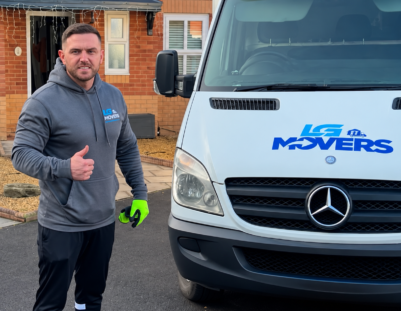
LG Movers came highly recommended, and that is how I encountered Liam Gilmore, the owner. From the outset, he was responsive, helpful and happy to answer our questions. On the day, he delivered a great service.
If you need furniture moving in the Manchester area, I can personally recommend Liam and LG Movers.
Being fairly hands-on, I jumped in to help carry the furniture.
During the move, I noticed Liam recording a video on his phone. He explained that it was for social media.
| Did you find this content useful? |
|---|
| Sign up for my free Marketing Hints, Tips and Hacks email newsletter every Tuesday at 11am. => Sign up here <= |
That made me suspect he was the owner. Here was someone doing the physical work while also thinking about how to promote the business.
As the morning progressed, we got chatting. Sure enough, Liam was the boss.
I mentioned that I work in marketing automation.
That description did not mean much to him initially. Fair enough. When you are busy running a removals company, “marketing automation” probably sounds less immediately useful than another pair of hands.
But when we started talking about leads, WhatsApp and missed calls, the conversation became much more relevant.
Great service generates referrals. Growth needs a consistent flow of enquiries
Liam explained that referrals bring him work.
That is a good starting point. My own booking was evidence that recommendations were working.
But he wants more leads to grow the business.
This is a familiar situation for small business owners. You deliver a good service. Customers recommend you. Yet the flow of new enquiries can still feel unpredictable.
For a removals company, several questions are connected:
- How do more people discover you?
- What happens when they enquire?
- Who responds if the owner is busy?
- Are quotations followed up?
- Does each completed job create an opportunity for a review or referral?
- How do you coordinate more work as the team grows?
- How quickly do you collect payment?
A well-configured CRM can help organise these activities. HighLevel goes further by bringing customer management together with marketing, communications and automation.
However, the starting point should always be what the business needs.
Back to Liam, and the opportunities we discussed while moving furniture…
Turn social media posting into a system with HighLevel Social Planner
Liam was already creating content while doing his everyday work.
That is valuable. Real footage shows the people, care and effort behind the service. It gives prospective customers something more convincing than a generic photograph of a removal van.
The opportunity is to organise that content so posting becomes a manageable routine.
HighLevel’s Social Planner lets a business connect supported social accounts, prepare content and schedule posts through a shared calendar. Content can be prepared in batches and scheduled ahead, rather than relying on Liam finding time to publish between jobs.
For a removals company, that could include:
- Videos from recent moves, with customer permission.
- Packing and furniture protection tips.
- Answers to common moving questions.
- Introductions to the team.
- Customer feedback and testimonials.
- Advice about access, parking and moving-day preparation.
Liam could continue capturing the raw material. Another team member could help prepare and schedule the posts.
That turns an occasional activity into a systematic, scalable marketing process.
The business can maintain a consistent presence even when everyone is busy delivering the service.
Give that content a longer life on the website
Social media is useful, but a busy feed moves quickly.
A post can continue reaching people after publication. However, relying entirely on social media means relying on what the platform chooses to show people.
But having a website with useful website content creates another opportunity: being discovered when someone is actively looking for help.
Liam felt his website could be better. My suggestion was to make more use of the experience and content he was already collecting.
Our furniture move from Stockport to West Didsbury could become a short job story explaining what needed moving, how the team approached it and what the customer thought afterwards.
That gives the business something specific and credible to publish, supported by its own experience.
Build a new removals website with HighLevel AI Studio
Creating a better website does not necessarily mean commissioning an expensive development project.
Using AI Studio in HighLevel, Liam could describe the website he wants and use AI to build it himself. That could include a blog or content section for content, advice and job stories.
He would still need to check the details, wording, photographs and finished pages. AI can help with the build, but Liam’s knowledge is what would make the website useful.
The website could explain:
- Which removals and furniture-moving services are available.
- Which locations the business covers.
- What information customers need to provide for a quotation.
- How the team handles common moving challenges.
- What previous customers say.
- How to request a quote or start a WhatsApp conversation.
But the website itself is only the starting point.
What you publish on it gives people a reason to visit.
They Ask, You Answer: the book I recommend to my clients
There is a brilliant book I recommend to my clients: They Ask, You Answer by Marcus Sheridan.
Its approach centres on answering the questions customers actually ask, openly and helpfully.
For a removals business, that could mean publishing answers to questions such as:
- How much does it cost to move furniture in Manchester?
- Can you collect a single sofa or something bought on Facebook Marketplace?
- What affects the price of a removal?
- Do I need to dismantle furniture before collection?
- What happens if there are stairs or difficult parking?
- How far ahead should I book?
- What should I check before choosing a removal firm?
- What information do you need for an accurate quotation?
Liam will already answer questions like these in conversations with customers.
Publishing those answers turns his everyday knowledge into useful marketing content (and a knowledge centre to train VoiceAI agents to answer the phone, more on this later).
With permission, the footage from a job could support a social post, a website article and an answer to a common customer question.
One job can provide material for several useful pieces of content.
Help local customers find you through Google and AI searches
People looking for a removals company may search Google, use Maps or ask an AI search tool for help.
They might search:
Furniture removals from Stockport to West Didsbury.
Or ask:
Can you recommend a reliable company to collect a sofa in Manchester?
My recommendation would be to publish clear, specific answers backed by genuine experience.
Explain what the business does, where it operates and how it handles the practical concerns customers have. Support that information with real job stories, photographs and customer feedback.
This is more useful than producing numerous near-identical pages that simply swap one town name for another.
There are no guaranteed Google rankings or AI recommendations. But clear answers and credible examples give customers and search systems more information about the business.
Liam was already creating content. The opportunity was to give that effort a clearer direction and a permanent home.
Google Ads can reach people actively looking for removals
Liam had considered Facebook and Google advertising.
For a business seeking immediate removals enquiries, I would usually start by exploring Google Search Ads.
Someone searching for “removals company Stockport” is actively looking for help. That is a different situation from someone scrolling through Facebook who happens to see an advert.
Facebook can still have a useful role in awareness and retargeting. But Google Search offers a way to reach people who already have a relevant need.
HighLevel’s Ad Manager supports creating and managing Google Search campaigns, including relevant keywords and negative keywords to help exclude unwanted searches.
The important part is what happens after the click.
An advert should lead to a relevant page, an easy enquiry process and prompt follow-up. Otherwise, you can pay to attract a potential customer and still lose the opportunity before a conversation begins.
Which brings us to the part of our discussion that really caught Liam’s attention.
What happens when the phone rings while you are carrying a sofa?
Liam explained that when he speaks to prospective customers, he is good at winning the work.
The problem is getting to the phone.
When everyone is busy, or a call comes outside working hours, an unanswered enquiry can become a lost job.
You cannot always stop halfway down a staircase with a piece of furniture to answer a call. Meanwhile, the caller may move straight on to another company.
HighLevel’s Voice AI can be configured to answer incoming calls, respond to common questions and collect caller information. Call routing can be arranged so the AI handles calls when appropriate, including when the team cannot answer.
For a removals business, we could configure an AI receptionist to ask for:
- The customer’s name and contact details.
- Collection and delivery locations.
- Their preferred moving date.
- An outline of what needs moving.
- Relevant access details.
- A suitable time for a callback.
Liam could then return to a captured enquiry with useful information.
The AI would need clear instructions about what it can promise. Capturing a requested moving date is different from confirming that a suitable van and crew are available.
The practical benefit is straightforward: more callers receive a response, and the team has more opportunities to win the work.
Want to hear an AI receptionist? Call Jenny to experience an AI receptionist demo on 07458 008 090.
Share WhatsApp enquiries across the team
Liam told me the business already uses WhatsApp Business, but the conversations live only on his phone.
WhatsApp makes sense for removals enquiries.
Customers can send furniture photographs, explain access arrangements, share locations and ask quick questions.
But if responding depends on the owner, what happens when he is driving, carrying furniture or taking a day off?
With WhatsApp connected to HighLevel, authorised team members can handle customer conversations through the CRM.
HighLevel also supports WhatsApp Business App coexistence for eligible accounts, allowing the business to continue using the app alongside the CRM. The existing number and setup would need checking during onboarding.
Another team member could pick up an enquiry, see the previous conversation and help the customer without waiting for Liam.
That is a practical step towards a business that can grow beyond the owner’s personal availability.
Use Google reviews to strengthen local visibility and trust
There was something else I did not get around to mentioning while we were carrying furniture: reviews.
Later that day, I left LG Movers a Google review. At the time, I could see 43 Google reviews.
Reviews do more than reassure someone who already knows your name.
Google says that more reviews and positive ratings can help a business’s local ranking. Local results also depend on relevance, distance and how prominent a business is.
Reviews are also relevant to the wider conversation about AI search.
Someone might ask:
Can you recommend a reliable furniture removals company near West Didsbury?
Depending on the AI tool and the sources it accesses, customer reviews may form part of the information used to assess or describe local businesses.
That does not mean the company with the most five-star reviews automatically gets recommended. Different tools use different sources, and service relevance, location and other evidence matter too.
My practical advice is to build a strong, genuine review profile alongside useful website content.
That helps customers assess the business and strengthens the public evidence of the service it delivers.
Make review requests and replies part of the process
After a busy day, remembering to request a Google or Facebook review is another task on the owner’s list.
HighLevel can make it a consistent part of completing a job.
Marking a move as completed could trigger a thank-you message and a request for an honest Google review. HighLevel supports manual and automated review requests.
Its Reviews AI can also help draft replies or respond automatically, depending on the settings chosen.
A sensible setup could make routine acknowledgements easier while leaving sensitive feedback for personal attention.
The opportunity is to turn more completed moves into visible evidence that helps win the next one.
Collect video testimonials for the website
Written reviews are useful. Hearing a customer describe their experience on video adds another dimension.
Moving can be stressful. A customer explaining how the team made the day easier can help someone understand what to expect.
HighLevel can collect video testimonials, which the business can review and display on its website through the review widget.
A short testimonial could explain how easy the move was to arrange, how the team treated the furniture and why the customer would recommend the company.
Liam was already recording the work. Video testimonials could add the customer’s perspective alongside it.
Follow up removal quotations before opportunities go cold
Not every enquiry becomes a booking during the first conversation.
A customer might be comparing options, waiting for a moving date or checking arrangements with someone else.
A removals company CRM should make it easy to see:
- New enquiries.
- Customers needing a survey or further information.
- Quotations sent.
- Quotations awaiting a decision.
- Confirmed bookings.
- Completed jobs.
- Outstanding payments.
A HighLevel pipeline can be configured around those stages, with appropriate follow-up.
That might include a helpful message after a quotation, a reminder for a team member to call or a request for missing information.
Follow-up should stop or change when the customer replies, books or declines.
The purpose is to make sure a promising enquiry does not disappear simply because everyone became busy.
Keep customers informed before moving day
Winning the booking is only part of the customer experience.
Customers also need to know what happens next.
A removals business could use HighLevel workflows to send agreed booking details, preparation guidance and reminders about access or parking.
Forms could gather missing information before the job.
These details matter because a better-prepared customer can mean fewer surprises for the team on moving day.
They also reduce the routine messages someone has to remember to send manually.
Furniture delivered. Why leave getting paid as another job for later?
My last contact with Liam was that he would be in touch regarding payment.
There was no problem with that from my perspective. But it left another task on his list: contact me, arrange payment and check that the money had arrived.
Multiply that across a busy week and it becomes more administration for the owner.
With HighLevel, Liam could easily raise an invoice in the HighLevel mobile app and collect payment before leaving the customer.
With a compatible phone and supported payment provider connected, Tap to Pay lets the customer tap their contactless debit card, credit card or digital wallet against his phone. No separate card reader is required for that setup.
Furniture delivered. Invoice raised. Payment collected.
“Simples!” as the Compare the Market meerkats would say.
For a removals business, that means less payment chasing, fewer outstanding tasks and payment collected while everyone is still there.
It illustrates the wider opportunity: helping the business handle everything from the first enquiry to getting paid.
Build relationships with people who can refer regular work
Individual customers may only need a removals company occasionally.
Other businesses regularly encounter people who need one.
Estate agents, letting agents, storage businesses, furniture retailers and property managers could all be relevant referral contacts.
A CRM can help organise those relationships, record conversations and prompt appropriate follow-up.
For a removals business, a small number of strong referral relationships could become a valuable source of enquiries alongside customer recommendations.
Schedule removal jobs with HighLevel Service Calendars
Once a customer accepts a quotation, the next question is: when can you fit the job in?
HighLevel’s Service Calendars can help organise bookings for the services your removals business. Depending on the setup, that could include furniture collections, smaller moves or pre-move survey appointments.
For Liam, the opportunity would be to bring scheduling into the same system as the customer’s enquiry and follow-up, rather than arranging everything through separate messages.
A sensible process could be:
- Capture the enquiry and moving requirements.
- Confirm the scope, price and suitable availability.
- Schedule the agreed service.
- Send booking confirmations and preparation reminders.
- Trigger the next steps after completion, such as payment follow-up and a review request.
For straightforward services with predictable durations, online booking may be appropriate. Larger removals usually need an assessment of the furniture, journey, access and crew requirements before confirming a slot.
The aim is to make booking easier without allowing customers to reserve a move the business cannot deliver.
Service Calendars provide a starting point for scheduling. If the business later needs more advanced dispatching, route planning and visibility of teams on the road, we could then explore FieldTask.
Add FieldTask to help manage jobs and crews
There was another tool I forgot to mention to Liam: FieldTask.
FieldTask is an additional field service app built for HighLevel. It adds capabilities including scheduling, dispatching, route planning, GPS tracking, job photographs and mobile access for the team.
For a growing removals business, we could explore using it to:
- Assign jobs to crews.
- Share customer details and instructions.
- View team locations on a map.
- Track job progress.
- Capture photographs and completion records.
Think of the visibility of an Uber-style map, applied to coordinating your own mobile team.
The exact fit would depend on requirements, particularly for inventories, vehicle capacity and complex moves. A business already using specialist removals software may have good reasons to retain it.
The opportunity is to connect winning the work with organising the people who deliver it.
By the end of our conversation, Liam had made his immediate priority clear.
He wants more leads so he can grow the business.
So, before thinking about implementing HighLevel, my suggestion was to focus on creating useful content on his website, aimed at the questions people ask through Google and AI search tools.
He already has the experience. He has real jobs to talk about. He is already taking out his phone and creating content.
The next step is to give that effort a clearer direction: answer customer questions, show the work, explain the areas he serves and build a growing collection of useful information.
He does not have to replace his website or buy a new platform to start.
And if that approach succeeds, it should create a new challenge.
More enquiries to answer. More quotations to follow up. More bookings to coordinate. More customers expecting a prompt response while Liam and the team are moving furniture.
That is where HighLevel can really add value.
Voice AI can help capture calls when everyone is busy. Shared WhatsApp conversations can let the team respond without everything waiting for Liam. Automated follow-up can help keep enquiries moving, while pipelines give the business visibility of potential work.
Service Calendars can support scheduling. Mobile payments can reduce administration after the job. Review requests can help the next customer discover the business. As the operation grows, FieldTask could help coordinate jobs and crews.
Together, these processes can support the next stage: enough demand to sustain a larger team, and systems that allow that team to take more responsibility.
The ambition is bigger than keeping Liam busier.
It is to help him spend more time working on the business, developing the team and planning its future, while capable people and reliable systems support the day-to-day work.
HighLevel cannot create that growth on its own. But with demand, good people and the right processes, it can help a removals business handle far more than the owner could personally manage.
Could HighLevel help your removals business grow?
If you run a removals company and recognise these challenges, book a 20-minute discovery call. We can identify your immediate priority and the practical steps that would help.
And if you need furniture moving in the Manchester area, give Liam at LG Movers a shout. He did a great job for us.
Frequently asked questions about HighLevel for removals companies
Can HighLevel be used as a CRM for a removals company?
Yes. HighLevel can organise contacts, enquiries, quotations, conversations and sales opportunities. It can also support marketing, follow-up, payments and review requests. It needs configuring around the company’s process.
Can GoHighLevel follow up removal quotations automatically?
Yes. Workflows can send follow-up messages and create tasks for staff. They should be configured to respond appropriately when a customer replies, accepts, declines or changes their plans.
Can the team share access to WhatsApp enquiries?
Yes. With a supported WhatsApp setup connected to HighLevel, authorised users can manage customer conversations through the CRM. Existing numbers and eligibility should be checked before implementation.
Can Voice AI answer calls while the removals team is busy?
Yes. Voice AI can be configured to handle calls, answer approved questions and capture enquiry details. Any promises about availability, pricing or bookings need to reflect what the system can reliably confirm.
Can HighLevel schedule removal jobs?
Service Calendars can support scheduling for appropriately configured services and survey appointments. More complex moves need their scope, duration and resource requirements assessed before a booking is confirmed. FieldTask is an additional option for more advanced field operations.
Does HighLevel replace specialist removals management software?
That depends on the business. HighLevel offers CRM, communications and marketing automation, but specialist inventories, storage administration and complex move planning may require dedicated software. Assess the operational requirements before replacing anything.
Can a removals company collect card payments through the mobile app?
Yes. Supported mobile payment options include Tap to Pay, subject to a compatible device, app and payment provider setup. This can allow payment collection at the end of a job.
My advice to Liam: focus on getting found first

About the Author
Julian Mills
HighLevel Consultant & Marketing Automation Strategist
Julian Mills helps business owners automate lead generation, sales follow-up, customer communication and business processes using HighLevel and MarketerM8. Since 2009 he has helped businesses implement CRM, marketing automation and AI-powered systems that save time, improve customer experience and generate more sales.
About Julian
Book a Discovery Call
Join a Free HighLevel Workshop
Learn About HighLevel with MarketerM8